TALLAHATCHIE COUNTY, Miss.—China, traditionally the United States’ largest soybean customer, has taken its business to South America in response to U.S tariffs, and Mississippi farmers say they are bearing the brunt of the move.
Soybean farmers in Mississippi and other Midwestern states have found themselves being used by Beijing as a bargaining chip in the U.S.–China trade dispute. For the first time in more than two decades, China has not yet bought soybeans from American growers from their autumn harvest, which began in September.
The United States has levied tariffs of more than 50 percent on Chinese imports in response to Beijing’s long-running unfair trade practices and trade imbalance against the United States. The two countries are currently negotiating a deal.
Tallahatchie County soybean farmers say the dilemma is especially vexing as they have produced a bumper crop, both in yield and quality, this year. If China were in the market for American soybeans, they say, their state is poised to provide them.
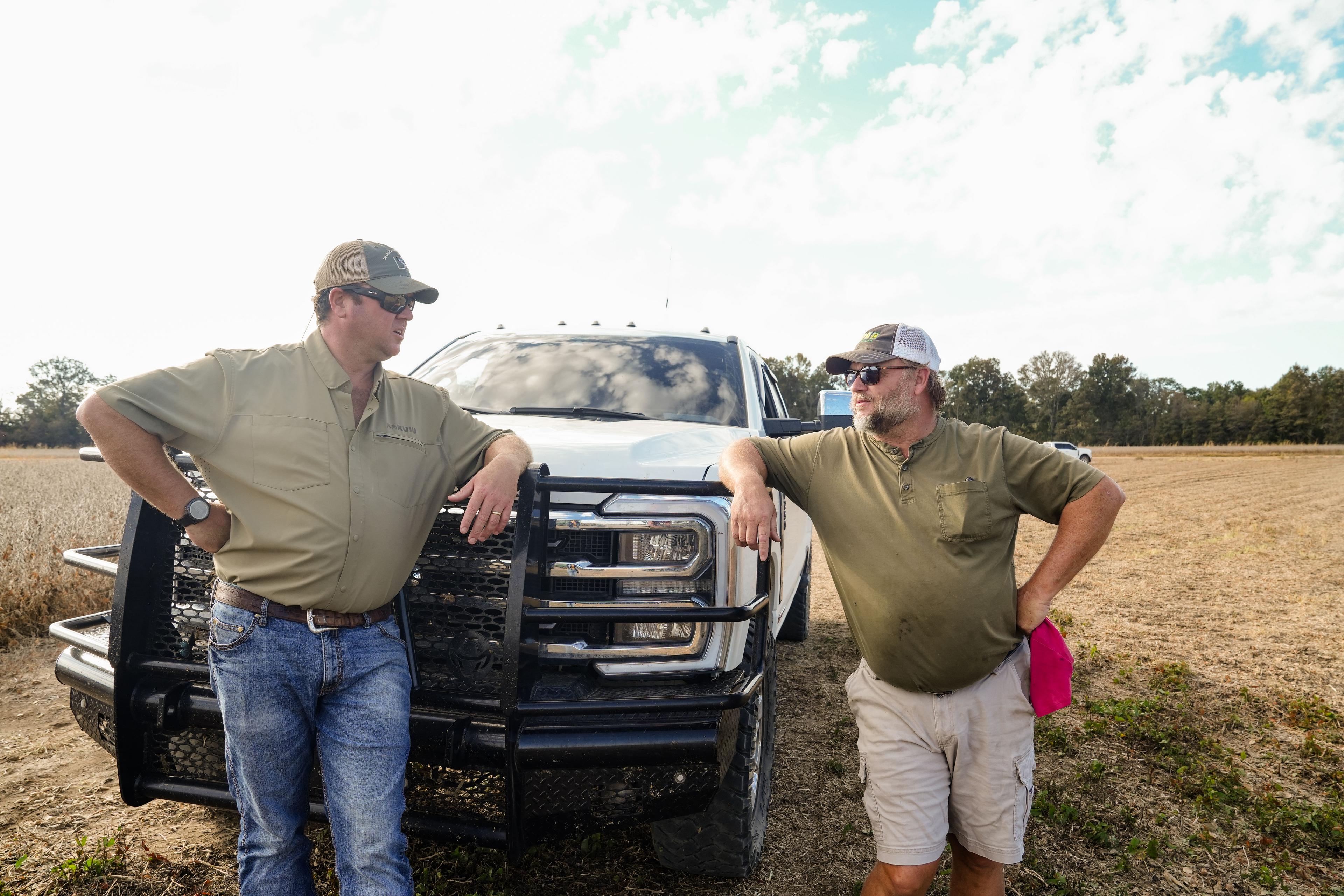
“We had a real good irrigated crop,” Murray Hardy of Teasdale, Mississippi., told The Epoch Times. “It’s just real hard, fertilizer is up, everything went up but the price [of soybeans].”


“We’ve made so much money on Tariffs that we are going to take a small portion of that money and help our Farmers,” his post reads. “I’ll be meeting with President Xi, of China, in four weeks, and Soybeans will be a major topic of discussion.”
“Then after that, they’re going to do, I think, better than they’ve ever done before,” he added.
“It’s unfortunate that Chinese leadership has decided to use the American farmers, soybean farmers in particular, as a hostage or pawn in the trade negotiations,” Bessent said on CNBC on Oct. 2.
Tallahatchie County’s farmers say that based on their experience, the amount of time it could take for the financial aid to actually funnel through the government agencies and programs before reaching them could be too long.
They said the government shutdown only adds to their frustration.
“Some guys are wondering if they can hold out until help comes,” Jim Bowen, general manager of the Tallahatchie Farmers Supply, Inc., told The Epoch Times.
Bowen provided data on the financial challenges the average farmer faces.
According to Bowen, farmers begin their year applying for a line of credit from the bank. The amount of credit is based on their expected crop yield and is collateralized by the crop and often their land.
He said that after purchasing seed, fertilizer, pesticides, and herbicides, the input for the crop can average $625 per acre. For a 1,500-acre farm, this comes to more than $937,000. According to Hardy, who farms about that much land, this is a relatively nominal amount.
“I’m a small farmer. That’s my whole income, but I’m just a small farmer compared to some,” he said.
Bowen’s estimate is only for the actual crop expenses. It excludes parts and maintenance for tractors, combines, and other equipment, transportation, taxes, and administrative costs. Bowen said that when it’s all said and done, the farmer could be on the hook for close to $1 million.
If a farmer finishes the year at a loss, the deficit is rolled over so the farmer can start the new year with old debt.
Bowen said that often, farmers will forego new equipment purchases and opt for less expensive inputs to make up shortfalls. Bowen said he is opting for repairing old equipment that he might have replaced a few years ago.

“We’re reblading discs and just swapping parts out where not too many years ago, we'd just sell it and go get another, but that’s not that’s not happening right now,” Bowen said.
China has a record of reducing its demand for U.S. soybeans when there’s tension between the two countries.
In 2018, Trump raised tariffs on nearly $370 billion worth of Chinese goods over accusations of intellectual property theft, forced technology transfers, and unfair trade policies and practices.
Bowen said that “a few years ago, we were getting $12.50” per bushel for soybeans. That price has dropped to around $9.94.
“So you take a $2.50 [decrease] on a 70 bushel [per-acre] crop, that’s $150. So, let’s just say you have 1000 acres, that’s a $150,000 swing,” Bowen said.
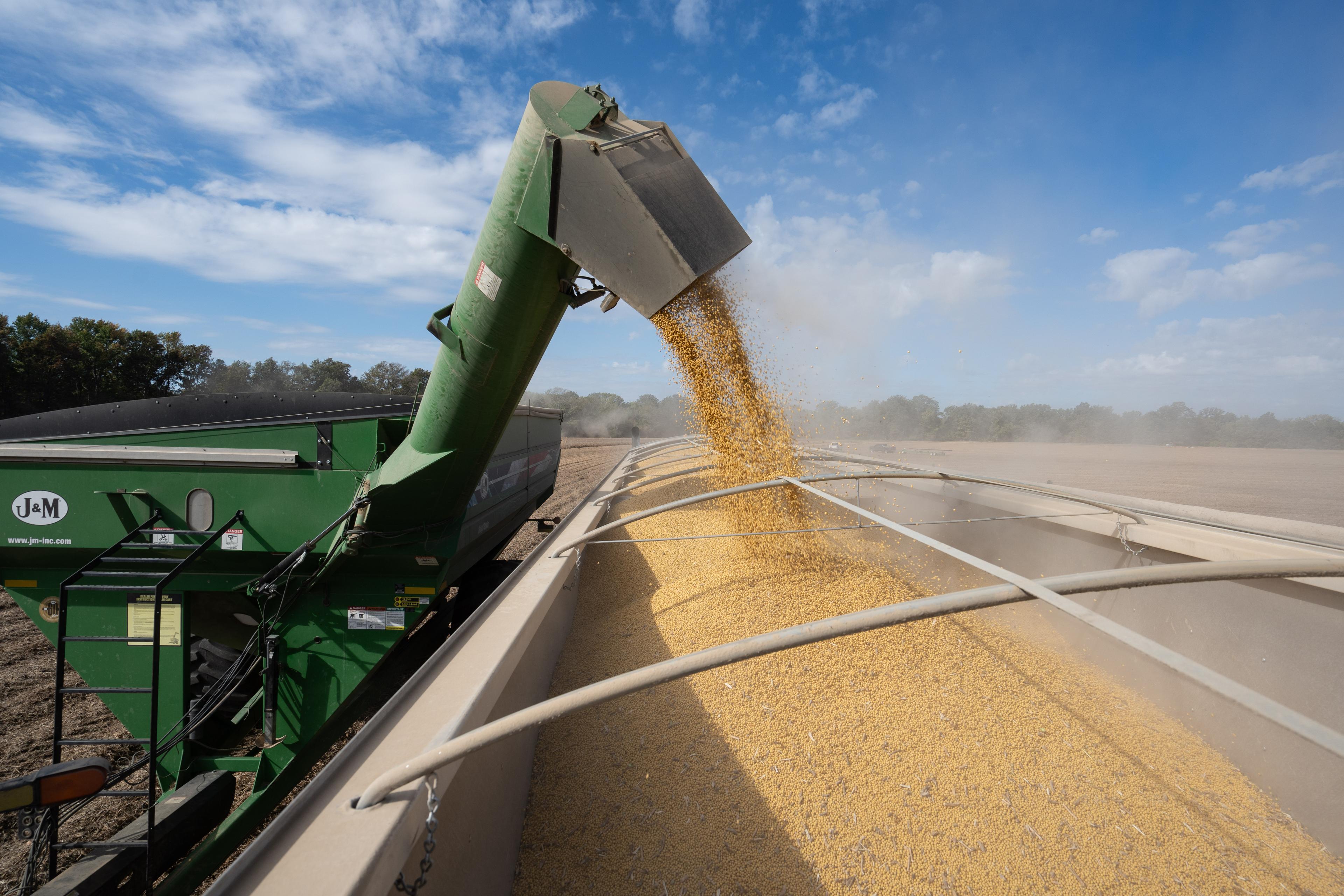
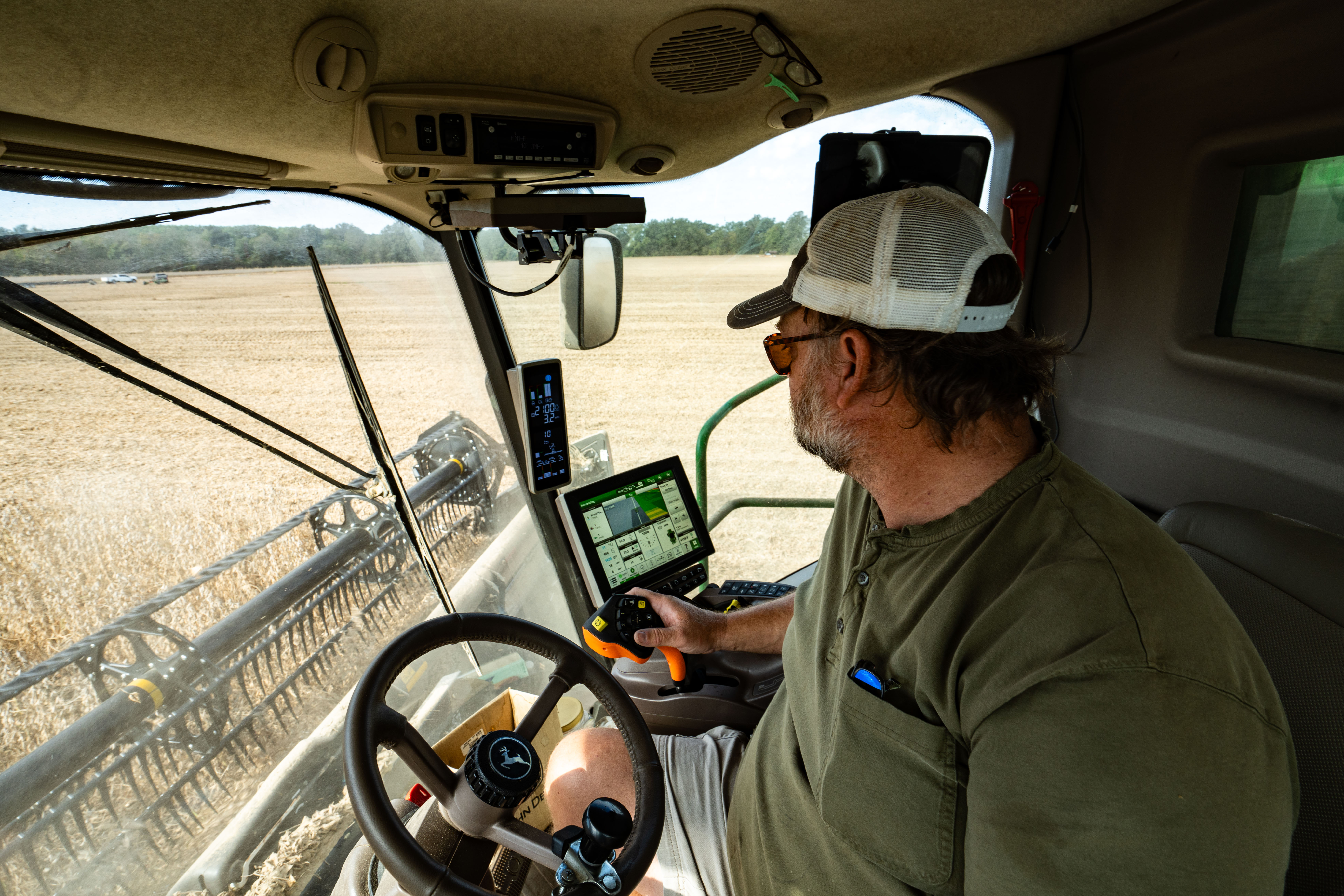
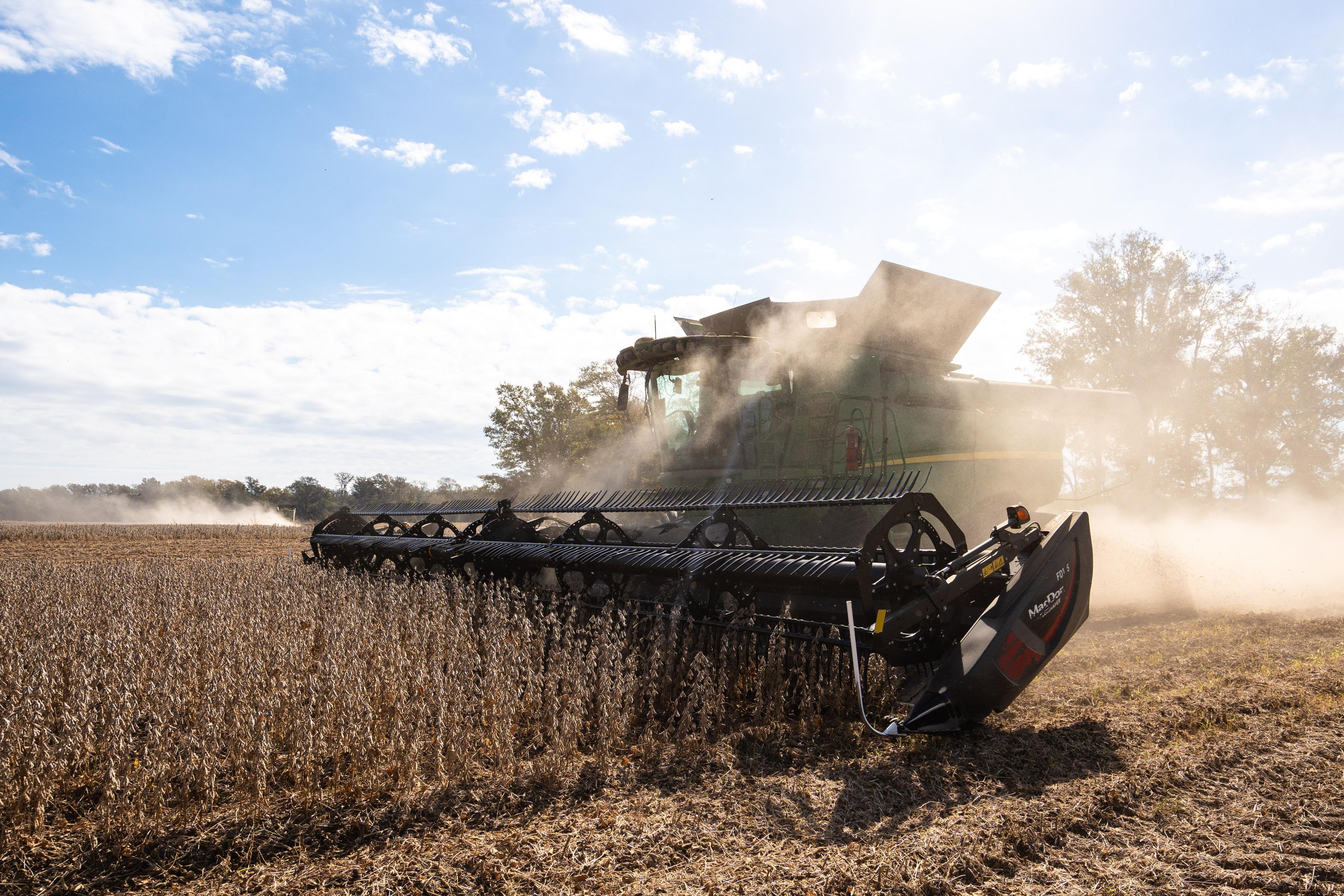
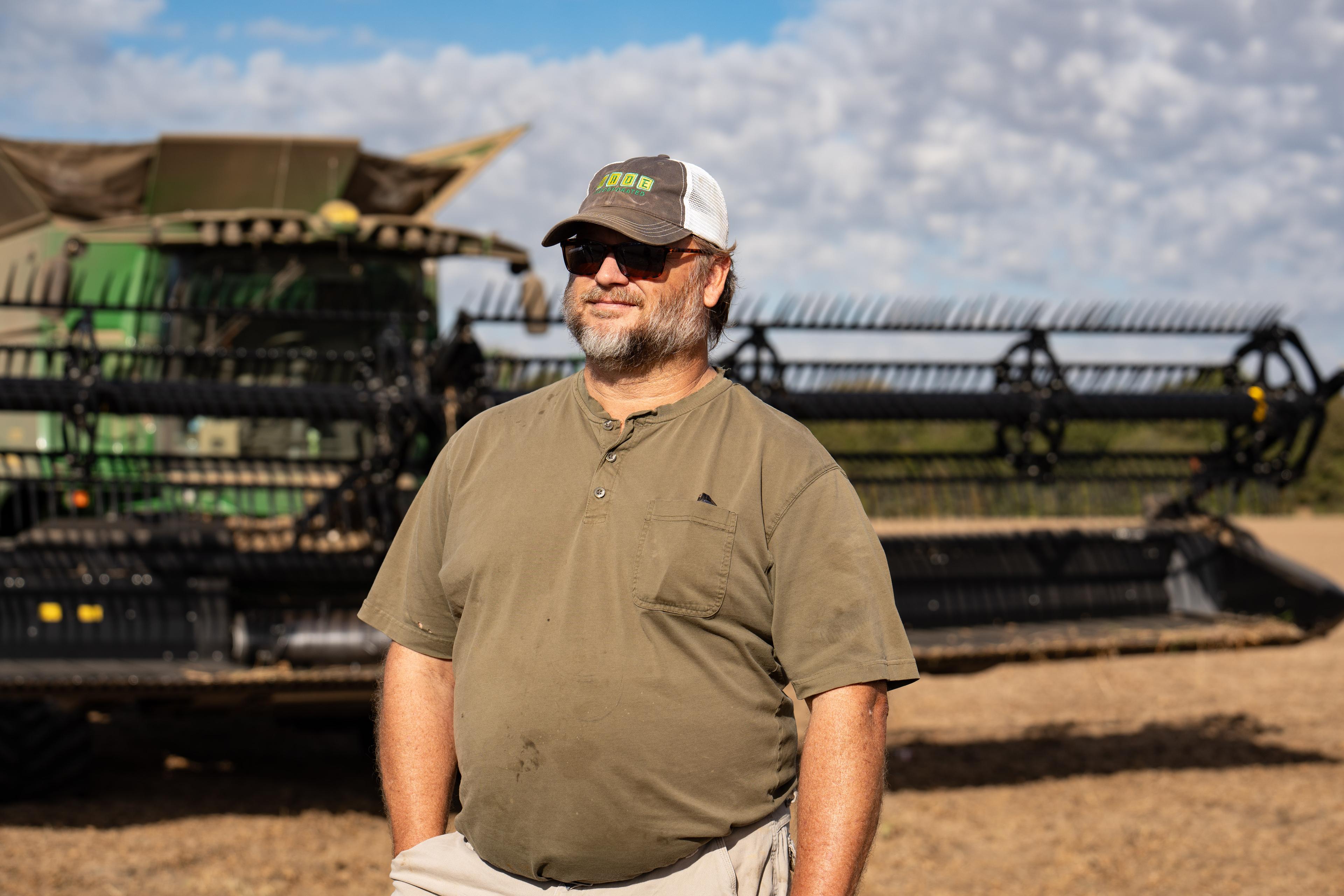
In a dusty field a few miles south of State Highway 35, Van Wolfe prepared to climb into his combine for the final day of harvesting. He and his brother farm 7,600 acres of mostly soybeans and some corn.
He said the prices haven’t hurt him much, but the input costs have hit his operation hardest. According to Wolfe, getting his beans to a paying customer would solve most of his farm-related problems.
“This is probably one of the better crops we’ve harvested, and we haven’t sold anything. We have it all in the grain bin,” Wolfe told The Epoch Times.
Wolfe said his feeling is 50-50 on whether the president’s promised help will do any good.
“It’s a big comfort, but for some farmers it may be too little too late,” Wolfe said.
The situation is almost a replay of the president’s first term, when China stopped buying soybeans over tariffs.
“U.S. soybean growers need predictability and certainty that we will retain market access in China. We support a long-term solution to U.S. – China relations that is more predictable and stable,” the website states.
Bowen pointed out that Trump enjoyed solid support from rural areas in the presidential race.
“I’m not saying that what he’s doing is wrong,” Bowen said. “It’s just, I don’t know that a bunch of farmers can wait it out, can hold on long enough.”