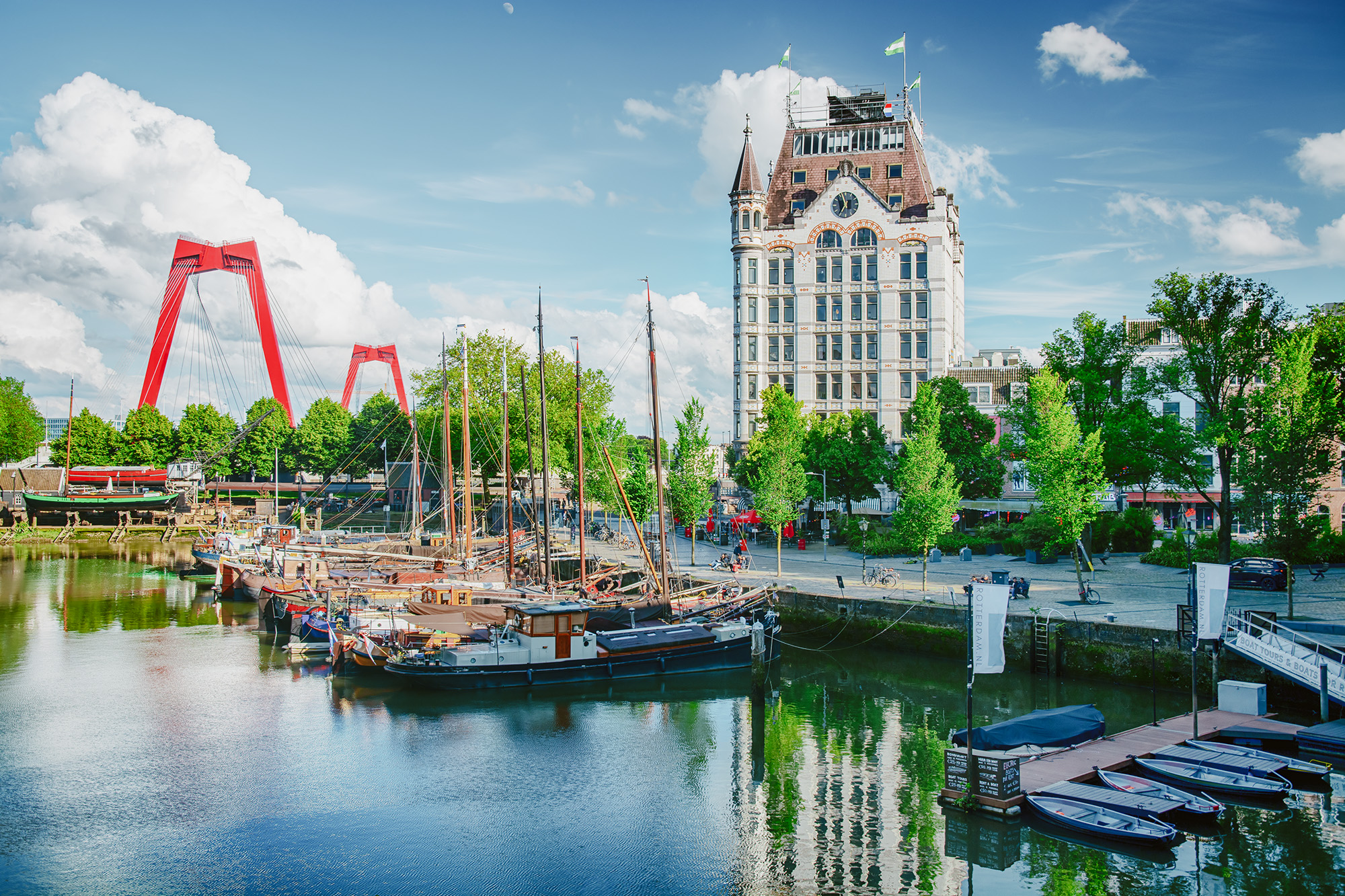
When people mention Holland, it feels like Amsterdam gets all the love. People want their canals, stepped gables, and all the old-world charm that this globally famous city offers. But with fame comes crowds—lots and lots of them. On the streets, lanes, and waterways. In the restaurants and cafes and hotels and everywhere else. Especially in the summer.
But look just to the south, less than an hour’s ride by rail away, and you’ll find the second city of the Netherlands. That train serves as a time machine to the future. Youthful, international, cosmopolitan, and a place of undeniable optimism and beauty, Rotterdam is unlike any other city on earth.
It’s all rooted in history. An important port, the Germans flattened it during a 1940 bombing blitz, leaving hundreds dead and thousands homeless. But from the seeds of tragedy, a whole novel, innovative metropolis grew—a place of glass and steel, where new ideas on architecture and design could take root.
Arrival
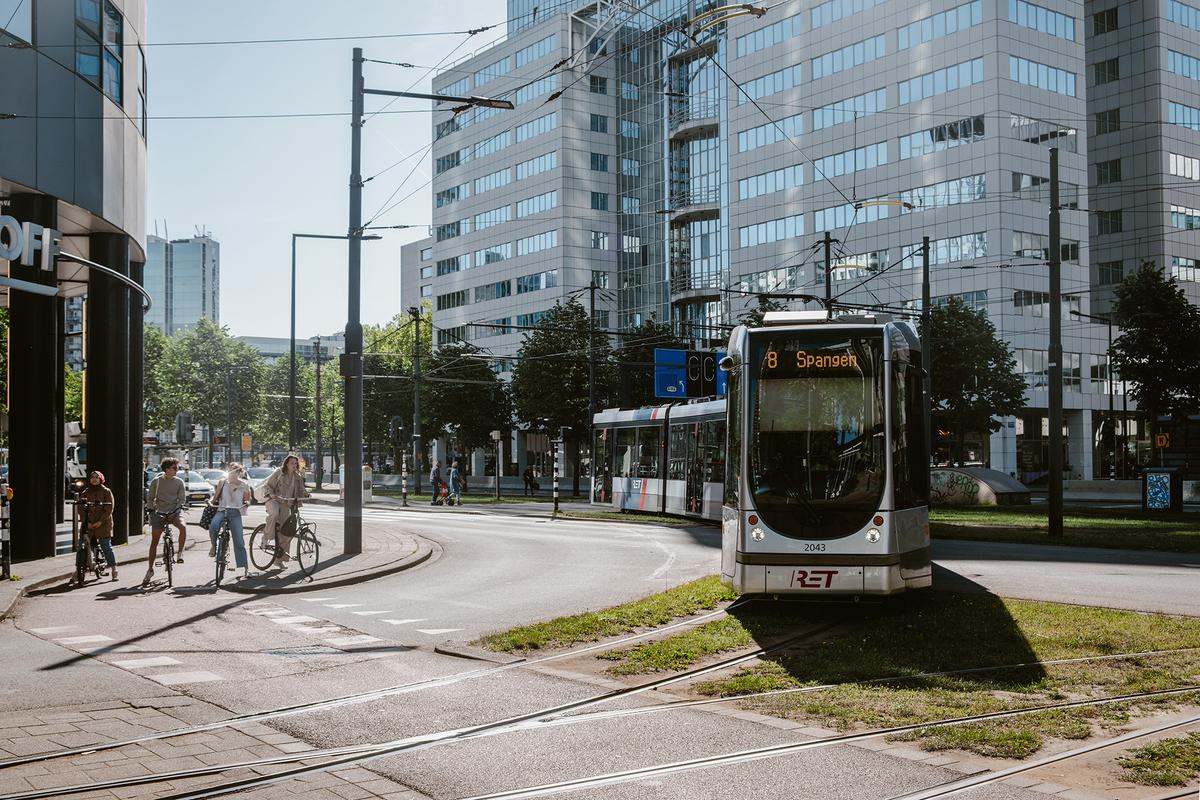
While the small Rotterdam The Hague International Airport (RTM) is basically right in town, if you’re flying from North America, you will land at Amsterdam Airport Schiphol (AMS). Like some other small nations, the Netherlands has a big airline and a very busy airport. AMS is the main hub of the flag carrier KLM Royal Dutch Airlines, which flies not just to New York and Los Angeles but also to Memphis, Edmonton, Montreal, Las Vegas, and many other airports across the Atlantic and around the world.Landing at Schiphol, getting to Rotterdam is simple. Trains from the on-site station depart often, sometimes several times per hour, and arrive at the city’s central station in just 40 minutes. From there, you can hop on a tram, bus, the serviceable subway system, or a taxi or ride-share car.
The Joys of an Under-Touristed Destination
Over-tourism is a phrase we’re hearing more and more. It refers to spots so popular that any enjoyment of the place is sucked away by the sheer effort involved in visiting. I’ve been there, many times, squeezing into a tiny corner of the vaporetto just to get back to my Venice hotel, or pressing through a surfeit of selfie-seekers simply to see and admire the Mona Lisa in Paris.

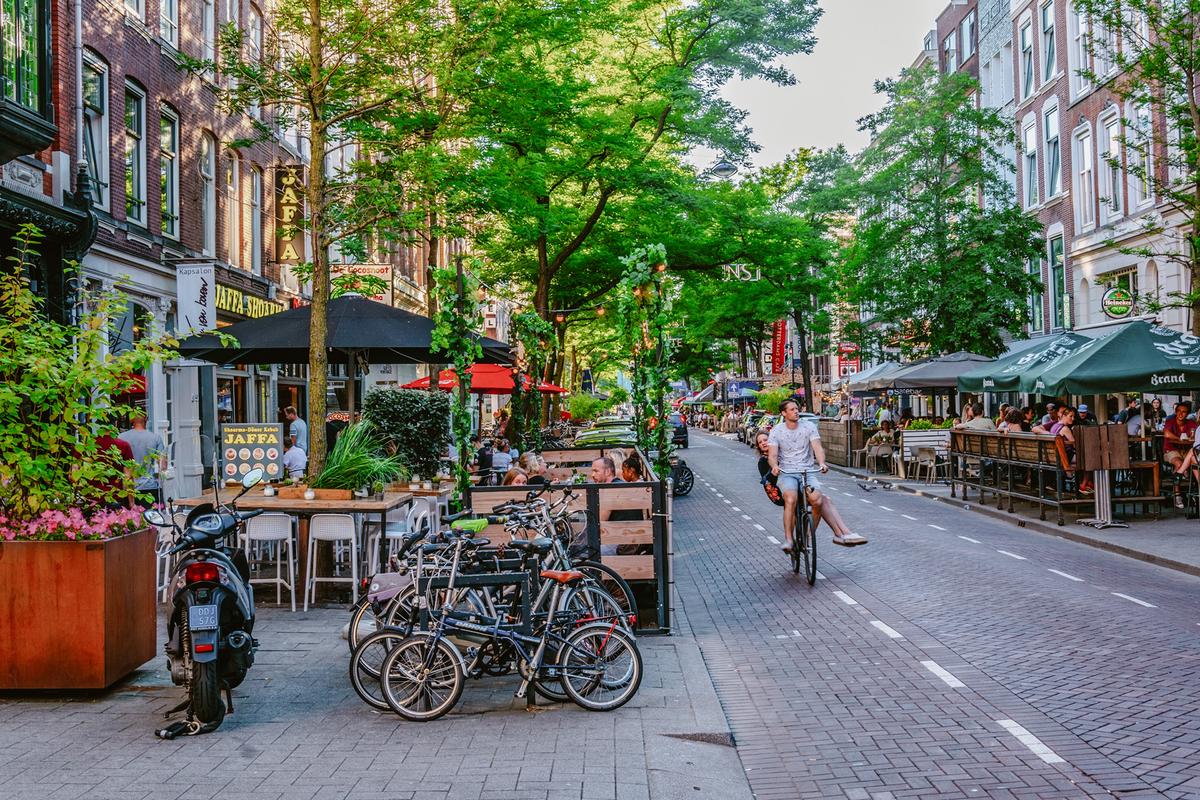
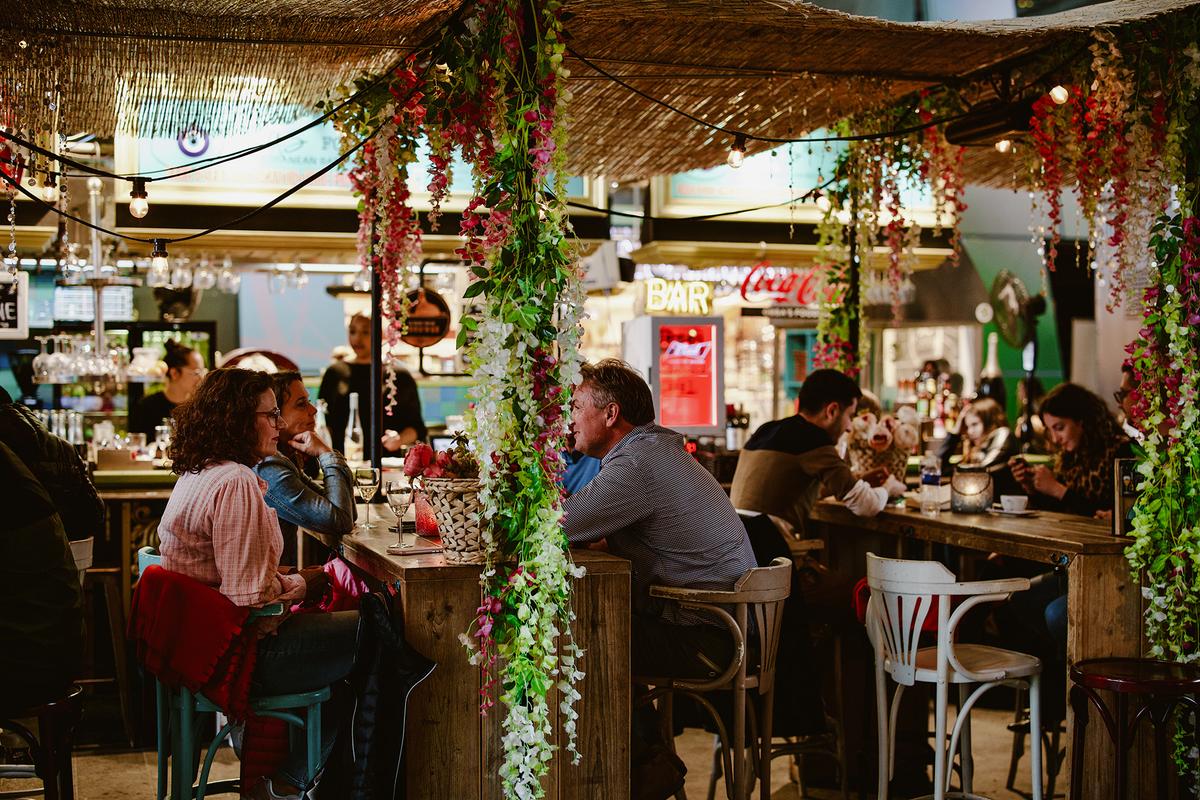
Rotterdam is, in so many ways, the opposite. Still under the radar, you’ll hear a variety of languages and meet people from across the earth here. But the difference is that they’re mostly in town to live and work. Even on a very recent, sunny, early summer visit to trendy, super-cool De Witte de Withstraat, a street lined with sidewalk cafes, restaurants, and clubs, I never had to wait more than five minutes for a table for dinner.
Truly Diverse City
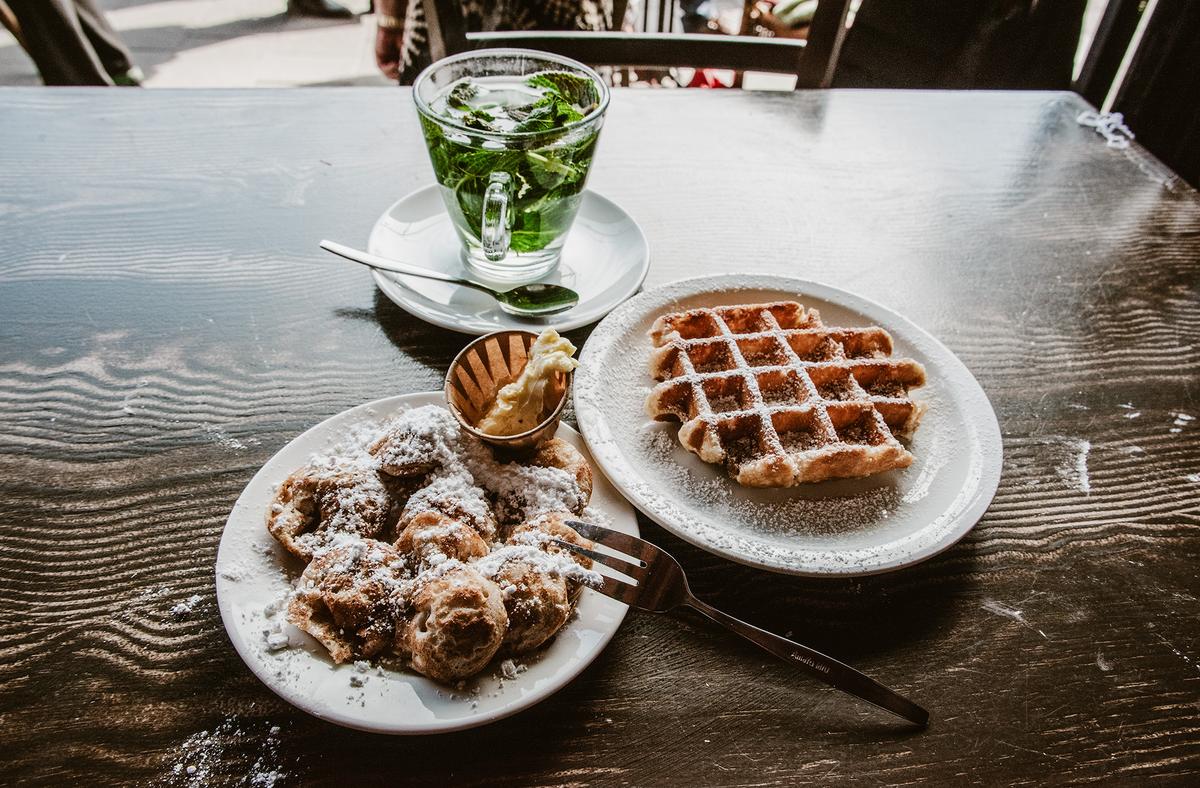
A little more on rich diversity I mentioned above: By some estimates, this city of 665,000 is home to about 170 different nationalities. And they bring with them the cuisine and culture of their home countries, a true, additional advantage. One easy way that I experienced that, just a little, twice in four days? Walking a few blocks from Rotterdam Centraal (an example of “transparent architecture”) to arrive at the city’s Chinatown.There, I lunched on a unique treat, perfect after a long flight. The ‘dynamite sandwich’ has become a local institution, bringing together Suriname, Indonesia, and China in one soft bun: pork, chicken, pickled cucumbers, and sambal. Think Banh Mi, but different. And a tip for North American palates: Ask them to go mild on the curry’s spice.
A Continuing Rivalry
The bad blood between traditionally blue-collar Rotterdammers and their fancier neighbor to the north has run for many centuries. And for people here, it remains a reality. When I got my haircut at Schorem (more on that below), the barbers filled me in on all the details, including the fact that they won’t even say the name “Amsterdam.”Roll on the Water
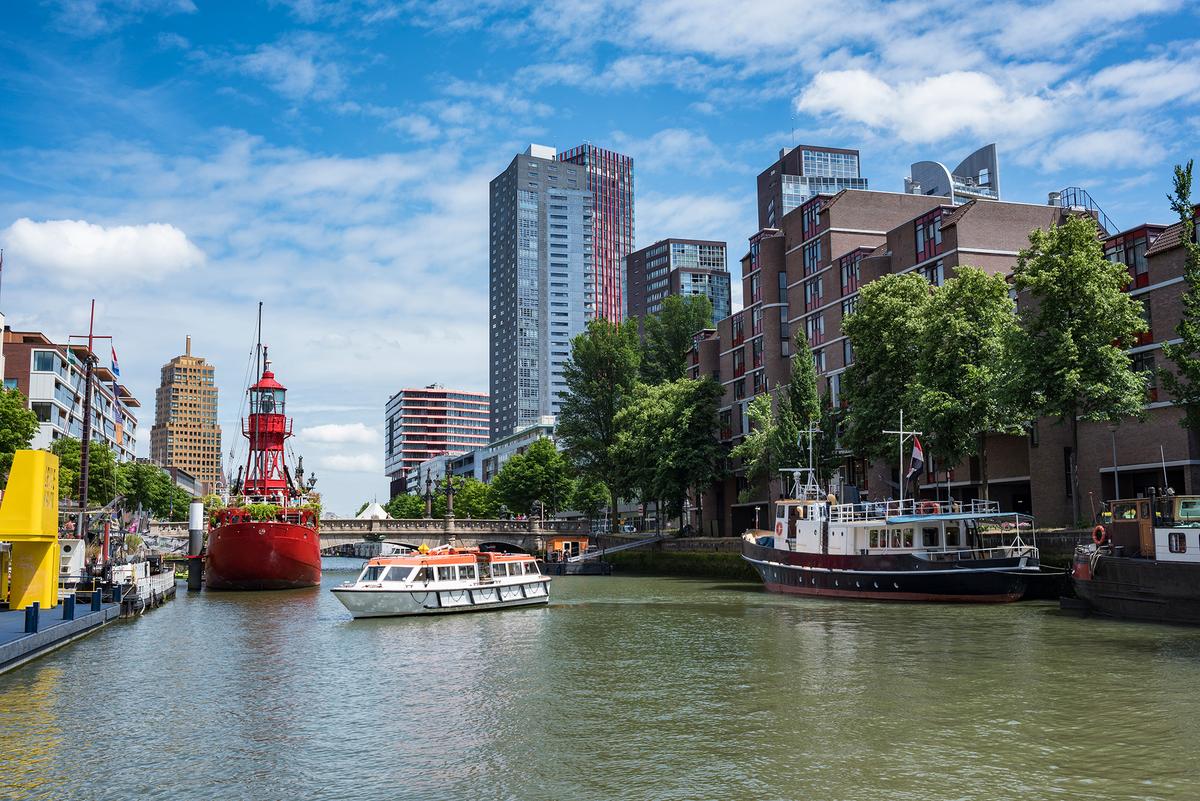
Rotterdam’s port is by far the largest in Europe, stretching some 25 miles. Over many centuries, a series of canals here connected the outside world—via the North Sea—to the rivers that reach deep into the continent. And not just cargo, but emigrants to the New World, too. In the 1800s and early 1900s, thousands upon thousands of people departed from here for North America aboard Holland America Line ships. (You can learn more of this history at the excellent Fenix Museum of Migration, and at Holland America’s former headquarters, now the boutique Hotel New York.)All of this means the best way to see this city in its truest form is from the water. A harbor tour with Spido takes just 75 minutes. But on my recent visit, I saw so much from the sun-baked top deck. Yes, Rotterdam’s glassy skyline and the iconic span of the Euromast. But even more fascinating, getting up close to the working terminals in the port, hearing and almost feeling the industry there, as cranes load all sorts of goods onto ships bound for the ocean.
Best Place in the World for a Haircut?
Years ago, on my very first visit to Rotterdam, I stumbled across a true treasure. Like most of the Netherlands, this city is very flat. Which makes it perfect for a person like me: someone who likes getting 15,000 to 20,000 steps a day but doesn’t love climbing up and down hills.Anyway, feeling rather shaggy, I made my way from De Witte de Withstraat up to the bustling Oude Westen (Old West) district. There, I encountered a true old-school barbershop. Opening the door nonchalantly, I asked if they take walk-ins.
Little did I know that pretty much every high-end, artisanal barber around the world is aware of Schorem. The nicer, loose translation of this word is “riffraff,” and it’s very similar to another Dutch word, scheren, which relates to shaving.
As I got my own straight-razor shave, I noticed people coming into the shop just to take photos. “What’s up?” I asked. My barber explained that they’d become famous for a variety of factors, including a series of YouTube instructional videos, plus their own line of hair products and an actual institute of barbering.
Park City
If there’s any silver lining to Rotterdam’s destruction in the Second World War, it’s the fact that they basically got to rebuild their city from scratch. The “Basic Plan” included big, airy spaces, room for residents to move and breathe. These include several green spaces that I would describe as linear parks, often divided by a calm little waterway, where those who live in nearby apartments spend time, enjoying a picnic with family or just lying on the grass with a good book.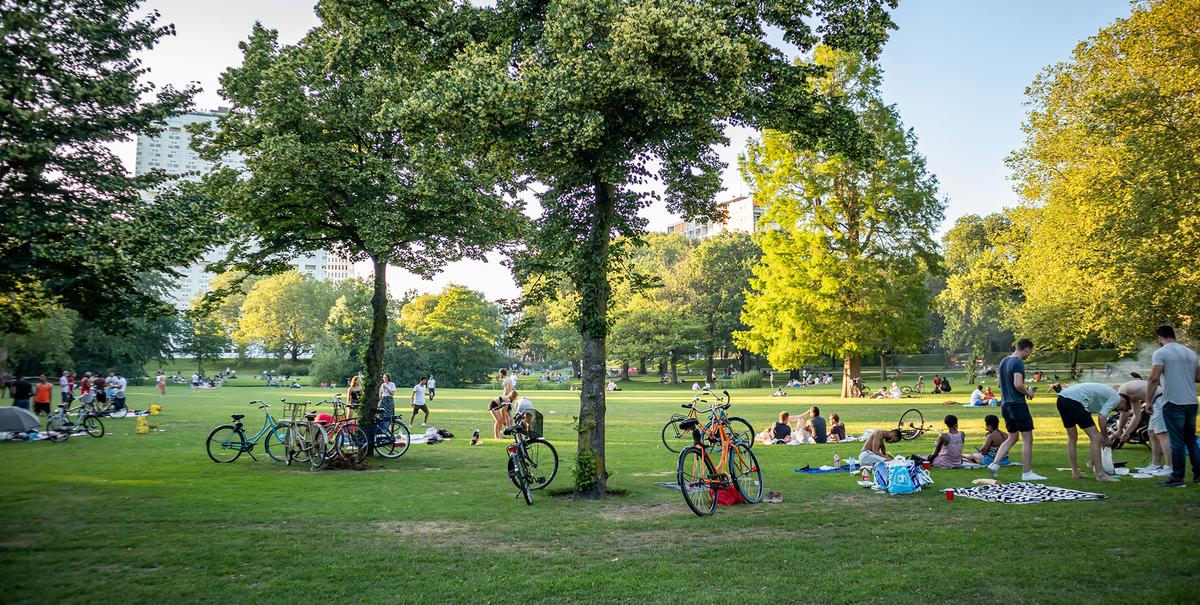
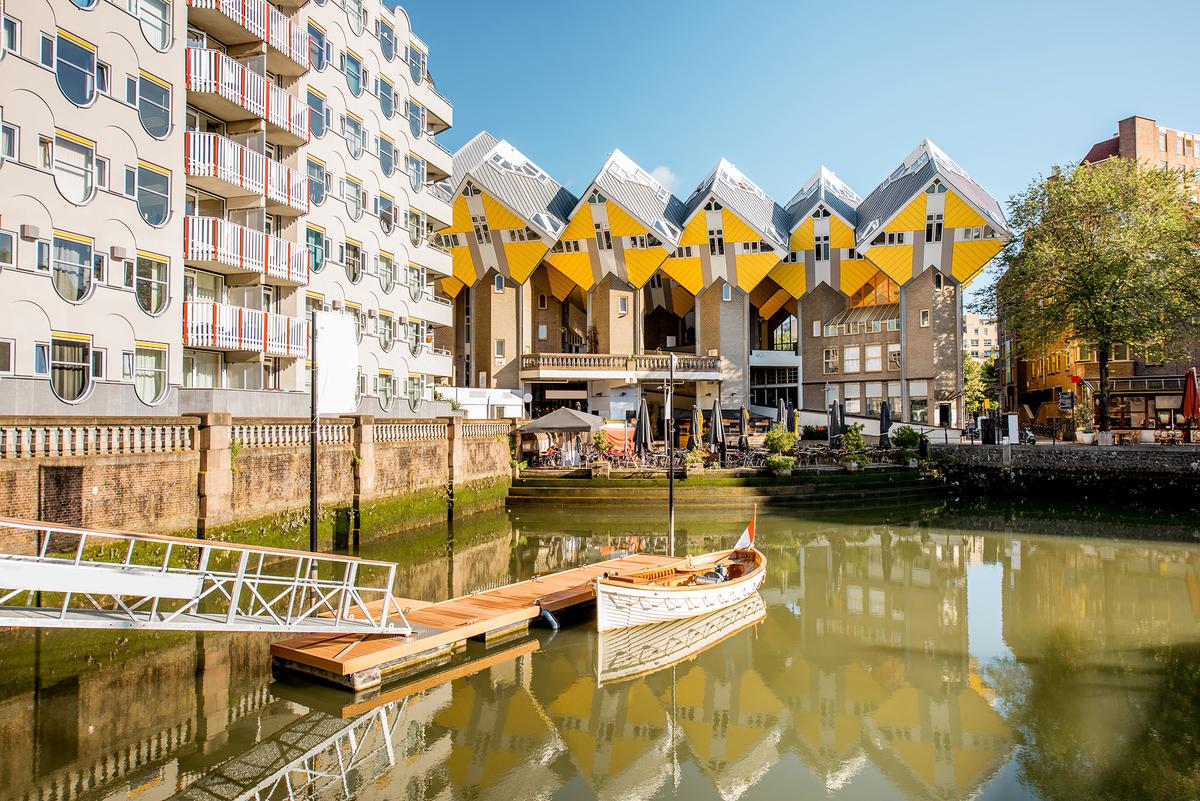
These parks often come as a surprise: Turning the corner off a busy commercial street, you’ll encounter just a slice of the sylvan, amidst it all, one of the other main features of the rebuilding: new, and sometimes strange, architecture. Love them or not, they must be seen to be believed, from the city’s unmistakable cube houses to the huge horseshoe of the Market Hall. (Footnote: A number of the 90-some stalls inside the latter carry some wonderful Dutch products, from rookwurst to Gouda, perfect to grab and head to the nearest park for lunch.)