This copy is for your personal, non-commercial use only. Distribution and use of this material are governed by our Subscriber Agreement and by copyright law. For non-personal use or to order multiple copies, please contact The Epoch Times Reprints.
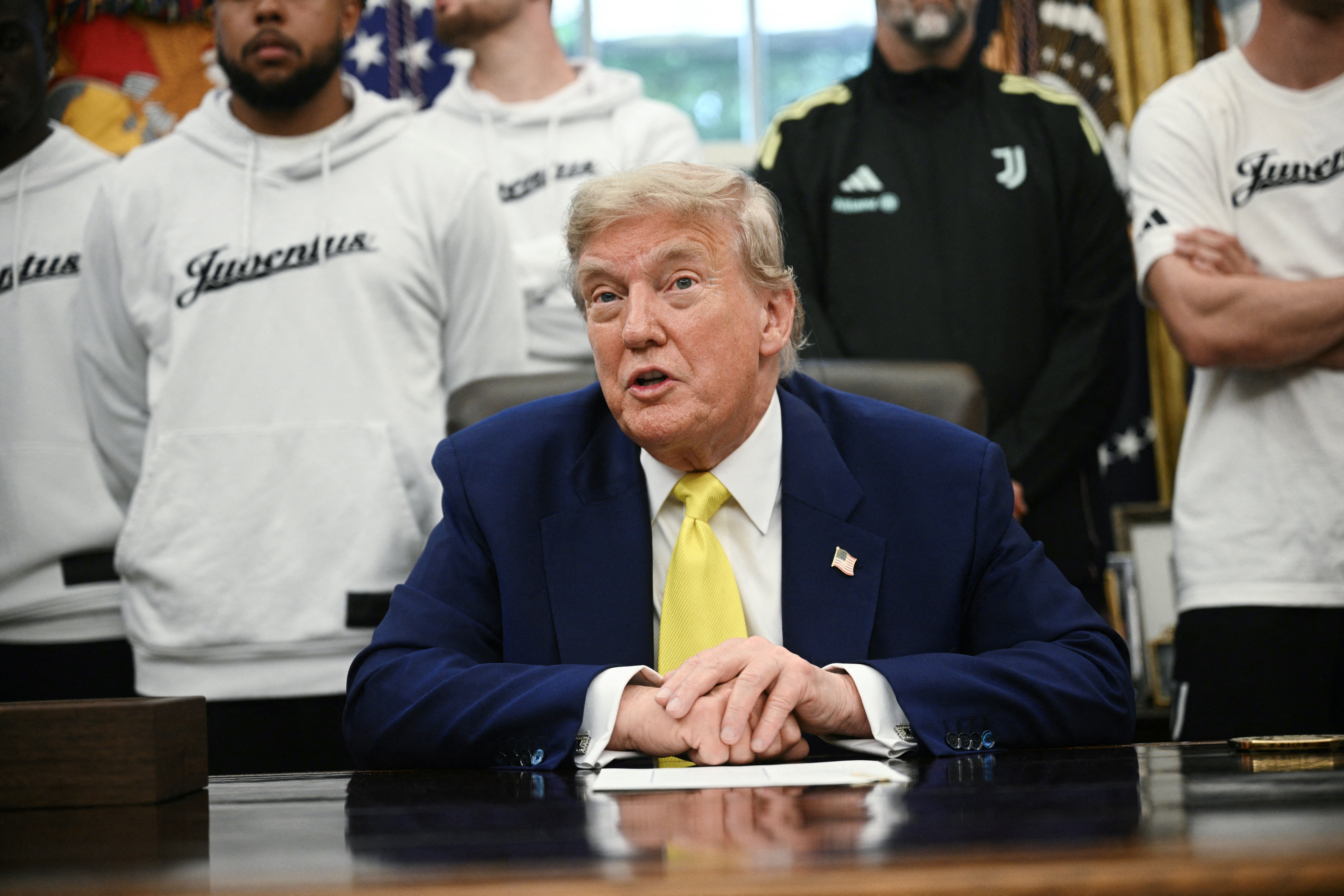
President Donald Trump speaks to the press in the Oval Office of the White House as members of Italian soccer club Juventus pay a visit in Washington on June 18, 2025. Brendan Smialowski/AFP via Getty Images
President Donald Trump speaks to the press in the Oval Office of the White House as members of Italian soccer club Juventus pay a visit in Washington on June 18, 2025. Brendan Smialowski/AFP via Getty Images
Here is the latest
•
Trump’s Meeting in Situation Room Ends: White House Official
•
Trump Says He Believes Iran Was ‘Weeks Away’ From Nuclear Bomb
•
Trump Says First Night of Israel’s Attack Changed Outlook
•
Trump to Hold Meeting in Situation Room
•
Trump: Tucker Carlson Apologized
Trump’s Meeting in Situation Room Ends: White House Official
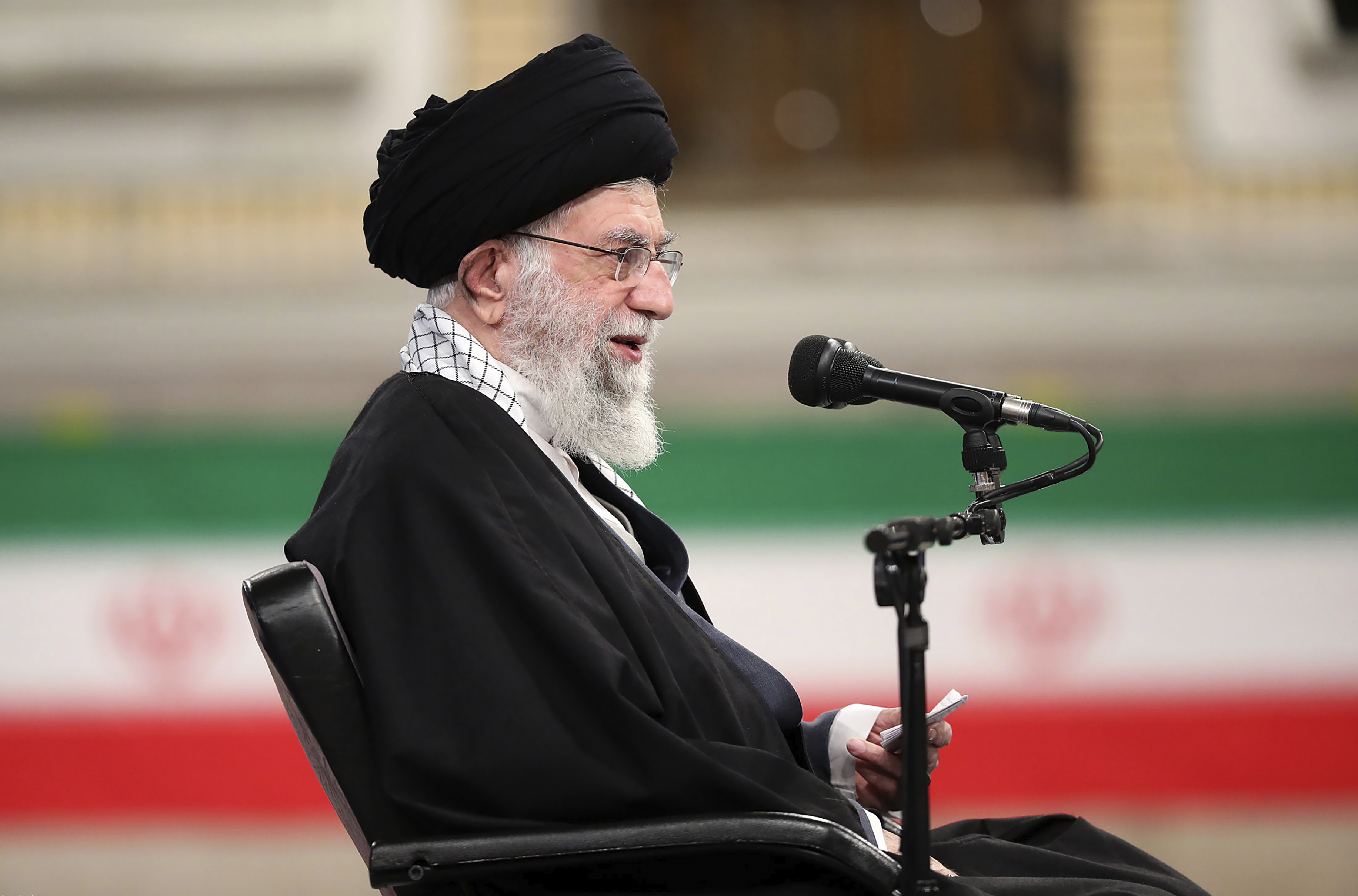
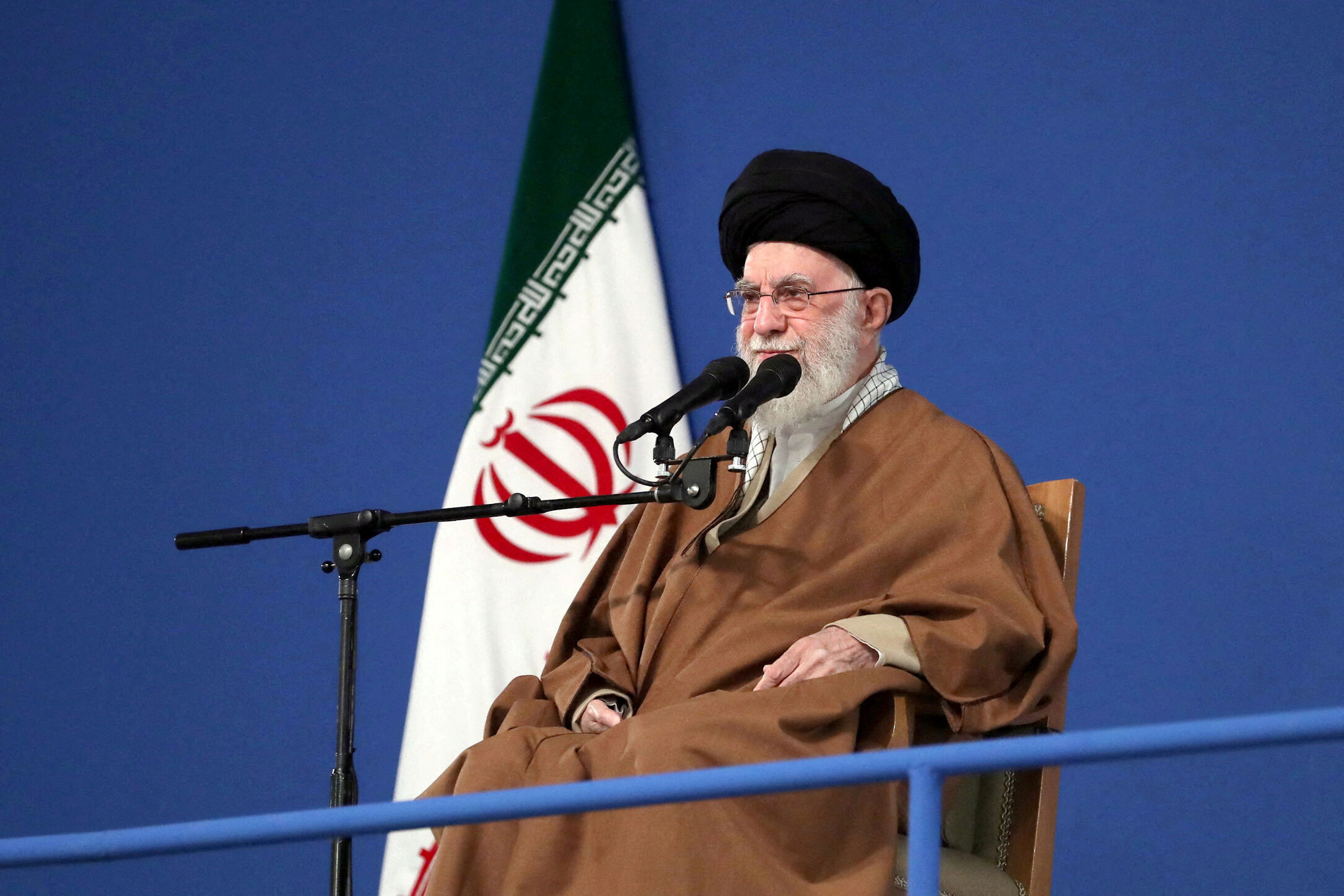
Iranian Supreme Leader Ayatollah Ali Khamenei speaks during a meeting with the army's air force and air defense staff in Tehran, Iran, on Feb. 7, 2021. Office of the Iranian Supreme Leader via AP
Iranian Supreme Leader Ayatollah Ali Khamenei speaks during a meeting with the army's air force and air defense staff in Tehran, Iran, on Feb. 7, 2021. Office of the Iranian Supreme Leader via AP
Iranian leader Ayatollah Ali Khamenei has rejected a call by U.S. President Donald Trump for Iran to unconditionally surrender amid the regime’s aerial war with Israel.
Earlier this week, Trump called for the “unconditional surrender” of Iran’s regime, led by Khamenei, as Israel launched a number of airstrikes against Iranian infrastructure, including its nuclear facilities, in the past five days. Iran has responded by firing hundreds of missiles at Israel.
“The US President threatens us. With his absurd rhetoric, he demands that the Iranian people surrender to him. They should make threats against those who are afraid of being threatened. The Iranian nation isn’t frightened by such threats,” Khamenei wrote in a post on X on Wednesday morning in response to Trump.
Trump Mum on Whether US Will Join Israel’s Attacks on Iran
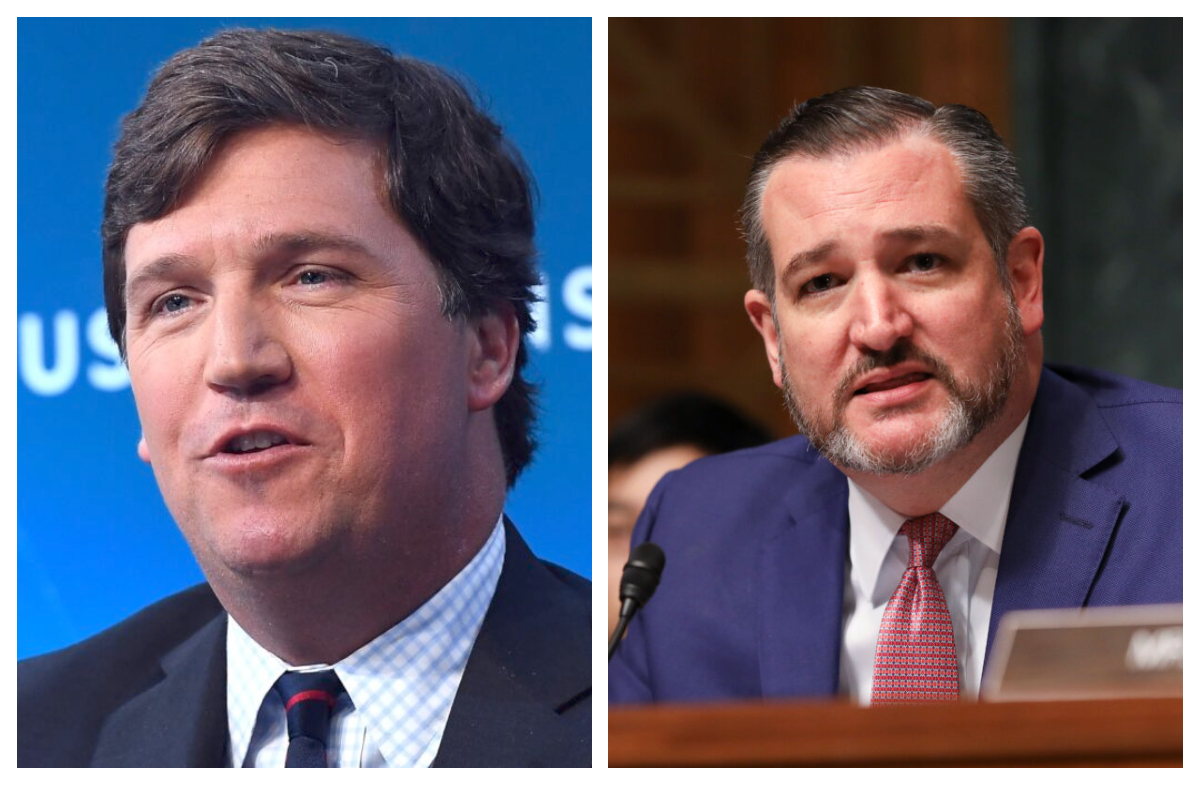
(Left) Tucker Carlson speaks at Time Warner Center in New York City in 2017; (Right) Sen. Ted Cruz (R-Texas) during a Senate Judiciary hearing in 2019. Roy Rochlin/Getty Images; Charlotte Cuthbertson/The Epoch Times
(Left) Tucker Carlson speaks at Time Warner Center in New York City in 2017; (Right) Sen. Ted Cruz (R-Texas) during a Senate Judiciary hearing in 2019. Roy Rochlin/Getty Images; Charlotte Cuthbertson/The Epoch Times
Former Fox News host Tucker Carlson and Sen. Ted Cruz (R-Texas) engaged in a heated discussion over whether the United States should get involved in the Israel–Iran aerial conflict that started this past week.
In a video released by Carlson on June 17 on his X social media account, he asks Cruz a series of questions about Iran and its demographics as the two men escalate their rhetoric. The clip has drawn more than 23 million views, or impressions, on X.
In an earlier X post that appeared to promote the interview, Cruz wrote: “Yep, I stand with Trump. Iran can’t have a nuclear bomb. Make sure you tune in tomorrow.”
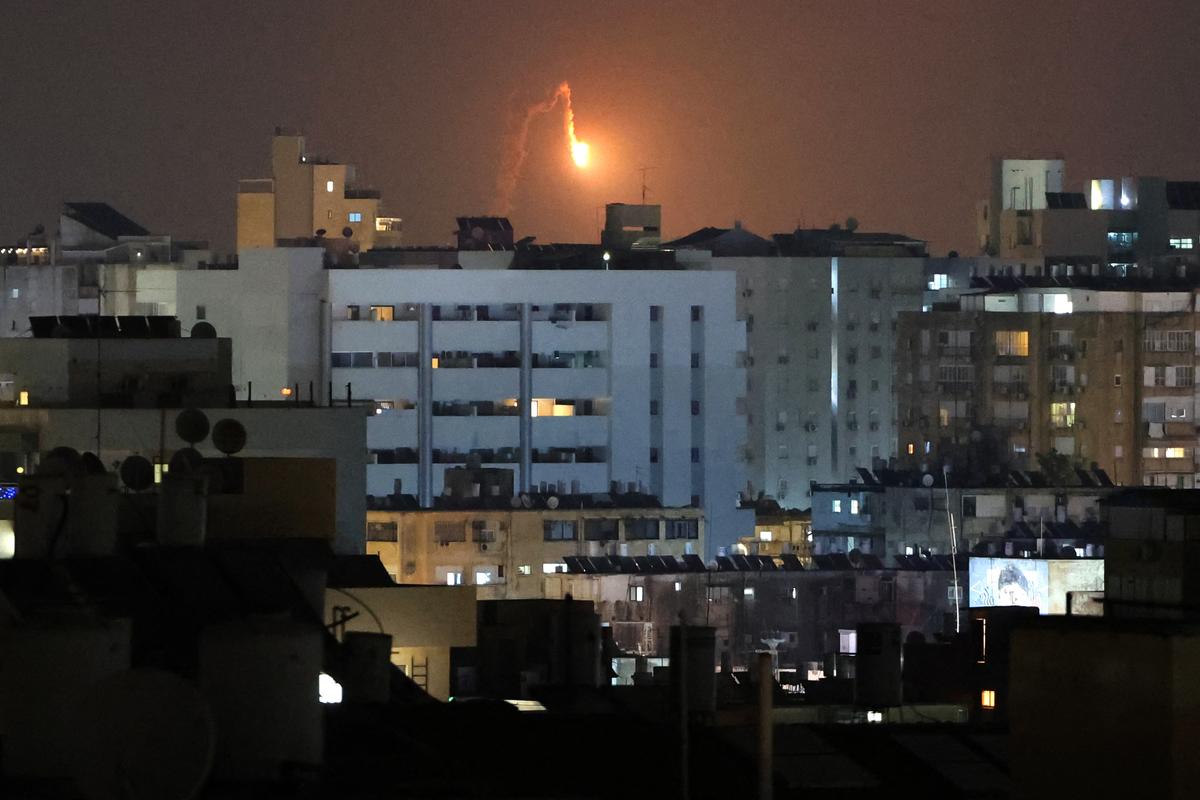
Rocket trails are seen in the sky above the Israeli coastal city of Netanya amid a fresh barrage of Iranian missile attacks on June 17, 2025. Jack Guez/AFP via Getty Images
People take shelter for the night at an underground light rail station in the city of Ramat Gan, east of Tel Aviv, on June 17, 2025. Menahem Kahana/AFP via Getty Images
US-Based Human Rights Group Says 585 Killed in Iran
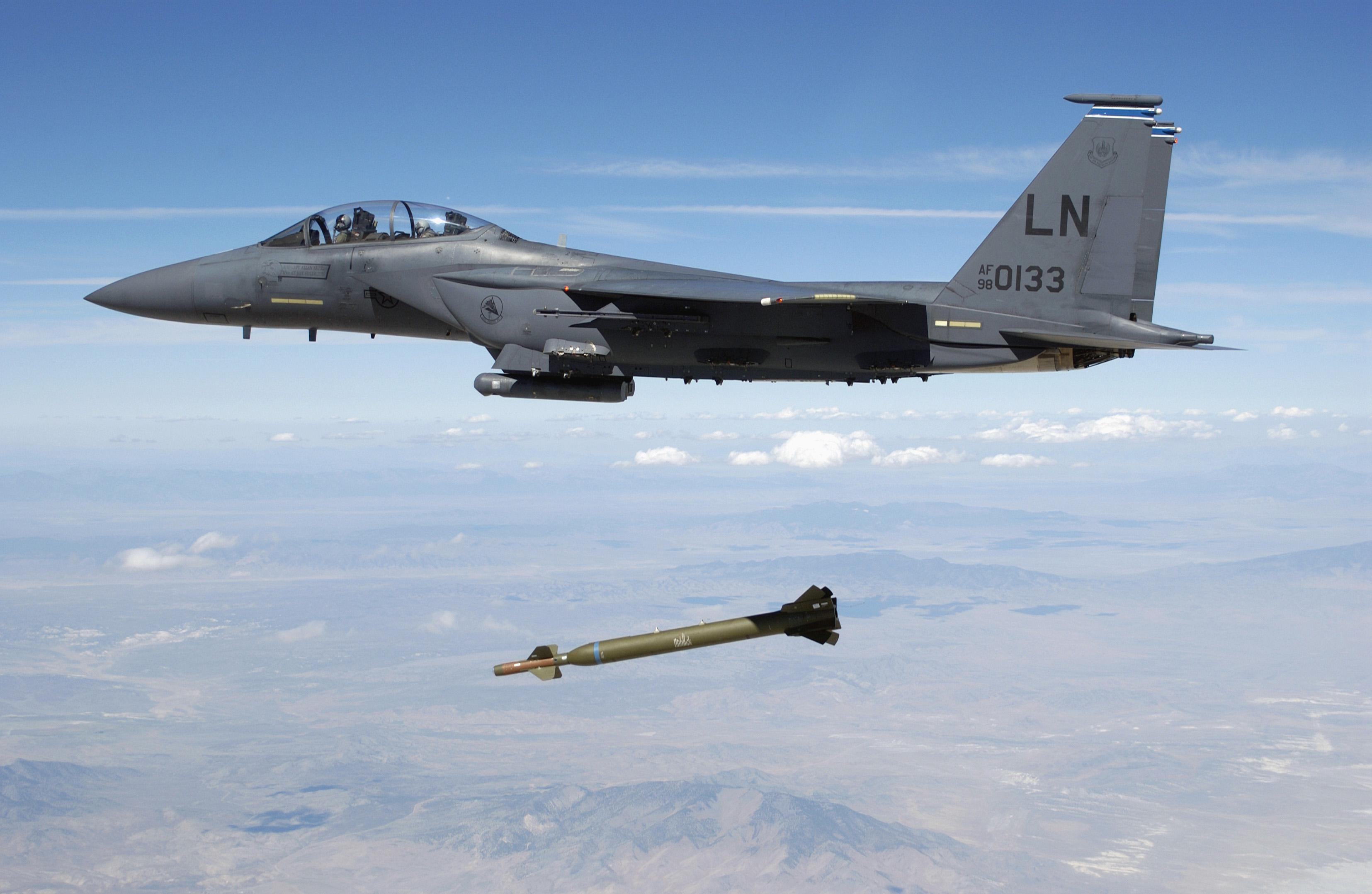
A U.S. Air Force F-15E strike eagle aircraft from the 492nd fighter squadron, Royal Air Force, releases a GBU-28 "Bunker buster" 5,000-pound laser-guided bomb on Aug. 5, 2003. U.S. Air Force via Reuters
A U.S. Air Force F-15E strike eagle aircraft from the 492nd fighter squadron, Royal Air Force, releases a GBU-28 "Bunker buster" 5,000-pound laser-guided bomb on Aug. 5, 2003. U.S. Air Force via Reuters
President Donald Trump is considering using military force to support Israel’s current campaign to destroy Iran’s nuclear enrichment capabilities.
Although Trump has expressed a desire to keep U.S. forces out of the expanding conflict in the Middle East, Israel lacks the military capabilities required to directly destroy some of Iran’s nuclear facilities located deep underground.
To successfully destroy Iran’s Fordow nuclear enrichment plant, which is housed beneath a mountain, Israel requires so-called “bunker-buster” bombs, which are designed to penetrate soil and concrete structures before striking their target.
Iranian Supreme Leader Ayatollah Ali Khamenei speaks during a meeting in Tehran, Iran, March 21, 2025. Handout via Reuters/File Photo
Iranian Supreme Leader Ayatollah Ali Khamenei speaks during a meeting in Tehran, Iran, March 21, 2025. Handout via Reuters/File Photo
Israel’s strikes on Iran on June 13 were conducted with the expressly stated aim of preventing Iran from developing a nuclear weapon.
During what has been code-named “Operation Rising Lion,” a reference to a Biblical verse from the Book of Numbers, the Jewish state hit numerous targets, including some nuclear facilities integral to the Islamic regime’s atomic ambitions.
But how successful has Jerusalem’s lightning strike been in achieving its aims?
Israelis Take Shelter as Iran Launches More Missiles
President Donald Trump on Tuesday called for the Iranian regime’s “unconditional surrender” in the Israel–Iran war and threatened the life of Iran’s supreme leader if he orders missile strikes against civilians or American troops.
In a series of messages on social media on June 17, Trump said “we” have full control of Iranian airspace and stated that the United States knows “exactly where” Iranian Supreme Leader Ali Khamenei is hiding—calling him an “easy target” but saying he would not be killed, “at least not for now.”
“We now have complete and total control of the skies over Iran,” Trump wrote in the first post. “Iran had good sky trackers and other defensive equipment, and plenty of it, but it doesn’t compare to American made, conceived, and manufactured ‘stuff.’ Nobody does it better than the good ol’ USA.”
In a second message, Trump said that the United States knew the exact location of Iran‘s supreme leader and that eliminating him would be easy.
“We know exactly where the so-called ‘Supreme Leader’ is hiding. He is an easy target, but is safe there,” Trump wrote. “We are not going to take him out (kill!), at least not for now. But we don’t want missiles shot at civilians, or American soldiers. Our patience is wearing thin.”
A third post called for Iran’s unconditional surrender.
A request for clarification sent to the White House on whether Trump’s posts reflect direct U.S. military involvement in Iranian airspace—and imply possible escalation—was not immediately returned. In response to a similar inquiry, the Pentagon deferred to the White House.
Trump’s remarks come a day after he called for the immediate evacuation of Tehran, repeating the warning that Iran must not obtain a nuclear weapon and suggesting the country could be headed for a catastrophe by refusing to make a deal on nuclear disarmament.
The president’s Tuesday remarks dovetail with statements made on June 16 by several Israeli officials, who declared the establishment of air superiority over Iran.
Israeli Prime Minister Benjamin Netanyahu said on Monday that Israel’s control of Iranian airspace was “a game-changer,” while national security adviser Tzachi Hanegbi said pilots could operate “against countless more targets” over Tehran, thanks to the fact that Iran’s air defense systems have been compromised.
The Israeli Air Force said in a Tuesday post on social media that, after five waves of attacks, more than 70 Iranian air defense batteries have been destroyed, delivering “air superiority” over Iranian forces.
Meanwhile, Trump’s Tuesday remarks indicating that the United States may be getting more directly involved in the conflict come amid questions about whether Israel will be able to completely knock out Iran’s nuclear program without Washington joining the campaign with strategic bombers that can drop ordnance able to penetrate sites buried deep underground.
Emily Harding of the Washington-based Center for Strategic and International Studies told Reuters that it is widely assumed that Israel cannot on its own completely eliminate the deepest buried parts of Iran’s nuclear program.
However, “Israel has strongly hinted that it has more capability than that conventional wisdom would suggest,” she said. “For example, the ability to operate freely over the target allows for multiple sorties that could do a lot of damage.”
Israel has struck multiple Iranian nuclear sites in recent days, but has so far failed to destroy the Fordo uranium enrichment facility, located deep underground. Military analysts say taking the facility out would likely require the GBU-57 Massive Ordnance Penetrator—a 30,000-pound bunker-busting bomb currently deliverable only by the U.S. B-2 stealth bomber. Israel does not possess either the munition or the aircraft required to deploy it.
Some experts argue that only boots on the ground will be able to finish the job of dismantling Iran’s nuclear weapons ambitions. Andreas Krieg, a senior lecturer at the School of Security Studies at King’s College London, told Reuters that Israel has achieved “quite a lot of operational and tactical successes” in its campaign thus far, but that “translating that into a strategic success will require more than what air power can deliver.”
Krieg said even the heaviest U.S. bunker-busting bombs might struggle to penetrate Iran’s deepest sites, suggesting special, commando-style forces might be needed on the ground.
Meanwhile, Israeli leadership appears to be contemplating regime change in Iran. In remarks to Fox News on Monday, Netanyahu said Israel’s primary war aim is to thwart the nuclear and missile threats that Iran poses toward Israel, but he added that this weakens the regime and provides an opportunity for the Iranian people to topple the authoritarian rule of the ayatollahs.
The regime in Iran is “very weak” and could well collapse as a consequence of Israel’s military actions, Netanyahu said, adding that given the opportunity, “80 percent of the people would throw these theological thugs out.”
“We’re geared to do whatever is necessary to achieve our dual aim, to remove ... two existential threats—the nuclear threat and the ballistic missile threat,” Netanyahu told Fox News, adding that Israel is trying to “protect the world from this incendiary regime.”
Trump has repeatedly stressed that Iran cannot be allowed to possess a nuclear weapon. But while he has called for a negotiated settlement to the conflict—urging Iranian leaders to “make a deal”—he has also warned that failure to do so would mean Israeli attacks would “only get worse” and possibly lead to wider destruction in Iran.