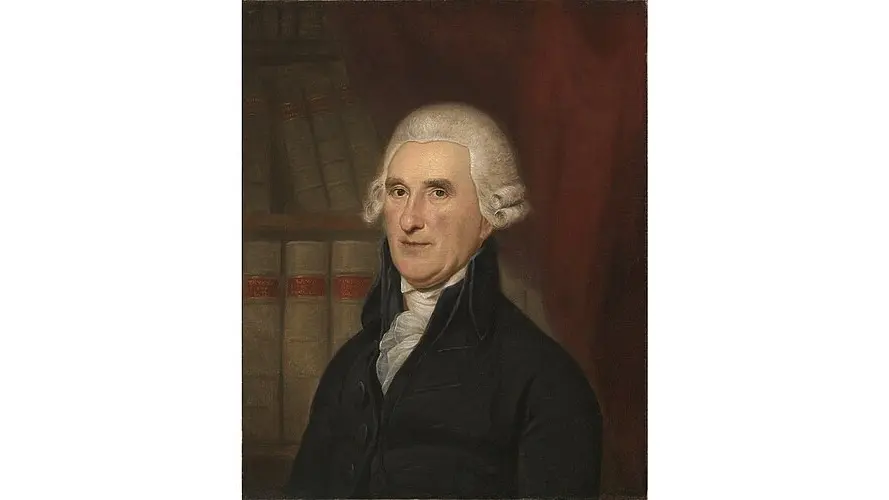
The Founding Fathers were a diverse group of men possessing a wide range of talents and experiences. Some were charismatic orators; others were influential writers whose words inspired their fellow countrymen. Yet others were successful merchants with a talent for logistics and organization. Samuel Huntington of Connecticut was none of these.
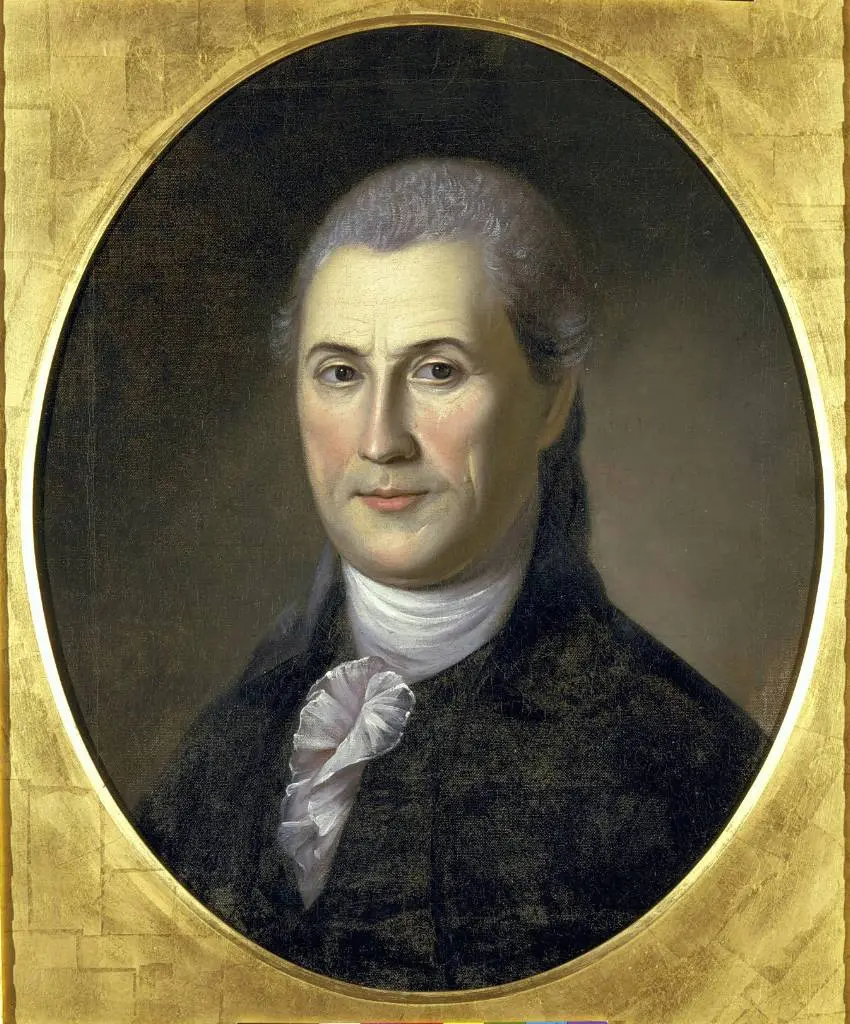
An industrious and ambitious farmer’s son, Huntington was respected by his fellow delegates for his diligence, work ethic and composure in debate. A longtime public servant, his crowning achievements were signing the Declaration of Independence and the Articles of Confederation, as well as serving as the President of the United States in Congress the assembled when the Articles of Confederation passed.Serving 651 days as president of Congress, Huntington was the longest tenured man in that position after John Hancock. His career accomplishments are remarkable considering he received little formal schooling and was largely self-educated.
A Bootstrap Education
Samuel Huntington was born on July 16, 1731, the fourth child and second son born to Nathaniel and Mehetabel Huntington. His older brother Nathaniel and other brothers went to college, while Samuel stayed home to help his father on the family farm. At age 16, he was apprenticed to a cooper while still helping his father. However, Huntington’s mind and ambition were as fertile as the rich Connecticut soil, and, when possible, he eagerly pursued self-studies, focusing on Latin and the law.The Reverend Ebenezer Devotion opened his personal library to the ambitious young man, who later became his son-in-law. As Huntington narrowed his field of interest to the study of jurisprudence, he borrowed books from local attorneys and taught himself the law. Huntington was admitted to the Connecticut bar at the age of 23, and before age 30, he moved to the larger town of Norwich where there was more work for an industrious young lawyer.
After settling in Norwich, Huntington married Martha Devotion, Rev. Devotion’s daughter, in 1761. The Huntingtons never had children of their own. However, the couple raised their niece and nephew as their own. Martha’s sister Hannah married Samuel’s younger brother Joseph and had three children. When Martha and Joseph died, the Huntingtons took in the two younger children.
In May 1765, Norwich voters elected Huntington to the colony’s lower house of the General Assembly, launching a political career he maintained for the remainder of his life. He was also appointed King’s Attorney for Connecticut but resigned that same year due to his opposition to the British Parliament’s Stamp Act.



A Staunch Advocate for Independence
Huntington was never a political radical like Samuel Adams and John Hancock, but with each successive taxation act on the colonies he grew into a vocal supporter for independence. In January 1776, he joined Roger Sherman and Oliver Wolcott as Connecticut delegates to the Second Continental Congress.Unfortunately, Huntington contracted smallpox that same month and was unable to resume his congressional duties until late February. Later that summer he joined his fellow state delegates in voting for independence, signing the engrossed document on Aug. 2, 1776. During his years in Congress, Huntington served on several committees and enjoyed widespread support among his fellow delegates, including prominent Pennsylvania delegate Dr. Benjamin Rush. Rush considered Huntington “a sensible, candid and worthy man, and wholly free from State prejudices.”
President of Congress
During his tenure as president of Congress, Huntington worked diligently to fund the war effort by encouraging states to honor levies for men, weapons, and supplies. He also supported the need for a national constitution. His efforts paid off on March 1, 1781, when the Articles of Confederation were ratified by all 13 states, three and a half years after Congress formally adopted them.Post-Congressional Career
Huntington’s service as a justice on the Connecticut Supreme Court overlapped with his time serving in Congress. In 1784 he was named Chief Justice of the court and was also elected the state’s lieutenant governor that same year. In 1786 he was elected governor, a position he held for 11 terms. It was at this time that he resigned as chief justice.As governor, Huntington did much to shape Connecticut and the American Colonies. He presided over Connecticut’s state convention for ratification of the U.S. Constitution; supported the Northwest Ordinance that created a national solution for settlement and governance issues in the Northwest Territory; promoted civil reforms supporting improvement to schools and roads; pushed for a more progressive civil legal system, and advocated for strict financial reform. Huntington also supported abolishing slavery and authorized the construction of a new state house in Hartford.
The ambitious young man who never attended college received honorary degrees in 1780 and 1781 from Yale, Princeton, and Dartmouth in recognition for his contributions to his country.
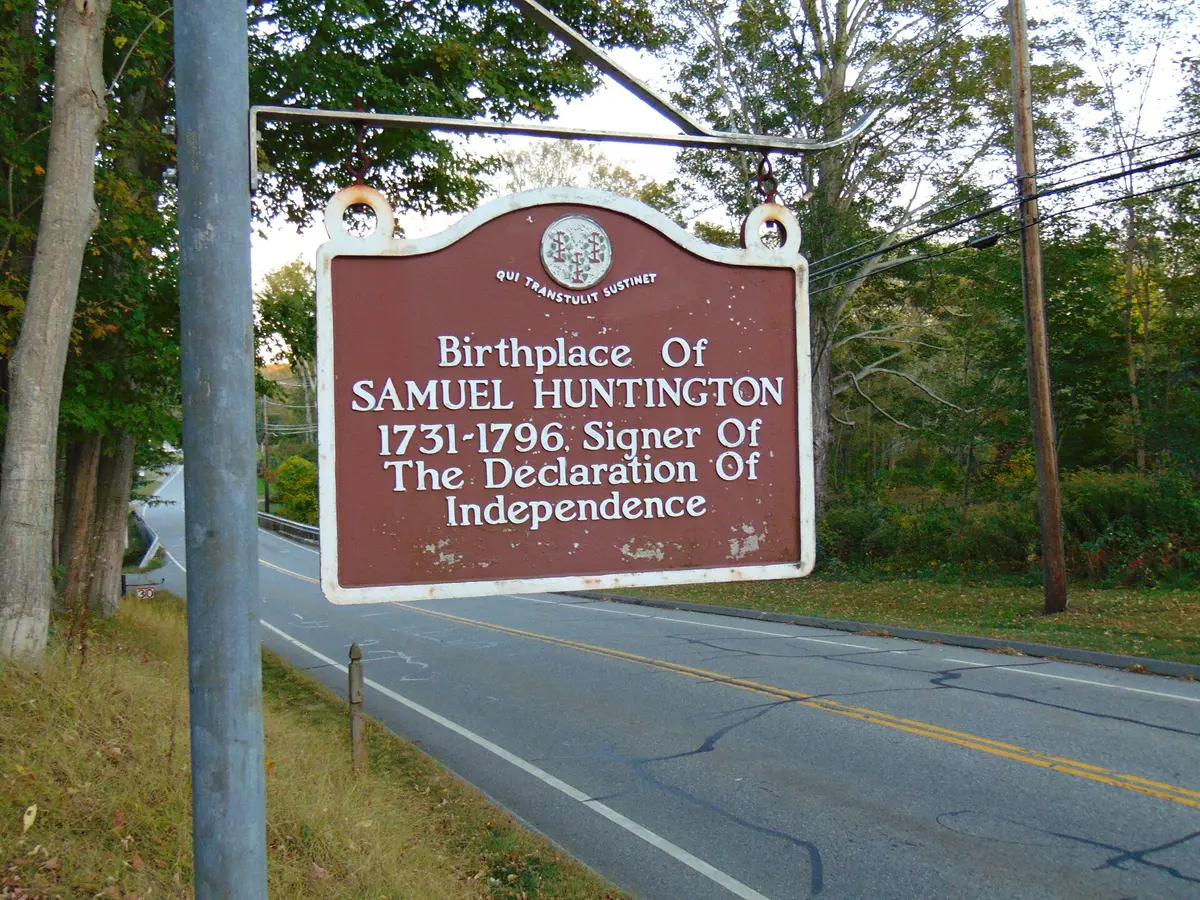
The industrious Founding Father who lifted himself up by his bootstraps as a young man died with his boots on at age 64 when he passed away nine years and a month into his 11th term as governor.
Largely forgotten today, Samuel Huntington was a devoted, selfless Founding Father who deserves remembrance for a career that spanned colonial times, the Revolution and the early days of the Republic.