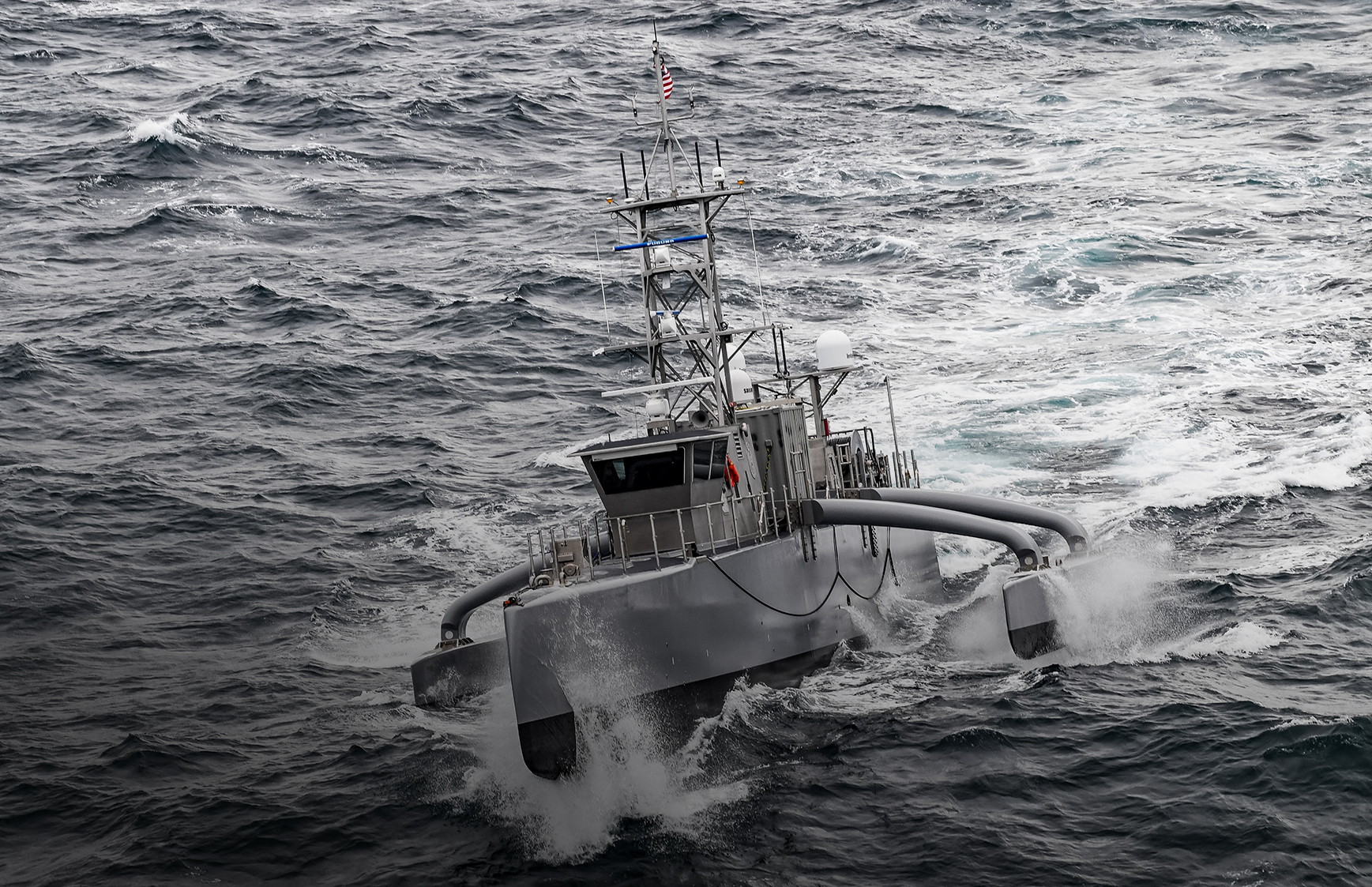

As U.S. military planners and policymakers continue to develop strategies for a potential conflict with China, the U.S. Navy has taken steps to develop a family of highly adaptable drone attack boats.
These drone attack boats could serve as a workhorse in an Indo-Pacific conflict and help address some of the challenges U.S. military planners face in the region.
The program documents state that the Navy is seeking a “non-exquisite solution” for up to three different vessel variants, ranging in size and payload.
The Navy is also looking for solutions that are easily repairable at facilities around the world, with a preference for designs that are compliant with arms export regulations. Such design characteristics suggest the United States is seeking a solution that could become ubiquitous across a network of allies and partners.
A Navy spokesperson told The Epoch Times via email that this adoption of standardized containers means the drone attack boat could be “rapidly reconfigured to meet different operational needs.”
One of these drone boats could potentially move from a surveillance role to a combat role, all with a change of the standardized containers it carries.

Along with being highly standardized and accessible to allied users, the Navy wants a vessel it can start making quickly. Among the service’s top-listed priorities is to begin fielding vessels within 18 months of granting an award for a prototype.
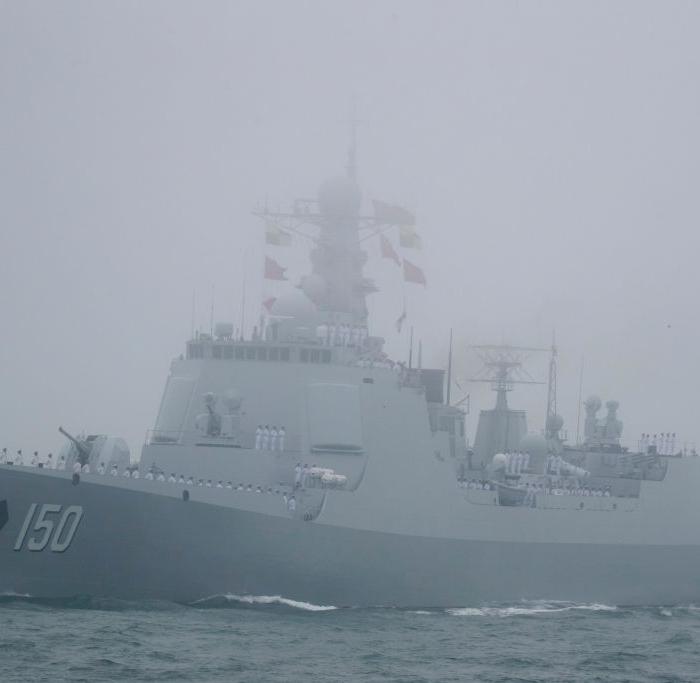
Of the three potential drone-boat variants, the first vessel the Navy is seeking is a MASC that could potentially carry at least two standardized 40-foot equivalent unit (FEU) containerized payloads, each weighing 36.3 metric tons and requiring up to 75 kilowatts of power.
The Navy is also looking for a high-capacity MASC variant, capable of carrying a minimum of four FEUs, each of which weighs up to 36.3 metric tons and requires up to 50 kilowatts of power.
The Indo-Pacific Strategy
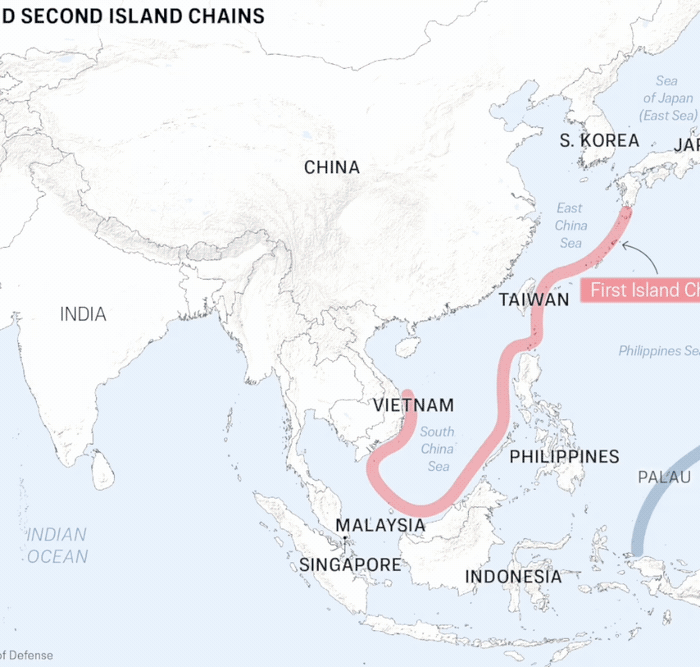
Beijing’s rapid military build-up in recent years has expanded the Chinese military’s arsenal of weapons that can be used for what analysts refer to as an anti-access or area denial strategy. With such a strategy, the Chinese regime could swiftly lay claim to a stretch of ocean and then deploy anti-ship and anti-aircraft weapons, raising the cost for anyone seeking to challenge its expansionist claims.U.S. military planners have tried to figure out how they would break into these Chinese maritime control zones and still maintain their situational awareness, support their supply lines, and bring their own weapons to bear, while minimizing losses.
In recent years, these U.S. planners have built upon a concept known as distributed maritime operations, wherein relatively small dispersed forces can spread out and hit their adversaries from many different angles, while reducing the potential cost when those adversaries fire back.

Steven Wills, a strategist and policy analyst with the Navy League’s Center for Maritime Strategy, said the drone attack boat program shows that the Navy is taking steps to realize its concept for countering the Chinese regime.
“It opens up the Navy to actually support its distributed maritime operations concept ... where the idea is you want to spread the fleet out more so it’s harder to target it with missiles,” Wills told The Epoch Times.
“That’s harder to do if you have to buy a bunch of manned ships to do that. But maybe you can buy a bunch of unmanned ships and get that same distribution while putting fewer sailors at risk.”
Wills remarked that a handful of vessels as described in the Navy program documents could also serve as an escort for a single destroyer, working in conjunction with the larger manned warship to provide additional long-range firepower. They could also divert enemy attacks away from the main manned vessel.
Eureka Naval Craft is among the companies that have responded to the Navy’s solicitation for the drone attack boat program. Bo Jardine, the company’s CEO, said the planned vessels would take on the numerous smaller tasks that would tie up a traditional manned warship.
“We’re not advocating getting rid of the big ships,“ Jardine told The Epoch Times. ”In fact, we think they have a place to play. But they also need little friends to deal with things that they’re challenged with.”
World War II Concepts Reimagined
As U.S. military planners try to navigate the best course in a potential conflict in the Indo-Pacific region, they’re drawing from lessons learned during World War II, when U.S. forces fought Imperial Japan for control over the same region.Given the parallels between World War II’s Pacific theater and the emerging conflict scenario with China, the Navy’s new attack drone boat program could put a modern spin on some of the ideas used during the last major conflict in the Indo-Pacific.
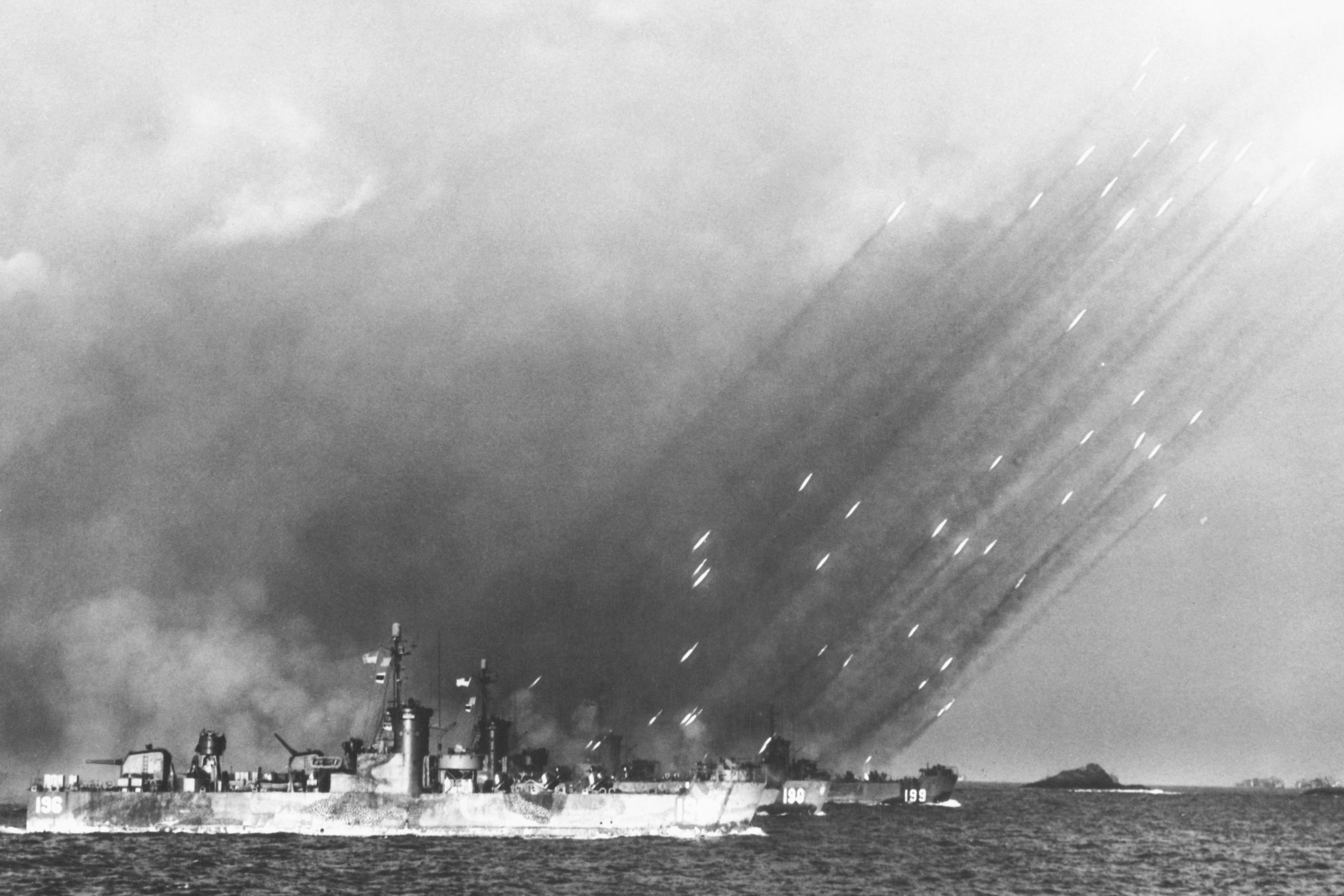
Jardine likened the new drone attack boat program to the patrol torpedo (PT) boats that the U.S. military used throughout the Pacific theater during World War II. U.S. forces frequently used these PT boats to harass the ships used to resupply Imperial Japanese forces across the region’s island chains.
“The one thing the Japanese were never able to deal with in World War II were PT boats. These are the modern-day PT boats,” Jardine said.
Wills agreed that the PT boat tactics of World War II provide a valuable way of conceptualizing the Navy’s new drone boat program.
“I think the reference to the PT boat is pretty good—a rapid force that’s always out there launching weapons at you that you have to allocate additional targeting and your own weapons to deal with,” he said.
“So that’s certainly one of the use cases, and that’s good to think about it that way.”