Anti-Chinese Communist Party (CCP) activist Jie Lijian was beaten unconscious by three men in New York and remained under intensive hospital care after losing consciousness for more than two days—the latest in a series of assaults and suspicious incidents he has faced while protesting the Chinese regime and exposing people he identifies as CCP-linked actors in the United States.
Three Asian men followed Jie near the Queens Botanical Garden in Flushing on July 15 as he tried to reach a bus, according to Jie.
The men caught up with him and repeatedly struck his head and legs with a club-like object. Bleeding and disoriented, Jie said, he managed to reach a bus before losing awareness.
When he awoke more than two days later, he was in a hospital intensive care unit. Doctors told him that emergency personnel found him severely injured aboard the bus and transported him to the hospital.
The China Democracy Party International Alliance, or CDPIA, an overseas Chinese pro-democracy organization chaired by Jie that advocates an end to CCP rule through peaceful political change, accused the Chinese Communist Party of hiring gang members to carry out the attack.
Jie said the concentration of his legal activity immediately before the New York assault led him to believe the beating was intended to stop him from supplying evidence and pursuing cases involving Chinese government institutions and people accused of working for Beijing.
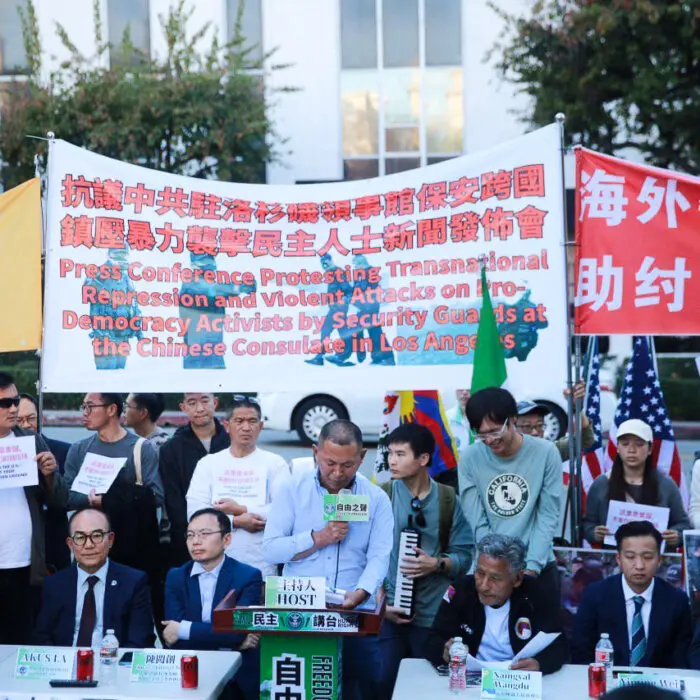
The Los Angeles County Superior Court complaint, case No. 26STCV21753, also names security guard Xian Wu, JK Patrol SVC, and unidentified defendants. It alleges battery, assault, intentional infliction of emotional distress, premises liability, and negligent hiring, supervision, and retention.
The action arose from a Jan. 4 protest outside the Chinese Consulate in Los Angeles, where Wu used pepper spray against demonstrators. Eight protesters said they were struck, and several required hospital treatment. Wu was arrested following the incident.
Jie said the July 9 step formally brought the Chinese government and consulate into the action and that summonses were being transmitted under the Hague Service Convention.
Also on July 9, the U.S. Attorney’s Office for the Southern District of New York informed Jie that law enforcement had identified him as a victim or potential victim in the criminal case against Yuanjun Tang.
Federal prosecutors said Tang secretly accepted assignments from China’s Ministry of State Security and supplied information about U.S.-based dissidents and pro-democracy activities, including names, photographs, and recordings of participants.
Jie said prosecutors continued asking him to provide evidence and statements connected to the case.
Also on July 9, the Los Angeles City Attorney’s Criminal Branch sent Jie a reminder to submit evidence requested in connection with the January consulate incident.
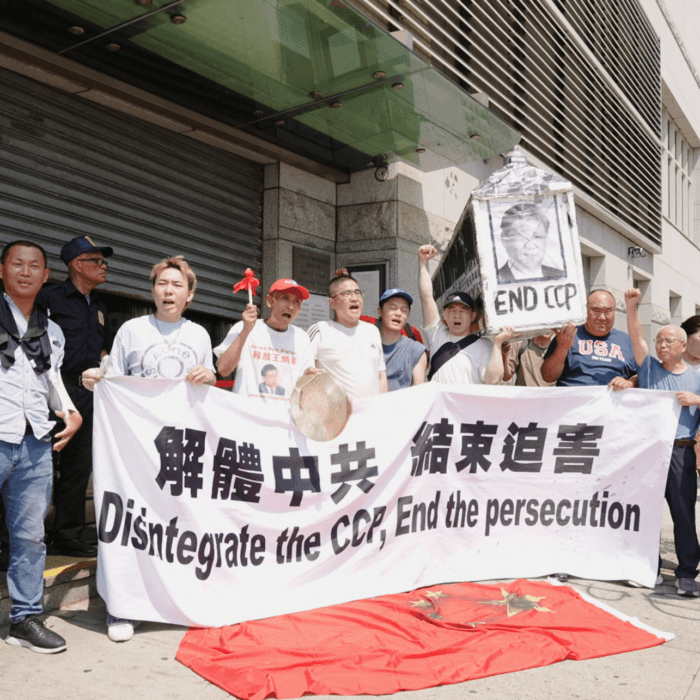
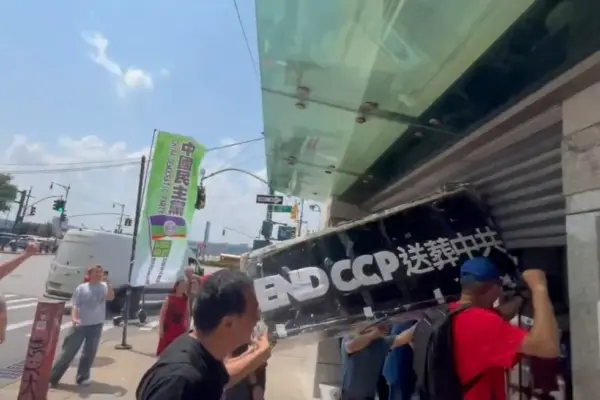
Protesters carried a coffin marked “End CCP” toward the entrance and chanted for an end to communist rule.
Jie wrote before the demonstration that Chinese people who had suffered under the CCP had waited too long for the Party’s “funeral.”
Years of Attacks, Threats, and Surveillance
The July 15 beating followed years of incidents in which physical attacks were accompanied by political insults, threats against Jie’s family, apparent surveillance, or signs that others had learned about an attack before he had disclosed it publicly.
In November 2021, a vehicle struck Jie while he was cycling in Rowland Heights, California, destroying his bicycle and phone and leaving him injured. Jie said the driver called him a “traitor” and warned him to watch what he did.
Two days later, a Telegram account using the name “Zhuang Sir” threatened Jie and his family, referred directly to the collision, and said the driver should have crippled his legs. The account also sent an image of a knife.
The messages threatened that Jie and his family would “die badly” and referred to his father in China.
Two months later, Jie said, a car forced him toward the roadside as he traveled to a Walmart in Rowland Heights.
A large man emerged carrying a long knife and stabbed at him five or six times. The blade pierced Jie’s lower jaw, causing severe bleeding and leaving him in critical condition.
The stabbing came two months after the collision and the threats that had referred to Jie as a traitor and the warning to his family.
In August 2023, Jie said an unknown attacker struck him from behind in the head while he was walking outside Los Angeles, knocking him unconscious.
While Jie was recovering, Chinese- and English-language posts falsely announced his death, accompanied by fabricated funeral-hall images and purported memorial videos.
Jie believed the material had been prepared in connection with the assault.
He also said people repeatedly photograph or film him at close range during demonstrations.
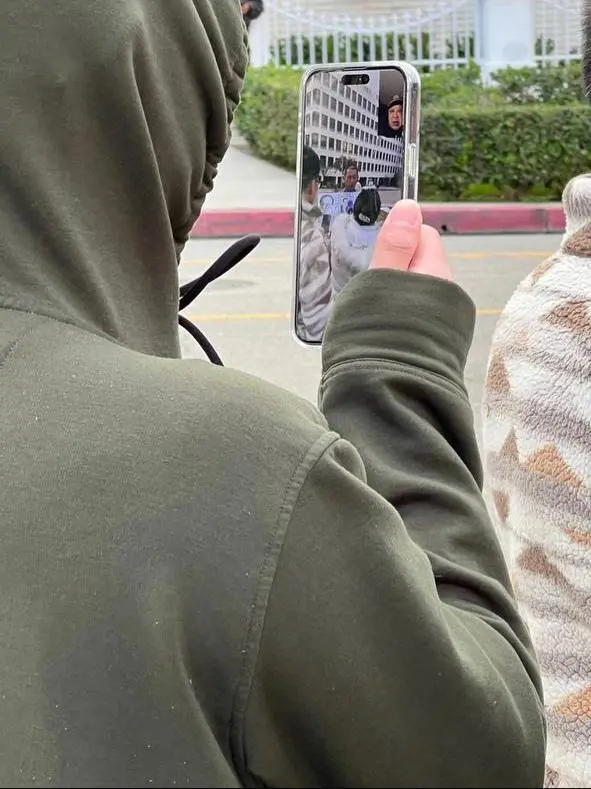
During a December 2022 protest outside the Chinese Consulate in Los Angeles, a hooded man wearing a mask livestreamed Jie through a video call.
A photograph of the man’s phone screen shows Jie at the protest while a Chinese man was on the receiving end of the call wearing a Chinese police uniform.
Jie said the encounter led him to suspect that his image and political activities were being relayed to Chinese law enforcement.
Struck Twice on a Remote Utah Road
Less than seven weeks before the New York beating, Jie survived another incident he believes was connected to his activism.
Jie spent May 26–28 protesting Chinese Foreign Minister Wang Yi during his visit to the United Nations in New York and helping coordinate June 4 Tiananmen Massacre commemorations.
On May 31, while traveling back toward Los Angeles, he encountered another vehicle on a remote Utah road.
Jie said he moved aside to let the vehicle pass. Instead, he said, the driver struck the rear of his car, then hit the front before fleeing.
The hits pushed Jie’s vehicle to the opposing lanes, broke through a roadside barrier, and came to rest in open terrain.
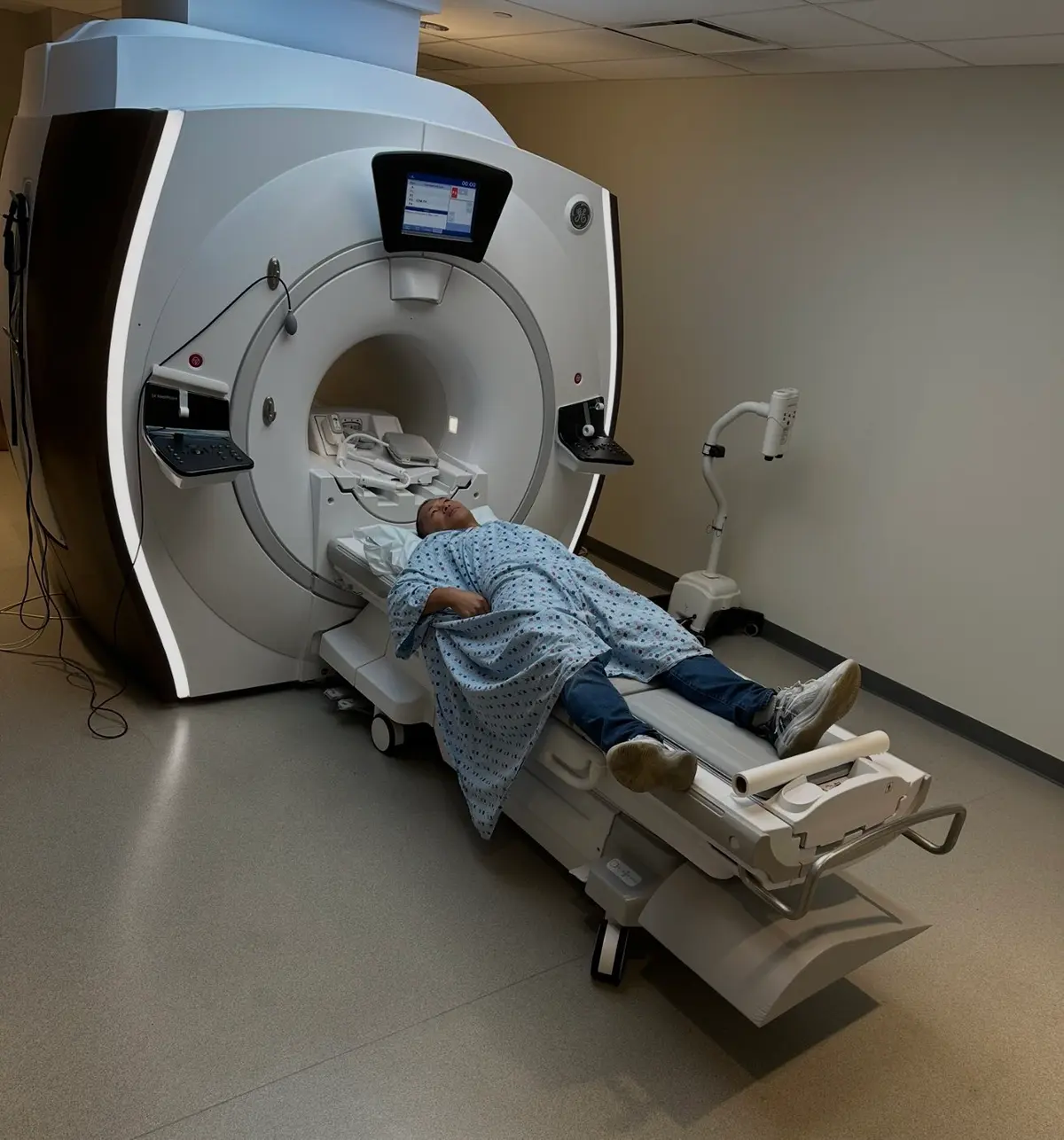
Jie suffered a fractured arm as well as head and chest injuries.
The detail that most disturbed him came afterward.
Relatives in China called and urged him to return, telling him he was unsafe abroad.
“I had not contacted my family directly,” Jie said. “How did they know that something had happened to me?”
Jie said the call deepened his suspicion that pressure on his relatives in China was connected to the incidents he was experiencing in the United States.
From Petitioning to Anti-CCP Activism
Jie’s opposition to the CCP grew out of his family’s efforts to petition Chinese authorities.
He said his mother went missing during that struggle and his father was left disabled.
Jie continued seeking answers and redress from authorities. He said officials repeatedly detained him over his petitioning and at one point confined him in a psychiatric facility.
He fled China in 2019, traveling through Africa and South America before reaching the United States.
In the years that followed, he became a prominent organizer of Chinese pro-democracy and anti-CCP demonstrations.
His activities have included commemorations of the 1989 Tiananmen Square massacre, rallies supporting Falun Gong practitioners and political prisoners, protests outside Chinese consulates, and efforts to assist people who have been targeted by the Chinese regime.
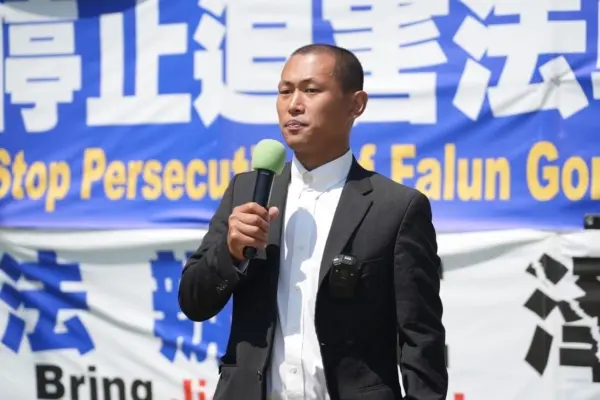
By 2025, Jie said he had organized more than 100 demonstrations.
The repeated threats and attacks have changed how he lives.
Jie said he checks beneath his vehicle before driving and leaves markings near doors so he can determine whether someone has entered or tampered with his surroundings.
He said the constant vigilance leaves him exhausted and sometimes makes him question why he continues risking his life. But he believes retreat would not make him safer.
“They want to make you afraid and make you shut up,” he said in an interview in May 2025 with the Chinese language edition of The Epoch Times. “Even if you become afraid today, they still will not let you go.”
Transnational Repression in the United States
The bureau lists stalking, threats against relatives, assault, attempted kidnapping, and attempted murder among the tactics used.
Federal prosecutors have brought multiple cases alleging that Chinese intelligence and police agencies used intermediaries in the United States to monitor, intimidate, or pressure dissidents.
In Tang’s case, prosecutors said he collected names, photographs, and recordings of pro-democracy activists for China’s Ministry of State Security.
‘A Video Will’
In the hospital, Jie recorded a video after doctors allowed him access to his phone.
He spoke slowly and struggled at times to remember the date or reconstruct the days since the attack.
Jie said he believed the beating was intended to frighten him and others involved in the cases into silence.
“I want to tell the Chinese government: Don’t even think about it,” he said. “It is impossible—absolutely impossible—to make us stop.”
He warned other Chinese dissidents to protect themselves.
“As long as I have one breath left, I will pursue these cases to the end,” he said.
Near the end of the video, Jie described the recording as a possible “video will”—a final statement in case he did not survive.