Twenty-two states and the District of Columbia provide in-state tuition and financial aid for illegal immigrants despite a federal prohibition against the practice.
The Illegal Immigration Reform and Immigrant Responsibility Act, signed into law by President Bill Clinton in 1996, prohibits states from offering in-state tuition rates to illegal immigrants unless that same benefit is extended to all U.S. citizens, regardless of residency.
The Trump administration is targeting states that offer in-state tuition for illegal immigrants.
Three Republican-dominated states ended the practice after the Department of Justice (DOJ) sued. The lawsuits were filed after President Donald Trump’s April executive order directing the department to take legal action against the practice.
At most public colleges and universities, tuition for in-state residents is typically a fraction of what out-of-state residents and international students pay. Public systems are funded by state income and sales taxes.
Trump’s Order
Under Trump’s executive order, signed on April 28, the DOJ and Department of Homeland Security are directed to enforce the 1996 federal law prohibiting out-of-state tuition rates from being charged to U.S. citizens by schools that provide in-state discounts to illegal immigrants.Oklahoma, which had provided in-state tuition rates to any high school graduate who lived with a parent or guardian for at least two years before earning their diploma, immediately settled with the DOJ following an Aug. 5 lawsuit and stopped enforcing the state law.
Kentucky, which the DOJ sued in June, is the latest state to discontinue in-state tuition for illegal aliens. State Attorney General Russell Coleman announced his compliance with the federal policy on Sept. 1.
“Those lawsuits were the low-hanging fruit,” Ira Mehlman, media director for the Federation for American Immigration Reform, said. “They’re basically pushing an open door there.”
Mehlman said more red states will likely comply without the threat of a federal lawsuit, but New York, California, and Illinois are bracing for a fight and setting the stage for a U.S. Supreme Court case.
Previous Supreme Court decisions affirm that all children in the United States are entitled to a free K–12 education, but not a college education. Moreover, in-state taxpayers subsidize approximately two-thirds of a student’s tuition costs, and most schools have a limited number of slots, Mehlman said.

In-State Tuition for Illegal Immigrants
Several Republican-run states already limit the in-state benefit to U.S. citizens or legal permanent residents, while other states—a combination of blue and red—offer it to students who illegally entered the country before age 16, and have continually attended school.Annual in-state tuition and fees at New York State’s four-year schools run about $9,000 compared with $20,000-plus for students from other states.
Critics say offering illegal immigrants, or the children of illegal immigrants, in-state tuition rates represents a disconnect between state and federal immigration policy and is an unfair double standard; most international students pay full price.
Additionally, some states dedicate scholarships for illegal immigrants, Fontanilla added.
Blue states remain undeterred, promoting opportunity and diversity in higher education. The State University of New York (SUNY), for example, encourages illegal immigrants to use their applications “as an opportunity to talk about” their lives in America and how they’ve contributed to their community, according to SUNY’s website.

Loopholes in Federal Law
States found loopholes in the 1996 legislation and passed residency laws extending tuition benefits to illegal immigrant students who attended and graduated from high school in the same state, Mehlman said.“The intent of Congress was pretty clear, but now we have a situation where they [states] have not been doing what they were supposed to be doing,” he said.
More than half a million illegal immigrants are enrolled at U.S. colleges and universities, both public and private.
Many illegal immigrant high school graduates have lived in the country most of their lives, according to TheDream.US, a Georgia-based charity that has provided more than 10,000 scholarships to illegal immigrants across 20 states and 80 partnering colleges.
“We believe everyone, regardless of where they were born, should have equitable access to a college education, a meaningful career, and opportunities to contribute to the communities they call home,” the group’s website states.

Setting Caps
In North Carolina, all illegal immigrant students are ineligible for discounted in-state tuition.
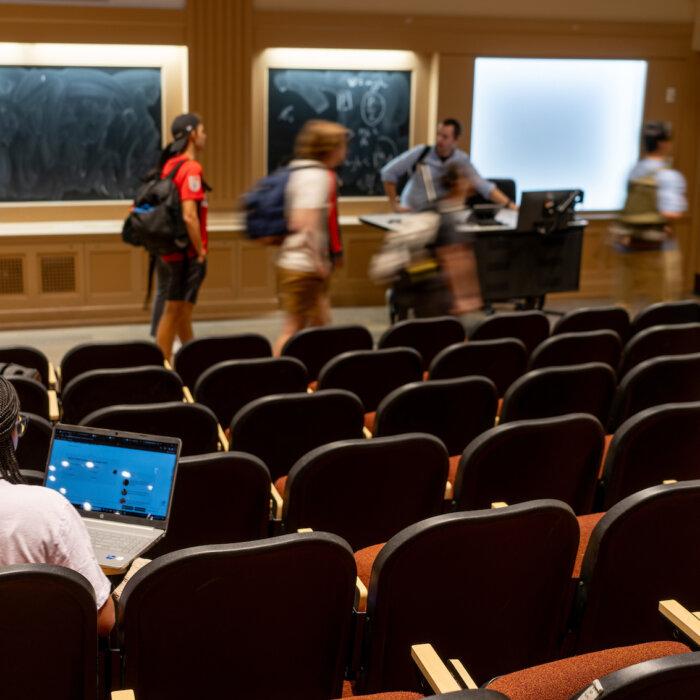
In addition, every public community college, four-year school, and university can set a cap for out-of-state students, which includes other U.S. citizens, illegal immigrants, and international students.
At the University of North Carolina at Chapel Hill, the state’s flagship school, the cap is 18 percent, but it’s higher at less-selective schools, said Jenna Robinson, president of the Raleigh-based James G. Martin Center for Academic Renewal.
North Carolina’s state system has 58 community colleges and 16 colleges and universities. There are also several private higher learning institutions across the state that are allowed to discount tuition for illegal immigrants.
What’s Next?
At the national level, Rep. Nancy Mace and Sen. Rick Scott, both Republicans from Florida, proposed the American Students First Act, which would block federal funding to states that grant in-state tuition rates or state-based financial aid to illegal immigrants..Scott’s bill was referred to the Senate Judiciary Committee on June 18. Mace introduced her legislation in March.
Immigration advocacy organizations urge states to preserve the in-state tuition rates for illegal immigrants.

TheDream.US intends to continue its outreach to students in “locked out” states where they don’t qualify for in-state discounts, according to its website.
The organization provides recipients up to $100,000 toward bachelor’s degree programs.
In Georgia, which prohibits illegal immigrant enrollment in public colleges, Freedom University, which opened in 2011, provides free tuition and transportation to 25 illegal immigrant students each semester.
The university considers itself “the one true sanctuary campus in the United States,” according to its website. Classes are held in confidential locations, and everyone is required to get COVID-19 vaccinations and wear masks, according to its website.
Course listings include U.S. government through a human rights lens; mental health and well-being; American Sign Language; radio broadcasting; and political education, leadership development, and beloved community building.
“By centering students’ cultural identities and deepening their political consciousness, we empower them with the knowledge and tools they need to actively participate in the transformation of the world,” its website states.