This copy is for your personal, non-commercial use only. Distribution and use of this material are governed by our Subscriber Agreement and by copyright law. For non-personal use or to order multiple copies, please contact The Epoch Times Reprints.
Where Did All the Turkeys Go?
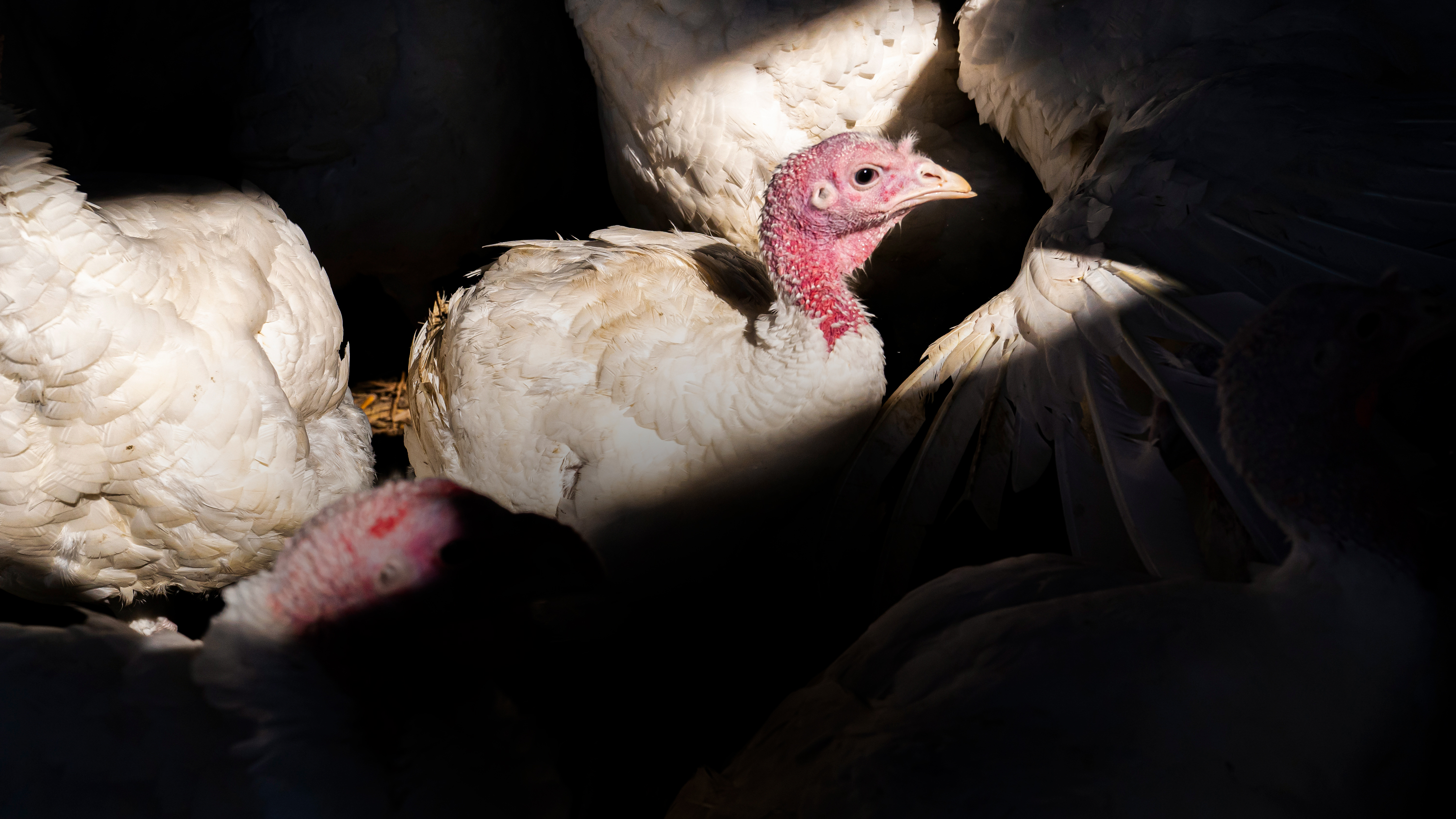
A flock of white turkeys in a shelter as part of an effort to prevent exposure to avian influenza on a farm in Townsend, Del., on Nov. 14, 2022. Nathan Howard/Getty Images
A flock of white turkeys in a shelter as part of an effort to prevent exposure to avian influenza on a farm in Townsend, Del., on Nov. 14, 2022. Nathan Howard/Getty Images
Americans will eat nearly 30 million turkeys this Thanksgiving, the National Turkey Federation estimates.
That’s almost as many turkeys as there are people in Texas, the country’s second most populous state.
Although turkey continues to take center stage on the Thanksgiving table, American turkey farmers are challenged this holiday season by a drop in demand, accompanied by ongoing outbreaks of bird flu, which disrupts supplies, drives up prices, and threatens farm livelihoods.
Rise and Fall of Turkey in America
Turkey consumption in the United States has followed an arc over the past century, driven by agricultural, technological, and health trends.
According to the Department of Agriculture (USDA) Economic Research Service, the average person in the United States ate less than three pounds of turkey a year in the 1930s and 1940s. By 1960, that number had doubled, as producers introduced specialized bird breeds that yielded more meat.
Advances in production and the introduction of processed products such as luncheon meats, ground turkey, and deli items drove turkey’s popularity in the 1980s. Marketing campaigns promoted the bird as a healthy, low-fat meat.
Annual turkey consumption rose from an average of about 10 pounds per person in 1980 to a peak of 18 pounds per person in 1996.
Since that time, however, consumers have been steadily eating less turkey. In 2025, average turkey consumption is projected to be a little more than 13 pounds per person, a nearly 40-year low.
In total, the USDA projects that 4.5 billion pounds of turkey will be eaten in 2025—the lowest amount since 1990, according to the latest World Agricultural Supply and Demand Estimates (WASDE) report.
The USDA estimates that 195 million turkeys were raised in 2025, the lowest number in 40 years. This is the second consecutive annual decline; production has fallen by about 3 percent from 2024 and about 11 percent from 2023.
The 30 million turkeys Americans will eat this Thanksgiving represents 15 percent of the total number of turkeys raised in the United States this year. It also represents a 35 percent drop from the 46 million turkeys consumed during the Thanksgiving holiday in 2016, according to the USDA.
Although health-conscious consumers and dieters propelled turkey’s rise, health concerns about processed foods are now one factor causing turkey consumption to drop.
Consumers are “steering a bit away from highly processed meat,” Heidi Diestel, whose family has raised turkeys in Sonoma, California, for four generations, told The Epoch Times.
Bird Flu
Since February 2022, highly pathogenic avian influenza (HPAI)—also known as bird flu—has resulted in the death of almost 21 million turkeys, or about one-tenth of the current U.S. turkey flock.
The wave of infections continued in November; the Animal and Plant Health Inspection Service confirmed that eight turkey operations were affected in Michigan, North Dakota, and South Dakota, affecting 431,300 birds.
Farmers are also taking a hit from Avian respiratory virus, or aMPV—an upper respiratory tract viral infection that affects all types of poultry but is most harmful to turkeys.
HPAI is nearly 100 percent fatal to exposed birds, according to former National Turkey Federation Chairman John Zimmerman. Although its symptoms are generally milder, aMPV is equally devastating.
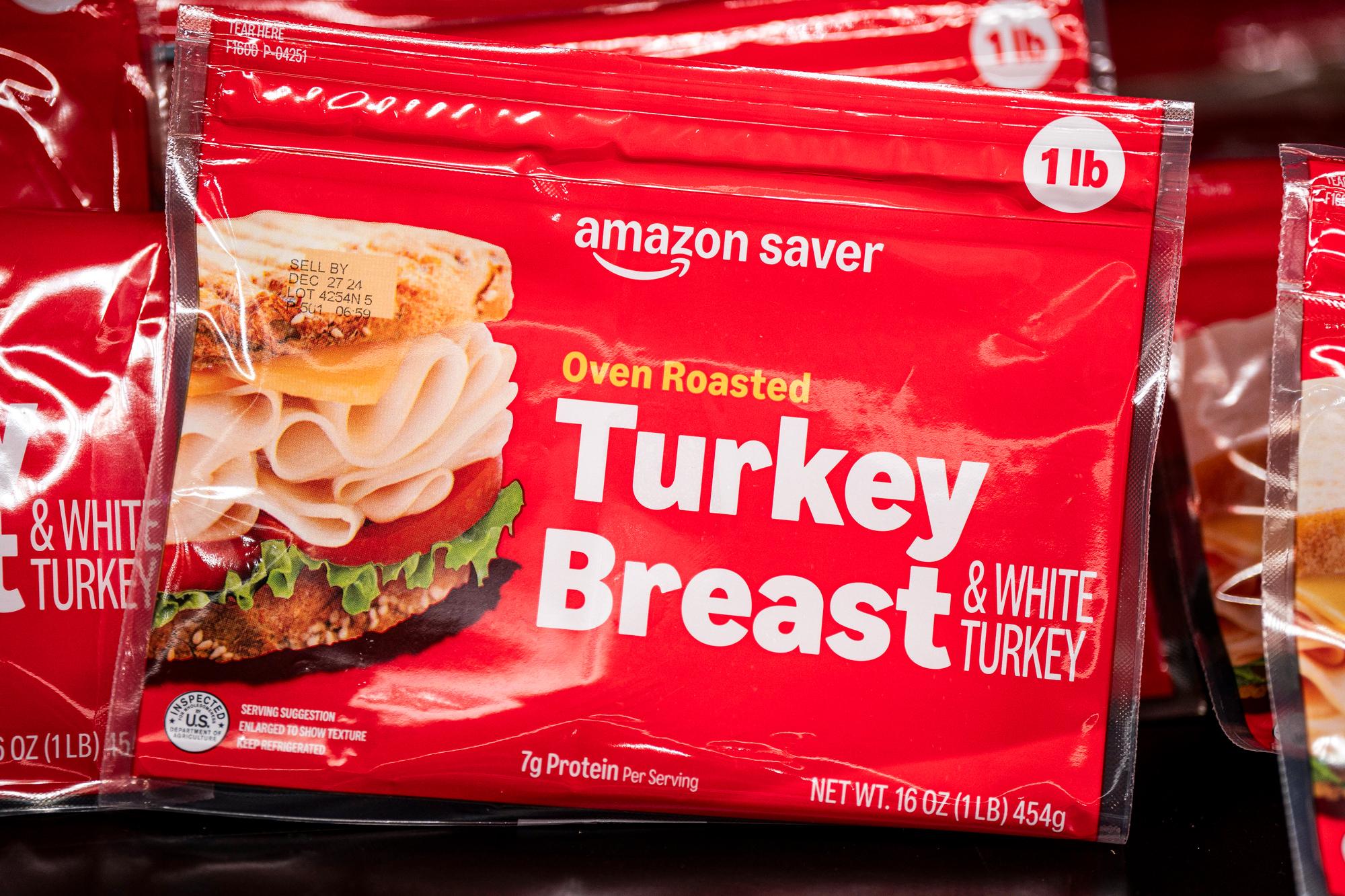
Packages of turkey under Amazon’s private-label Amazon Saver brand are displayed at an Amazon Fresh grocery store in Federal Way, Wash., on Dec. 12, 2024. The National Turkey Federation estimates that Americans will eat nearly 30 million turkeys this Thanksgiving. David Ryder/Getty Images
In addition to the flocks affected by HPAI, an estimated 60 percent to 80 percent of turkey flocks were affected by aMPV in 2024, according to Zimmerman, a Minnesota turkey farmer, who testified before the House Agriculture Committee in March.
The highly contagious respiratory illness is also known as turkey rhinotracheitis, or swollen head syndrome. It’s responsible for high death rates in commercial flocks and reduces egg production in breeder stock.
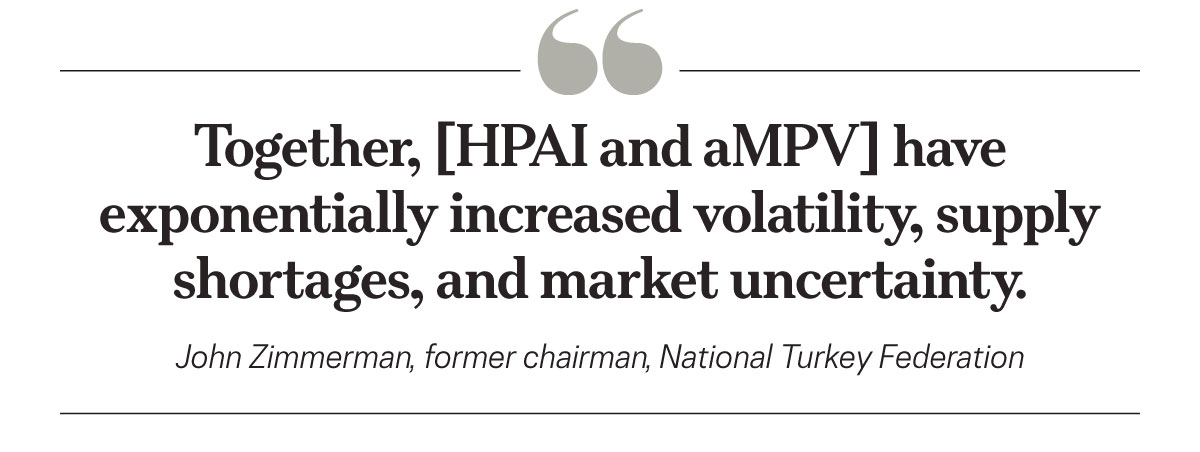
“Together, these two respiratory viruses have exponentially increased volatility, supply shortages, and market uncertainty,” Zimmerman said.
The H5N1 strain of bird flu, present in wild birds worldwide and primarily responsible for HPAI outbreaks in U.S. domestic birds and dairy cattle, originated in Guangdong Province, China.
From its first outbreak in 1996, it spread across Asia to Africa, Europe, and then the United States. The first U.S. case was detected in early 2022, according to the Centers for Disease Control and Prevention (CDC).
Known for infecting cattle and ravaging poultry flocks, the virus is also feared for its potential to infect humans. Worldwide, since 2003, more than 890 human H5N1 infections have been reported in 23 countries, according to the CDC’s September update.
In the United States, the CDC has reported 71 cases of human H5N1 infection since 2024, including one death in Louisiana in January.
On Nov. 14, Washington state’s health department confirmed the nation’s first human case of the H5N5 strain of HPAI.
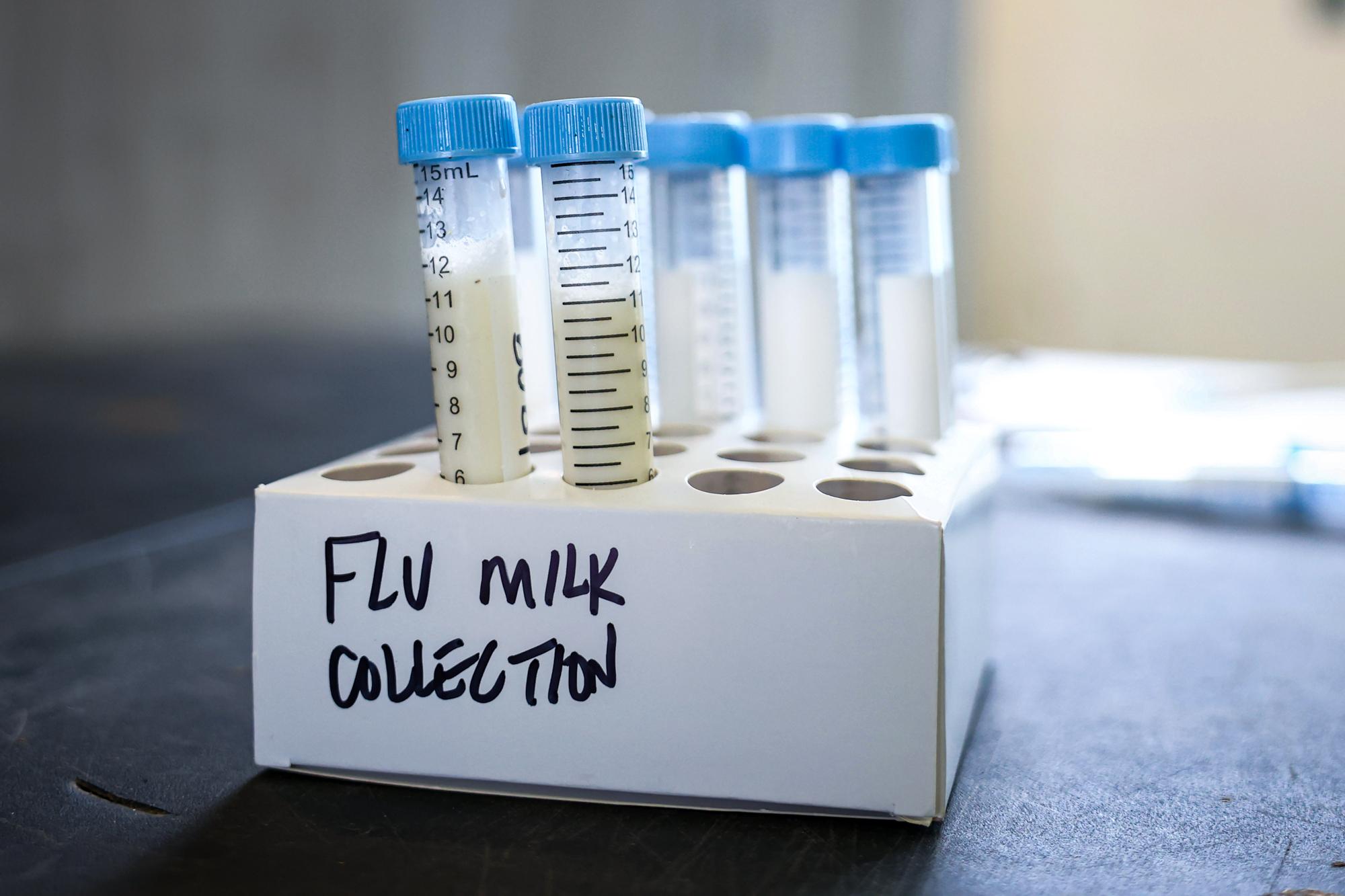
Milk samples await testing at the Cornell Teaching Dairy Barn at Cornell University in Ithaca, N.Y., on Dec. 11, 2024. U.S. turkey farmers face falling demand amid ongoing bird flu outbreaks that disrupt supply, raise prices, and threaten livelihoods. Michael M. Santiago/Getty Images
Turkey Prices
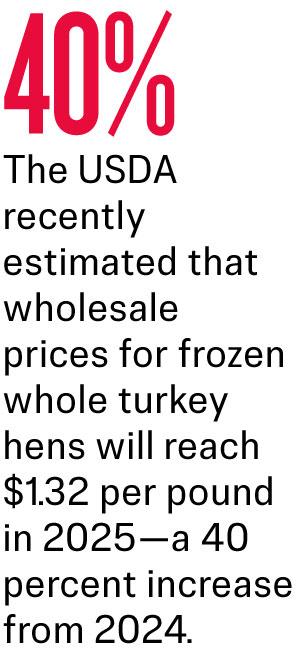
The USDA recently projected that wholesale prices for frozen whole turkey hens will reach $1.32 per pound in 2025. That’s a 40 percent increase from 2024’s price of 94 cents per pound.
“The 2025 rise in price is a response to lower production with HPAI pressures combined with steady demand,” a report from the American Farm Bureau Federation reads.
Despite this year’s jump in turkey wholesale prices, economist Bernt Nelson noted in the report that “prices are still 32 percent lower than just three years ago.”
The most recent USDA Agricultural Marketing Service data show the average per-pound feature price for whole frozen turkeys decreased during the second week of November.
“It’s encouraging to see some relief in the price of turkeys, as it is typically the most expensive part of the meal,” Farm Bureau economist Faith Parum said in a Nov. 19 statement.
Total cash receipts from turkeys in 2025 are forecast at $4.8 billion in the USDA’s September projection. This would be a 30.6 percent increase over turkey receipts of $3.7 billion in 2024, yet it remains 33.3 percent lower than the peak of $7.12 billion in 2022, when the current HPAI outbreak began.
Nelson said the contrast illustrates how disease pressures can put the industry on a “roller coaster,” boosting prices one year while pushing down production and revenue the next.
Diestel said, “Margin erosion is a real thing in agriculture.”
“It’s less profitable than it once was,” she said. “We'll see that food is most likely going to continue to cost more and retails will continue to increase.”
Beyond disease outbreaks affecting poultry, the agriculture sector is facing broader economic pressures. The USDA forecasts that crop cash receipts will fall this year by $6.1 billion (2.5 percent) from 2024, driven mainly by price declines for soybeans, corn, and wheat.
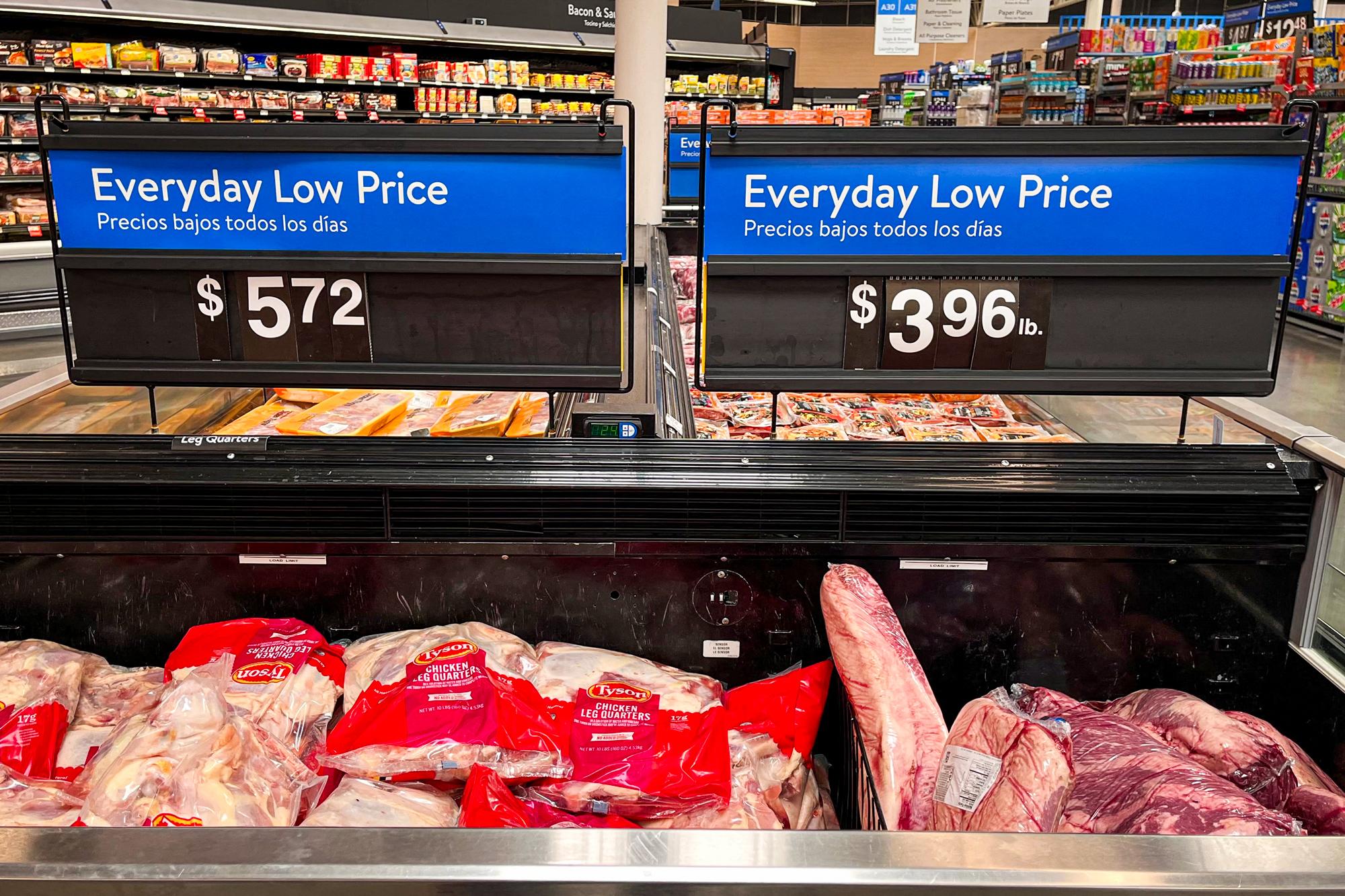
Meat packages are seen at a Walmart supermarket in Houston on May 15, 2025. The USDA projects 4.5 billion pounds of turkey will be eaten in 2025—its lowest total since 1990, according to the latest World Agricultural Supply and Demand Estimates report. Ronaldo Schemidt/AFP via Getty Images
Trading Turkey
In 2024, about 1.8 billion pounds of turkey products (whole birds and parts) were traded globally.
Poland was the world’s top exporter, controlling 24 percent of the market, followed by the United States at 20 percent, and Germany at 12 percent. These figures are based on The Epoch Times’ analysis of data from the International Trade Centre, a joint agency of the U.N. and the World Trade Organization.
Worldwide turkey exports reflected the downturn in U.S. exports, declining by 8 percent between 2021 and 2024.
Global exports have dropped by 22 percent since 2014, a year that saw the largest recorded HPAI outbreak in U.S. history up to that time, involving the H5N2 and H5N8 strains of the H5 bird flu.
The United States will import 36 million pounds of turkey this year, according to the WASDE report. That number is less than 1 percent of the anticipated 4.8 billion pounds of turkey produced for domestic sale, according to the Farm Bureau.
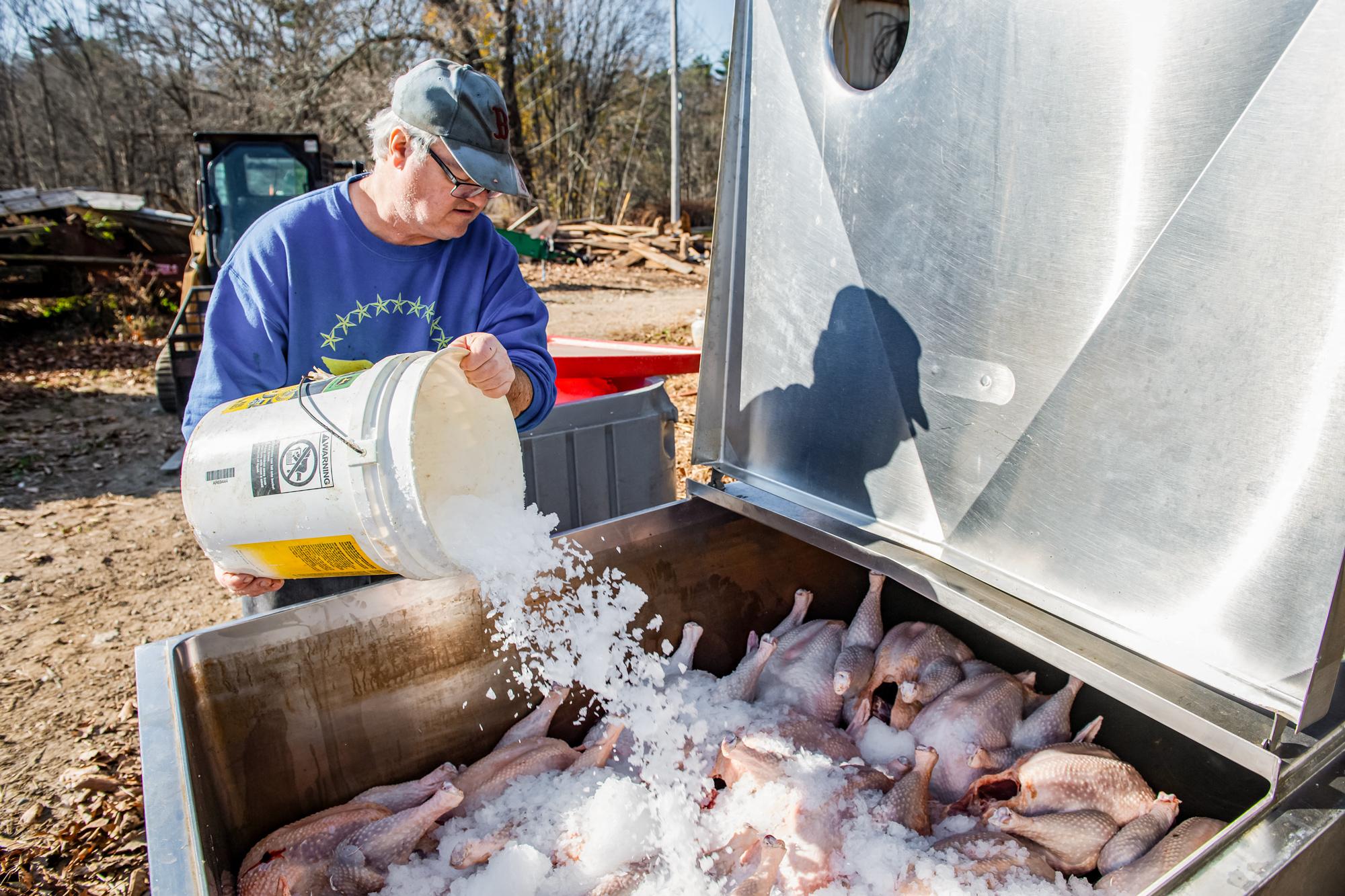
Farmhand Peter Carter adds ice to a cooler to keep turkeys fresh at Hurd Farm in Hampton, N.H., on Nov. 18, 2024. U.S. turkey imports, at less than 1 percent, are minimal compared to domestic production, according to a USDA report. Joseph Prezioso/AFP via Getty Images
Canada, Chile, and Mexico have been the sole sources of these imports since 2021, according to USDA data.
In 2025, the United States is projected to export 417 million pounds of turkey. That’s down 14 percent from last year. Over the past 30 years, only 1999 and 2022 have had lower export levels.
Exports peaked in the early 2010s, at nearly twice the volume expected for this year. Since 2015, they’ve dropped by more than one-quarter and continue to trend lower.
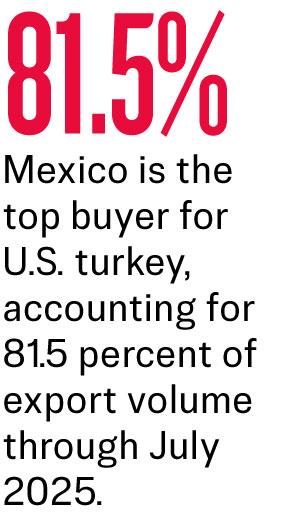
Mexico is the top buyer of U.S. turkey, accounting for 81.5 percent of export volume through July 2025. Since 2020, Canada has been the second-largest export destination for U.S. turkey, replacing Hong Kong.