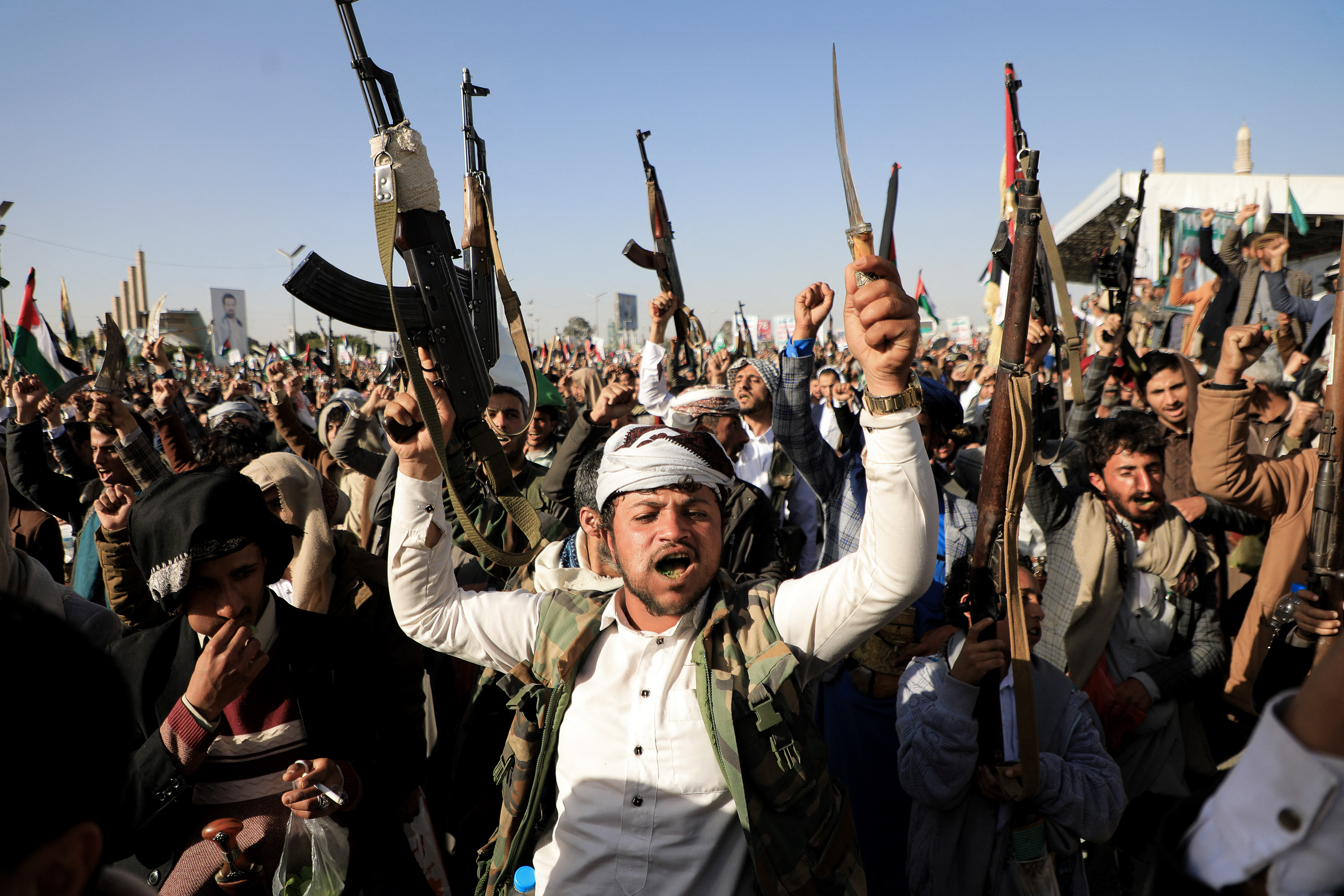

The Yemeni Houthi terrorist organization has announced a blockade on Saudi Arabian shipping through the Red Sea.
The move by the Iran-aligned group could spell further trouble for the global energy market, and global shipping, given its location along the Bab el-Mandeb Strait, which serves as the entry point to the Gulf of Aden in the Red Sea.
The Red Sea, which can be entered via Egypt through the Suez Canal, is a vital global shipping lane in times of peace, but has been even more vital to shipping firms and energy giants in getting their goods out to the world due to the effective paralysis of the Strait of Hormuz brought about by the conflict between the United States and Iran.
Here’s what to know about the impact this move could have on global energy markets.
What Have the Houthis Said?

In a statement released through the Yemen state-run SABA news agency, the Houthi armed forces wing said that it would impose the embargo, “effective immediately,” against Saudi Arabia.
The statement did not provide details on exactly what a maritime embargo would entail.
The remarks came after a fiery exchange between the Houthis and the Saudi-led coalition in Yemen last week, during which Sanaa International Airport and Abha Airport in Saudi Arabia were struck, threatening a truce that has been in place since 2022.
How Much Oil Flows Through the Red Sea?
It is not clear how the Houthis would impose the maritime blockade of Saudi Arabia, which borders Yemen to the north along the Red Sea coast.
Yemen sits on the Bab el-Mandeb Strait, which serves as the southern gateway to the Red Sea and, given the disruption in the Strait of Hormuz on the opposite side of the Arabian Peninsula, has become a critical alternative artery for oil flows from the Gulf.
A significant issue in the Bab el-Mandeb would effectively shut off both of the Middle East’s major oil export routes.
Following Iran’s partial blockade of the Hormuz after Israel and the United States attacked the Islamic Republic on Feb. 28, Saudi Arabia moved to divert more than 70 percent of its normal daily crude exports to its Red Sea port of Yanbu.
Ships departing Yanbu for Europe sail north through the Suez Canal, while those bound for Asia head south via the Bab el-Mandeb.
Oil shipments from the port averaged 4 million barrels per day in recent weeks, according to data from Signal Ocean, an AI-powered maritime intelligence and chartering platform, up from around 973,000 bpd a year earlier.
Total petroleum volumes transiting Bab el-Mandeb amounted to 7.4 million bpd in June, around 7 percent of global oil output, up from 4.2 million bpd last year, Reuters reported, according to Kpler data.
Kpler is a global data, analytics, and market intelligence platform that tracks the movement of commodities, ships, and freight in real-time.
What Could be the Result?
According to analysis by the Atlantic Council, a Washington-based international relations think tank, the key factor would be the extent and success of the Houthis’ nascent blockade.
The director of the Project for Middle East Integration with the Atlantic Council’s Rafik Hariri Center and Middle East programs, Allison Minor, said that should the Yemeni terrorists just target shipping, that “would be a blow to global oil supplies, given limited alternative routes.”
“But it would allow Saudi Arabia to continue exporting oil through Yanbu north, across the Red Sea to Egypt’s SUMED pipeline, which can carry roughly 2.5 million barrels per day to the Mediterranean.
“Additionally, tankers can carry roughly 1 million barrels via the Suez Canal,” she added, describing that supply as “critical for global markets already suffering from a 4 million barrel per day deficit due to closure of the Strait of Hormuz.”
However, the picture is different should the Houthis prove capable of targeting the port of Yanbu itself, according to Minor.
Minor says it “remains unclear if the Houthis have the stockpiles of more advanced missiles and drones needed to pose a sustained risk to Yanbu, which sits roughly 800 miles northwest of Houthi-controlled Yemen.”
But, according to Minor, “Saudi Arabia’s robust air defenses and a mixed Houthi track record with long-range strike precision mean that the group would likely need more significant stockpiles to overwhelm Saudi air defenses and hit their target.”
How Could the Blockade Play Out?
Swedish company African Security Analysis (ASA), which specializes in providing advice about the continent to governments and companies, identified the Bab el-Mandeb in an article published in April as a potential source of major disruption to global trade.
A model developed by the company said that disruption in the strait would likely develop in stages.
The first stage is what ASA termed a “trigger layer,” which could “involve military escalation linked to the Red Sea or Yemen, direct attacks on commercial vessels,” or a “sharp increase in perceived risk that causes insurers to withdraw coverage or impose significantly higher premiums.”
Following this stage, ASA said, shipping companies may choose to reroute vessels around the Cape of Good Hope, on the southern tip of Africa, rather than continue through the Red Sea and Suez corridor.
Should shipping shift to that longer route, it would place additional strain on ports and shipping schedules elsewhere, contributing to congestion and equipment imbalances.
The third stage, according to ASA, would be “longer routes and higher insurance costs would raise freight rates, delay supply chains, and increase the landed cost of goods.”
“Commodity prices, especially for fuel, food, and agricultural inputs, could then rise further,” ASA said.
What Has Been the Impact So Far?
Oil prices have risen since the Houthis announced the blockade, but that comes alongside the resumption of hostilities between Tehran and Washington in the Strait of Hormuz, making its impact alone hard to discern.
Dutch banking multinational ING said in a note on July 21 that the announcement by the Houthis will increase insurance costs to shipping companies, adding that “if shippers decide to avoid the Bab el-Mandeb Strait, voyage times will be longer and more expensive.”
However, it said that looking at the oil price that morning, “the market is not convinced that this blockade will be successful.”
However, on July 22, benchmark Brent Crude oil surged 4 percent to above $94 per barrel on July 22, the highest it has been since June 8.
Trump was asked about the blockade concern during a meeting with Lebanese President Joseph Aoun in the Oval Office on Tuesday.
“So far, it hasn’t happened, might happen, but we take care of things,” he said.
“If something like that happens, we take care of it. We’ve done that with the Houthis before, and we haven’t heard from them in a while since we did what we did originally.”