The United States announced on July 20 that operations in three Lebanese villages deemed part of a “pilot zone” had begun, as part of the implementation of an agreement reached between Israel and Lebanon.
The U.S. Department of State said in a statement that operations “began in the villages of Froun, Srifa, and Zawtar Al-Gharbiya in accordance with the Trilateral Framework and under the auspices of the Military Coordination Group for Lebanon.”
“This milestone is a direct outcome of last week’s discussions between Israel and Lebanon in Rome. The United States will continue working closely with both parties to implement the Framework to a successful conclusion,” the department added, without giving any further specifics.
Hezbollah was formed in the 1980s in opposition to an Israeli occupation of southern Lebanon that concluded in 2000. Hezbollah and Israeli forces have continued to clash in the years since then.
Of the three villages, Froun and Srifa are not under Israeli military control, and the Lebanese army is present there, while the Israel Defense Forces (IDF) are in part of Zawtar al-Gharbieh.
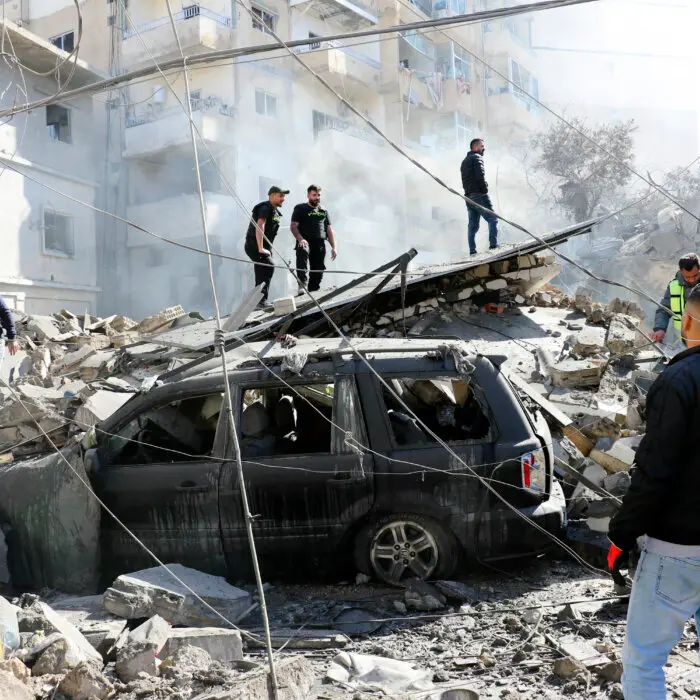
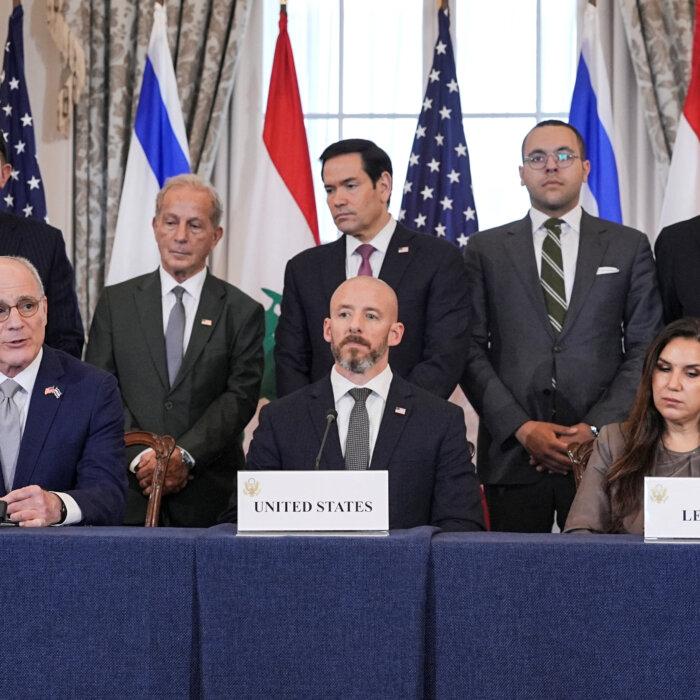
The IDF and Lebanese army both confirmed the move on July 20, with the IDF saying in a post on X that “in accordance with the directives from the political echelon, the ‘Safe Zone’ pilot program began today (Monday) in southern Lebanon, in cooperation with the U.S. military and the Lebanese Armed Forces.”
“As part of the pilot, teams from the IDF, the U.S. military, and the Lebanese Armed Forces are conducting coordination and planning for the continued implementation of the agreement,” the IDF said, adding that it will “respond forcefully to any violation of the agreement.”
The Lebanese army, in a July 20 statement, said its units “are continuing to carry out their missions in the southern regions, including the towns of Frun–Bint Jbeil and Srifa–Tyre.”
“Simultaneously, coordination is underway with the Military Coordination Group for Lebanon (MCG4L) to begin deployment in the town of Zawtar al-Gharbiya–Nabatieh, following the Israeli withdrawal,” it added, urging citizens not to travel to Zawtar al-Gharbiya and to follow the instructions given to them by soldiers.
In a later statement on July 21, the Lebanese army said that the deployment to Zawtar al-Gharbiya had begun and reiterated its call for citizens to avoid the area.
The movements on the ground in Lebanon come ahead of a White House meeting on July 21 between Lebanese President Joseph Aoun and U.S. President Donald Trump.
Aoun departed Beirut for the United States on July 18 and met with U.S. Secretary of State Marco Rubio the following day.
After the meeting, Rubio said in a post on X that he commended Aoun’s “courage” and “his government’s work to reclaim their country and advance towards peace.”
“We discussed implementing the Trilateral Framework. The United States remains committed to supporting this effort and Lebanon’s efforts to deliver security, peace, and a better future for the Lebanese people,” Rubio said.
Aoun expressed hope that the meeting with Trump would yield positive results, an independent Washington-based Middle Eastern news outlet Al Monitor reported on July 8.
“I chose negotiations because I could not stand idly by while my country was being led to the abyss in service of the interests of another country,” Aoun said, adding that he “had to take a step that could stop the Israeli machine of destruction and annihilation, reduce the loss of lives and the destruction of villages and ultimately end the occupation.”
On July 13, the Lebanese leader confirmed he would personally ask Trump to “exert the necessary pressure on Israel” to ensure it complies with the framework agreed in June.
“As the president of all Lebanese, I reaffirm that I will not give up the South nor the rights of Lebanon. That is why we insist on Israel’s withdrawal from all Lebanese territory and on Israel signing a commitment confirming it has no designs on Lebanon,” he said, according to Lebanese outlet L’Orient Today.
Netanyahu is expected to visit the White House soon, but a precise date for the trip has not yet been announced.
Aoun, who served as the commander of Lebanon’s U.S.-backed army before being elected president last year, is the first Lebanese head of state in almost two decades to visit the White House, where he will meet Trump face-to-face for the first time.
The 62-year-old became president just before Trump began his second term, and is a Maronite Christian, as required by Lebanon’s sectarian power-sharing system, which also stipulates the prime minister must be Sunni Muslim and the speaker of parliament must be Shiite Muslim, Reuters.