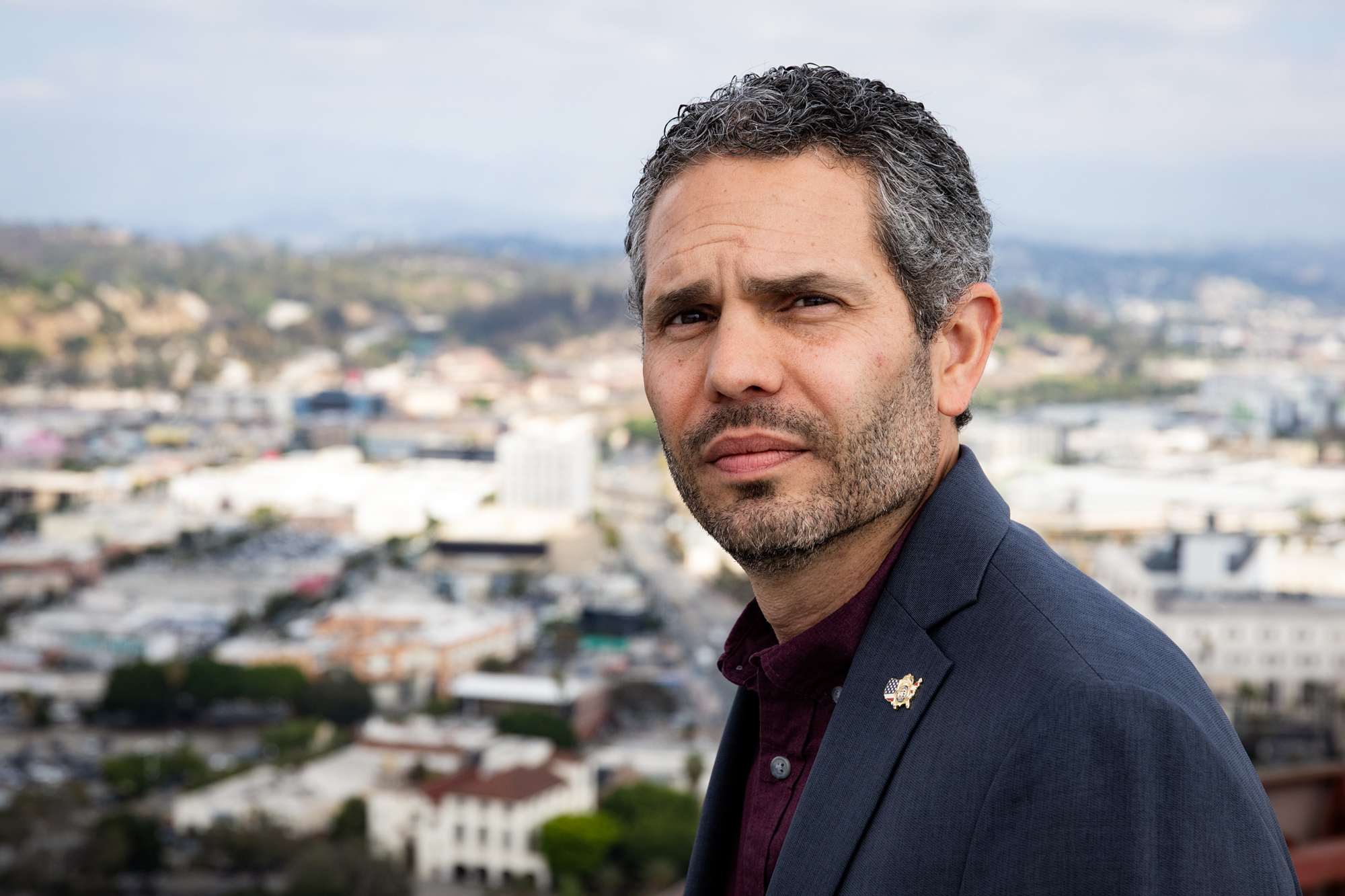
Agent Brian Clark still remembers a breakthrough case a decade ago.
His team at the Drug Enforcement Administration (DEA) arrested a Chinese money launderer at a U.S. airport where the individual had a layover.
The person had coordinated money pickups and drop-offs for the Sinaloa Cartel in Mexico. Mexican law enforcement identified him while he had lunch with a cartel leader in the country. The two of them discussed a then-recent DEA seizure of cash in New York.
The Chinese money launderer later cooperated with law enforcement and provided extensive information about how the laundering operation worked.
Between 2015 and 2016, Chinese money laundering networks began emerging, according to Clark, special agent in charge of the DEA’s Los Angeles Field Division. He said that by 2019, the Chinese had dominated the laundering marketplace.
Chinese money laundering organizations provide “cheap, fast, and almost guaranteed” services to cartels, Clark told The Epoch Times, and the result is that cartels have more money to cause more harm with drug trafficking.
Experts say that Chinese money laundering is a global operation supported by the Chinese Communist Party (CCP) and poses a grave danger to the United States.
Reports from think tanks and intergovernmental organizations link the CCP’s global investments to increased illicit trade and corruption.
“China, directly and indirectly, profits from money laundering operations that touch its economy and financial sector through the international trading system or its underground banking,” David M. Luna, executive director at the International Coalition Against Illicit Economies, told The Epoch Times.
Luna is also a former U.S. diplomat and national security official.
“The CCP allows it because it is so lucrative, and helps China to expand the global illegal economy that drives their commercial and mercantilist expansion in many corners of the world and geopolitical ambitions for power dominance,” he said.
He said that cracking down on Chinese criminality is a unique opportunity to counter the Chinese communist regime—because the crimes expose the CCP’s malign nature.
Money Laundering With Chinese Characteristics
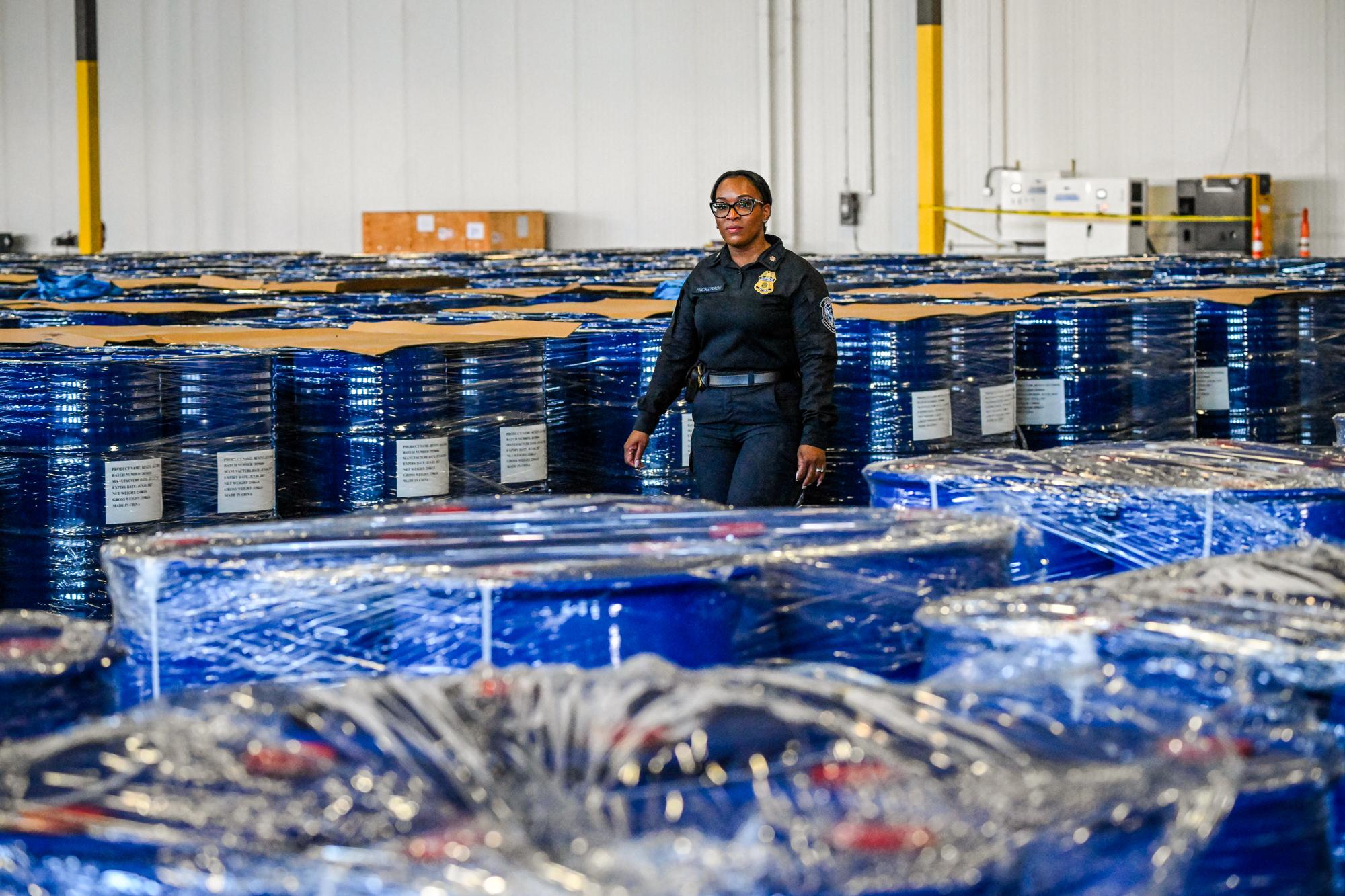
When Chinese money laundering organizations took over the market in 2015 and 2016, they charged significantly lower commissions than traditional players in Latin America. Clark said that the market rate for laundering was 10 percent to 15 percent but that the Chinese charged close to zero for several years to undercut competitors.Even after that, Chinese brokers’ commission rates have remained low—between zero and 6 percent—resulting in a direct boost to drug cartels’ bottom lines, former DEA agent Robert Zachariasiewicz said at an event hosted by Global Financial Integrity, a Washington-based think tank.
That translates to billions of additional dollars each year.
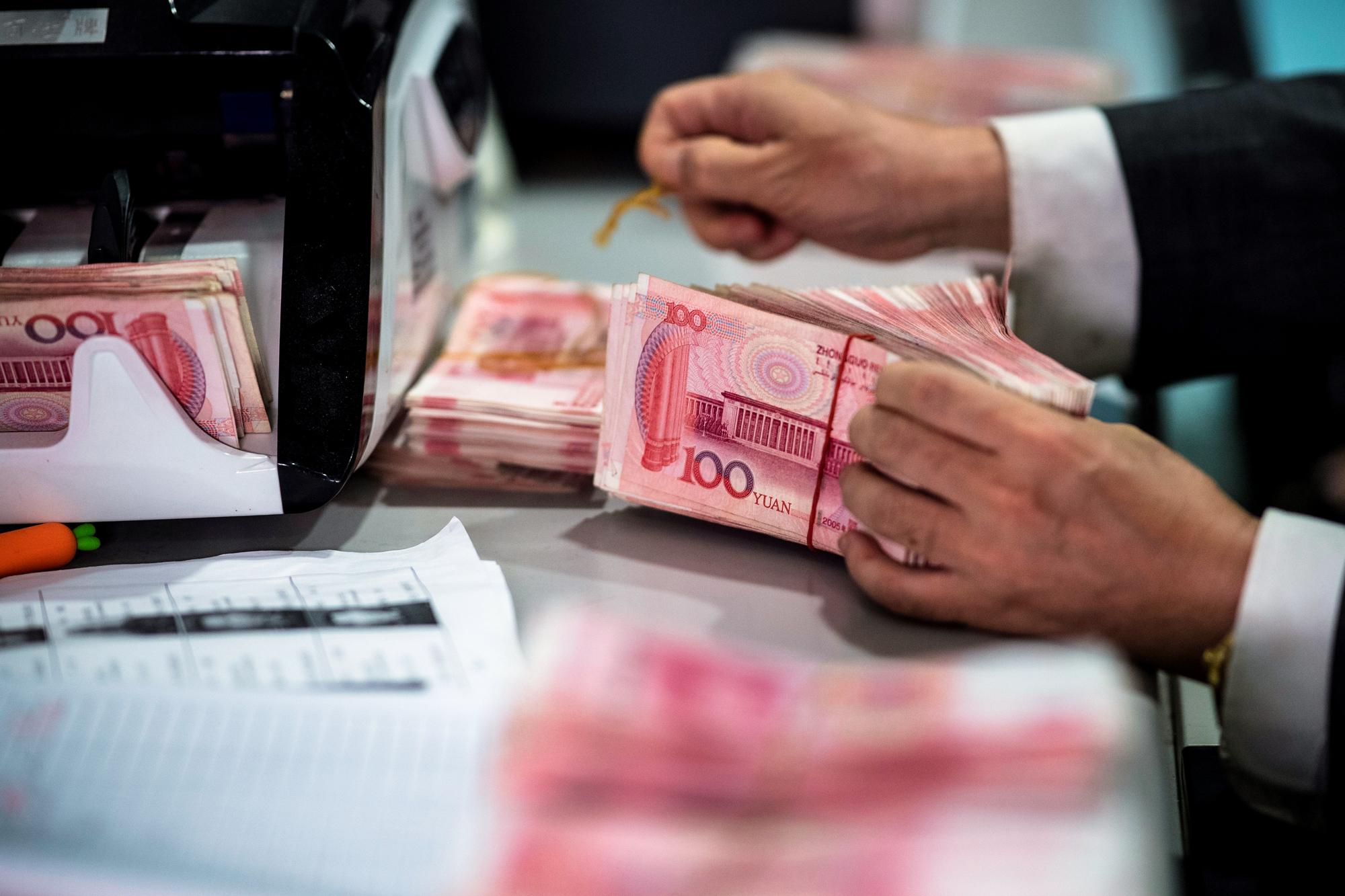
Chinese brokers can afford to charge below-market commissions to drug cartels because they generate profits from additional customers in the laundering cycle.
A key group is wealthy Chinese individuals who live in China. They want to invest in real estate in the United States or pay for their children’s tuition in U.S. universities.
However, the CCP imposes an annual foreign exchange limit of $50,000.
The limit has been in effect since 2007, and at the end of 2016, Beijing announced tighter controls on the review and approval of conversions from Chinese yuan to U.S. dollars.
That timing coincided with the rise of the Chinese money laundering networks, Clark said, adding that the underground Chinese banking systems flourished simultaneously.


These wealthy Chinese customers receive the U.S. dollars generated through drug trafficking. The money doesn’t have to leave the United States because the wealthy Chinese pay the same value in yuan to the cartel-affiliated laundering network in China. They are called mirror transactions, or swaps, and they make it harder to link the money to an underlying crime.
The Chinese yuan that ends up in cartel-affiliated accounts in China can be used to purchase chemical precursors of drugs or goods to transfer the value of the drug trafficking proceeds further back to the cartels’ home country.
The wealthy Chinese individuals are willing to pay commissions of 3 percent or higher for the service, according to Clark.
A misinvoiced transaction can also facilitate money laundering.
For example, if the drug cartel needs to launder $990,000, the Chinese money laundering networks organize a Chinese business to ship $1 million worth of consumer electronics to Mexico.
And instead of properly settling the trade, the business invoices the cartel for only $10,000. Once it’s imported to Mexico, a cartel-affiliated business can turn around and sell it, recording a profit of $990,000 on its books. Thus, $990,000 of drug trafficking proceeds have been integrated into the legitimate financial system.
Such trade-based money laundering may be measured through value gaps—the value difference between what’s recorded in a country’s imports and another country’s exports between two trade partners.
‘Threat Multiplier’
Experts say that the lifeline Chinese money laundering networks provide goes beyond drug trafficking.“Among the reasons that many law enforcement agencies view Chinese illicit enterprises as a ’threat multiplier' is because they help to fuel greater violence, insecurity, and instability in too many markets,” Luna said.
Illicit trade and corruption have spread alongside China’s global investments. A leading example is China’s Belt and Road Initiative (BRI), a global infrastructure project also known as One Belt, One Road.
The analysis found that the more investment a country receives from China, the more counterfeit goods it exports. Knockoffs form the top category of underlying crimes for money laundering.
The Belt and Road expansion and corruption also overlap.
China’s investment in the program reached its peak in 2019.
“Of course, it is doubtful that Beijing or many of its partners truly want a BRI free of corruption,” the Foundation for Defense of Democracies report reads. “Given its track record, the CCP clearly considers transparency and accountability to be unacceptable risks from a political point of view.”

To assess the Chinese market share, Cassara examined the global crimes underlying money laundering operations. Such crimes are professionally referred to as predicate offenses or specified unlawful activities.
He said that out of the 12 major categories—including counterfeit goods, human trafficking, organ trafficking, and corruption—the only one in which China doesn’t lead is drug trafficking, although it does lead in providing chemical components to make the drugs, such as fentanyl, that eventually land on U.S. soil.
US Fights Back
The United States has taken a series of actions to combat transnational crimes directly and indirectly facilitated by “CCP Inc.”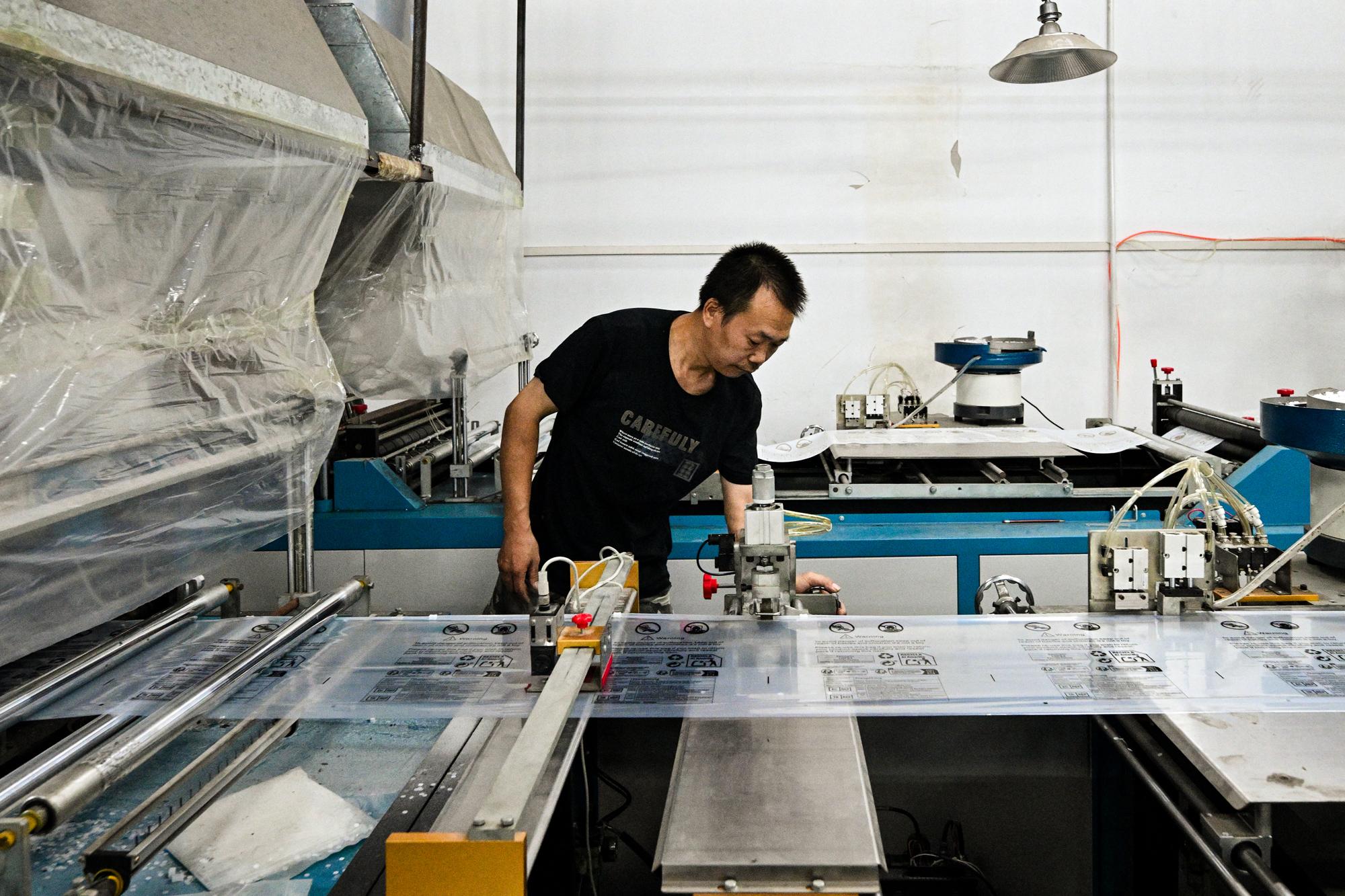
Although Chinese money laundering schemes can be highly complex, depositing the tainted cash in U.S. banks remains a significant weakness in the chain, he said.
It’s a specific area in which the U.S. government has tightened its scrutiny.
Red flags include when an individual opens a bank account with a Chinese passport and holds unexplained wealth inconsistent with his or her profession—such as a student, retiree, laborer, or housewife—or a Chinese national makes an all-cash real estate purchase.
“The United States will not stand by and allow nefarious actors to launder illicit proceeds through our financial system.”
Luna, the former U.S. diplomat, has identified the Asia-Pacific Economic Cooperation (APEC) 2026 summit as a potential opportunity to hold China more accountable. Beijing will host the APEC summit next year.
Last year, the Chinese regime amended its anti-money laundering law to cover non-financial businesses such as real estate intermediaries and specified seven predicate offenses, including smuggling and corruption. The law took effect at the beginning of this year.
Cassara said he believes that the United States needs to do more and should “name and shame ‘CCP Inc.’”
“I would love to see the Trump administration realize that China, CCP Inc., is vulnerable when we’re talking about transnational crime and money laundering,” he said.
“I think if they really focused on this area, it would be extremely effective, and it also needs to be done.”