A flower garden is a living, breathing, scent-producing work of art. It can actually reduce summer chores after installation, particularly if it replaces or reduces the size of the lawn.
It all starts with site selection. Most flowers love full sun—aka, a minimum of six to eight hours of sun per day—with some preferring partial sun of five to six hours per day. Watch how the sun moves through the yard. Note which areas get morning sun, afternoon sun, and all-day sun, and then choose the best flowers for the available sunlight. Got a lot of shade? Consider shade-loving astilbes, bleeding hearts, and that staple of garden resilience—hostas.
Mark It Out
Lay out—and fine-tune—the proposed flower bed shape using a garden hose, string, stakes (marking the corners of a proposed square or rectangular bed), or stakes and twine (for curved beds). Other options include cutting in the edges of the proposed design with a spade or edger or grabbing some temporary landscape paint.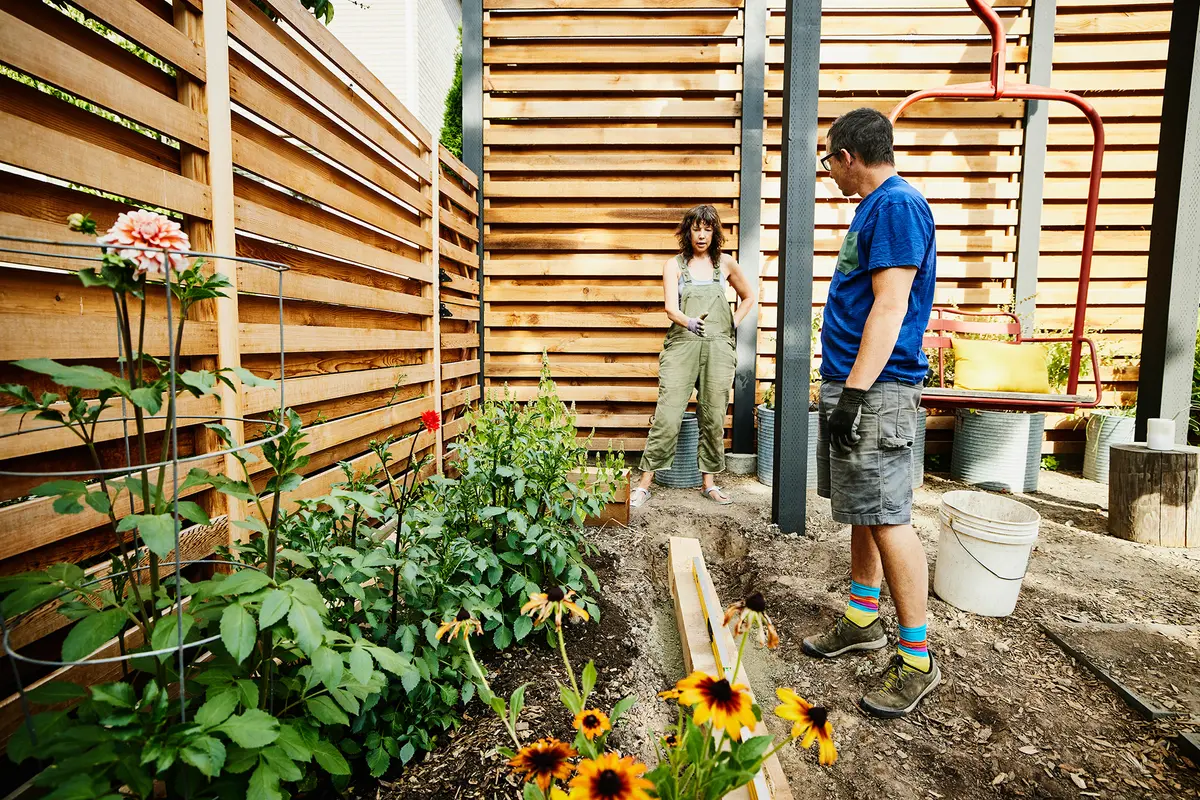
Start Digging
Meticulously remove grass, old plants, and weeds, along with all their roots. Any plant parts left behind can quickly take over again, squeezing out the flowers. At the very least, they’ll require reweeding, which is more difficult when flowers are in place.Get Amending
Sandy soil, which drains too quickly, and clay soil, which drains too slowly, should be amended with organic matter in the form of compost, leaf mold, or well-rotted, aged manure. Or, incorporate a 50 percent topsoil and 50 percent compost quality garden soil mix into sandy soil, and a 50 percent topsoil, 25 percent compost, 25 percent sand blend into clay soil.Raised bed garden mixes can also use a 50 percent topsoil and 50 percent organic matter (i.e., compost) quality garden soil.
Another popular choice is a combination of 60 percent topsoil, 30 percent compost, and 10 percent aeration material (such as sand or perlite). Although aeration materials will enhance drainage and soil aeration, this can be a double-edged sword, as it can also lead to water retention problems and nutrient depletion. It’s a judgment call, often based on the ground soil conditions beneath the bed.
Container gardeners will want to use a high-quality potting mix of 25 percent peat moss or coconut coir, 25 percent perlite, and 50 percent compost. Avoid the temptation to fill pots with regular garden soil, as it can compact and smother the roots.
Think on Paper
Draw things out first on paper, or use a free garden design app such as Garden Puzzle. Be sure to take into account each plant’s final size.When in doubt, start small, then expand the beds as your confidence increases, whether the goal is colorful curb appeal or a backyard nature sanctuary—or both. Keep beds three to four feet deep at most to simplify maintenance.
Pastels are serene. Bold colors are energetic. Consider combining them for a unique effect. Plant at least three to five (odd numbers work better) of each flower to keep the beds from looking chaotic.
You could plant taller plants in the back of a bed and shorter ones in front. Or, in the case of a round or oval-shaped island bed, or one wrapped around a tree, place the taller plants in the middle and graduate downward in height so the shortest plants are at the edges.
Instant Gratification
If you’re looking for hardy choices that do well even when planted in early-to-peak summer, consider zinnias, cosmos, marigolds, nasturtiums, sunflowers, Mexican sunflowers, black-eyed Susans, echinacea (purple coneflower), gaillardia, calendula, coreopsis, or Shasta daisies.Although they can all be grown from seeds, it may be simpler to buy some seedlings this year and save seeds from those plants for next year, if it’s an open-pollinated (heirloom) variety. Plus, nasturtiums, Mexican sunflowers, gaillardia, and some calendula can be perennials in zones nine to 11.