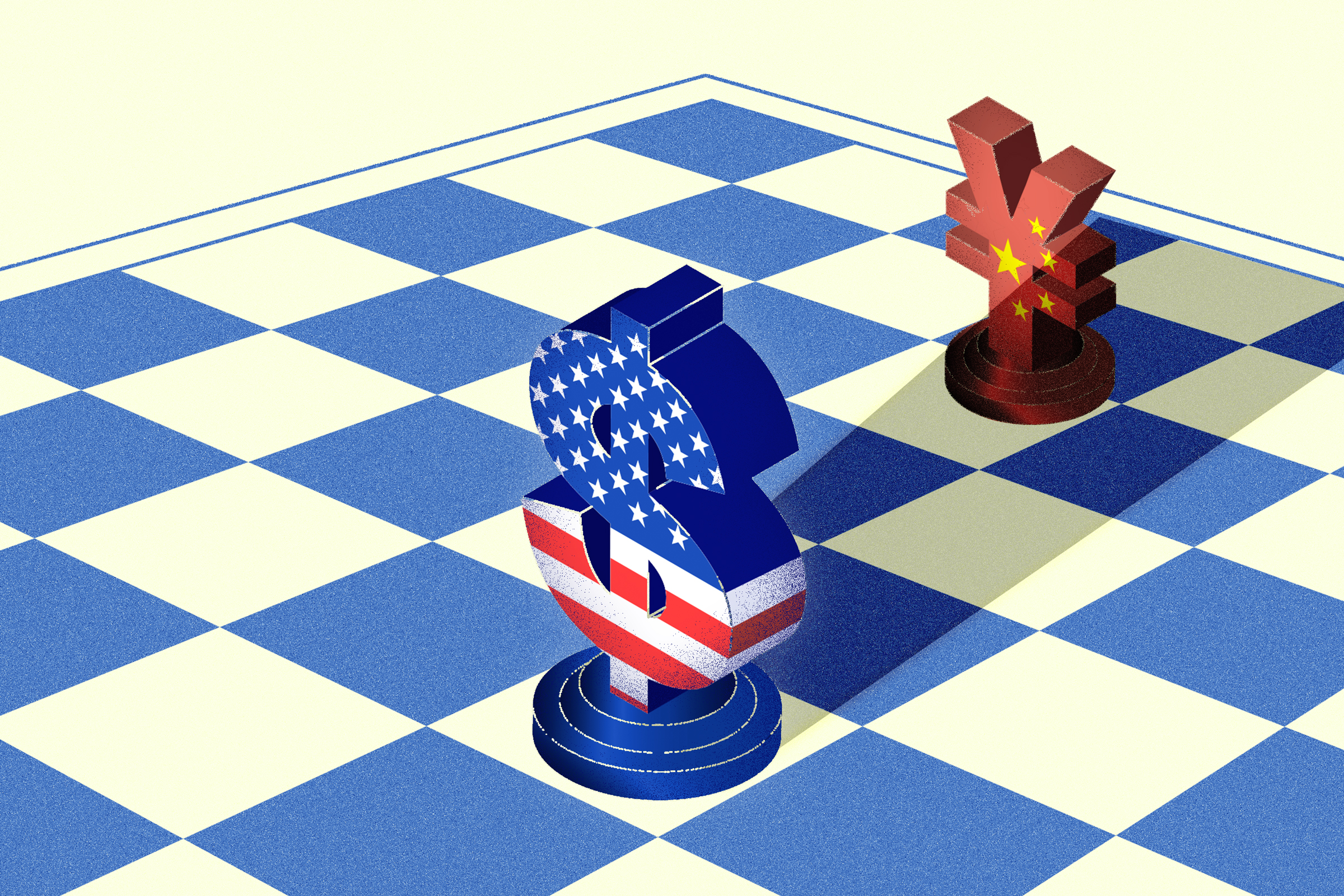
The U.S.–China trade war may be transitioning to a monetary standoff.
As U.S. President Donald Trump’s tariff policies kickstart a reshuffling of global supply chains and trade, Beijing is looking to another battleground: the Chinese yuan versus the U.S. dollar.
Last month, Pan Gongsheng, head of China’s central bank, reiterated the regime’s interest in promoting the internationalization of the yuan, also known as the renminbi, at the Lujiazui Forum, a leading economic forum in Shanghai.
The dominance of currencies, especially in the digital world, will be the next focus of the U.S.–China trade war, according to Mike Sun, a U.S.-based businessman with decades of experience advising foreign investors and traders doing business in China. He uses an alias to avoid reprisals from the Chinese regime.
William Lee, chief economist at the Milken Institute, concurred.
Lee told The Epoch Times that the fear of sanctions has spurred the regime to try to expand the use of the yuan in an alternative cross-border payment system. Now, China is concerned about potential sanctions before its digital currencies can gain traction and become more widely adopted, he said.
The concerns that Lee mentioned are front and center for policymakers in Beijing.
In a June speech in Shanghai, China’s central banker expressed concerns that the “traditional cross-border payment infrastructures can be easily politicized, weaponized, and used as unilateral sanction instruments” as the geopolitical tension escalates.
These economists are not just scholars, but a well-connected brain trust of senior Chinese Communist Party (CCP) officials, Sun told The Epoch Times. Hence, these experts don’t make recommendations; they foreshadow and interpret the regime’s actions.
Lian also warned that the United States might start imposing sanctions on a few Chinese entities, then expand the scope, eventually excluding China from the U.S. dollar-based system.
As the world’s reserve currency and primary medium for financial transactions, the U.S. dollar is the linchpin of the U.S.-led global order.
By exporting commodities to China and then buying electric vehicles from China, the member countries of BRICS can form an alternative trading system denominated in yuan, according to Lee.
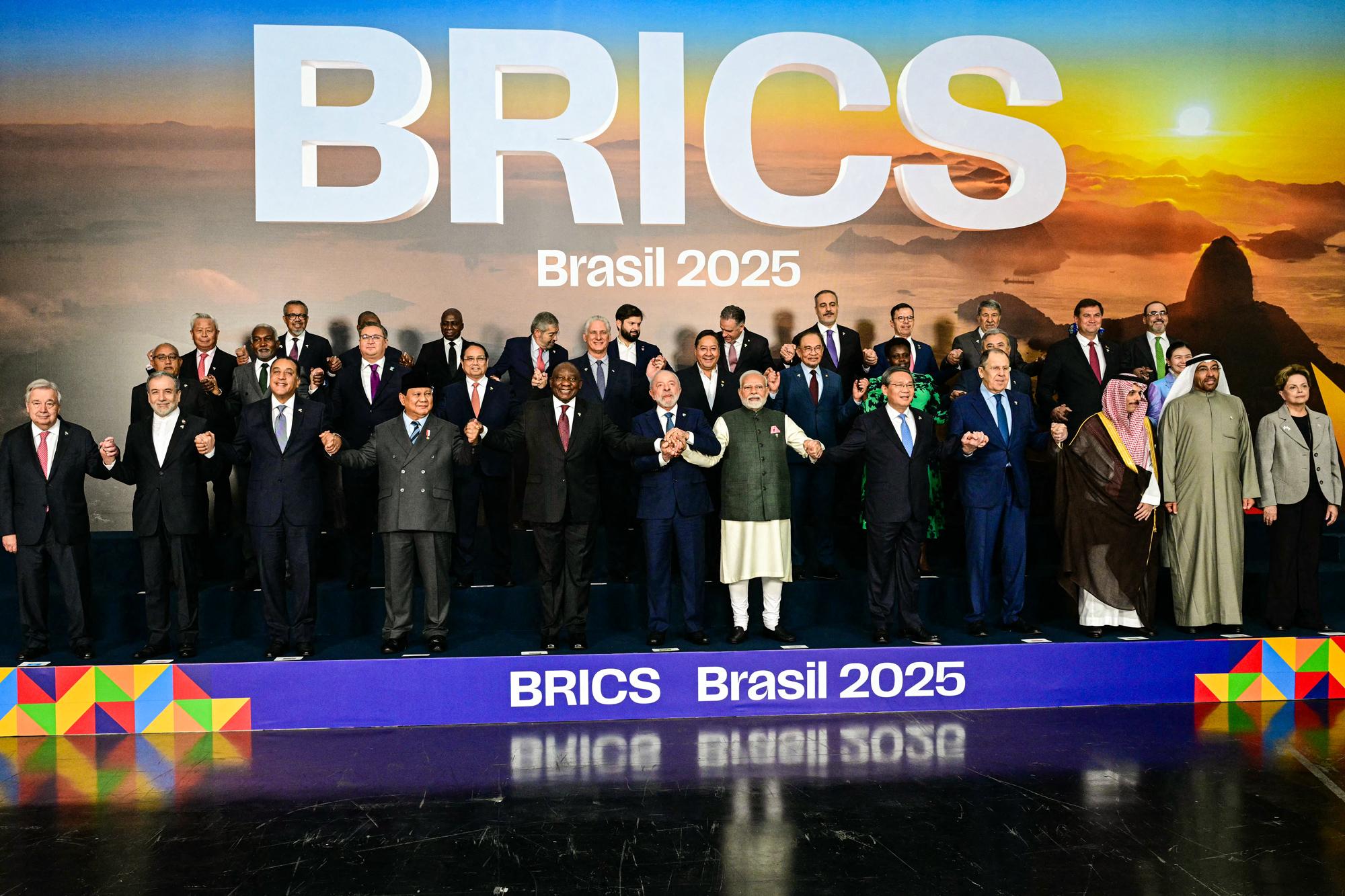
BRICS is a China- and Russia-led bloc designed to counterbalance U.S.-led Western democracies that also includes Brazil, India, South Africa, Saudi Arabia, Egypt, the United Arab Emirates, Ethiopia, Indonesia, and Iran.
The “BRICS philosophy of dethroning the dollar” is a real and credible threat to the United States, and that’s why Trump is imposing extra tariffs on these countries, according to Lee.
Winding Up Tariff Battles
Tariffs were a “completely foreign language for most people” when the Trump administration launched global reciprocal levies, Lee said.“Now, the whole world has come to accept a minimum 10 percent tariff,” he told The Epoch Times.
Lee said final tariff numbers aren’t as significant as the establishment of a new trade order.
“What matters is we have a new building in place, and the new building is much more of a decentralized trading system, incentivizing capital inflow to the United States,” Lee said. “And that’s something that has been missing from the WTO.”
Sun described this approach as a “blind box” method, meaning that the tariff rate is revealed only upon receipt of the letter. He said that in his view, such an approach is “very effective” with the “lowest cost.”
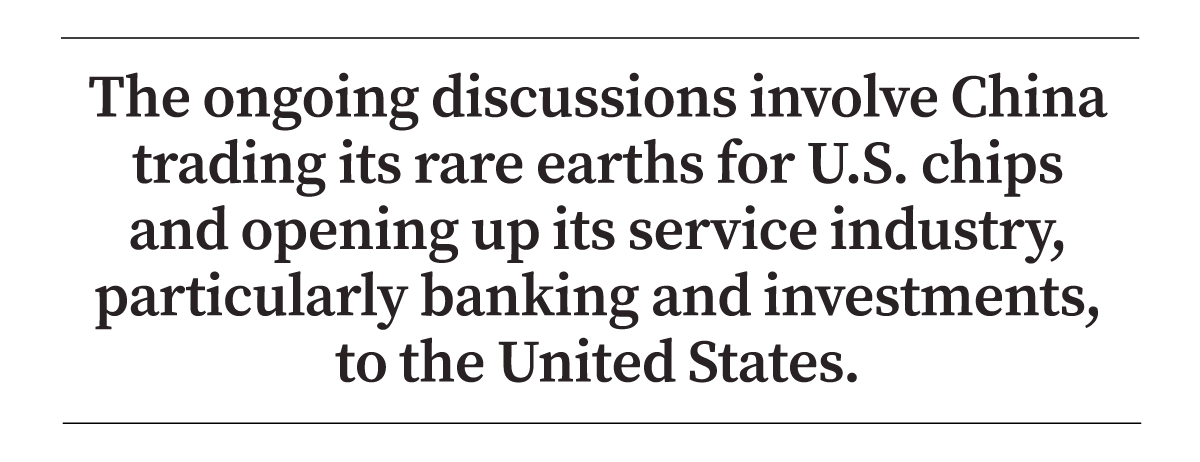
Trump sends a message that he’s the decision-maker, and other countries can only provide input under his framework, according to Sun.
“I think all countries will eventually agree with Trump’s framework, including China,” he told The Epoch Times.
Yeh Yao-Yuan, a professor of international studies at the University of St. Thomas in Houston, said he views the trade negotiations as a prelude to a new cold war, resulting in the world being split into two camps: one led by the United States and the other by China.
There’s little room left for tariff rate negotiations between the United States and China, the experts said in interviews with The Epoch Times.
The ongoing discussions involve China trading its rare earths for U.S. chips and opening up its service industry, particularly banking and investments, to the United States.
China has had a near-monopoly on rare earths for decades, mainly because of predatory practices that have driven foreign businesses out of the sector. Therefore, it has been using its leverage on these critical minerals as a trade weapon.
In effect, the public–private partnership ensures that a U.S. national champion will remain vital, regardless of what China does.
Beijing has been exploring further opening the service industry as a bargaining chip for its trade negotiations. Opening up China is a beneficial strategy to Beijing as well, according to Lian.
He wrote in his article that opening up the financial market more would increase China’s “stickiness” and make it “too big to sanction.”
However, according to Sun and Lee, the tariff battle will mainly focus on the currencies, as the United States has an oversized vulnerability: its nearly $37 trillion debt.

Defending Dollar Supremacy
Currently, the U.S. dollar’s status as the global reserve currency and the primary currency used in international trade allows the United States to borrow more at a lower interest rate.The U.S. debt level is so high now that the annual interest payment surpasses the nation’s defense spending.
In fiscal year 2024, which ended on Sept. 30, 2024, the United States spent $882 billion on interest on its debt, compared with $874 billion on defense expenses, according to the Treasury Department.
That makes the U.S. dollar’s role even more crucial because any diminishing or significant doubt of the currency could lead to the nation’s default.
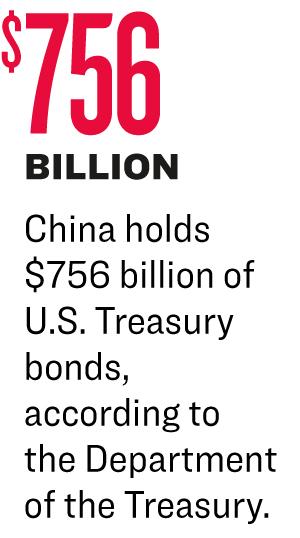
Still, Sun believes that China is the top U.S. Treasury bond holder in the world—surpassing Japan’s $1.1 trillion—because of the unknown amounts that Beijing purchases through European institutions.
So Beijing could potentially sell off U.S. Treasurys at a crucial moment when the market loses confidence in the U.S. dollar and force the interest rate to increase if no buyers can take in China’s dumping.
If the reserve currency status of the U.S. dollar is shaken, it could also lead to the weakening of Washington’s borrowing power.
The CCP is aware of this and has been working for years to replace the U.S. dollar with the yuan.
In 2015, Beijing launched its own Cross-border Interbank Payment System, or CIPS, for transactions in Chinese yuan. Although CIPS is not comparable to the U.S. dollar-denominated global payment system—called the Clearing House Interbank Payment System, or CHIPS—in terms of scale and global reach, it’s getting bigger.
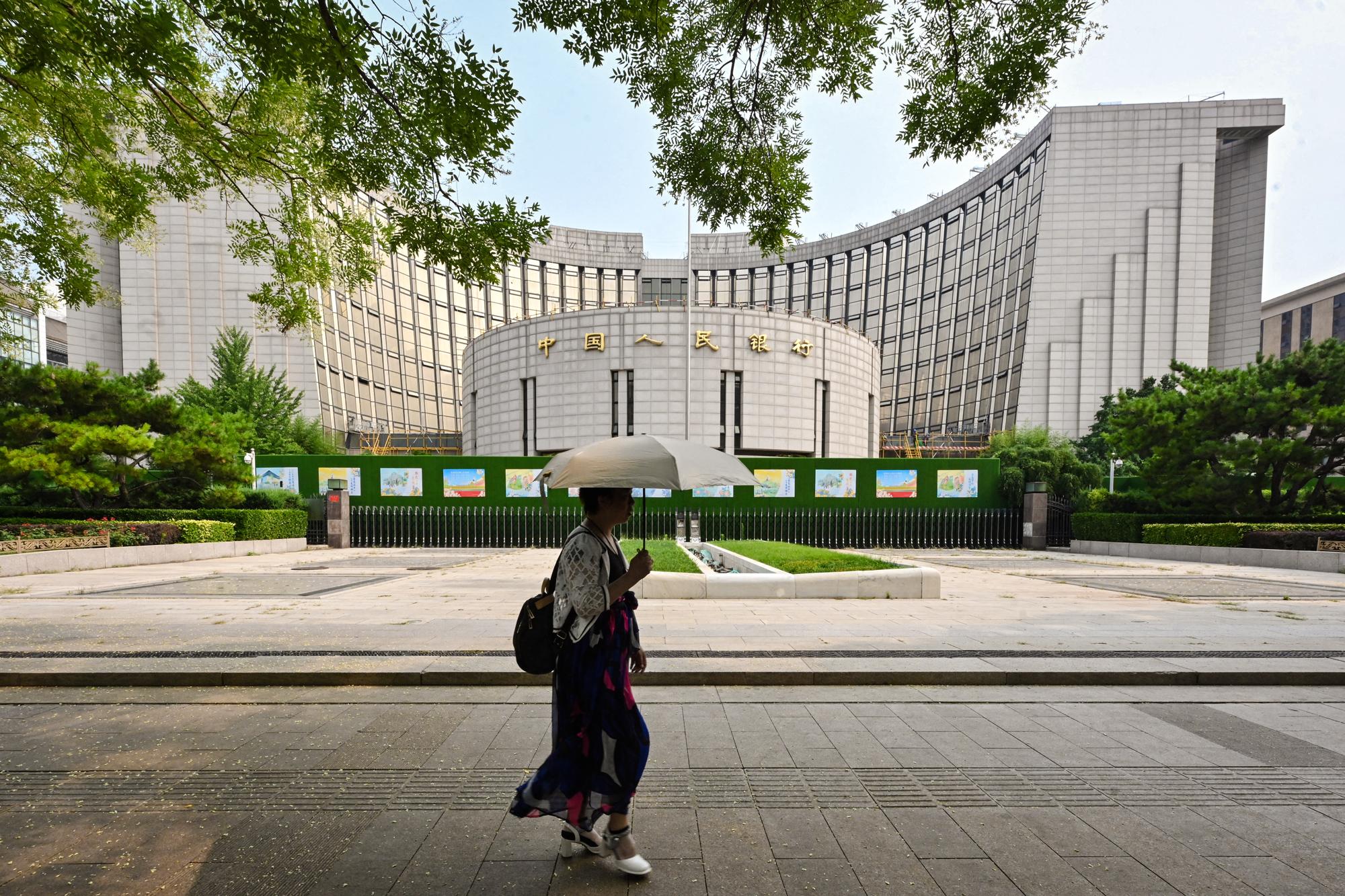
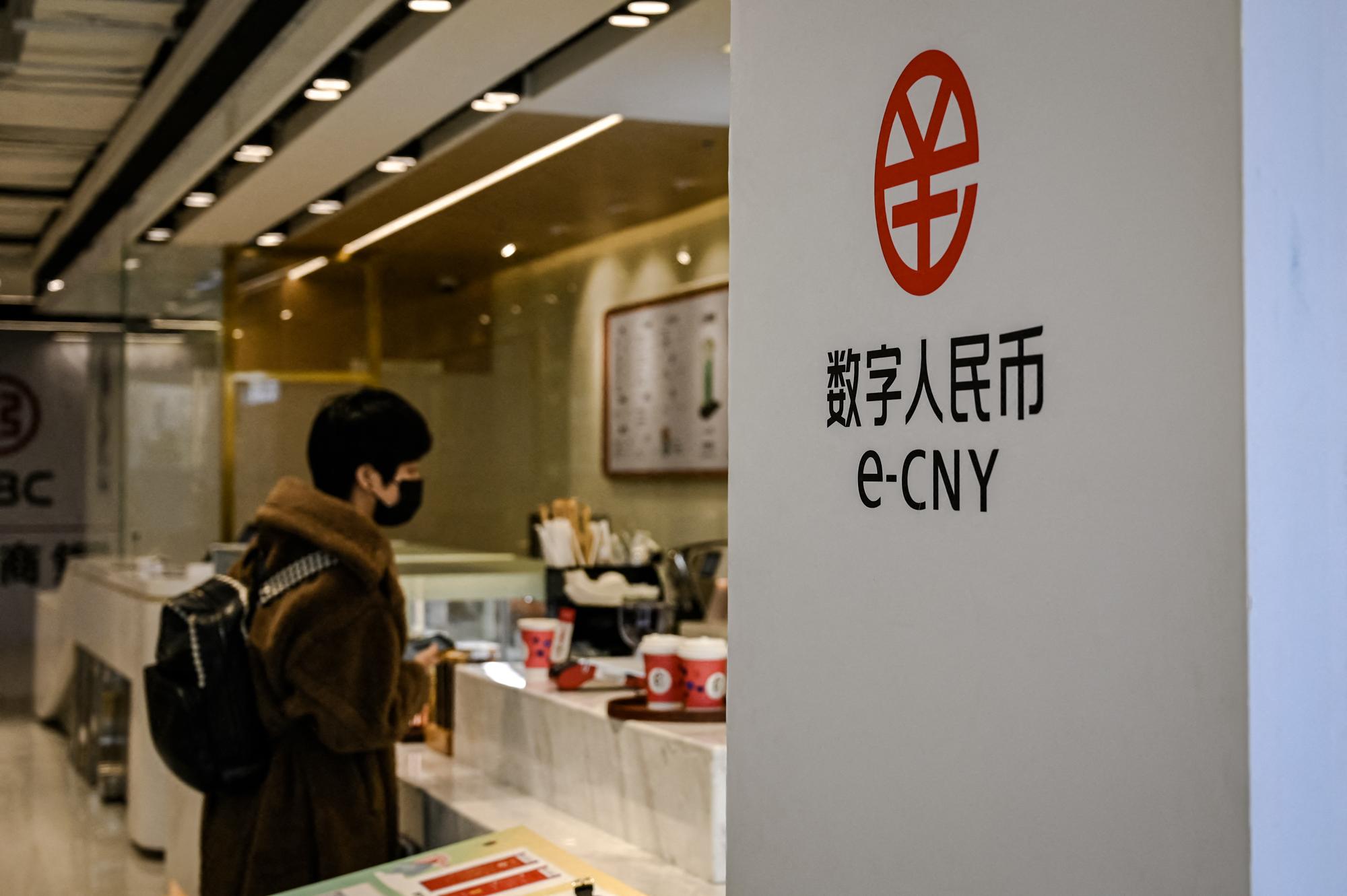
The CCP also took notice that the digital currency world offers a new field for competition, and in 2022, China introduced its digital yuan.
The current situation calls for the United States to find more non-China parties to hold U.S. debt and defend its reserve currency status in both the physical and virtual worlds, according to Sun.
He said a type of cryptocurrency referred to as “stablecoins” are a “creative” response to the challenge.
“Stablecoins can theoretically enable unlimited purchase of U.S. Treasurys,” he said. “The sky is the limit.”
Stablecoins are digital money pegged to a fiat currency at a one-to-one ratio. The issuers guarantee holders that they can convert the money back at any time. Therefore, stablecoins can provide the decentralization and cost-effectiveness of digital money, combined with the stability of a traditional fiat currency.
So far, 98 percent of stablecoins are pegged to the U.S. dollar, and 80 percent are issued outside the United States, according to the Atlantic Council, a Washington-based think tank. Owners can bypass banks and even the unreliable currencies of their home country. For example, a coffee shop in Argentina or a small business owner in Vietnam can do business in the digital currencies directly pegged to the greenback.
By leveraging stablecoins, the U.S. dollar has extended its dominance from the physical to the virtual world and found more buyers of U.S. debt at a collective level comparable to China and Japan, according to Sun, who called the strategy “a genius move.”