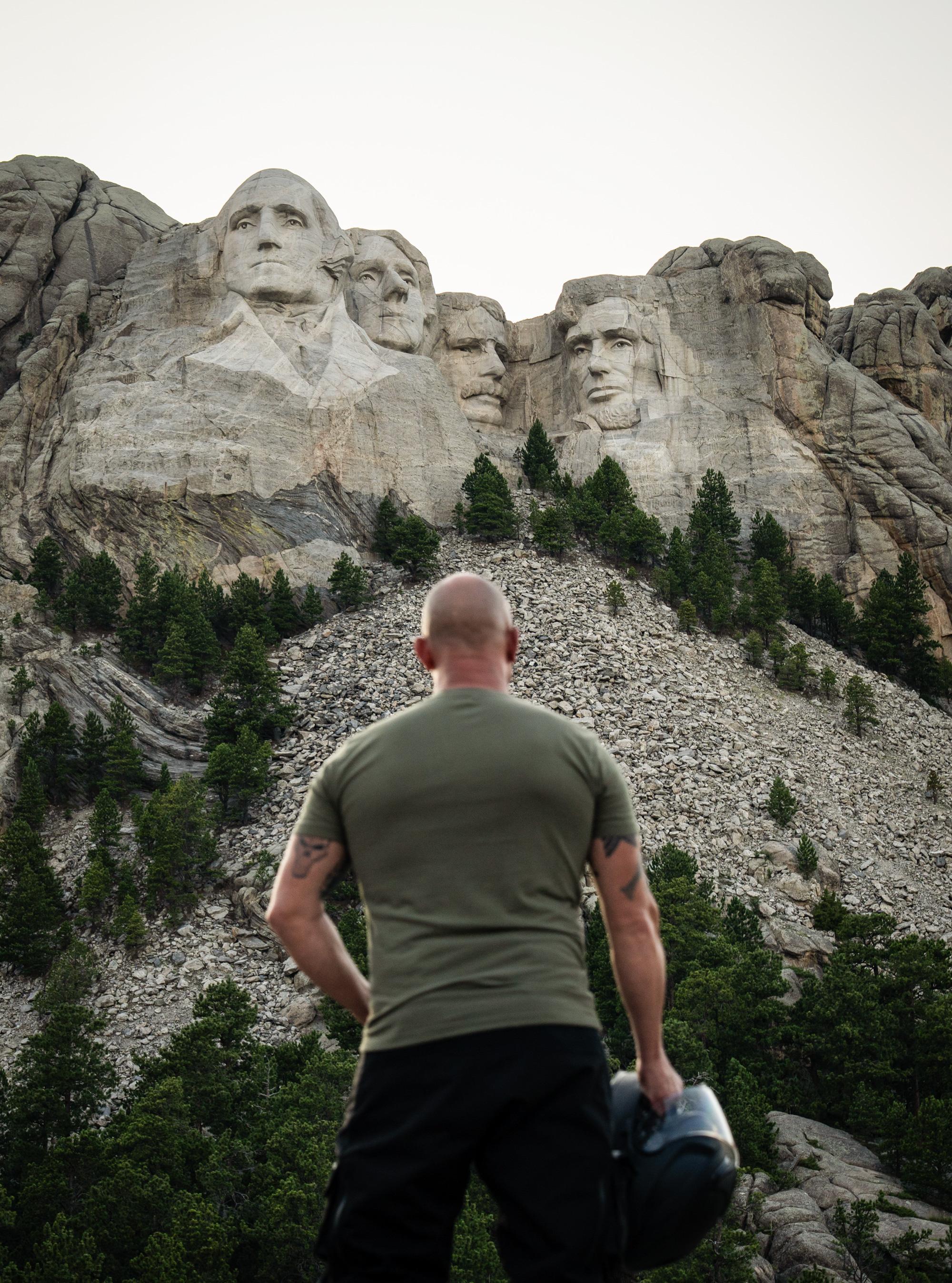
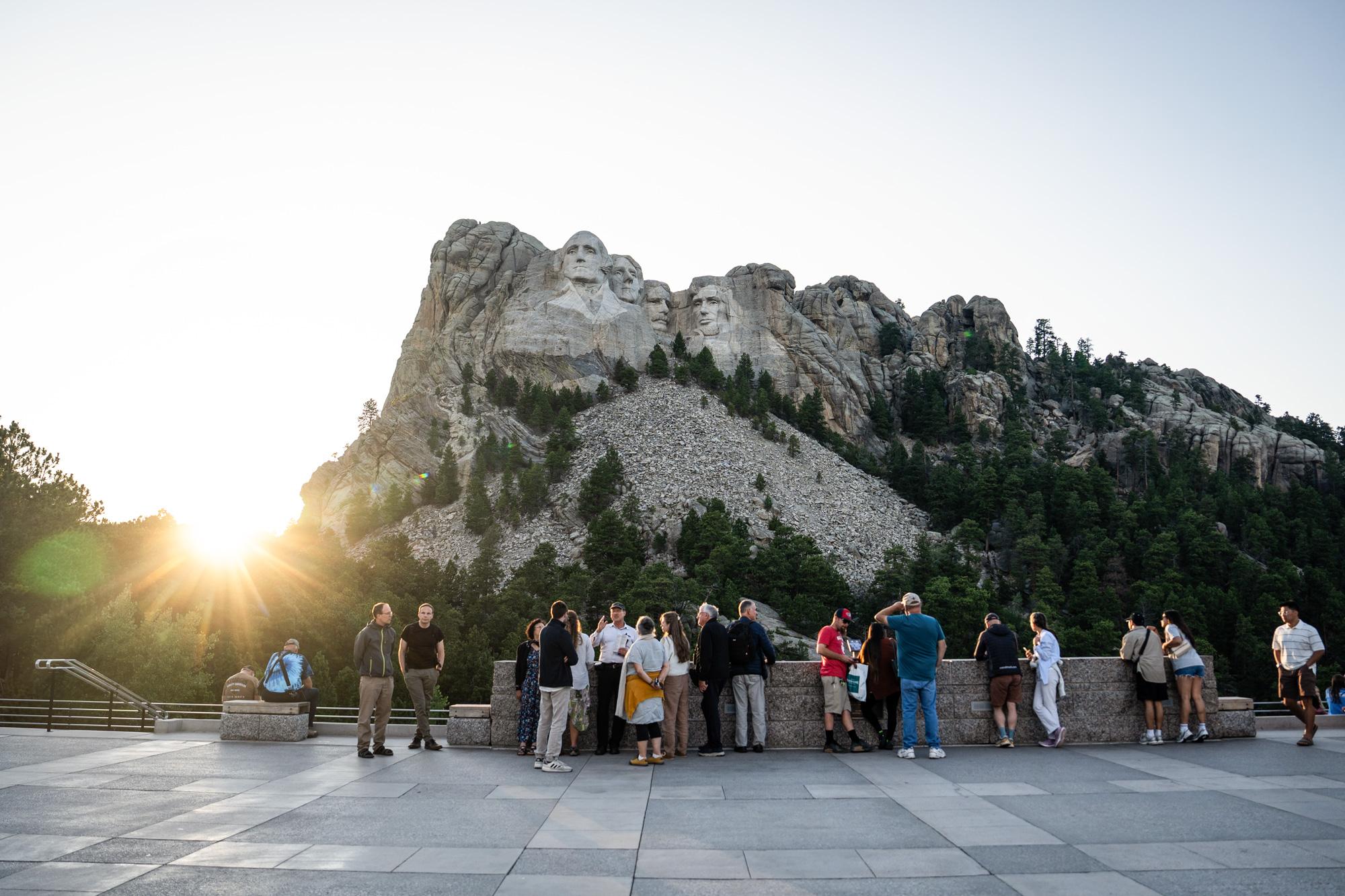
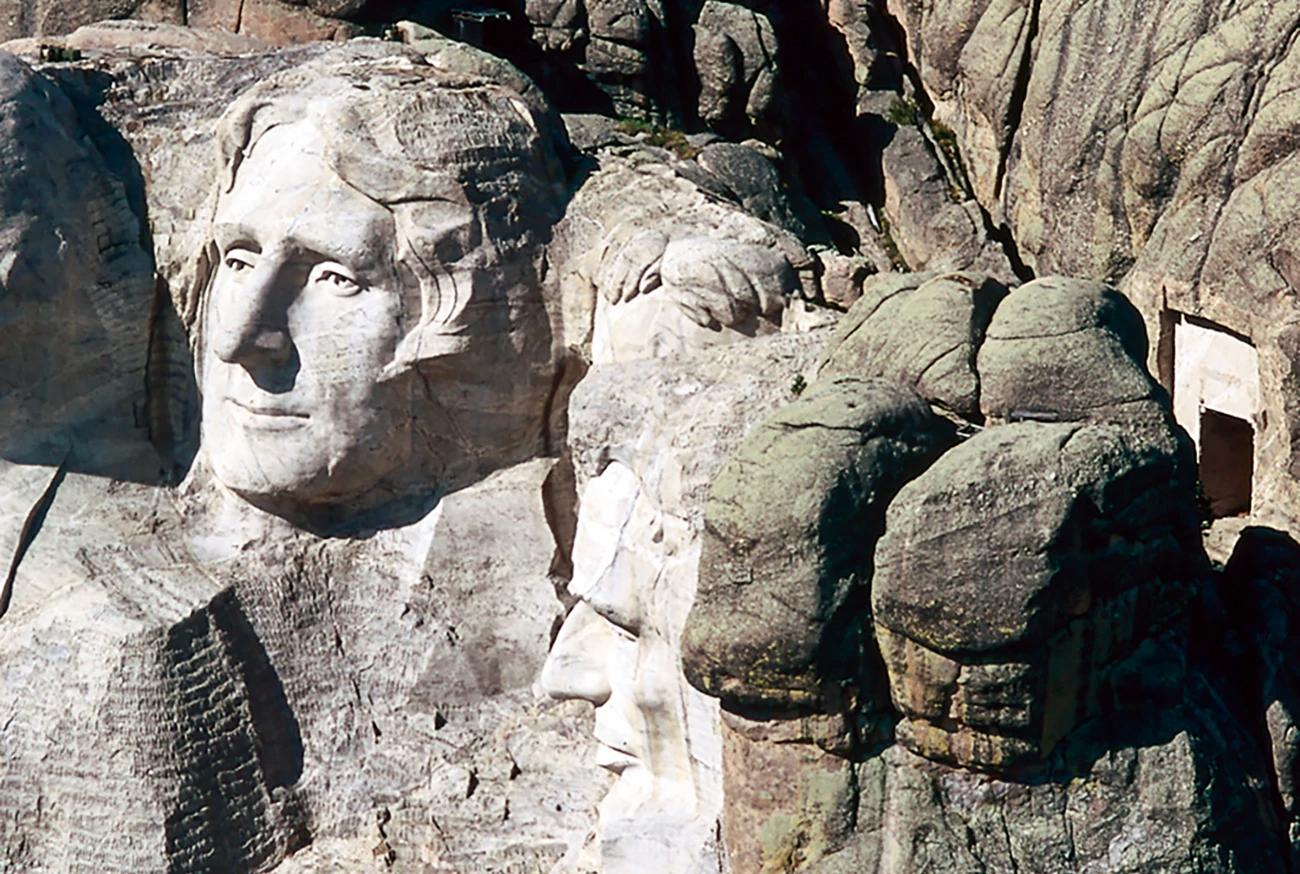
Each year, about 2 million people flock to see the four famous faces carved into Mount Rushmore. But few visitors may be aware that a mysterious rectangular opening hides behind President Abraham Lincoln’s image.
Blasted into the mountainside, that passageway is closed to the public; it’s a vestige of a planned feature that was never completed.
Inside, a titanium vault holds 16 porcelain-enamel panels inscribed with information about the monument. It was “left as a record for people thousands of years from now who may wonder how and why Mount Rushmore was carved,” a National Park Service webpage says.
Mount Rushmore National Memorial, which has stood for almost 85 years so far, was fraught with so many setbacks that South Dakota State Historian Ben Jones marvels over “the fact that it exists at all.”
“Just the story of how it came into existence is fascinating to me, as a historian and as a South Dakotan,” Jones told The Epoch Times. “The grandness of the setting is also compelling.”
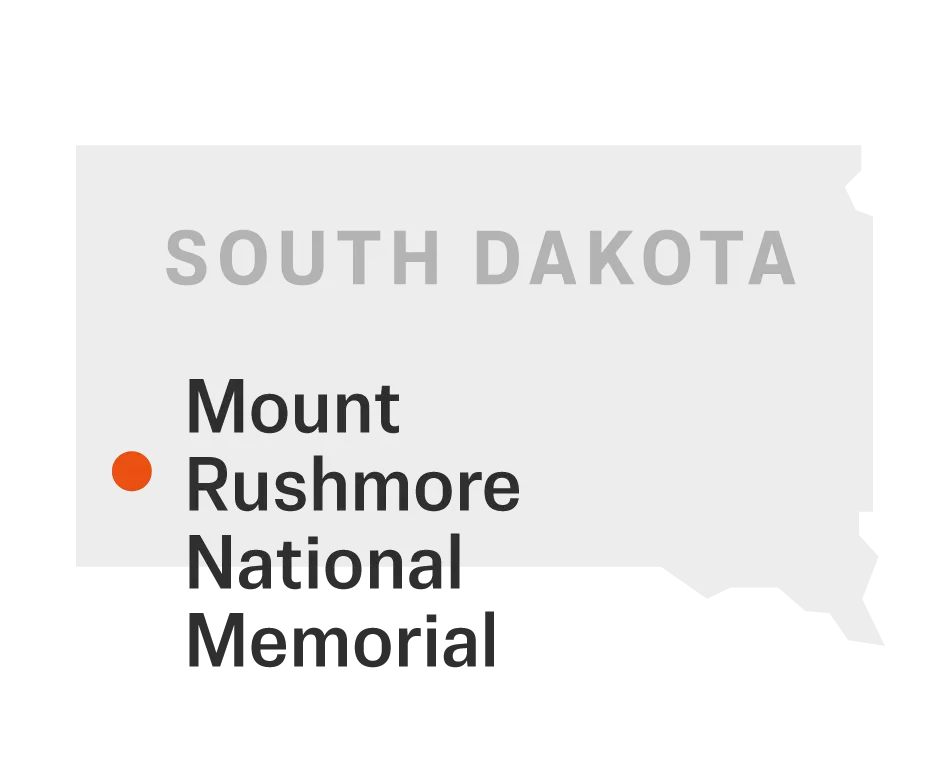
Nestled in the scenic Black Hills National Forest, Mount Rushmore rises 5,725 feet above sea level. It is surrounded by old-growth Ponderosa pine trees, other granite peaks, streams and wetlands. The 60-foot-tall presidential sculptures can be seen from miles away.
Jones, chair of the state committee marking America’s 250th birthday, said the celebration is drawing more attention to the monument that pays tribute to the nation’s first 150 years.
Freedom 250—a public-private partnership organizing Semiquincentennial events across the nation—says a rare Rushmore fireworks display on July 3 will serve as “a powerful tribute to 250 years of American independence.” Admission is limited to 4,800 ticketholders who won a public lottery earlier this year, but people can view the display at watch parties in nearby communities or via TV coverage.
President Donald Trump, who spoke at Rushmore in 2020, is also slated to deliver another speech; no other president has given two public addresses at the memorial.
Sometimes called “The Shrine of Democracy,” Rushmore “has a complex past—and one that was being invented at the time,” Jones said.
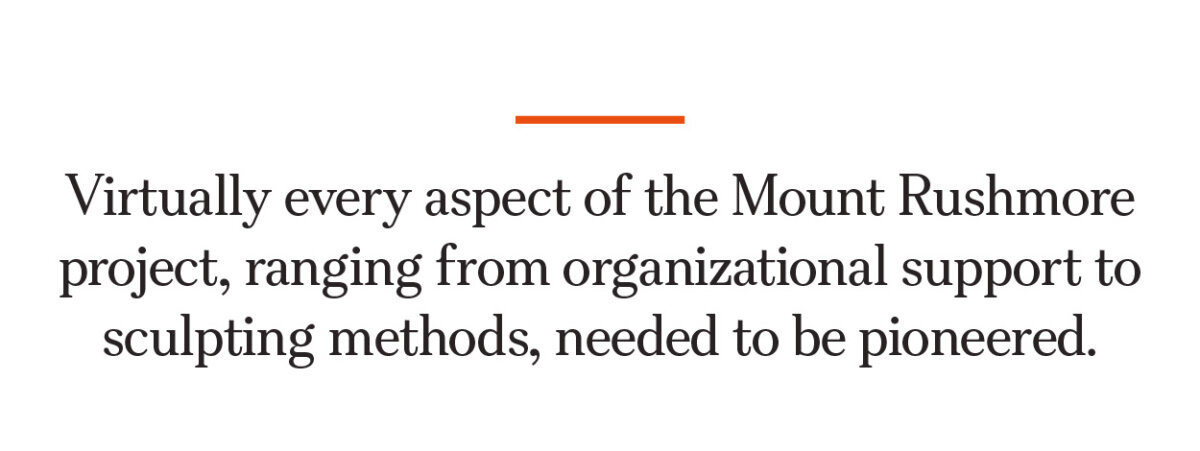
Virtually every aspect of the project, ranging from organizational support to sculpting methods, needed to be pioneered.
Funding shortfalls, political battles, and bad weather halted work multiple times. Disruptions consumed more than half of the monument’s 14-year construction period, which ended in 1941.
If not for dogged determination, engineering feats, and artistic ingenuity, this world-renowned American icon would never have taken shape.
Yet its likenesses of four U.S. presidents are built to last. They were born of Harney Peak Granite—which erodes at a rate of one inch every 10,000 years.
Along such a lengthy timeline, the history of Rushmore and our nation both register as mere blips.
Still, as the nation marks its 250 years with Rushmore as a centerpiece, the public is being invited to “enjoy the show and reflect on our nation’s remarkable journey and the great patriotic leaders who established, preserved and expanded our country’s destiny,” Dr. Jenifer Chatfield, deputy assistant secretary of U.S. Fish and Wildlife and Parks, said in a news release.
Accounts from Jones and other sources provide insights into the twists and turns of the mission improbable that produced Rushmore as an enduring symbol of America.
From No Name to World Fame
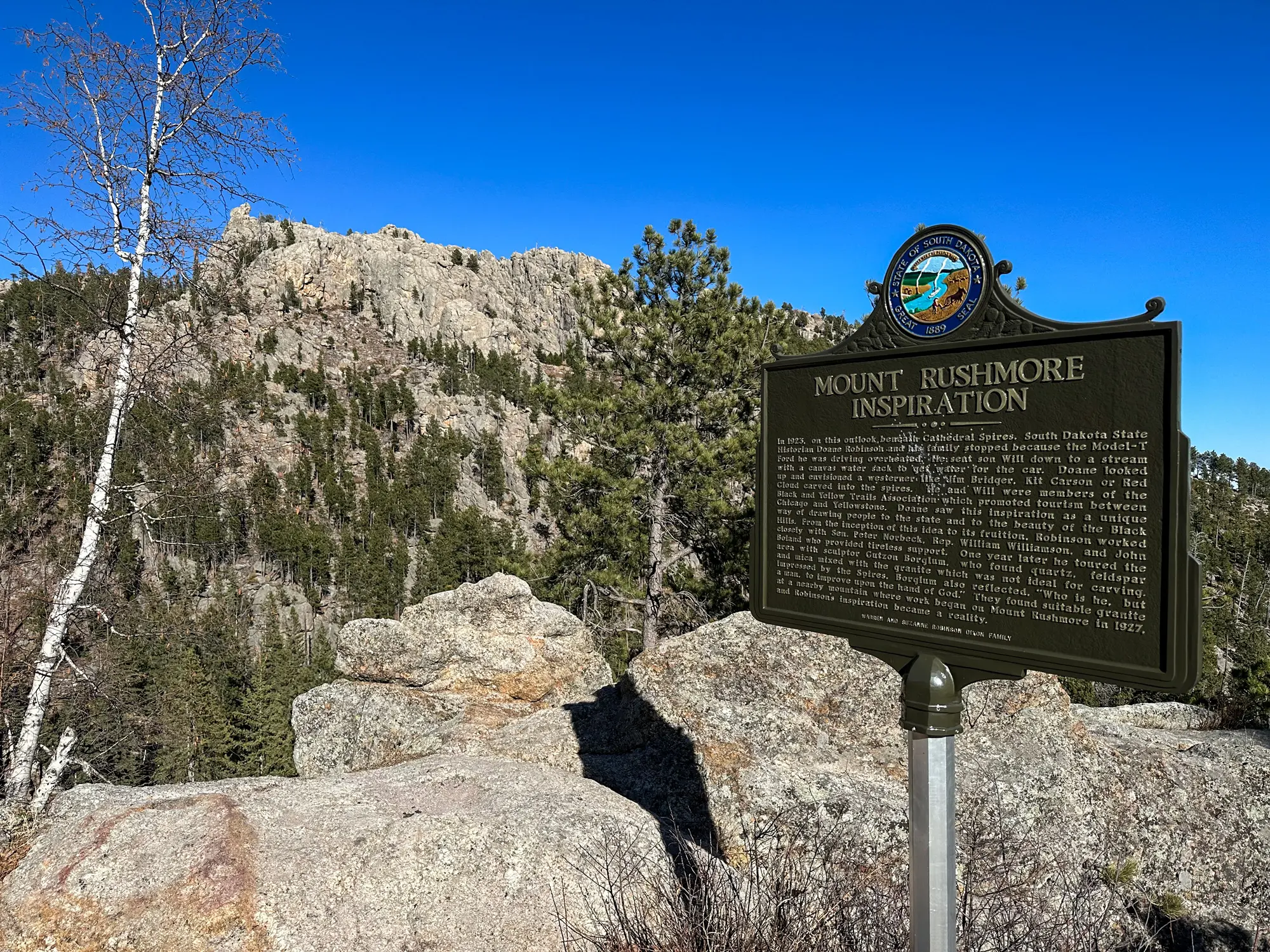
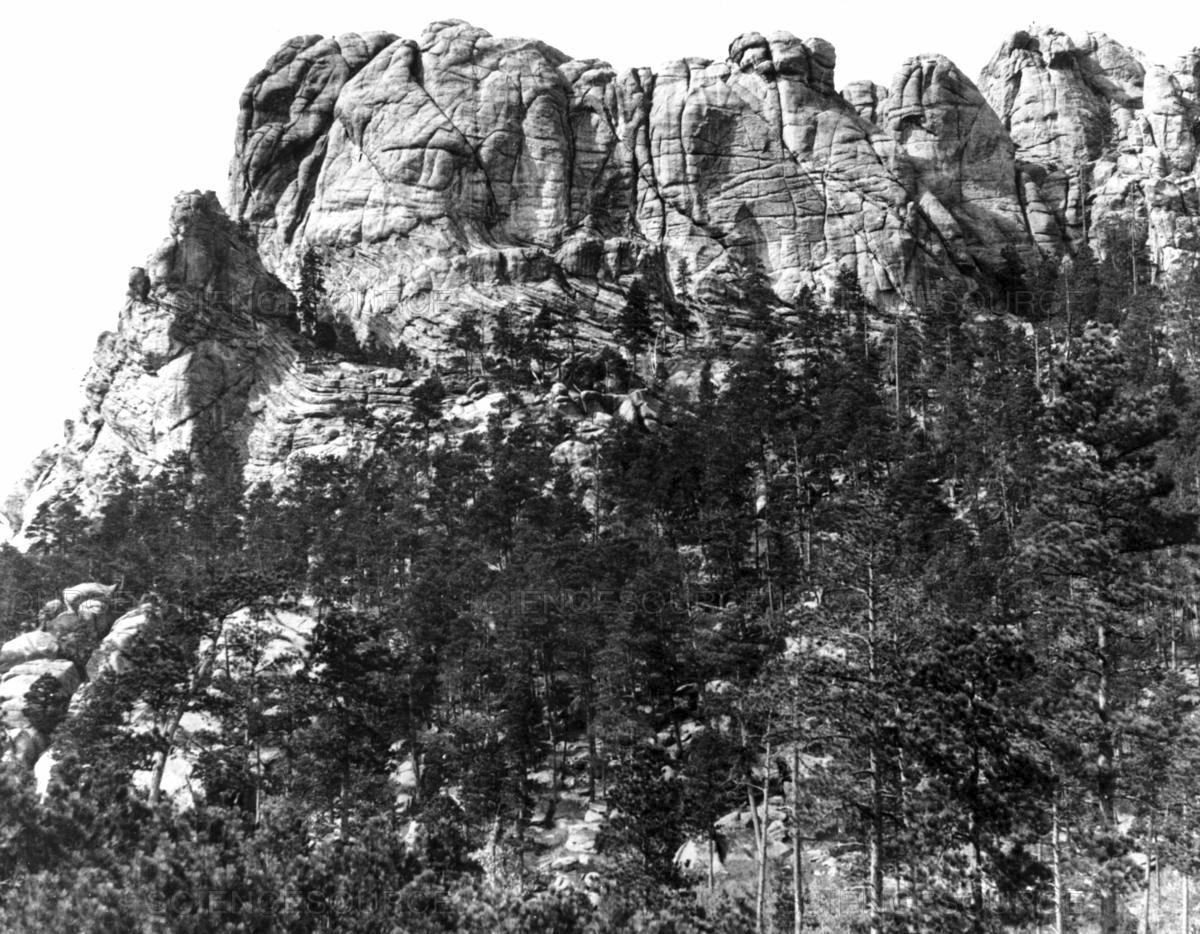
In 1885, when New York lawyer Charles E. Rushmore visited South Dakota, Mount Rushmore was not only faceless, but was also nameless. Merely by asking a local man what that specific peak was called, he unwittingly became its namesake.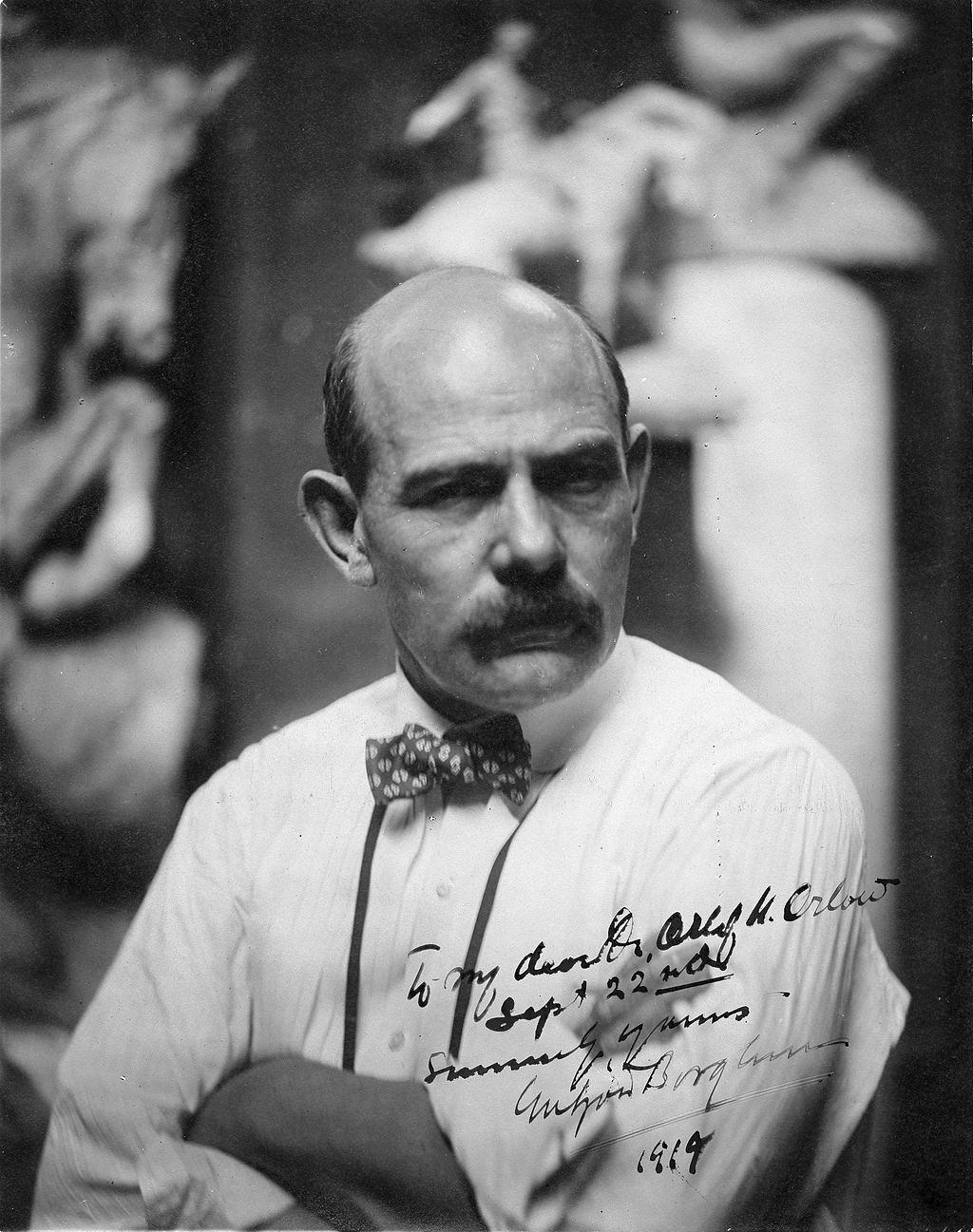
Decades later, the genesis of the famous Mount Rushmore carvings began arising from “the dreams of a gentle, aging scholar named Doane Robinson,” wrote author Rex Alan Smith in his 1985 book “The Carving of Mount Rushmore.”
Robinson, South Dakota’s state historian, envisioned a cluster of giant mountainside sculptures. He thought such a spectacle would become a tourist attraction. In 1924, he enlisted sculptor Gutzon Borglum to make that vision a reality.
An Idahoan born to Danish immigrants, Borglum studied art in Paris. After returning to the United States, he began creating “distinctly ‘American’ art,” the park service said. In 1908, he sculpted a “colossal head of Abraham Lincoln” out of marble—a precursor to the rendering that would later grace Mount Rushmore.
Borglum then was hired to begin work on Stone Mountain, a giant memorial to Georgia’s confederate heroes, carved into a mountainside. But the artist had a falling-out with sponsors of that project; it finally would be finished without Borglum, long after his death.
Borglum’s work on Stone Mountain helped him learn principles that were essential for the Rushmore project, including the use of explosives to blast away chunks of rock.
It’s remarkable that Borglum agreed to take on one of the world’s most ambitious projects when he was already in his late 50s, Jones said, but Borglum was exceptionally energetic and fit for his age.
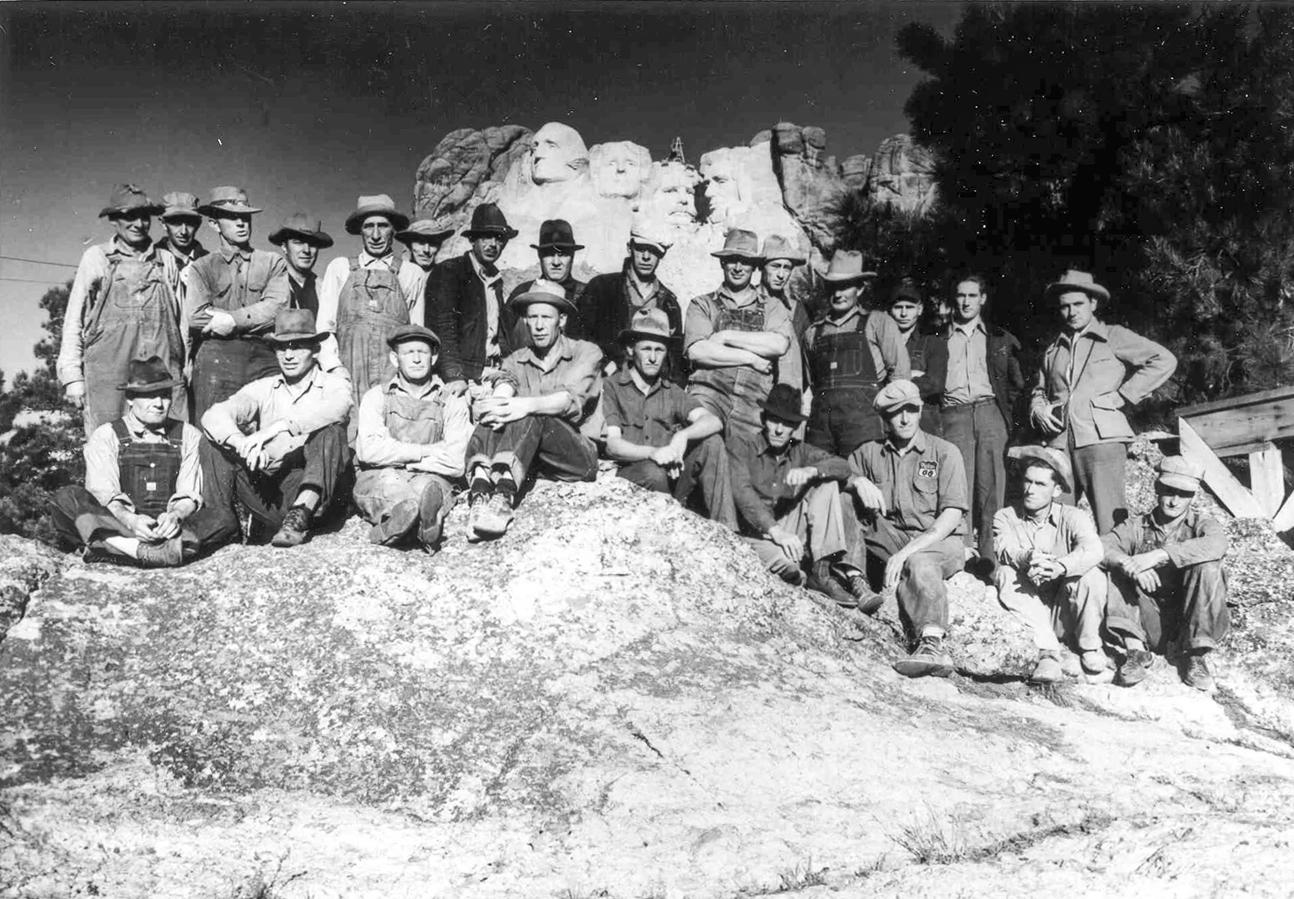
The sculptor’s “genius and stubborn dedication” get the most credit for Mount Rushmore, Smith wrote. However, the presidential likenesses never would have taken shape, he argues, if not for the contributions of Robinson, lawmakers, and many others, including some 400 workers who toiled on the mountainside.
Smith, a native South Dakotan, witnessed some of that work in person. He interviewed 25 workmen for his book, which is touted as the first to tell the full story behind “an unrelenting battle of man against mountain that finally culminated in an awe-inspiring symbol of America.”
Big Idea Gets Bigger
Almost every aspect of the eventual monument differed from Robinson’s original idea.“Presidents had not been the intended subject, Borglum had not been the intended sculptor, and Rushmore had not been the intended mountain,” Smith wrote.
Instead, Robinson imagined depicting notable figures of the American West.
And he had asked Chicago sculptor Lorado Taft if he could transform natural granite spires known as The Needles, 20 miles southwest of Rushmore, into representations of Buffalo Bill Cody and Sioux Indian Chief Red Cloud.
After months of attempting to persuade Taft, who was ailing, Robinson contacted Borglum. The sculptor and many other artists of his time believed that artwork on a grand scale “has a permanence to it that transcends time,” Jones said.
Borglum surveyed several Black Hills sites before identifying Mount Rushmore as the ideal setting. “Its broad wall of exposed granite faced southeast to receive direct sunlight for most of the day,” the park service said, making it more ideal for viewing.
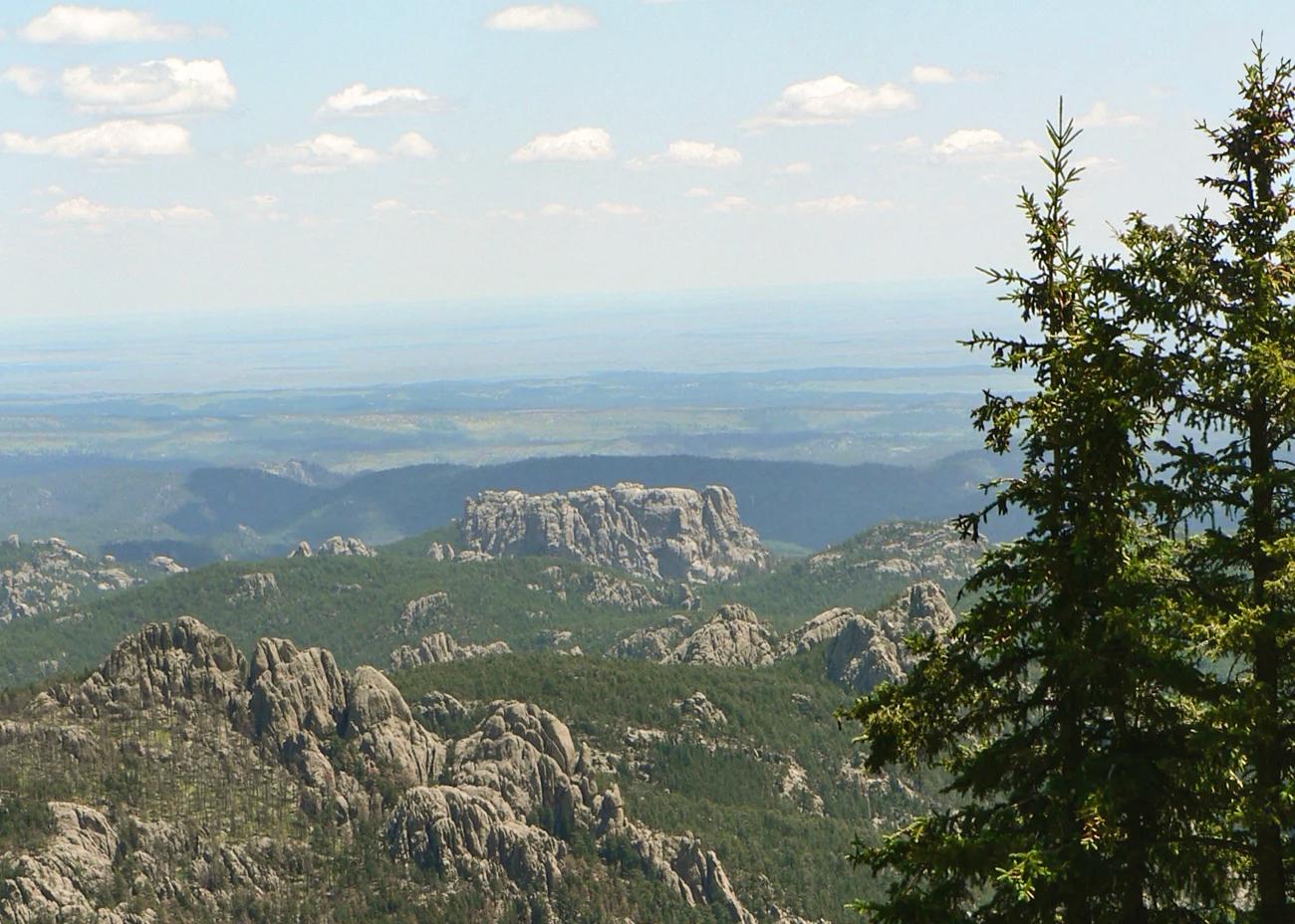
An admirer of New York’s Statue of Liberty and its powerful symbolism, Borglum wanted to create a landmark of national significance—not one with more limited, regional appeal, Jones said.
He believes Borglum was trying to convey that the ideals expressed in the Declaration of Independence “still live on and are visually manifested by the carving on this mountain.”
Borglum “was aware of the lasting legacy of his vision,” the park service says.
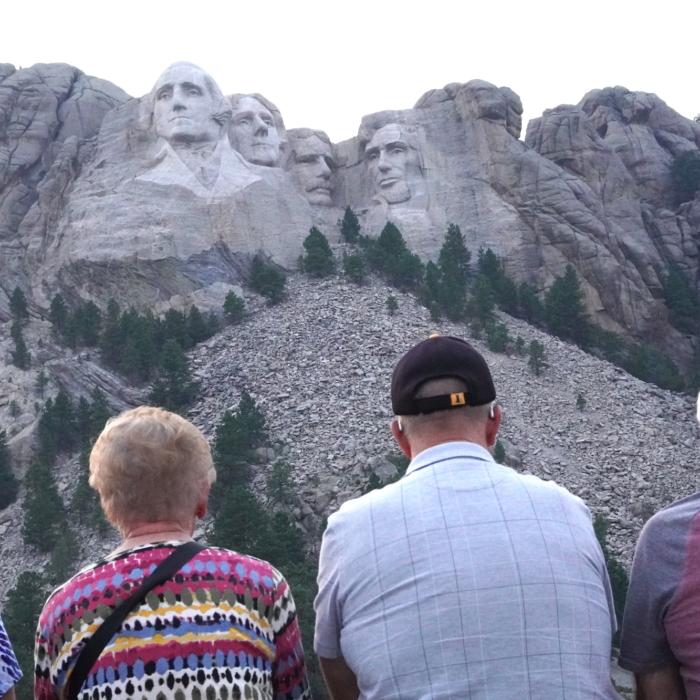
The sculptor once said, “If I can memorialize for the ages a tiny bit of America’s greatness by carving four of her leaders who contributed so much to this greatness, then I will have contributed something of value to the affairs of man.”
A narrative titled “The Meaning of Mount Rushmore,” which was inscribed on one of the 16 hidden porcelain panels, states that Borglum carved the four American presidents because they “symbolize the principles of liberty and freedom on which the nation was founded,” according to a transcript of a park service record.
The panel also explains why Borglum chose each of the four presidents:
“George Washington signifies the struggle for independence and the birth of the Republic;
“Thomas Jefferson, the territorial expansion of the country;
“Abraham Lincoln, the permanent union of the states, and equality for all citizens;
“And Theodore Roosevelt, the 20th-century role of the United States in world affairs and the rights of the common man.”
Big Dreams, Big Problems
The panel’s text emphasizes: “A project of the size and significance of Mount Rushmore required persistence and forthrightness to make it happen. Borglum possessed those qualities.”But as Borglum pressed Congress and others for funding, his abrasive and stubborn manner sometimes “alienated the very people whose support he sought,” the narrative reads.
Despite opposition from American Indians and others who wanted the landscape to remain undisturbed, state and federal lawmakers voted to allow the project in 1925.
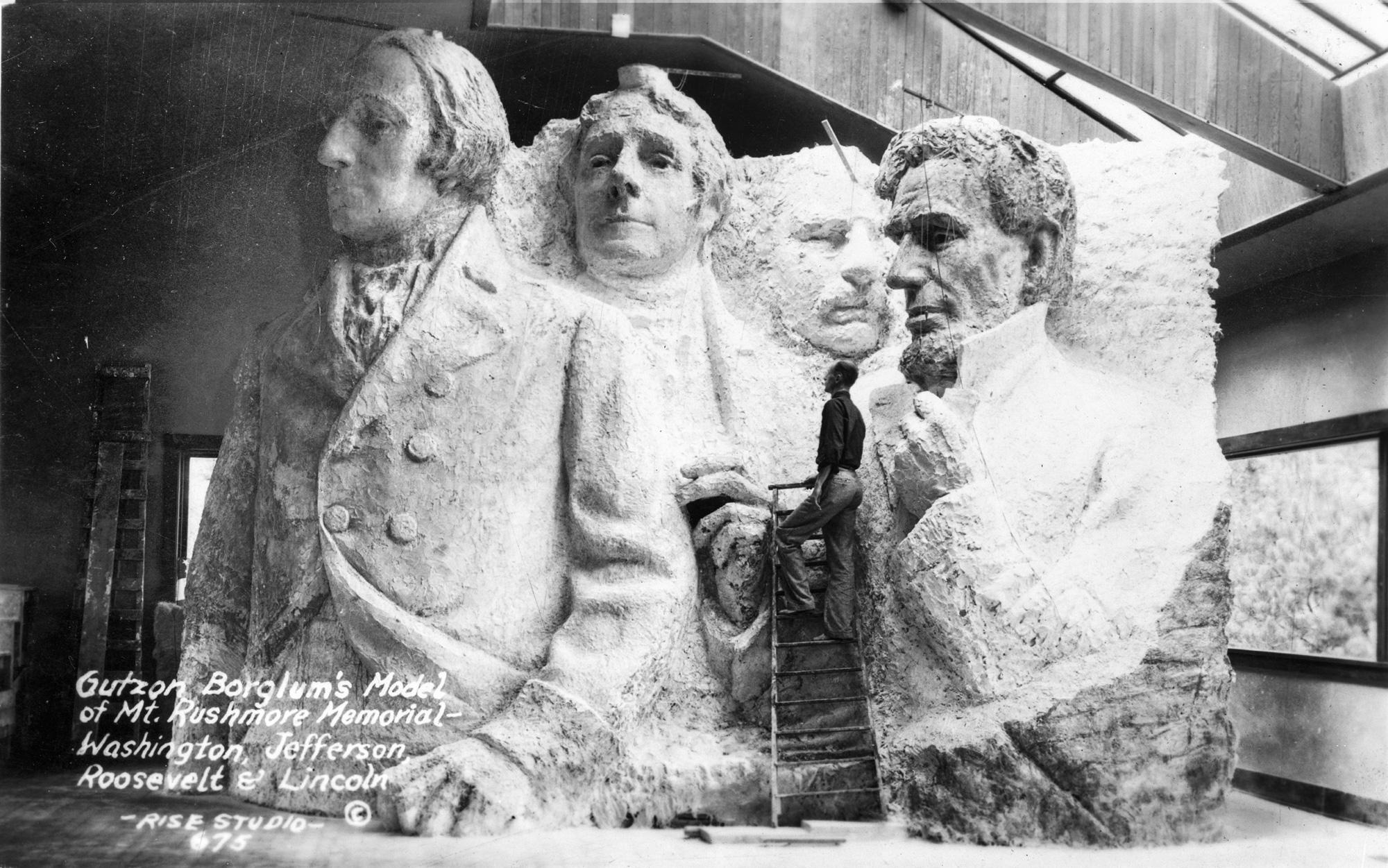
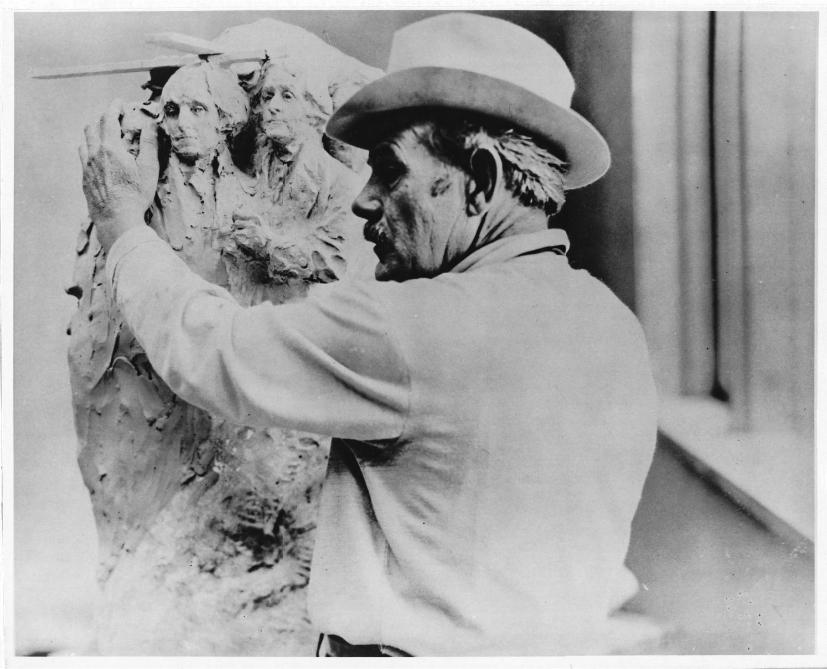
Then Borglum filled sketchbooks, made plaster models of the planned sculptures, and lobbied for federal funding.
His philosophy seemed to be, “I want to carve these massive statues on this mountain—and the money will come,” Jones said, adapting a quote from the 1989 cornfield-to-ball field movie “Field of Dreams.”
Borglum operated under “a sort of ‘Field-of-Dreams’ theory of financing,” Jones said, “and that wasn’t working out.”
Individual donors and community groups contributed funds that kicked off the project.
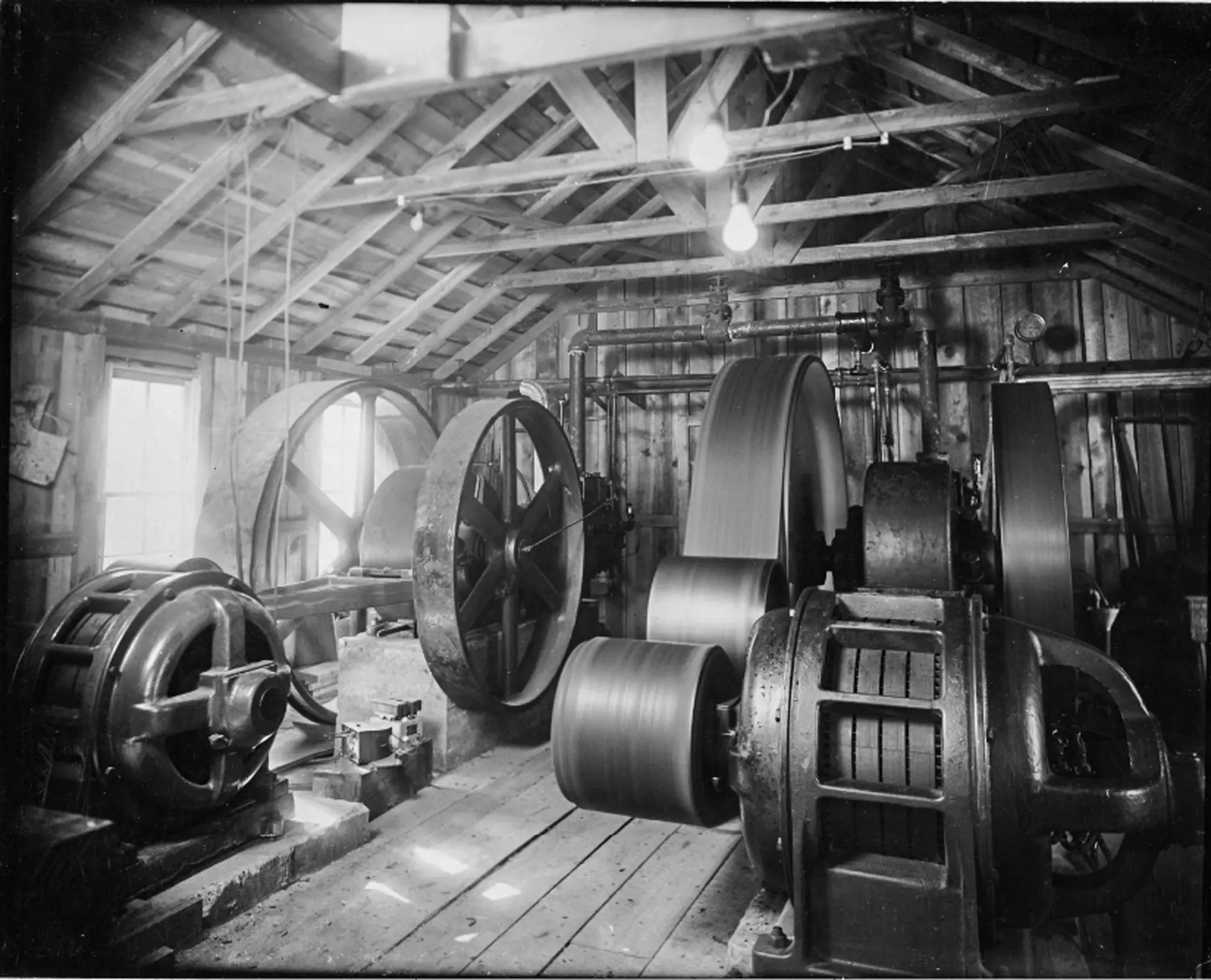
In 1927, the first drills whirred, jackhammers rattled, and sticks of dynamite blasted.
In 1929, Congress agreed to match contributions for up to half the memorial’s estimated $500,000 cost. The project, however, would end up costing nearly $1 million, mostly from federal sources.
As the Great Depression took hold, money was hard to come by for almost any purpose, let alone for an artistic endeavor.
Rushmore’s funds repeatedly ran out. Each time, “the work was abandoned, and the mountain returned to silence,” Smith wrote.
Over and over, Borglum’s sheer resolve revived Rushmore—a cycle that would churn until the day he died.
Precision and Peril
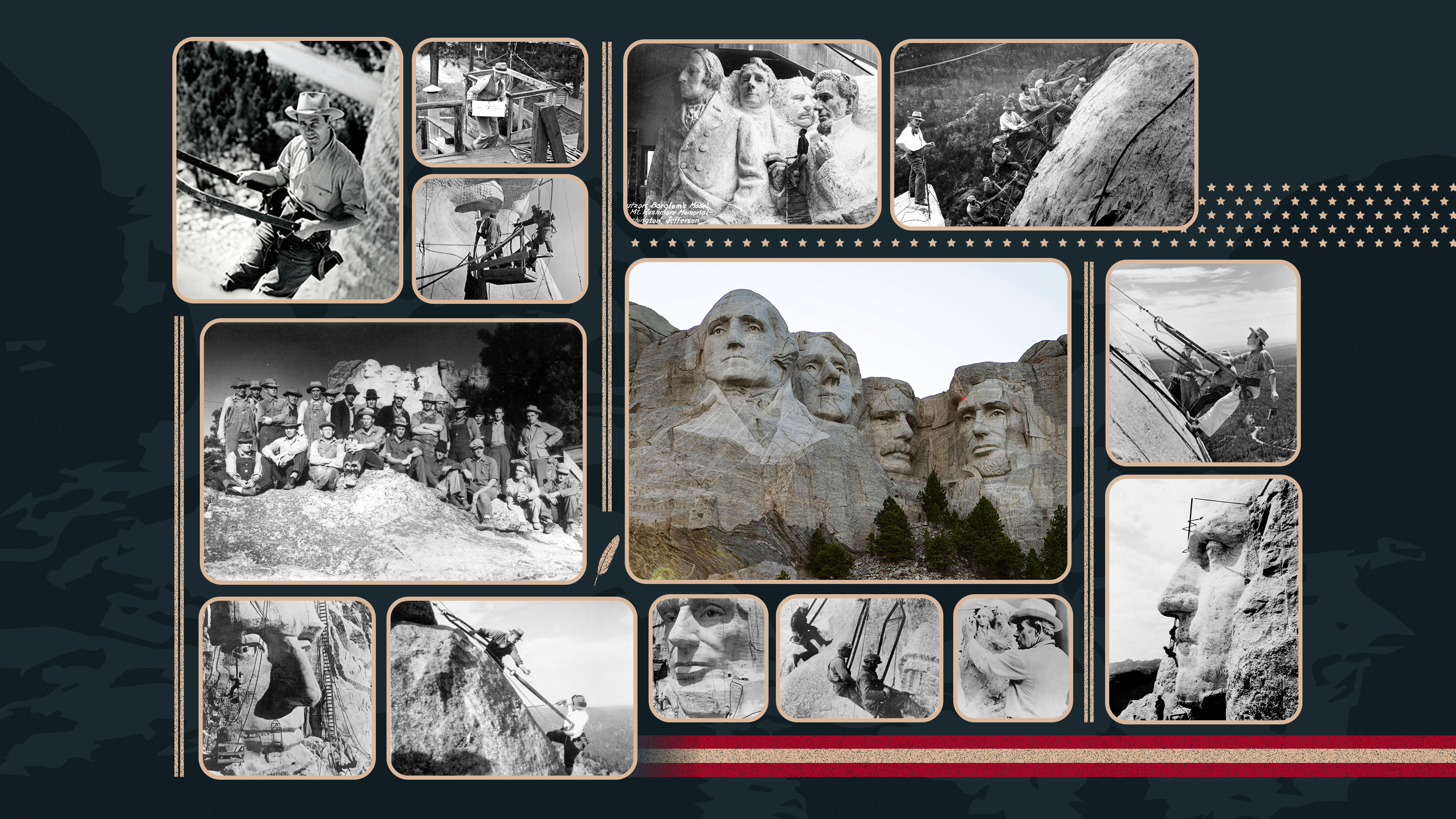
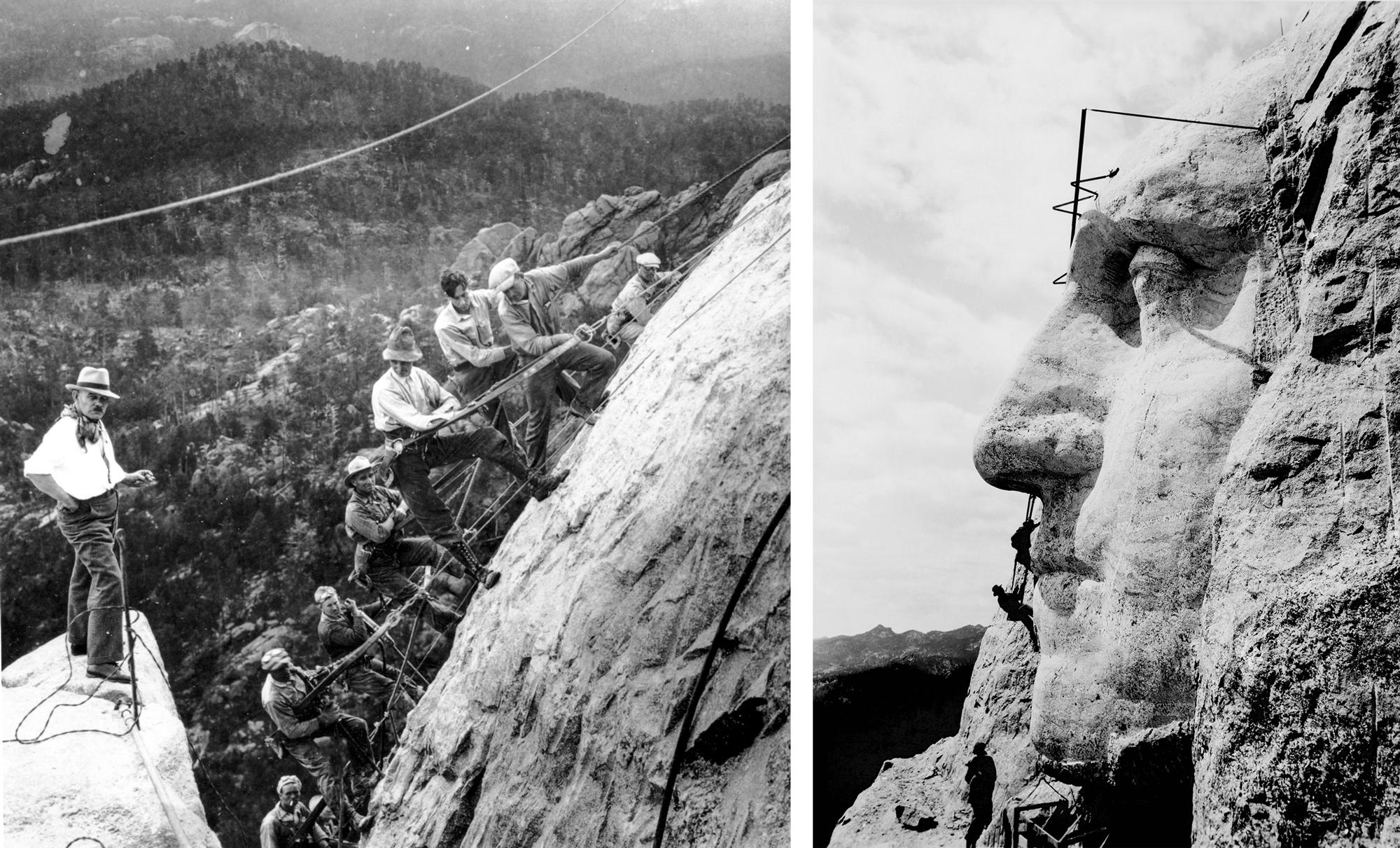
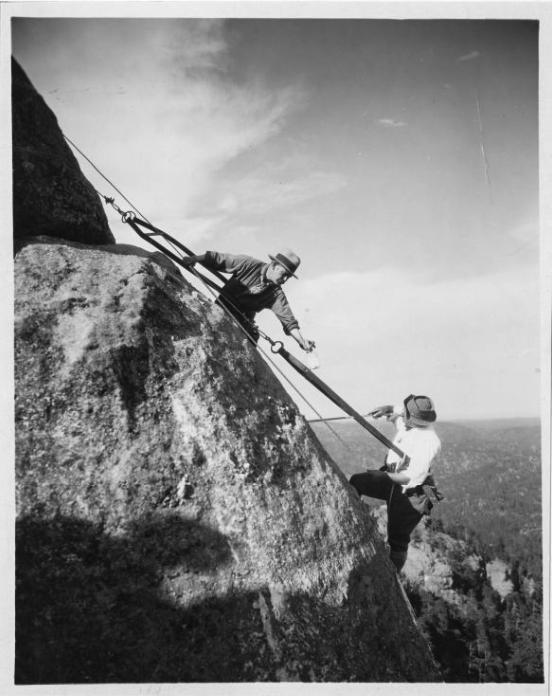
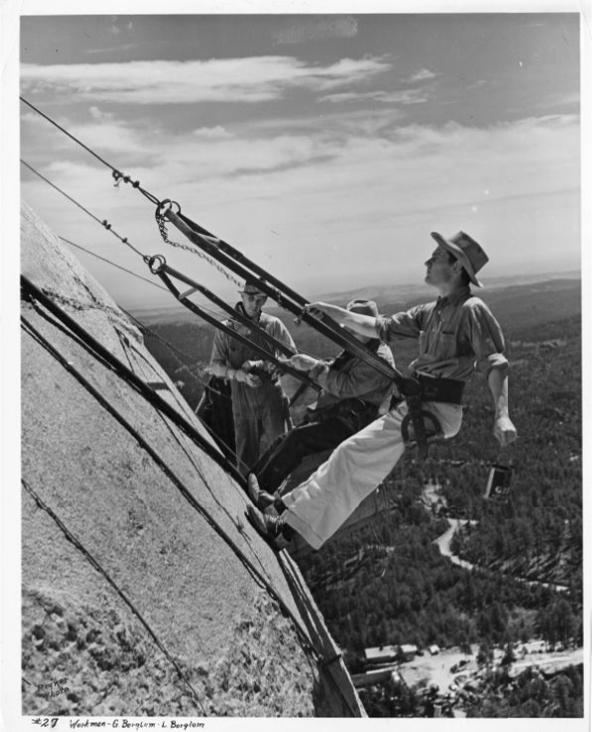
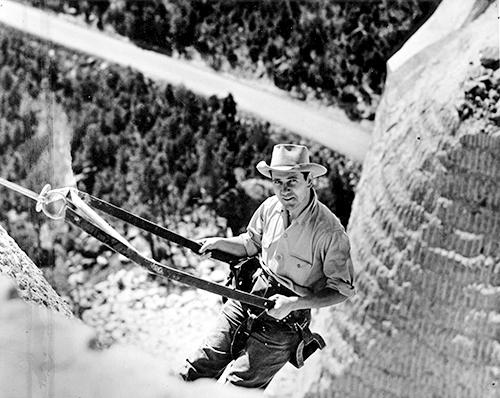
In the meantime, working on Mount Rushmore was so perilous, “it’s astonishing that no one was killed,” Jones said in a 2025 podcast.Workers started their day by climbing 700 steps to the mountaintop.
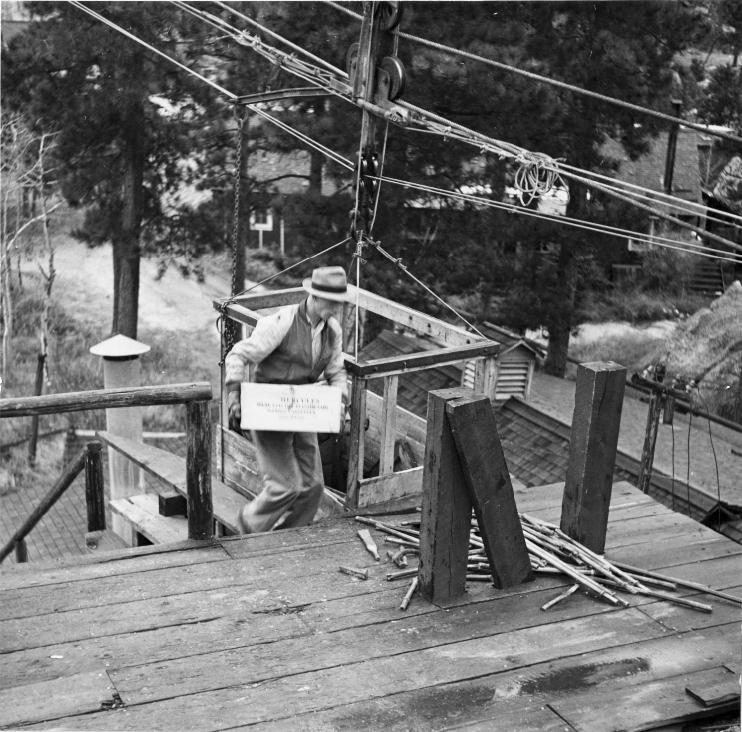
There, some of them would hand-crank a winch that raised and lowered co-workers who were strapped into “bosun chairs”—leather harnesses suspended on steel cables.
Workers hovered hundreds of feet above the ground, following Borglum’s directives.
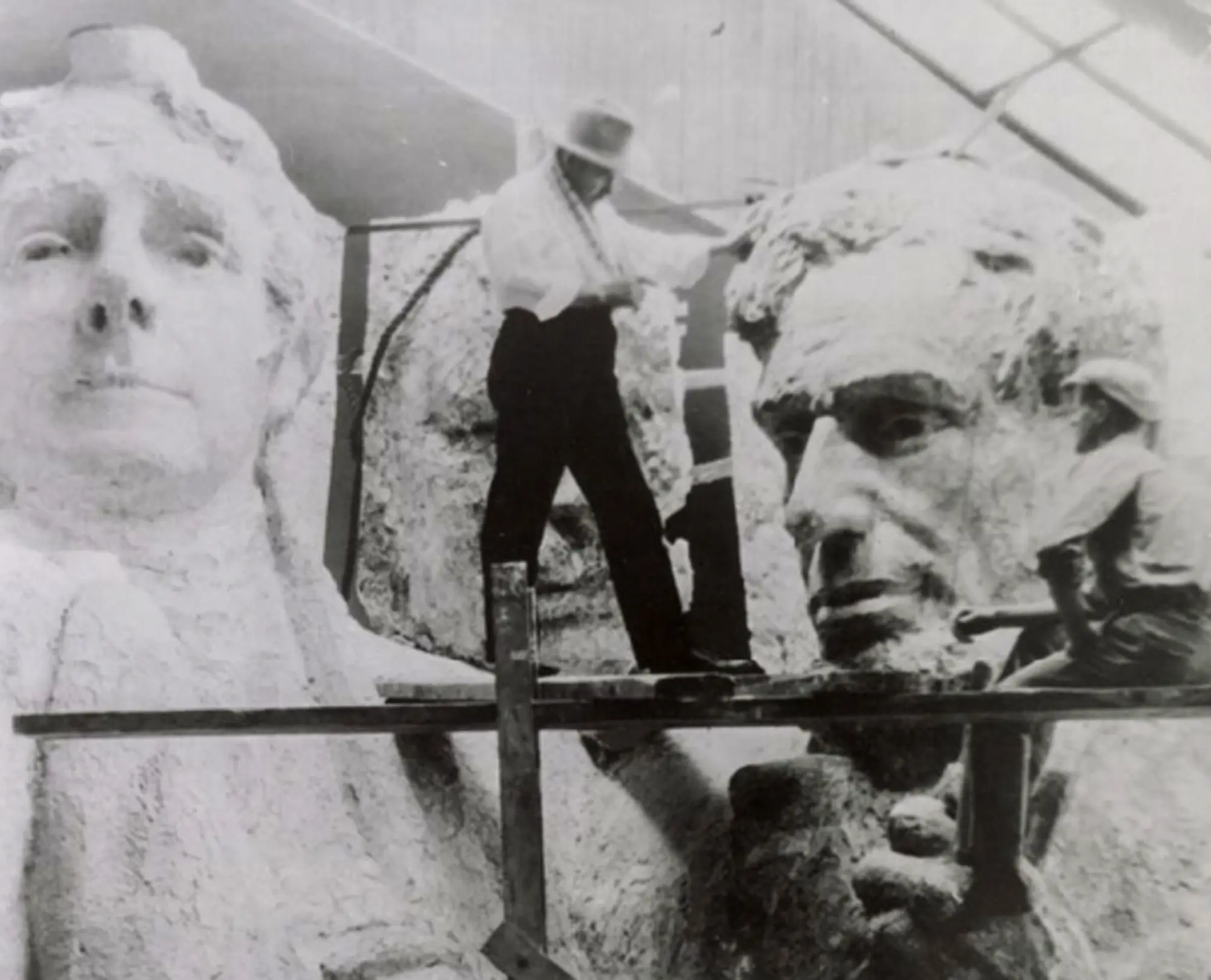
After crafting scale models of the presidents’ heads, he devised a method for transferring their proportions onto the mountainside.
Based on those specifications, workers called “pointers” marked spots for drillers to bore holes.
Then powdermen “would cut and set charges of dynamite of specific sizes to remove precise amounts of rock,” the park service said.
During those excavations, 450,000 tons of granite tumbled to the ground, where it remains today. About 90 percent of it was removed with dynamite, making Rushmore a rare example of a sculpture crafted primarily with dynamite, Jones’s podcast points out.
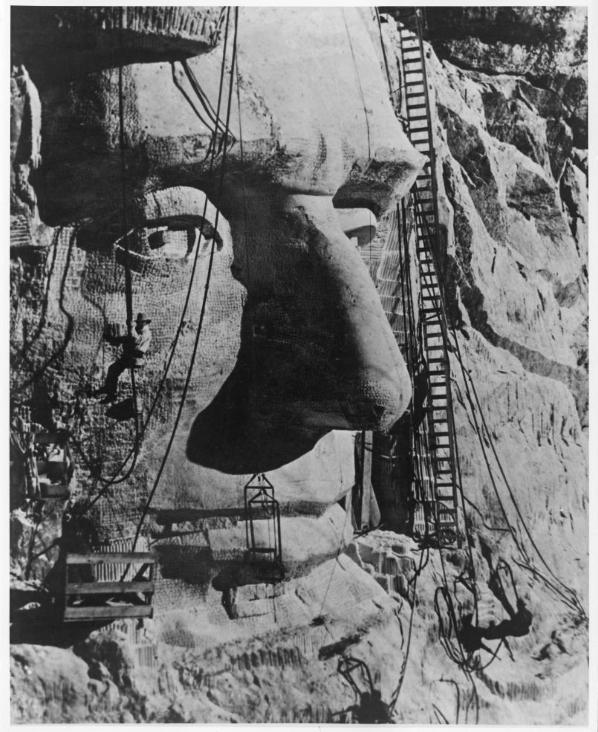
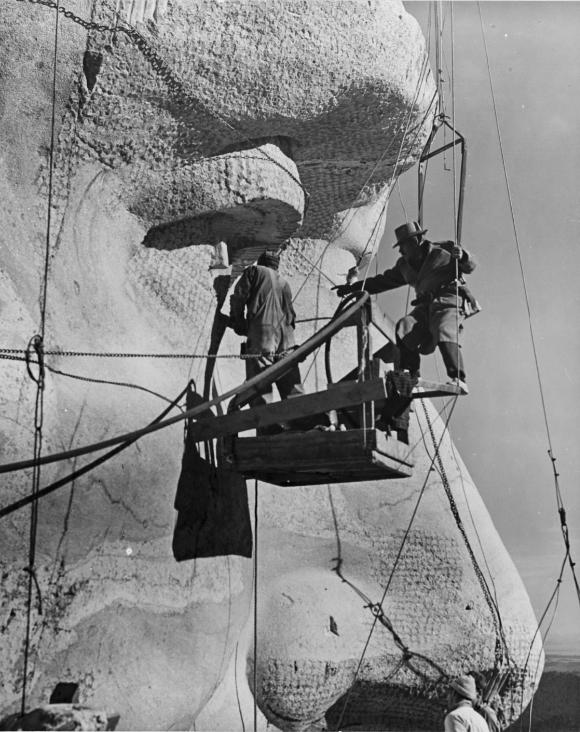
As the rough shape of each face began emerging, Borglum would calibrate adjustments. Then he would order blasting to cease.
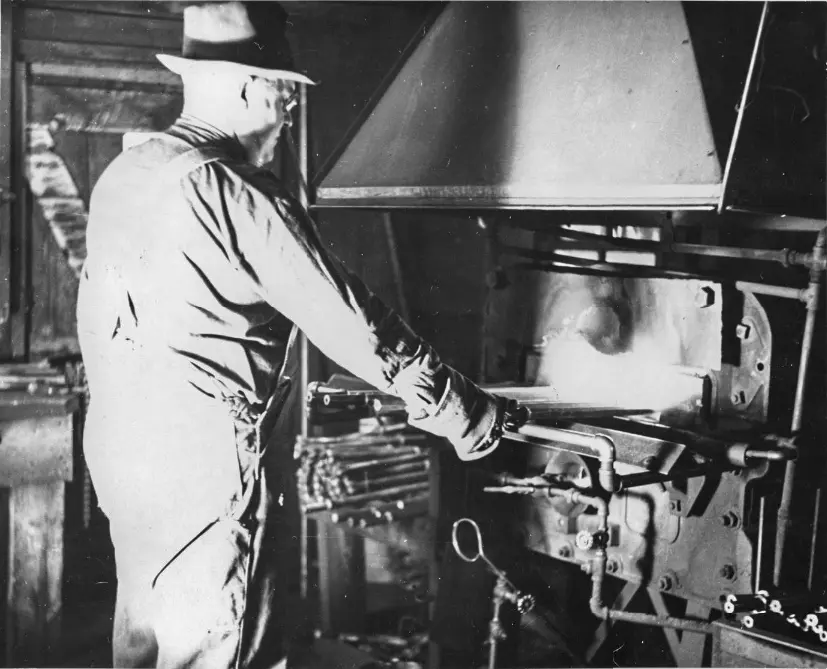
Next, workers drilled holes side-by-side to “weaken the granite so it could be removed,” the park service said. Each day, this process dulled hundreds of drill bits. A blacksmith stayed busy sharpening them.
In the final stages, workers smoothed the surfaces with tools such as pneumatic hammers.
To create the mesmerizing quality of each president’s gaze, Borglum engineered an optical illusion.
After carving a rounded opening in the center of each eye, workers carefully removed granite until a slightly rectangular peg remained, protruding beyond the edge of the eye.
Viewed from a distance, they appear as “highlights in the dark pupils that surround them,” Smith wrote, bringing “the expression and sparkle of life” to the inanimate stone.
Surprising Shifts
As grandiose as the sculptures appear today, they represent only part of what Borglum had planned.He intended the sculptures to include not just heads of the presidents, but also their torsos, all the way down to their waists.
Also, Borglum insisted on a written description to preserve the identities and significance of Rushmore’s enshrinees.
In 1939, he famously stated, “You may as well drop a letter into the world’s postal service without an address or signature, as to send that carved mountain into history without identification.”
So Borglum set out to carve “The Entablature”—a large inscription outlining major events in U.S. history from Washington to Roosevelt—alongside the presidential sculptures.
In 1930, Washington’s head was dedicated; to its right, workers began carving the Entablature and Jefferson.
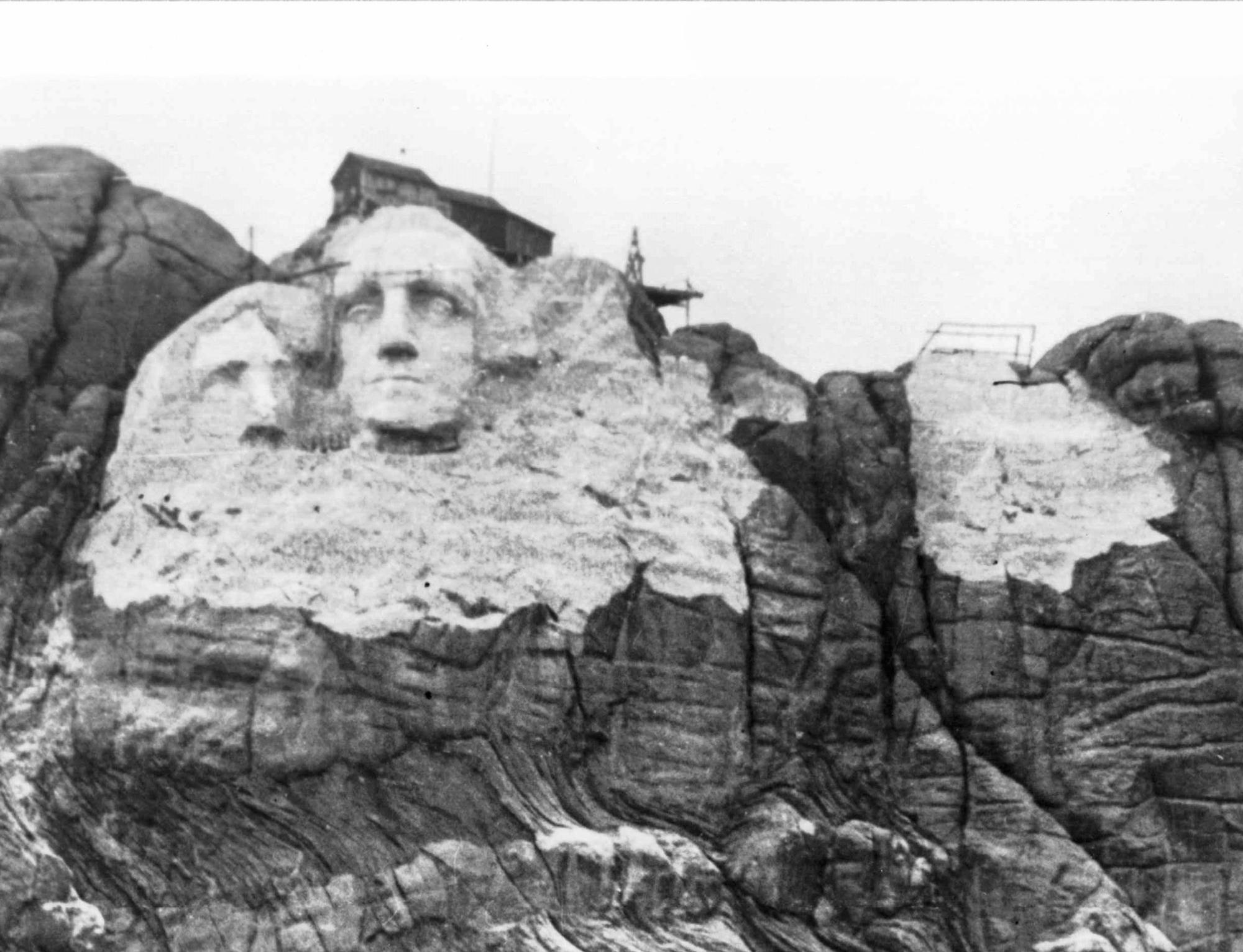
But work on both had to be scrapped.
After workers discovered serious flaws in the rock, Jefferson was relocated to the left side of Washington. Because of that reconfiguration, the original Entablature site needed to be used for the Lincoln head instead.
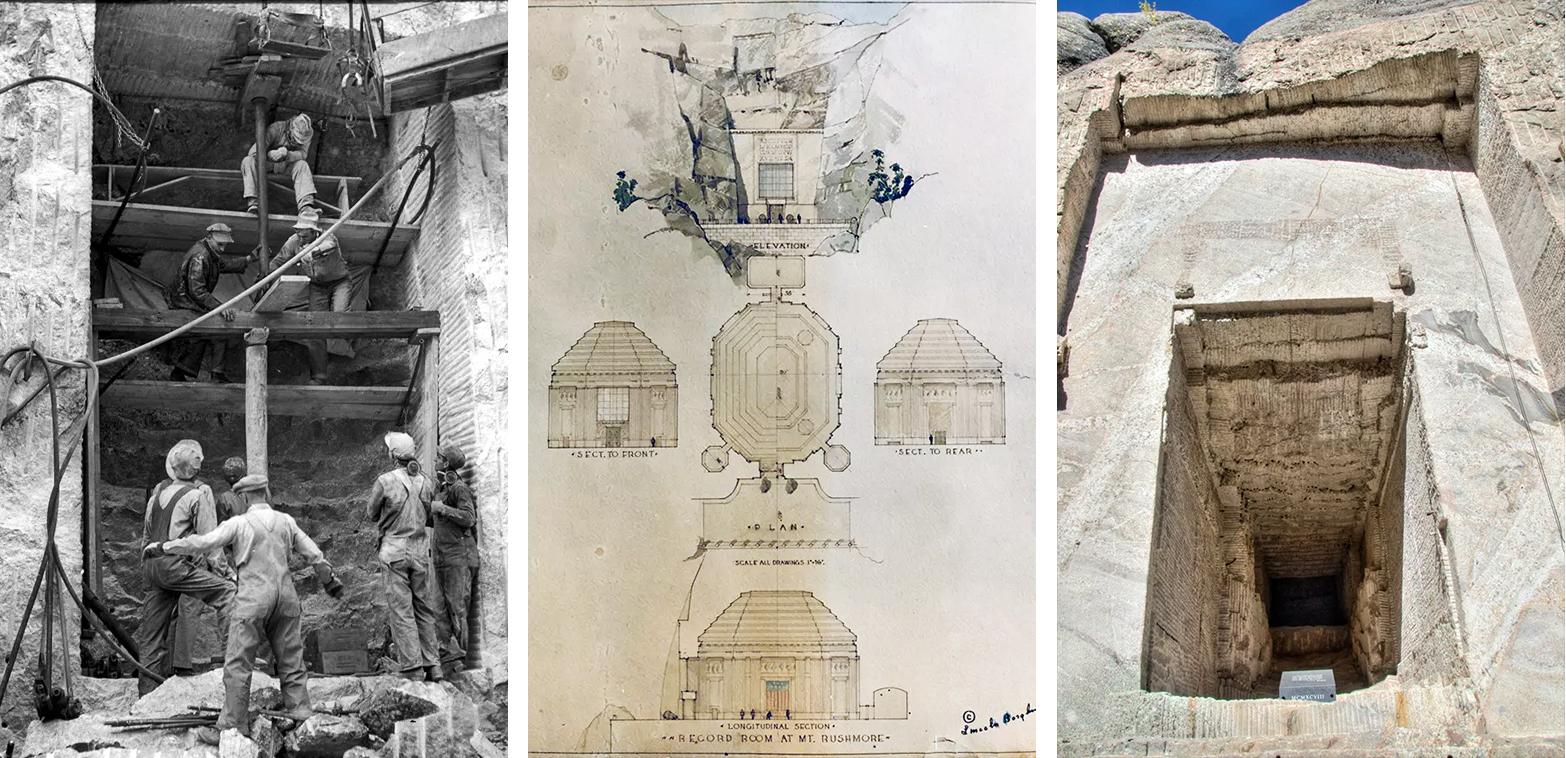
Enter Plan B: The Hall of Records.
“This chamber would hold the documents and artifacts most central to American democratic history,” the park service said.
Plans called for the Declaration of Independence, Constitution, and other vital records to be housed in bronze and glass cabinets in an 80-by-100-foot room inside the mountain.
Its entrance would feature “cast glass doors opening into a higher chamber,” the park service said, topped by a bronze eagle with a wingspread of 38 feet.
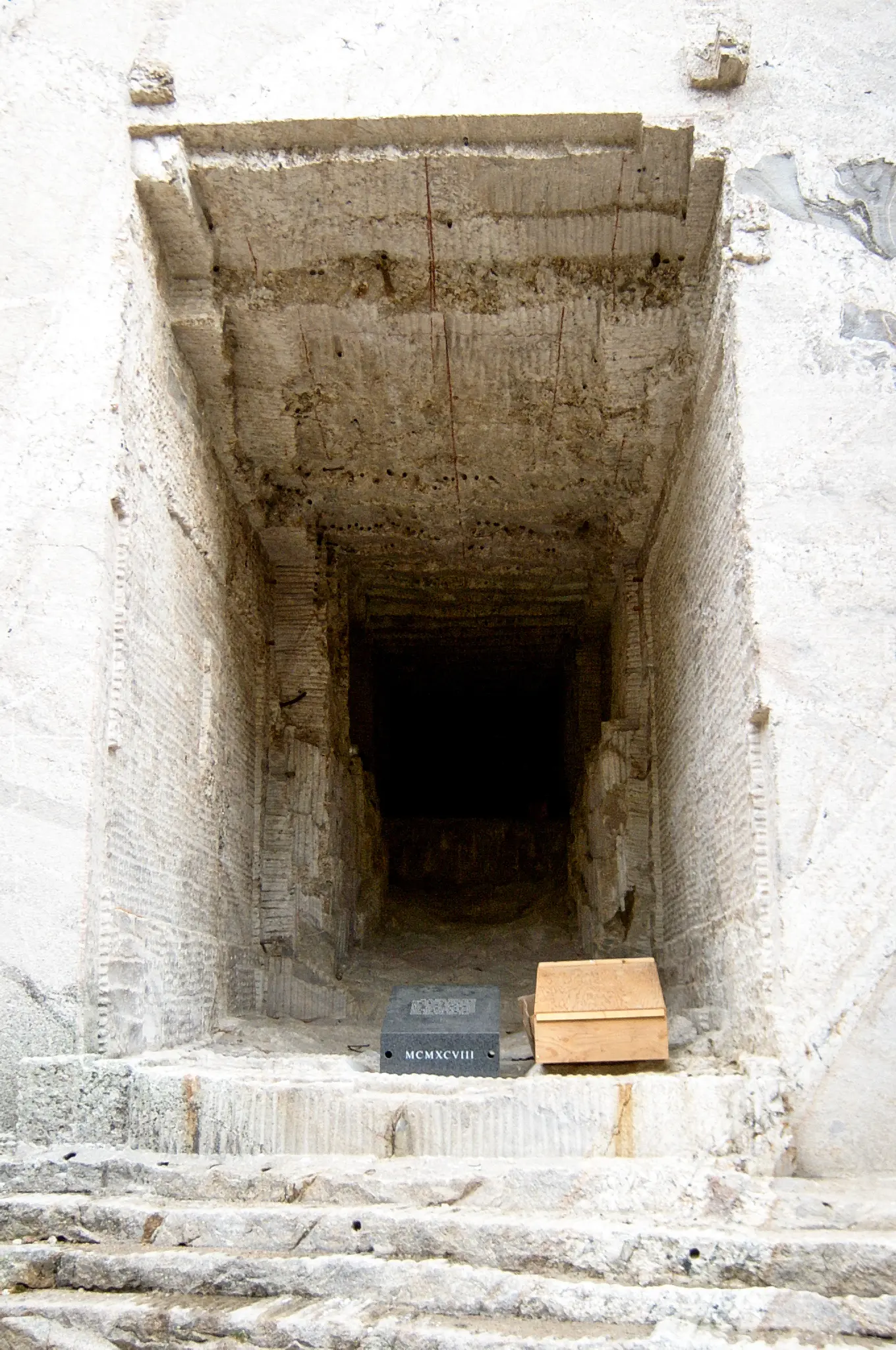
Work on the hall began in 1938—producing the tunnel behind Lincoln’s head.
But in 1939, Congress directed Borglum to stop that work and concentrate on finishing the presidents’ faces.
Complete But Not Finished
The final of the four sculptures, Roosevelt’s, was dedicated in July 1939. Some detailed revisions were needed on the presidents, and Borglum remained insistent about adding the hall.As of early 1941, months before the bombing of Pearl Harbor would force the United States to enter World War II, Borglum was still working on funding proposals.
He viewed Rushmore as an everlasting symbol of the American Dream that he cherished, Smith wrote.
“And Mount Rushmore, his supreme achievement, had become his obsession, reason for living, ticket to immortality,” Smith wrote.
But in March, Borglum underwent a minor surgery that led to his death from a blood clot, just shy of his 74th birthday.
When the sculptor died on March 6, 1941, so did his dreams for additions to Rushmore.
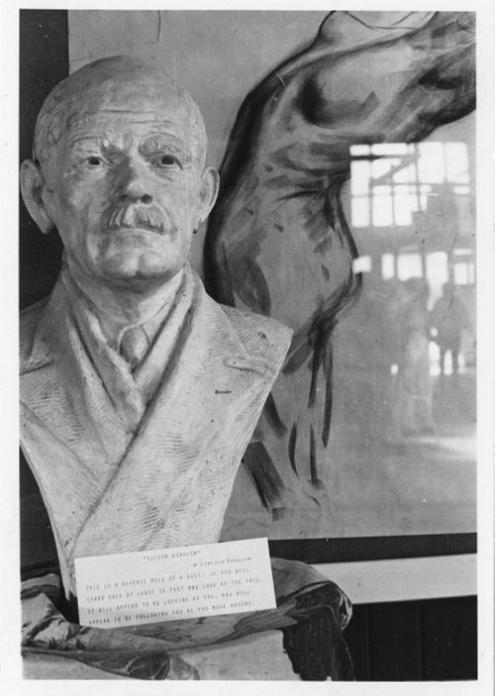
His son, Lincoln Borglum, who had helped work on the monument for years, directed workmen as they put finishing touches on the presidential hairstyles, Roosevelt’s facial features, and Washington’s collar and lapels.
At 4 p.m. on Oct. 31, 1941, “the mountain for the last time echoed the chatter of bumpers and the clamor of drills,” Smith wrote.
Echoes Across Ages
Yet Borglum would make one more mark on his life’s work decades after he was gone.On Aug. 9, 1998, his relatives and park service officials gathered inside the never-completed Hall of Records behind Lincoln’s head.
They added a records repository at the mouth of the otherwise empty 70-foot-long tunnel.
The repository includes those 16 porcelain-panel inscriptions, stored inside a teakwood box and encased in a titanium vault. They summarize how and why the sculptures were built and the meaning behind them. They also describe the contributions of Washington, Jefferson, Lincoln, and Roosevelt, and the history of America and its values.
That documentation falls far short of Borglum’s grandiose plans for the Hall of Records.
But the records at least offer some insights for explorers in future epochs, the sculptor’s daughter, Mary Ellis Borglum, said in an interview with local media at the time of the enshrinement.
Without those descriptions, Rushmore’s giant faces were in danger of becoming as enigmatic as the Great Sphinx statue in Egypt, his daughter said.
Thus, her father “felt the tremendous need to have a record of [its meaning] there at the mountain, where it could be found eons later,” she said.
A granite capstone covering the repository is inscribed with the sculptor’s own words:
“Let us place there, carved high, as close to heaven as we can, the words of our leaders, their faces, to show posterity what manner of men they were. Then breathe a prayer that these records will endure until the wind and rain alone shall wear them away.”
Mary Ellis Borglum said the placement of that capstone marked “the end of the creation of Mount Rushmore.”
Borglum’s masterpiece can be considered “the most enduring monument” for not just America, but for all of mankind, Smith wrote.
“Carved upon a cliff that has changed but little since mankind first appeared on Earth ... the faces will still be there, looking much as they do now, long after man has gone,” he wrote.