Once, not so long ago, Poland’s primary seaport was a rather grim and gritty place. Blue-collar to the bone, cranes dominated the skyline, and warehouses, increasingly derelict, crowded the waterfront. Stolid, lunchbox-bearing workers marched off, en masse, to the city’s famous shipyards. While I’m sure it had its pleasures, this was not a place synonymous with fun.
But times have changed—rather dramatically—in Gdansk. It is located near the Baltic Sea and home to about half a million people. Like other ports (and other urban centers in this part of the world), history here is long, complicated, and fascinating. Gdansk has been a Free City, a member of the Hanseatic League—an extensive medieval trading network—and also part of the German Empire (when it was known as Danzig). And it was the birthplace of Solidarity, a trade union and mass movement that shook the foundations of communism across the Eastern Bloc.
Arrival
Named for arguably Poland’s greatest recent hero (more on him later), Gdansk Lech Walesa Airport (GDN) is the country’s third busiest, behind those in Warsaw and Krakow. It also serves the two other cities, Sopot and Gdynia, in what’s known as the Tricity area. Collectively, Tricity has a population of about 1 million people.The airport is mostly a hub for low-cost carriers, including Ryanair and Wizz Air. GDN is also served by a handful of national flag carriers, which offer nonstop flights to a number of European cities, including Munich, Copenhagen, and Amsterdam. Which means your trip from North America will definitely include a connection somewhere else on the continent.
Morning
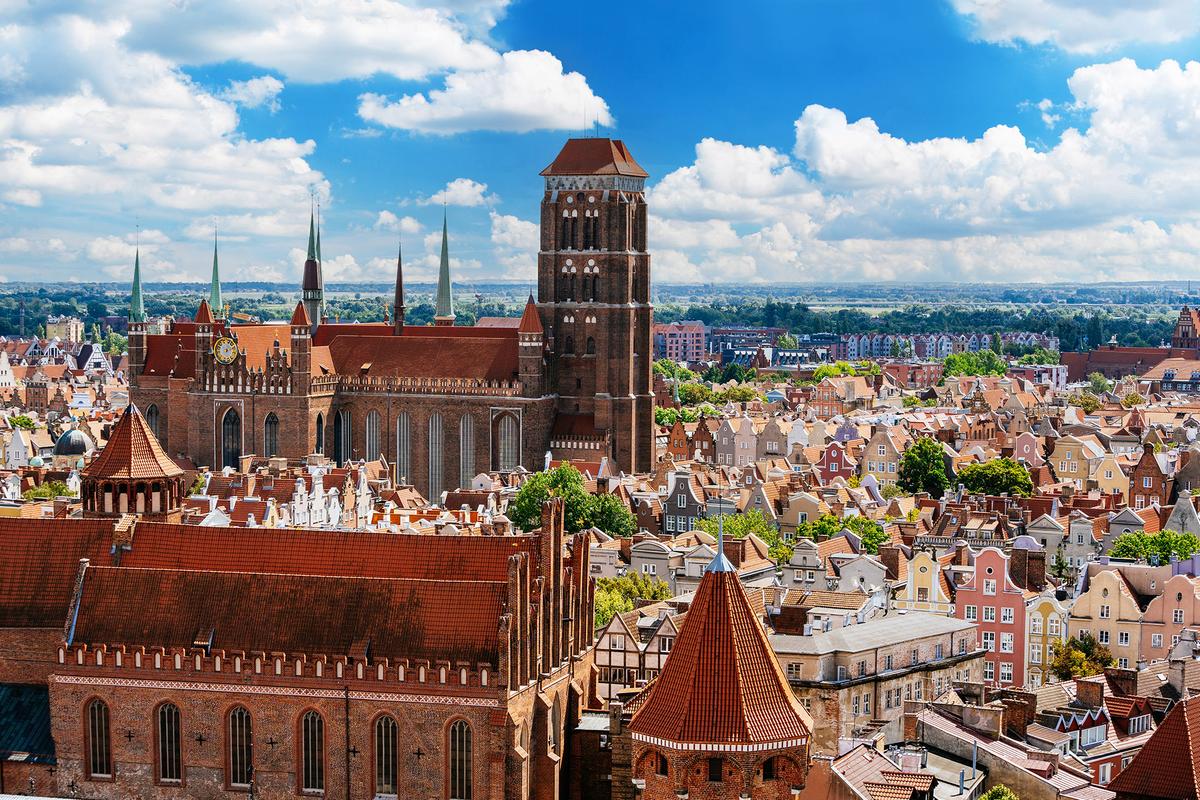
It probably makes sense to start where everything here began. This is a city of beautiful spires and brick towers. Once you arrive at Glowny, the central station, Old Town is only a few minutes away.
A brisk walk through Stare Miasto is the perfect way to shake off the jet lag and stretch your legs after a long flight. Old Town here is compact, but packed with attractions. Perhaps fortify first—especially because most of the day will be spent on foot. (I’m not a particularly ambitious walker, but on a recent visit, I averaged 15,000 to 20,000 steps every day.)
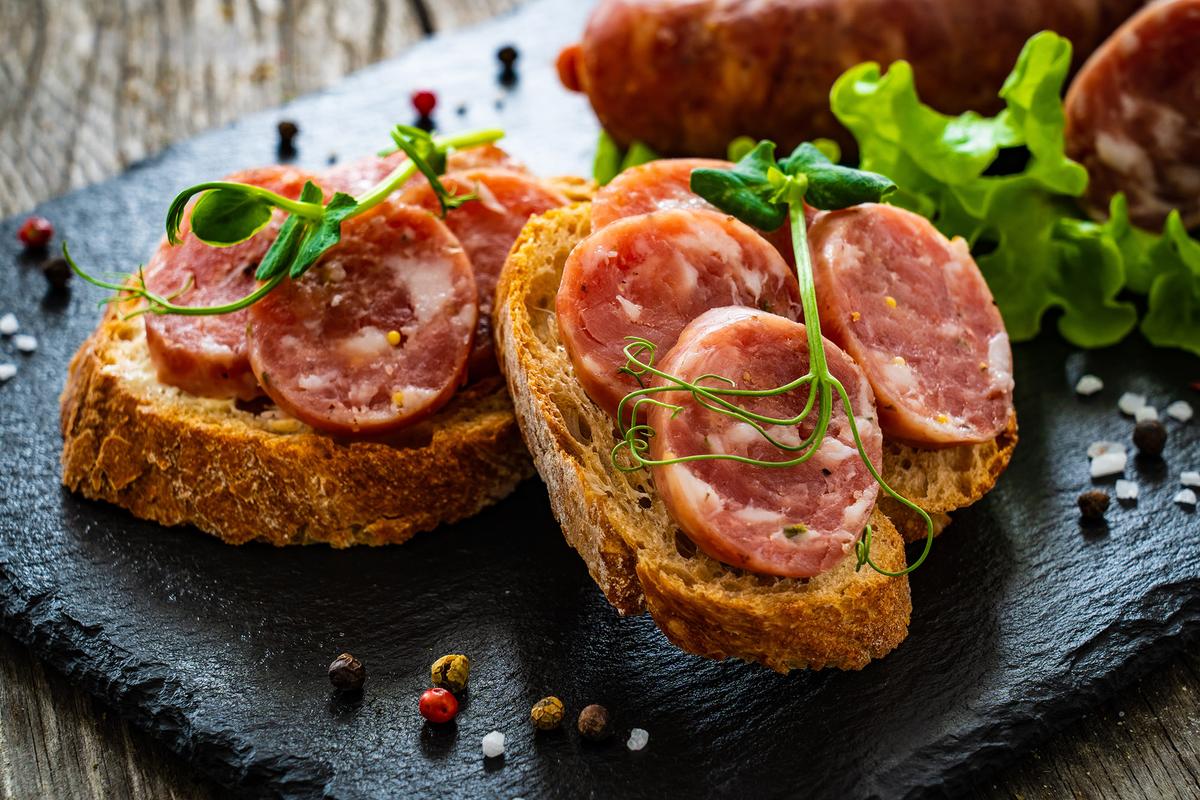
Piekarnia, a favorite local bakery, is a good choice, and only a few minutes’ stroll from Glowny. Opt for the Polish breakfast, their most traditional—a meal your grandmother might have served you on Sunday if you grew up nearby. Pure Polish nostalgia on a plate: sausages paired with cottage cheese, and radish and tomatoes and eggs with mayonnaise.
St. Mary’s Church, which dates back to 1343, is a showstopper. Its size alone leaves visitors in awe. Often called the largest brick church in the world, it includes more than 30 chapels and can seat tens of thousands of worshippers. Make sure to snap a photo of the 15th-century astronomical clock. And, should stamina allow, climb more than 400 steps into the church tower, with its lovely views of the surrounding, often-orange rooftops.
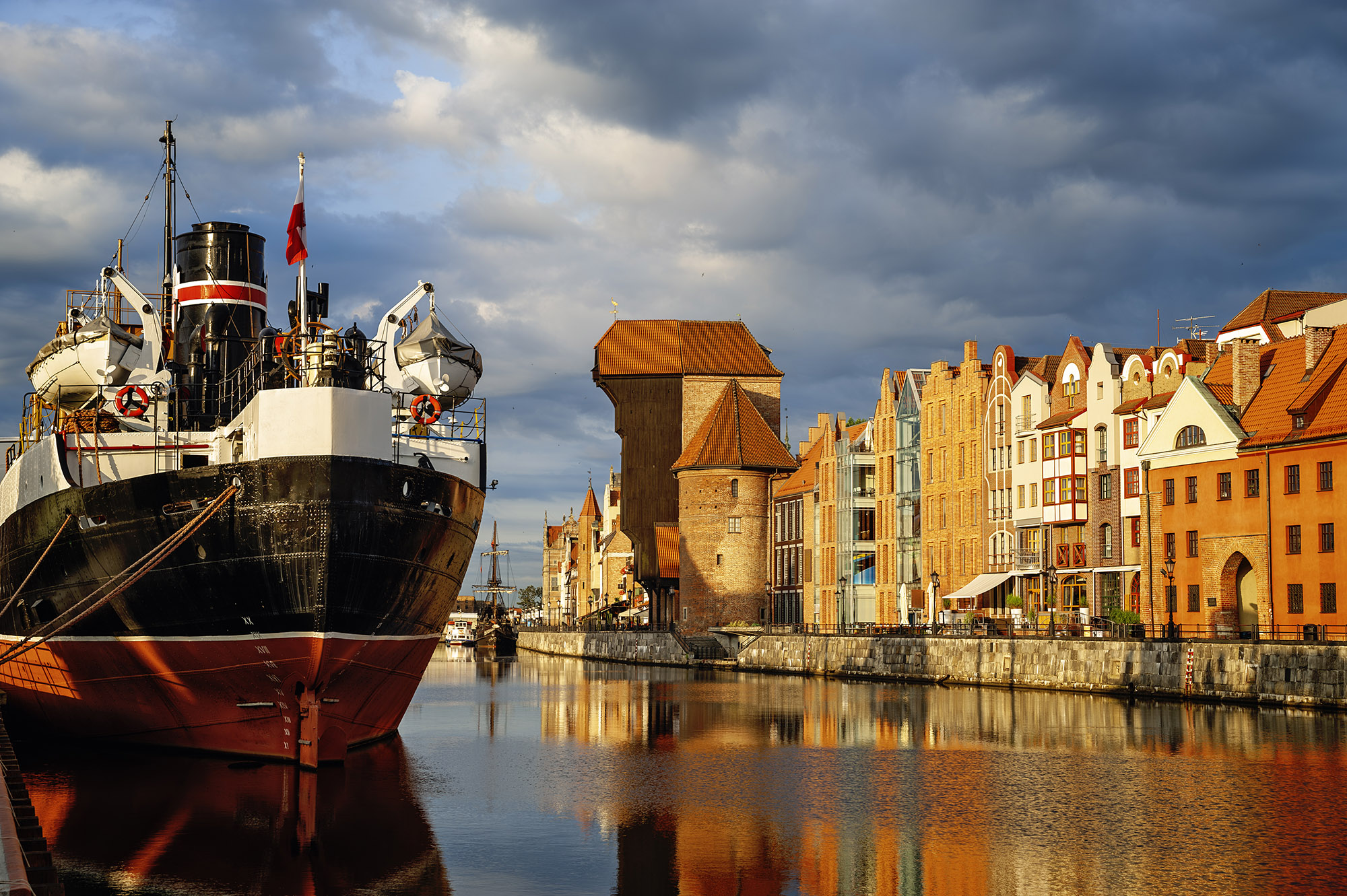
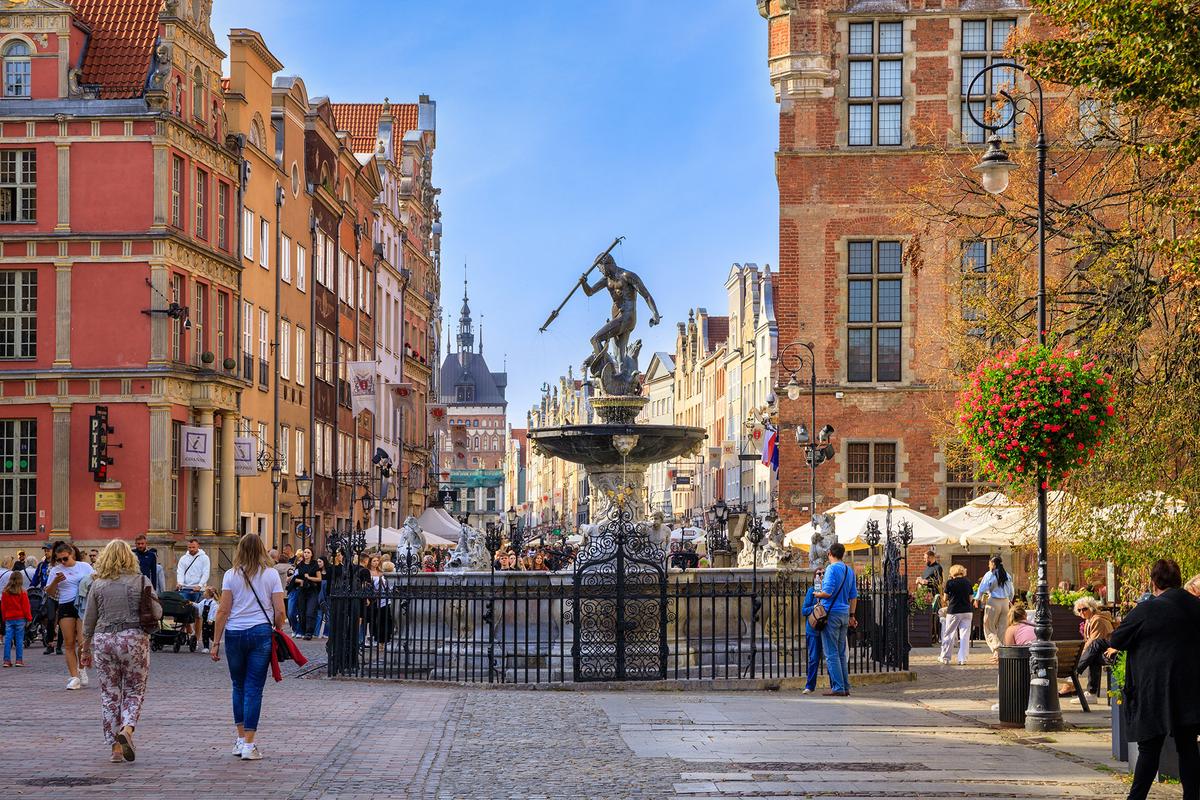
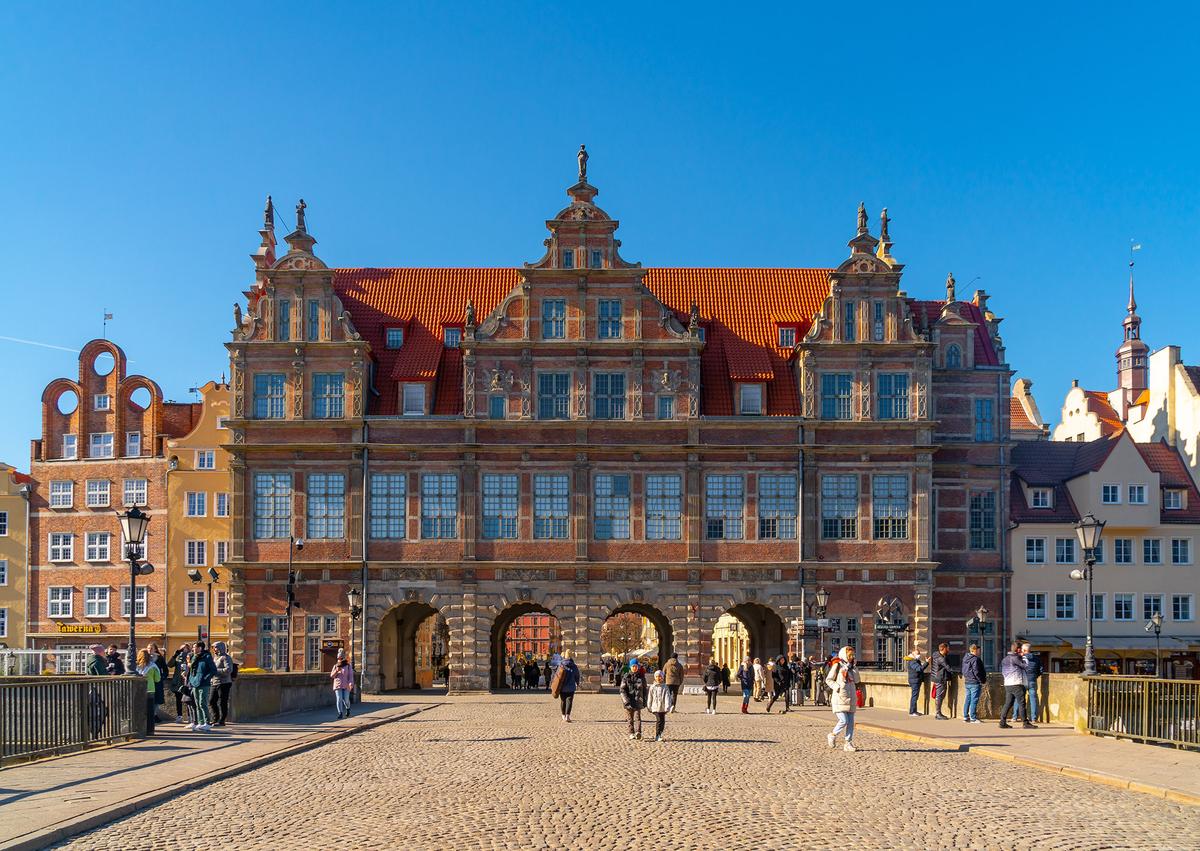
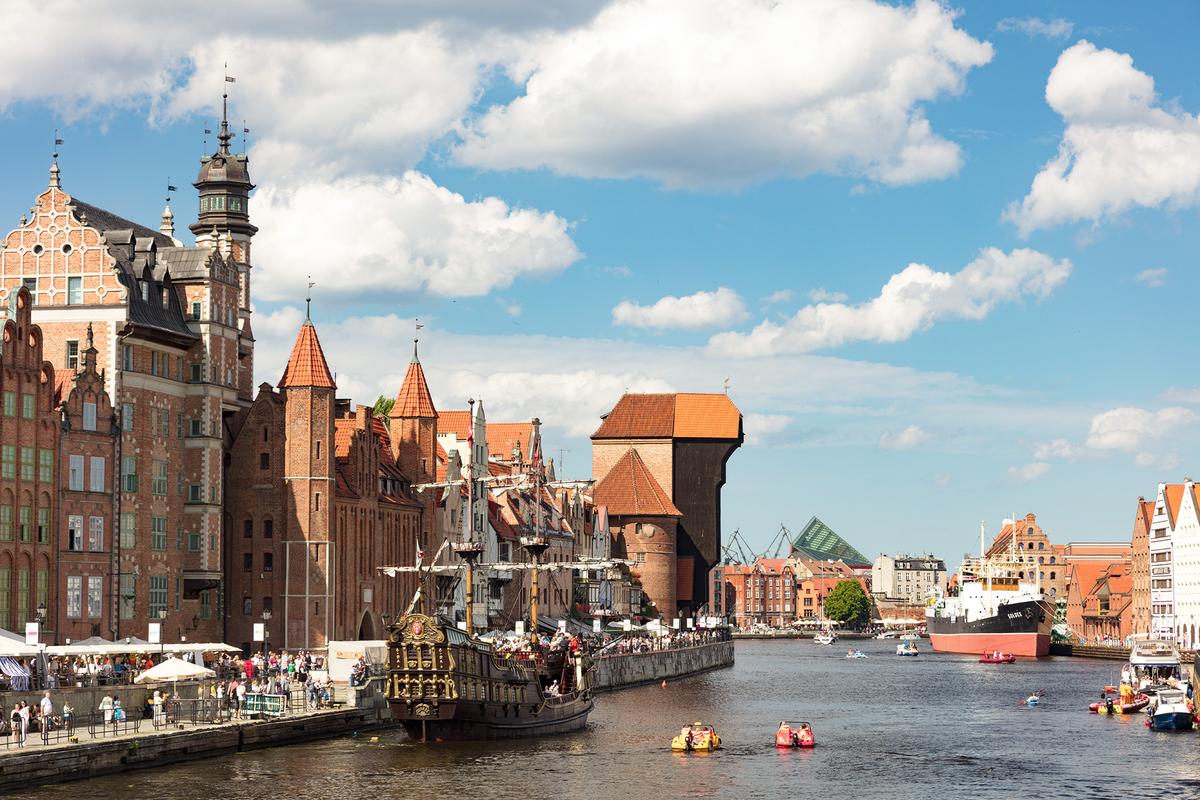
Finish the morning by passing through the Green Gate to the Długie Pobrzeze, which translates to “Long Embankment.” The feel is similar to Copenhagen’s Nyhavn or even Bergen’s Bryggen. Stretched along the Motlawa River, this harbor area bustles with boat traffic.
Afternoon
It’s been a big, long morning, and the afternoon is actually, probably, well underway. Time for a late lunch. While options in Old Town are endless, instead, walk the 20 minutes or so to the Montownia Food Hall. It’s a flat, easy, pleasant stroll, in part through green spaces, tracing a picturesque canal.A huge building, Montownia was once a submarine assembly plant. With its exposed pipes and trolley tracks running right down the middle, it somehow seems possible that those great vessels of the deep could’ve still been rolling off the assembly line just a couple years ago.
But while the look is industrial, the feel is bright and bustling and fun. And most of all—delicious. In the long space, lit naturally from above through a skylight, tables fill with friends sharing a brew.

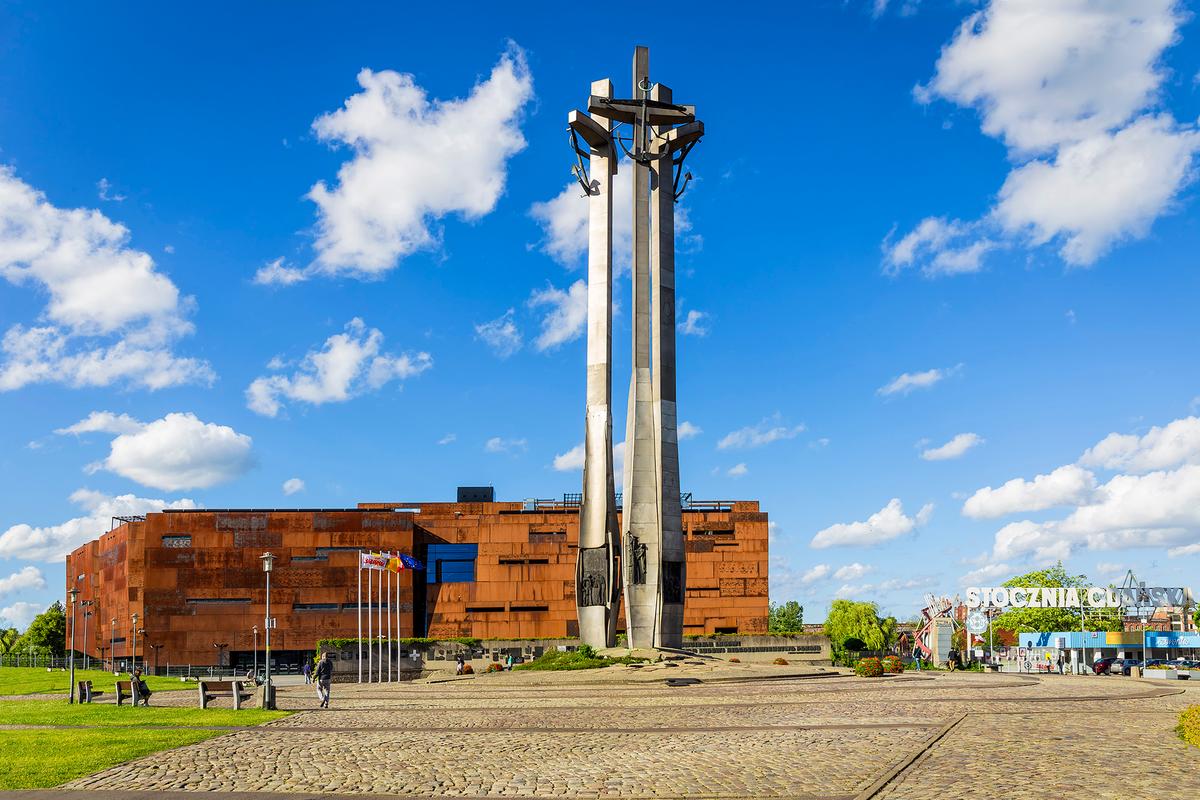
With the support of Polish Pope John Paul II, the movement pushed for and achieved civil rights and freedoms not seen since the country became part of the Eastern Bloc after World War II. The leader, an electrician named Lech Walesa, went on to be the country’s first post-communist president and to win the Nobel Peace Prize.
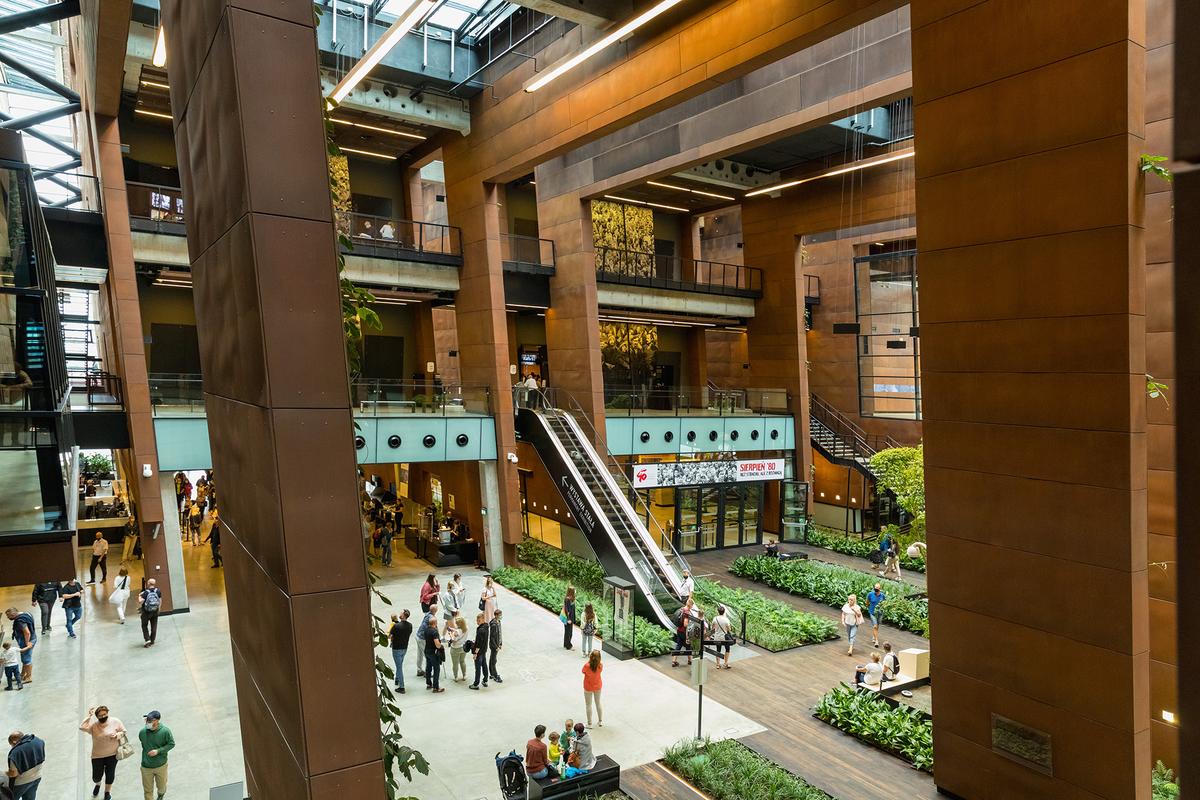
A person could honestly spend several days at the European Solidarity Centre and not get bored. The huge museum meticulously but dramatically documents not just the strikes and protests, but also the movement as it spread across the country—and the official backlash (which included a declaration and institution of martial law). It also shows how Solidarity served as a spark that ignited the flame that eventually blazed across Eastern Europe, leading to the end of communism in the region.
Evening
You might be tempted to stay right up until closing time at the museum (I did). Which means you’ll probably want to keep the rest of the day fairly simple. Fortunately, 100cznia is a close walk away. It’s located right next to a working shipyard. Once a disused industrial wasteland, today the warehouses and a collection of stacked containers form a city-within-the-city. Yes, bars and restaurants. But also an art gallery, a barbershop, a social club, a skate park, and even an ersatz beach.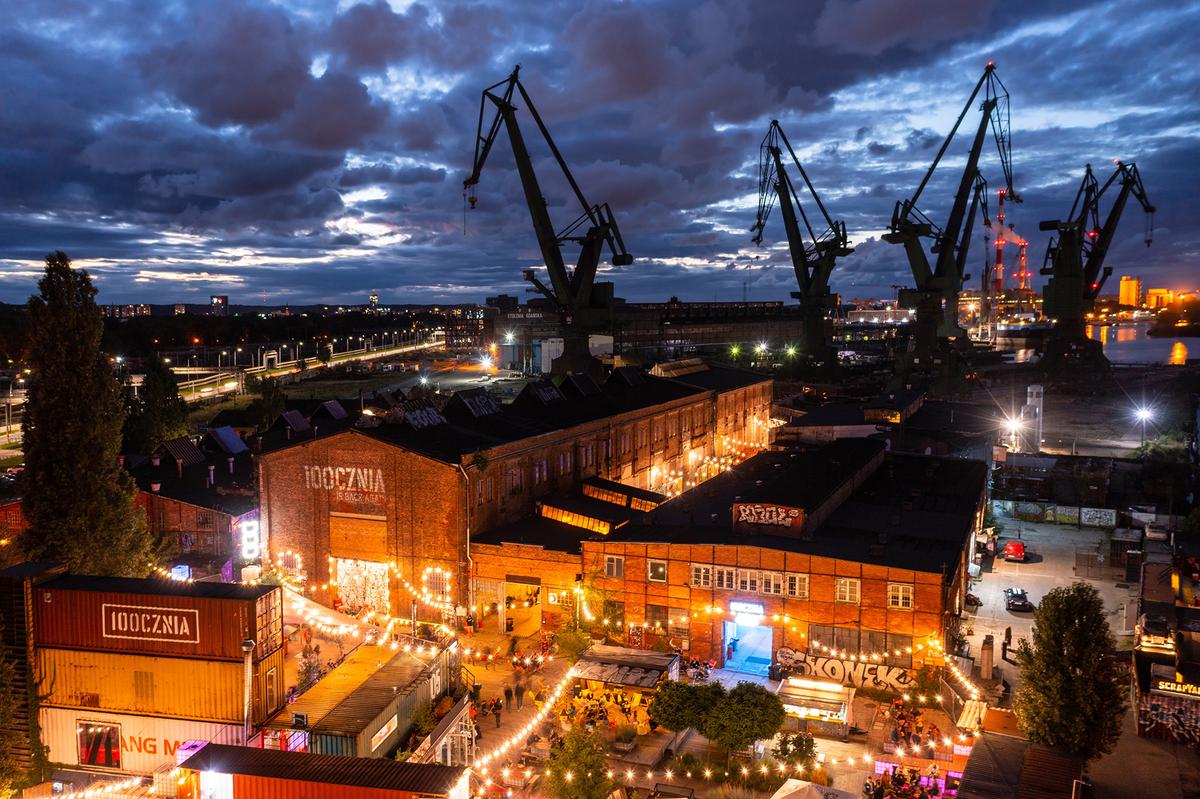
A Note on Currency
While Poland is part of the European Union and the Schengen Zone, the country retains its own currency. The fact that they use the zloty (versus the euro) means that most things remain less expensive than in other European countries. One U.S. dollar will buy you roughly 3.5 zloty, and you can often find a nice meal for around $20.A Day Trip to the Polish Riviera
While very close to the Baltic, Gdansk isn’t actually set on the sea. It’s well worth hopping on a tourist boat at Dlugie Pobrzeze, which will take you past shipyards and docked cruise ships and the new, glassy towers—offices and condos—that have sprung up with the city’s new tech wealth.It’ll probably drop you at the dock in Sopot, the longest wooden pier in Europe. From there, lunch at a grand hotel, walk the seaside boardwalk, and browse along pedestrian streets. Or just set up on the sandy beach and soak up the sun.