The fifth-largest island in the Mediterranean, Crete could be its own country. And in many ways, ranging from cultural to culinary and beyond, the biggest of the Greek islands is a place apart from the rest of this ancient nation. Kritikoi—or Cretans—enjoy a distinct identity and proud history.
This is a place where history is layered. “We have seen many, many empires,” a guide told me on a recent visit. And he reeled them off: Venetians, Byzantines, Ottomans, Romans, and more.
But the island’s sheer size isn’t always well-understood by first-time visitors. It is both beautiful, and very big. Lapped by a clear, blue sea, the island stretches some 160 miles from east to west, and is bisected by a spine of snow-capped mountains. Larger than the state of Delaware, but not quite as big as Connecticut—and much, much more substantial than other famous Greek islands like Mykonos or Rhodes or Santorini.
This makes it a challenge to visit in a mere 24 hours—but one that’s entirely worthwhile. The key is choosing a handful of spots to spend your day, and not waste too much time in transit. Here’s a guide to getting the most out of your short, but busy time in Crete.
Arrival
Sitting just outside Crete’s largest city, Heraklion’s Nikos Kazantzakis International Airport (HER) is the second-busiest in Greece. Named for Crete’s most famous author and poet—he wrote the novel “Zorba the Greek” and was nominated for the Nobel Prize in Literature—facilities here were initially very basic, with just tents for terminals. Today, the runway at HER receives aircraft from around the world.The most frequent flights (not surprisingly) take off for Athens. But nonstops—which are often seasonal—arrive from across Europe, including Dublin, Paris, Belgrade, Barcelona, Geneva, and a variety of other cities. If you’re flying from North America, your journey here will include at least one connection in Europe.
For those whose plans don’t extend beyond Heraklion (a city with a metro population of a little more than 200,000), ground transportation by bus is cheap and easy. The station is within easy walking distance of the terminal, and a ride into town won’t set you back more than 1.50 euros. But for the day you have ahead, a rental car is essential, and several major companies service the airport, including Avis, Hertz, and National.
Morning
Hit the ground running. Or rather, driving. The top priority once you land: Visit the island’s most famous and popular site, Knossos, as soon as possible. It’s a place where the shade is scanty and the crowds grow quickly, so honestly, the earlier you get there, the better.But first, a snack. Knossos isn’t a site that will be enjoyed by the tired, or the hungry, so it is best to fortify first. Keep it simple: Pop into a little, local bakery along the main route to the Palace (you’ll find many) for fresh yogurt, olives, honey. Or, perhaps, something a bit substantial like kalitsounia, a Cretan favorite. This savory, super-satisfying pie is traditionally filled with local soft cheese. And always pair the above with a steaming cup of strong Greek coffee.
Then, get ready for an archaeological adventure. Knossos Palace, sitting just on the southern fringes of the city, a few minutes outside Heraklion, dates back to the Bronze Age. It might be part of the oldest city in Europe, with settlement here stretching back as far as the 7th century B.C.
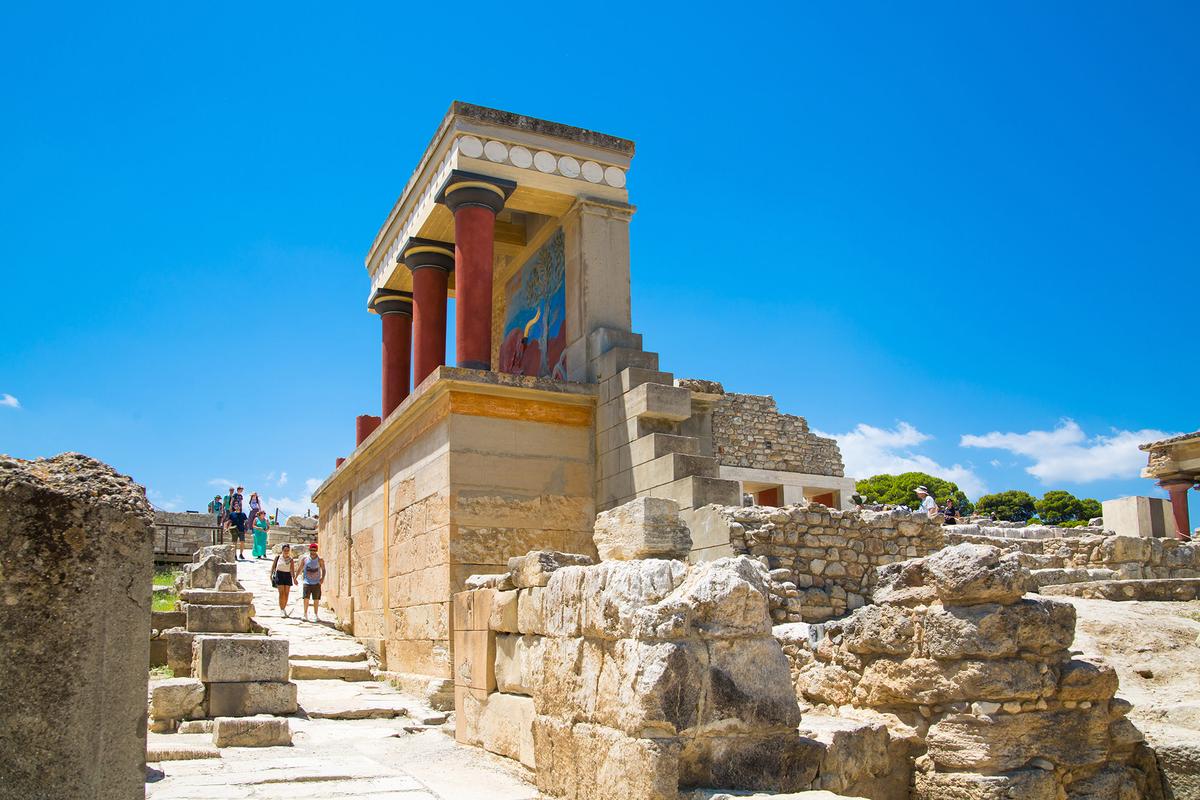
The Palace of Knossos was the ceremonial and political center of Minoan civilization. Today, it's Crete's largest Bronze Age archaeological site. IR Stone/Shutterstock
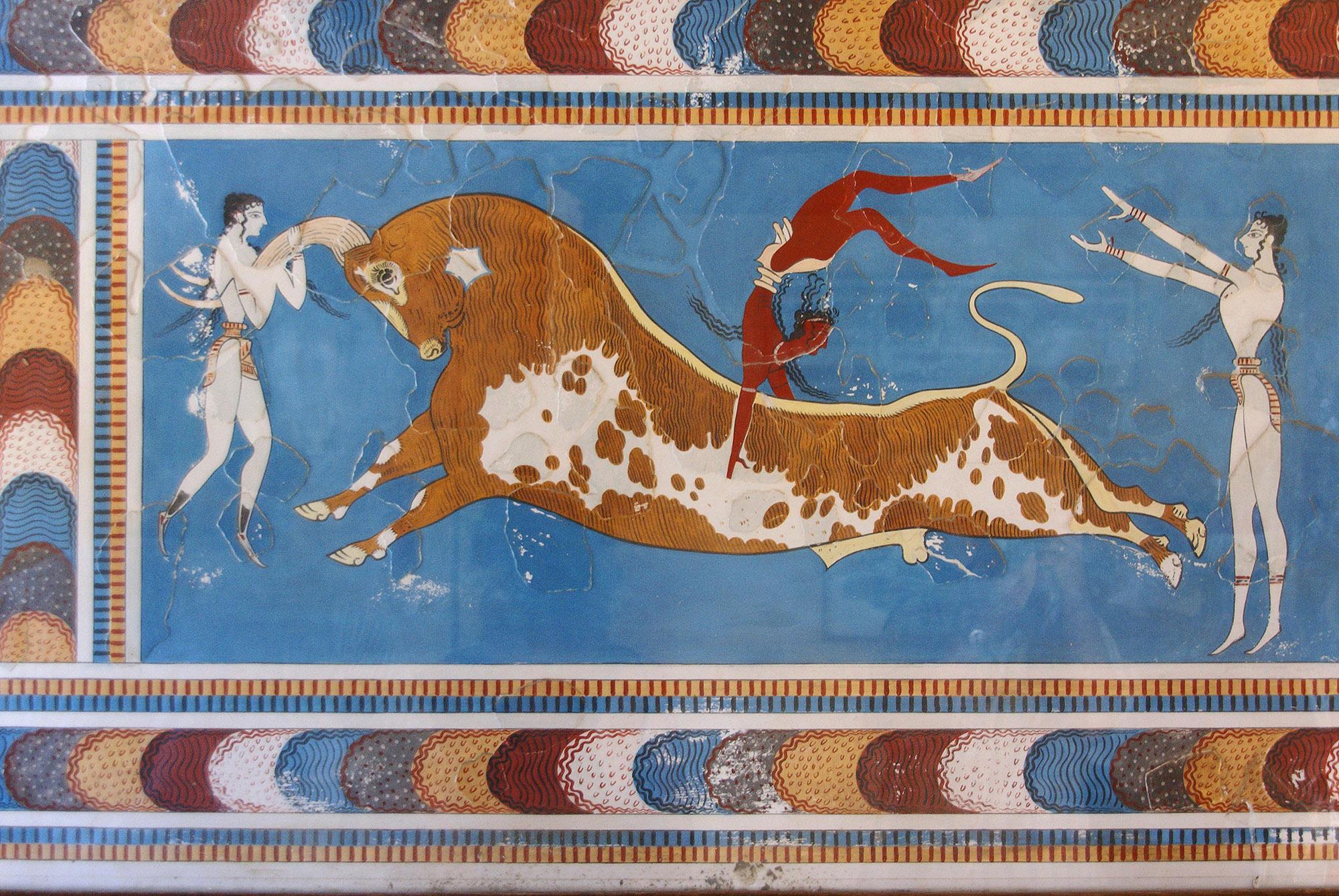
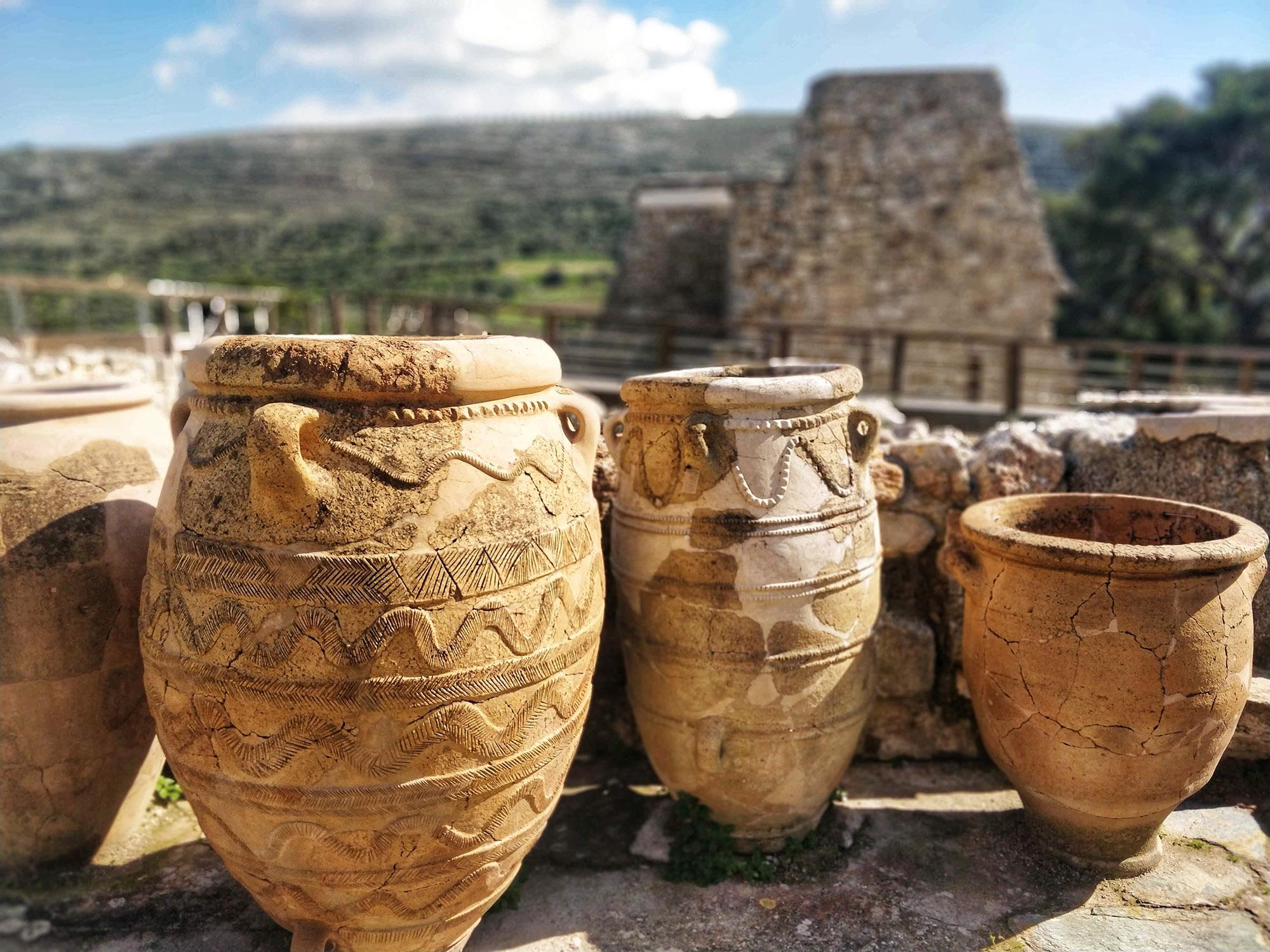
Gu Bra/Pexels, AnGupta/Shutterstock
This was the heart of the Minoan civilization. And perhaps home to legendary figures, including the Minotaur—half man and half bull. It was a center of political, economic, and religious power.
But the history? It’s not only long, but also a bit complicated. The fame of this place (it’s the second most popular archeological site in Greece, after the Acropolis) can largely be connected with the British archaeologist Sir Arthur Evans. Believing he had discovered the real, actual Labyrinth depicted in mythology, Evans worked tirelessly here for over three decades.
The long-running excavation unearthed thousands of artifacts, plus a throne room and bright frescoes. Inspired, Evans pursued a number of reconstructions, giving form and color to the ruins. Today’s experts note that these borrowed heavily from his imagination.
Still, Knossos is unlike anything you’ve ever seen—a thoroughly ancient site where you can squint your eyes, fire your mind, and picture what life was like here, all those many years ago. But don’t overthink it: Just enjoy touring through the east and west courts, the throne room, and the royal apartments, complete with bright artwork including a painting of leaping, blue dolphins.
Afternoon
You’ll need pretty much the entire morning to tour Knossos. But get ready for more fresh air, before settling down for a well-deserved break. Get back in the car and drive about 35 to 40 minutes to the southeast. It’s a scenic, 12-mile ride filled with switchbacks, along the arid lower flanks of the mountains, through charming villages and past vineyards.
Arriving at Peskesi Organic Farm, take a two-hour tour of the 24 biodynamic acres here. Crete has a rich and abundant agricultural history. This super-scenic spread of land features views all the way to the sea and sprouts with some 240 varieties of vegetables and fruits.
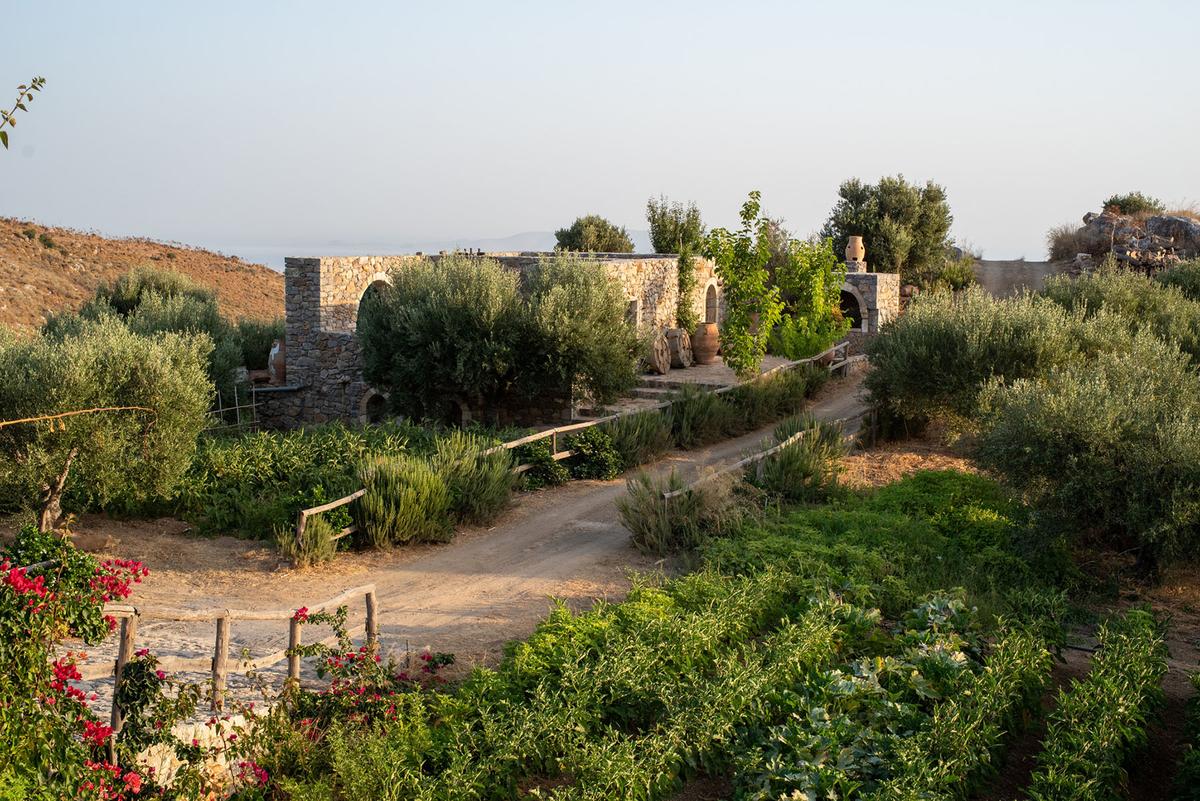
Peskesi Farm covers 24 acres and grows more than 240 varieties of fruit and vegetables. George Dryjohn/Peskesi
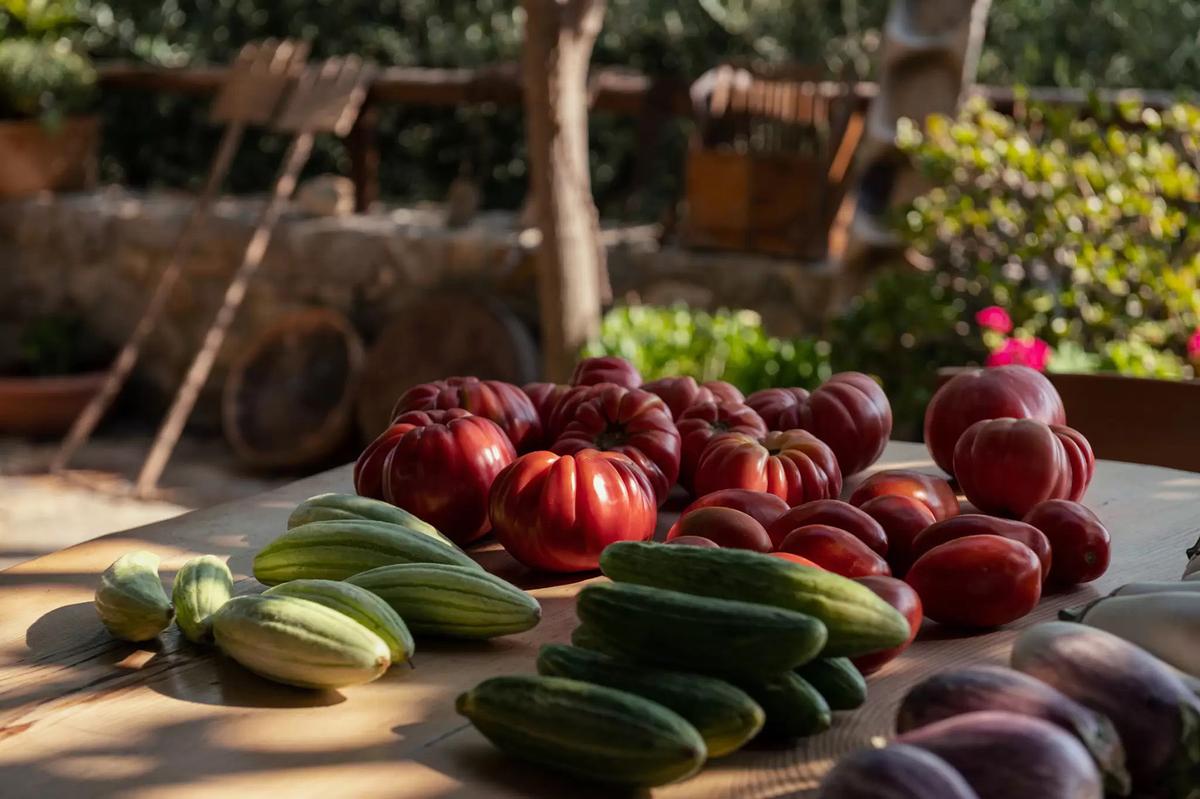
Peskesi Farm serves its certified organic produce in its on-site, farm-to-table restaurant. Peskesi
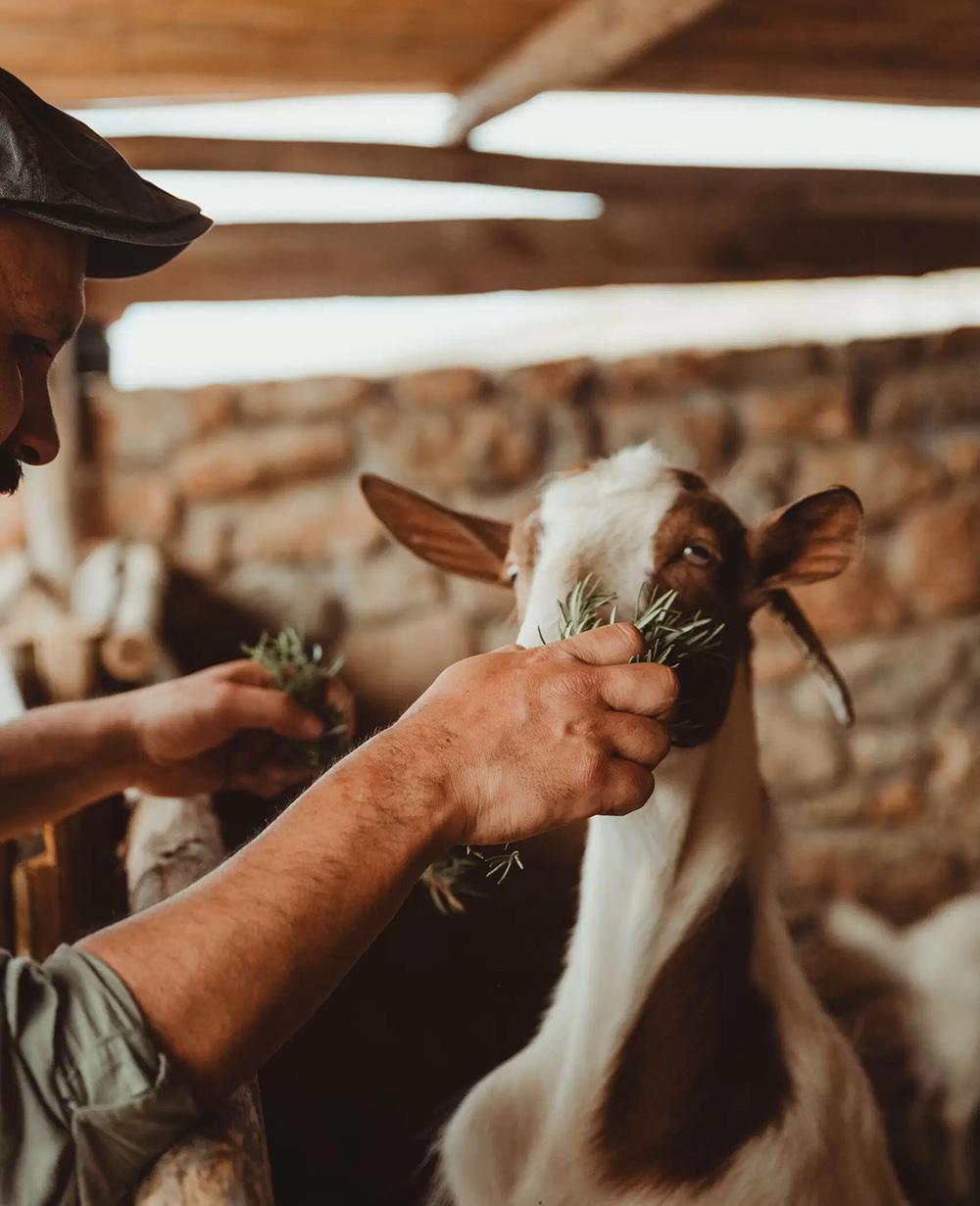
The tour will take you through gardens and olive groves and for a fun little meet-and-greet with the resident farm animals, which provide eggs and milk. If you’re lucky, the guide will give you a hands-on opportunity. For example: clipping a few herbs or harvesting an armload of juicy tomatoes.
The farm offers cooking lessons, olive oil tastings, plus a shop where you can grab honey and jams and more, all produced on their soil.
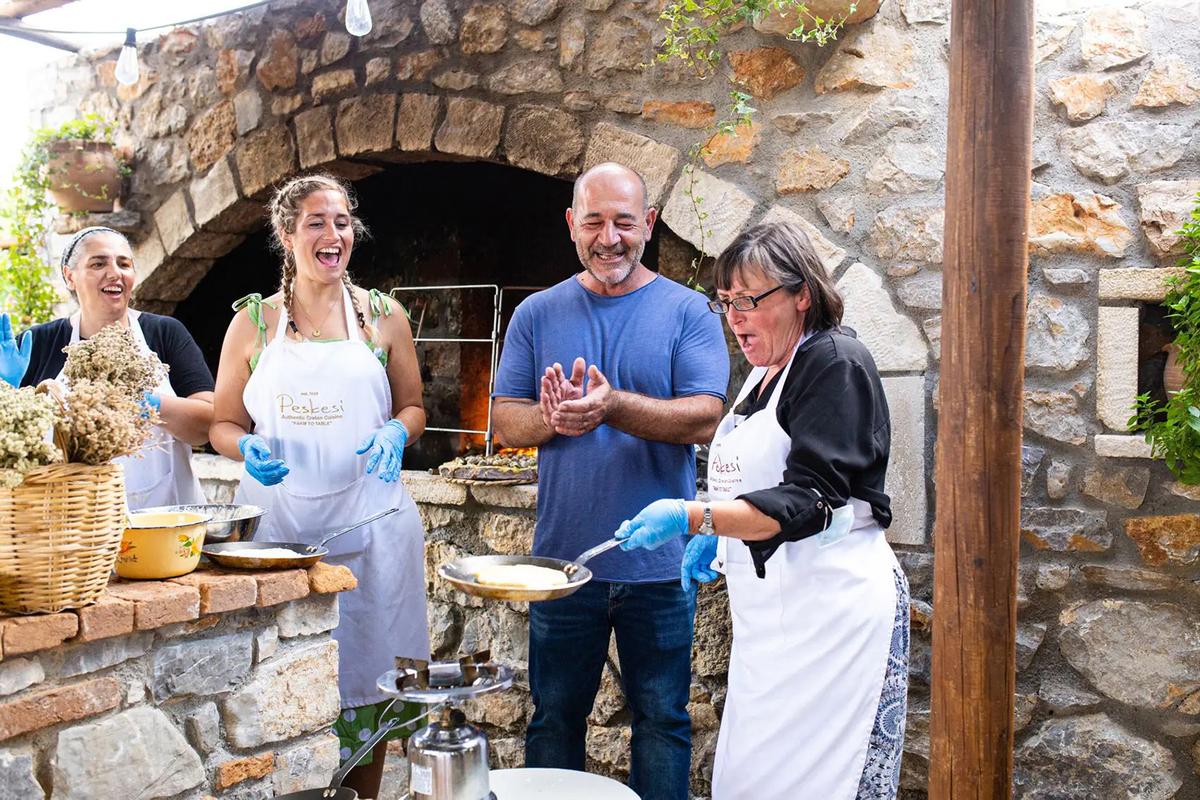
Guests can experience authentic Cretan tastes and cooking practices in Peskesi Farm's traditional, stone-built kitchen. Peskesi
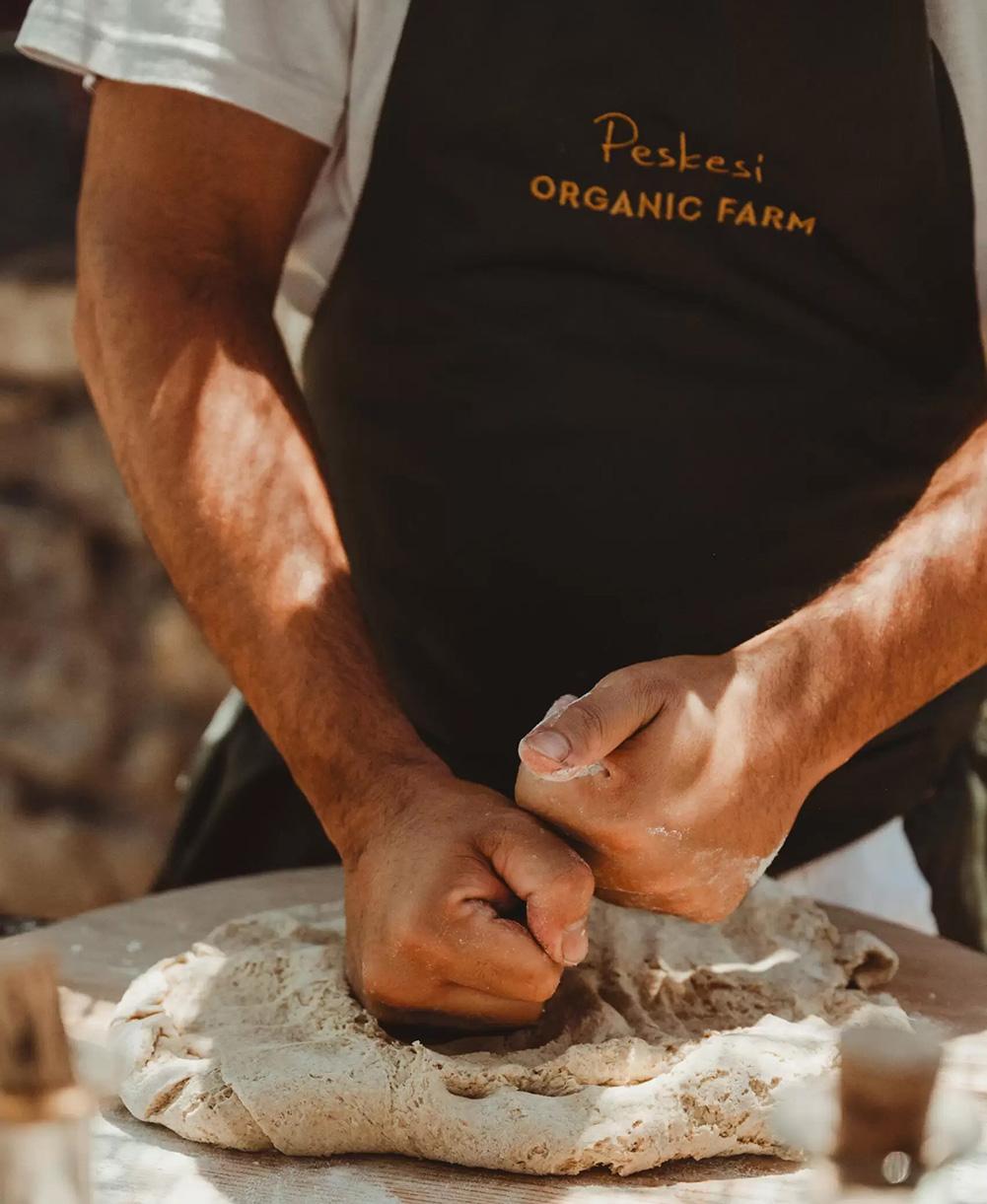
Peskesi
The owners of Peskesi restaurant started the place with the goal of bringing traditional Cretan cuisine back to the island. They took the task seriously, researching time-honored dishes. Pull up a chair on the patio of this restored historic mansion. Sit back. Relax. Enjoy.
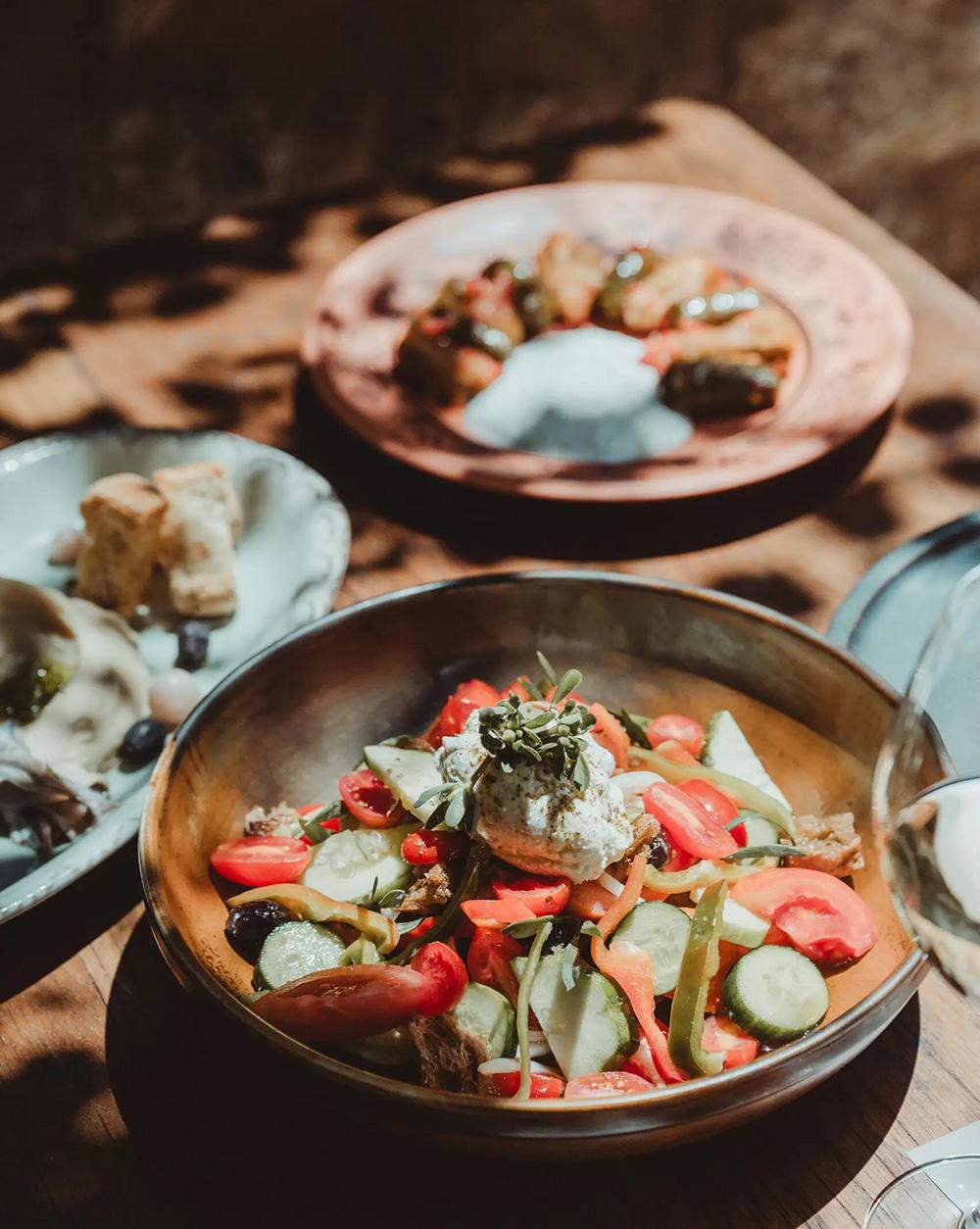
Perhaps ask to taste some of their extra-virgin olive oils. And order up a meal that’s been consumed on Crete for many generations. Each dish on the menu includes a mileage reading, indicating the average distance the raw materials traveled—from the ground, to your plate.
Definitely start with a shepherd’s salad, which locals have long composed with whatever they have at hand—a catch-all, to clean the cupboards. In this case, the restaurant has elevated things with spring onions and capers, bread rusk, eggs, and anthogalo. This Cretan creamy fior di latte cheese is literally legendary—it’s mentioned in mythology.
Then drive back to the coast, and the heart of Heraklion.
Evening
Walk off your lazy, long, very late lunch in the lanes of Heraklion’s Old Town. Extended sections of the city walls remain, as does the waterside Koules Fortress. Fountains in the squares have flowed for centuries.And while it might be tempting to just enjoy the rest of the day in the Cretan capital, it’s well worth taking one more drive. Make your way a couple hours west to Chania, which is arguably the prettiest town in Crete.
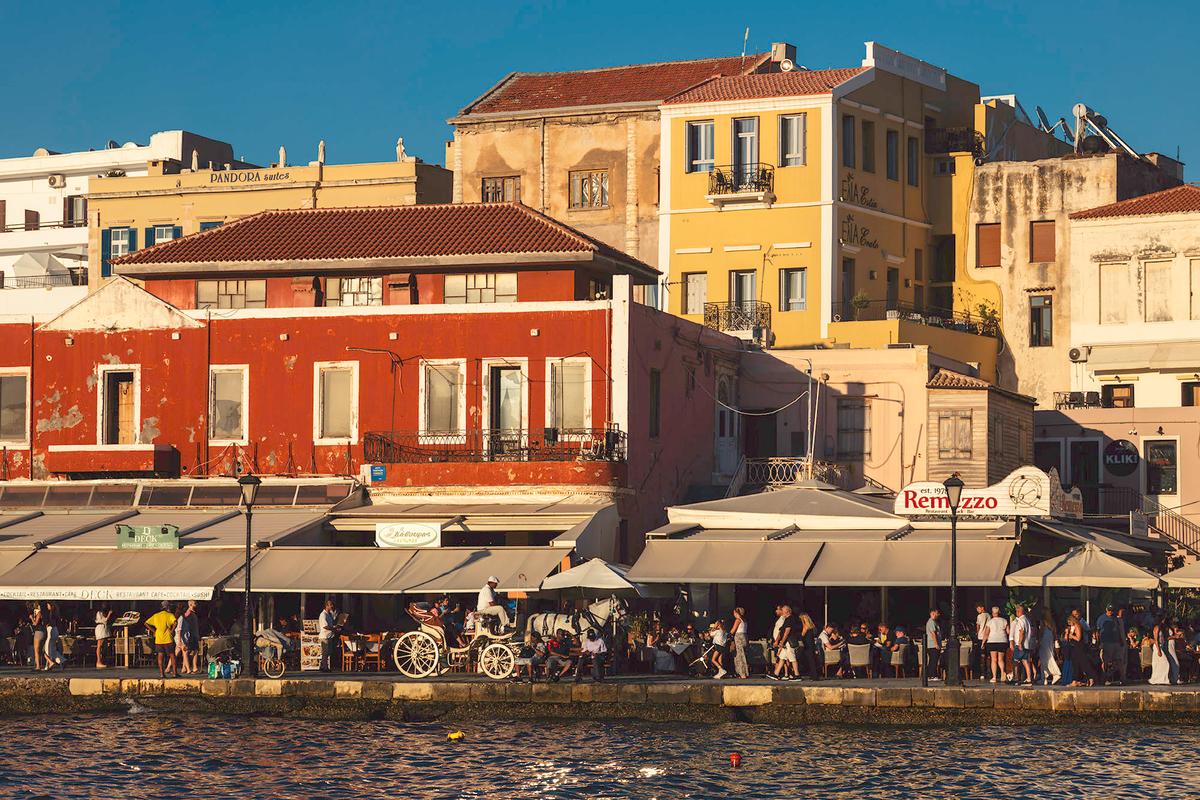
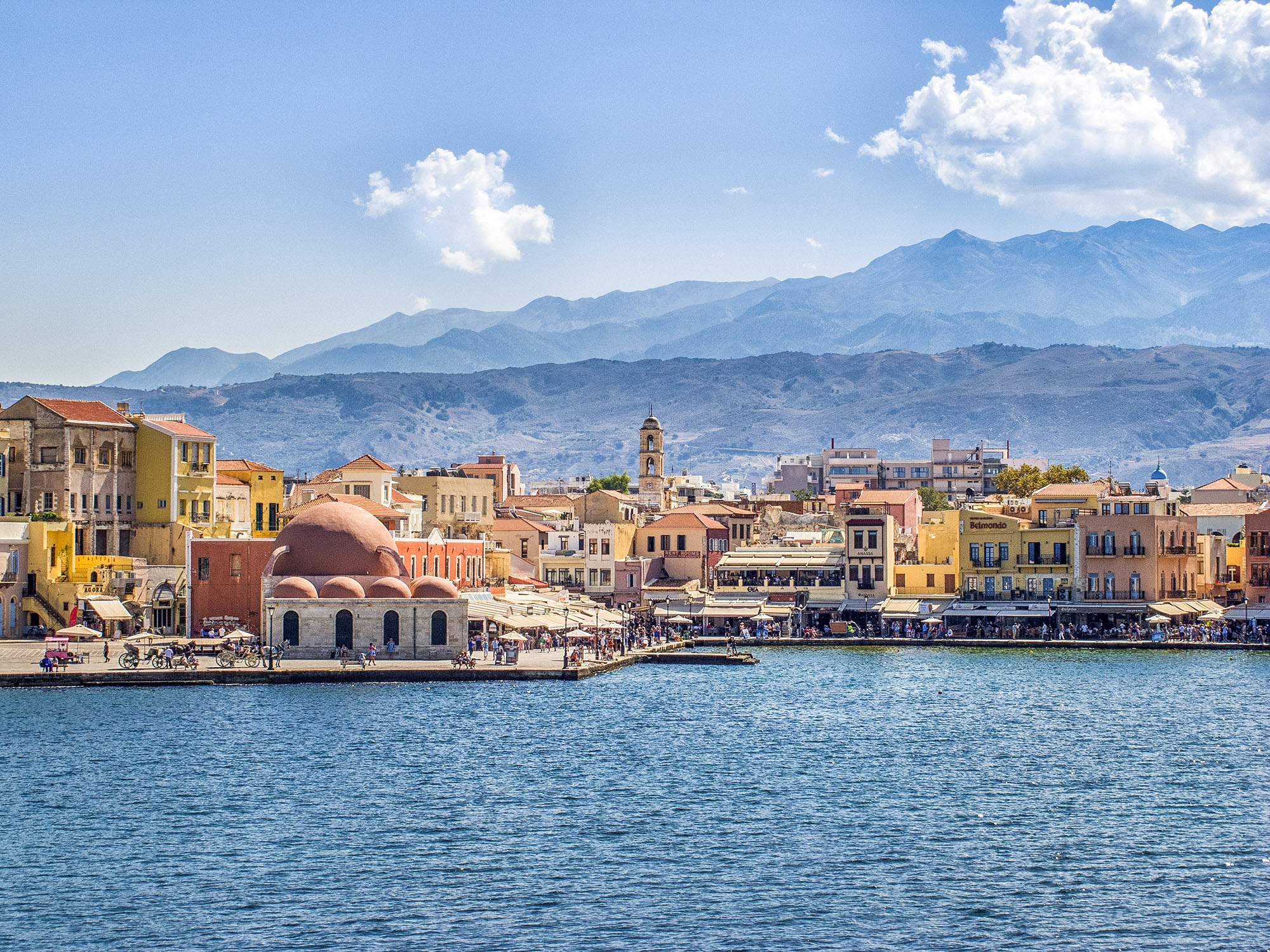
The Venetian Harbor of Chania is one of the most well-preserved of its kind in the Mediterranean, featuring a 16th-century lighthouse, dockyard buildings, and Ottoman-era architecture. Milamai/Moment/Getty Images
Greeks (and Cretans) famously eat late—it’s not unusual for them to tuck into dinner at midnight. So you won’t have to worry about the restaurant closing before you arrive. Take your time on the coastal drive, enjoying the views. Mountains to the left, and a string of both sand and stone beaches to your right.
Chania is perched on the western edge of the island, a city enriched by centuries of lucrative trade. The Venetians, especially, left their mark. They constructed the old harbor, as well as mansions, churches, and the town’s signature lighthouse.
Park the car, and start winding down. Walk along the harbor, which is circled by a gracious, broad stone promenade. Luxuriate in the light, as golden hour turns to blue.
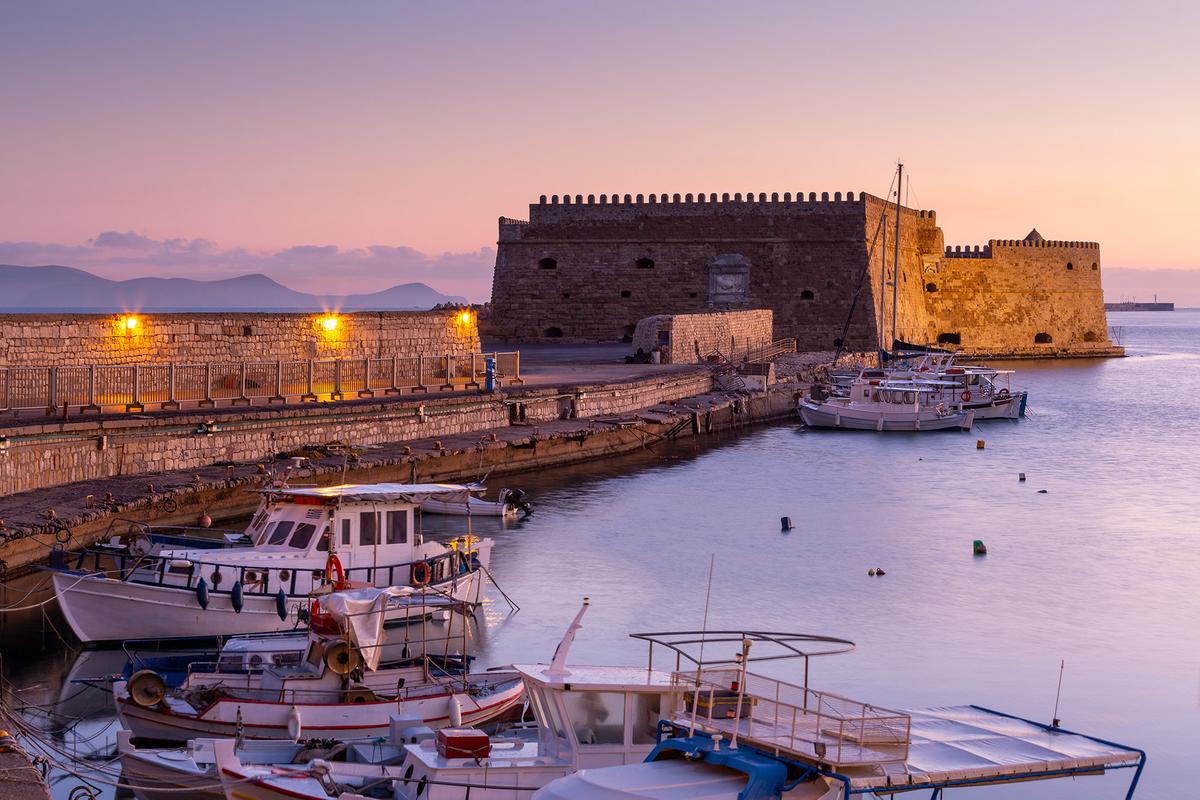
As Crete’s largest city and the island’s capital, Heraklion is a major port and cultural center. milangonda/iStock/Getty Images
And, when you’re finally ready for another meal, choose a little taverna. Almost any, of the many sitting right along the water, will do. Pour a toast to a fascinating and busy day with a little tsikoudia, traditional Cretan raki. Order some seafood, perhaps shrimp saganaki, or grilled squid or fish. And as that last little glimmer of daylight disappears on the horizon, over the waters of the Cretan Sea, reflect on a very busy, fascinating day all over this huge and historic island.