There’s no two ways about it: Beautiful Bergen absolutely dazzles. It may be a lesser-known Scandinavian destination for Western travelers, who might be more familiar with Oslo (or next-door Stockholm). But Norway’s second-largest city (population: about 300,000) is arguably its most scenic. A place that—once you encounter it—you’ll never forget.
Arrival
Like many Nordic airports, Bergen Airport (BGO) somehow manages to be both efficient and also kind of homey and comfortable. A huge glass façade brings in the boreal sunlight, which also flows through skylights in the warm, timber ceiling. It is the second-busiest airport in the country. While well-connected to the rest of Europe (Paris, London, Berlin, and lots of other capitals), any trip from North America will almost certainly involve a connection in a hub.Morning
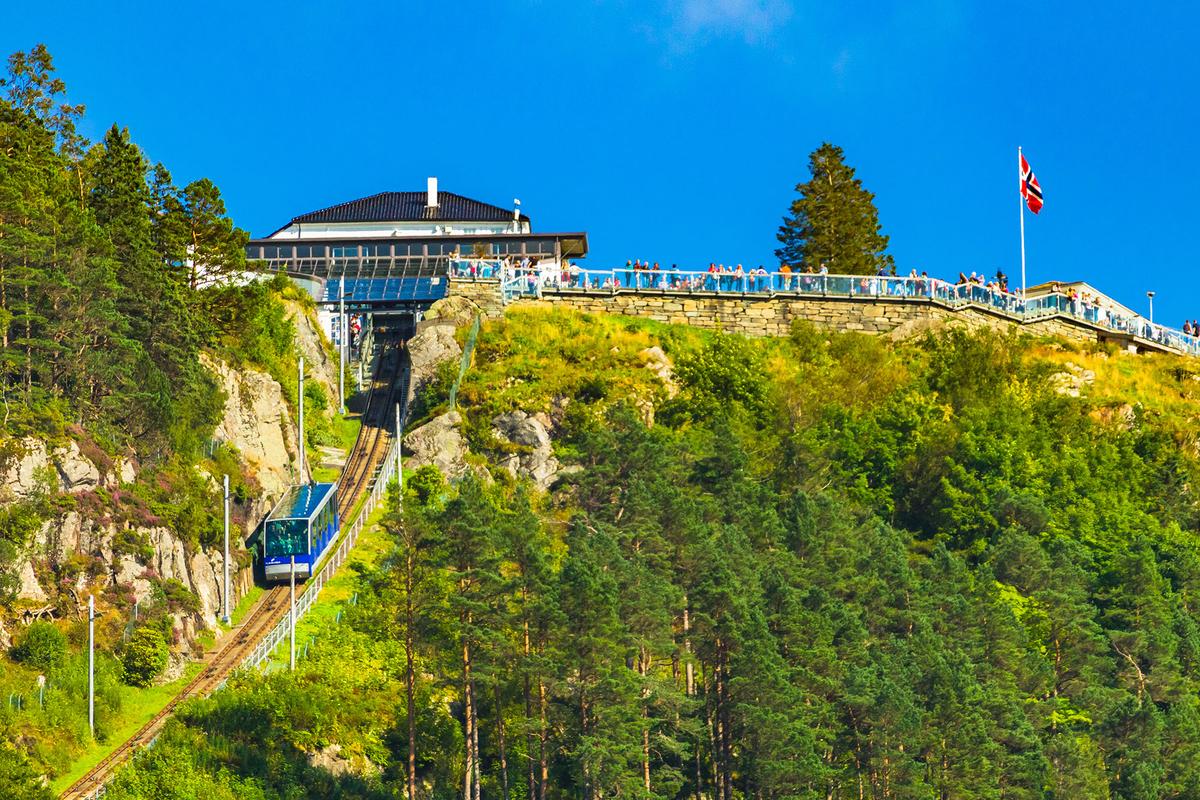
The beauty of Bergen is best appreciated from above. Ride the light rail to the end of the line and descend at Byparken. Then, walk about 10 minutes to the base station of the Floibanen Funicular, a train that literally climbs the side of Mount Floyen.The funicular opened in 1918 and uses a cable-and-pulley system to get passengers to the top. You’ll emerge at the upper station in eight minutes (or less). From the expansive viewpoint, the city spreads out more than 1,000 feet below. The vista is bright and colorful: Bergen unrolls along an undulating, curving coastline.
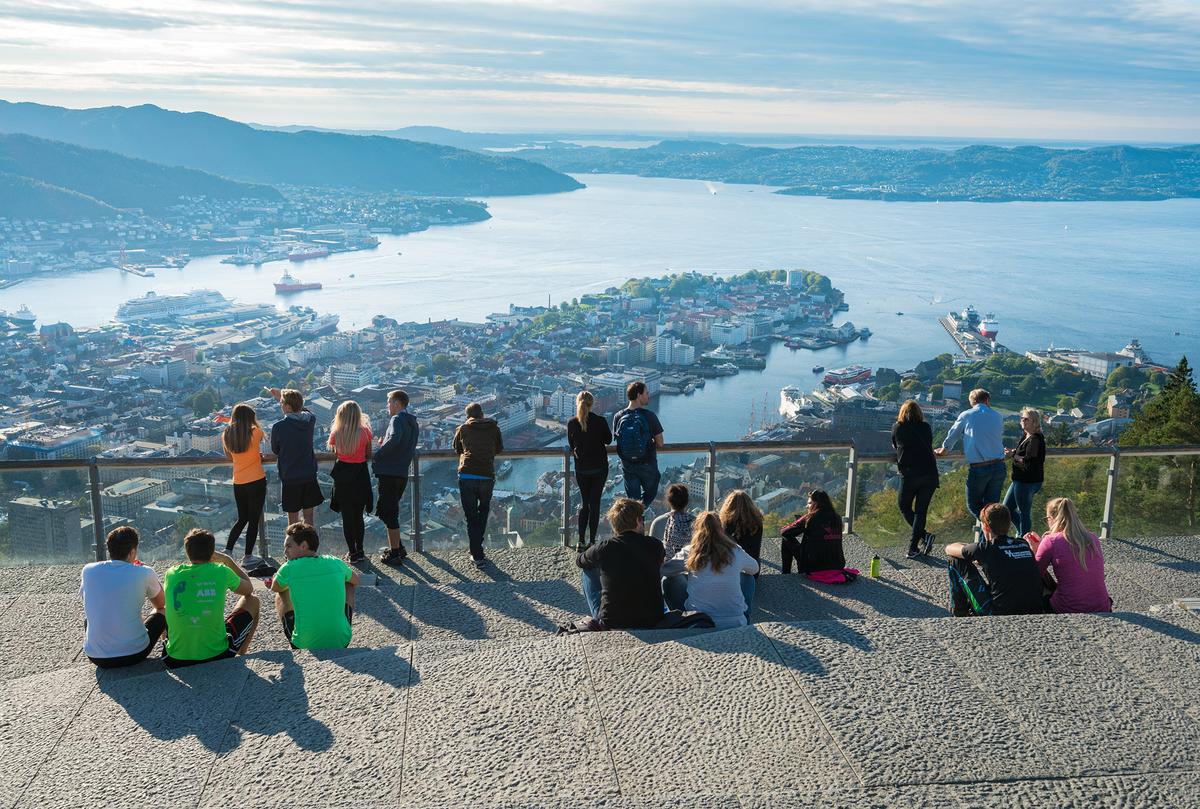
The first order of business? Pop into the Floistuen Café for a cup of freshly brewed coffee and a pastry, consumed at one of their outdoor tables.
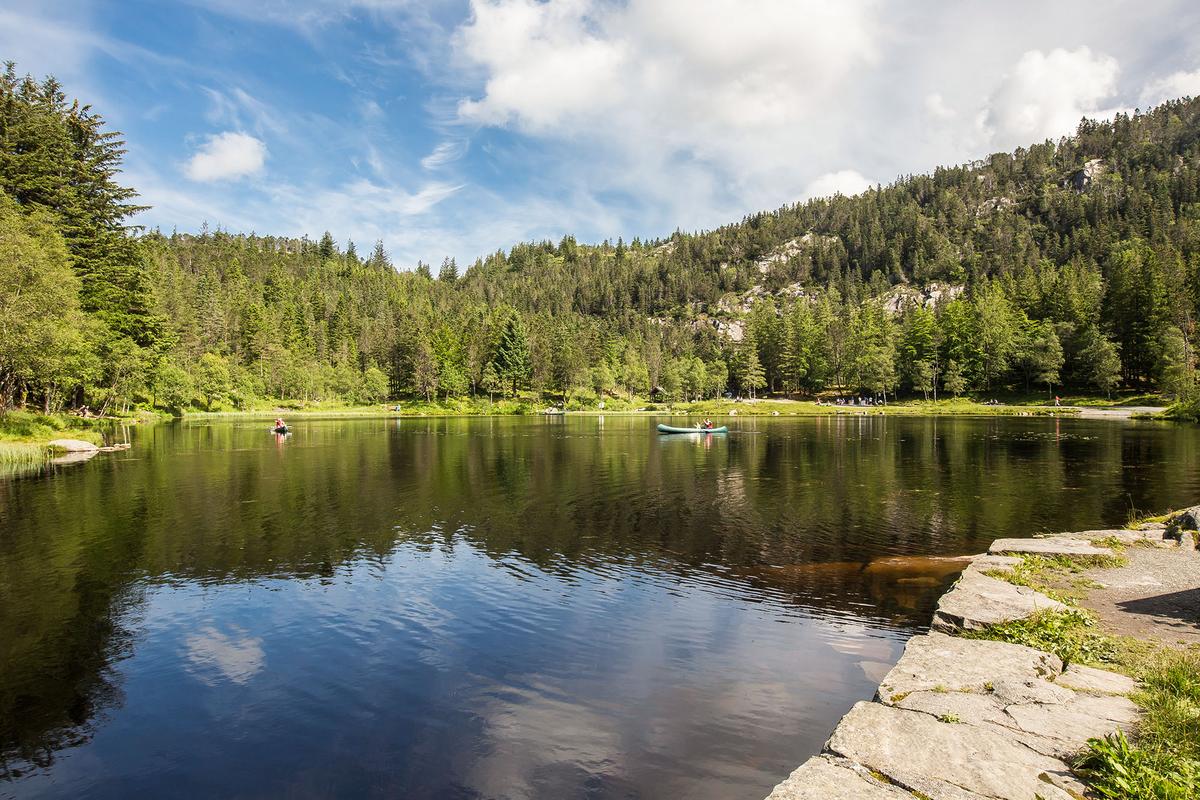
After snapping some photos, don’t hurry away. There’s so much to keep visitors busy at the top. Introduce yourself to the friendly resident goats. Hike or rent a mountain bike and navigate the network of trails. People can even paddle out on Lake Skomakerdiket, where they’ll lend you a canoe, paddle, and life jacket for free during the summer months.

Then, explore the troll forest. Norway is a land of deep, dark woods, dramatic fjords, and jagged peaks. Here mists can roll off the sea at a moment’s notice, giving everything a mystical feel. So it’s perhaps not surprising that references to these mythical creatures date all the way back to the sagas in the Middle Ages.
Afternoon
From the base station, it’s less than five minutes on foot to Bryggen. Way back in 1350, the Hanseatic League, a German network of traders, made Bergen its northern outpost. “They traded stockfish,” a guide explained on a recent visit. “And in return, they got barley and beer.”Stockfish—dried cod—formed the backbone of the Norwegian economy for centuries, and represented an important food source around the world in an age before refrigeration. (These fish, dried on outdoor racks by the elements, remain shelf-stable for years.)
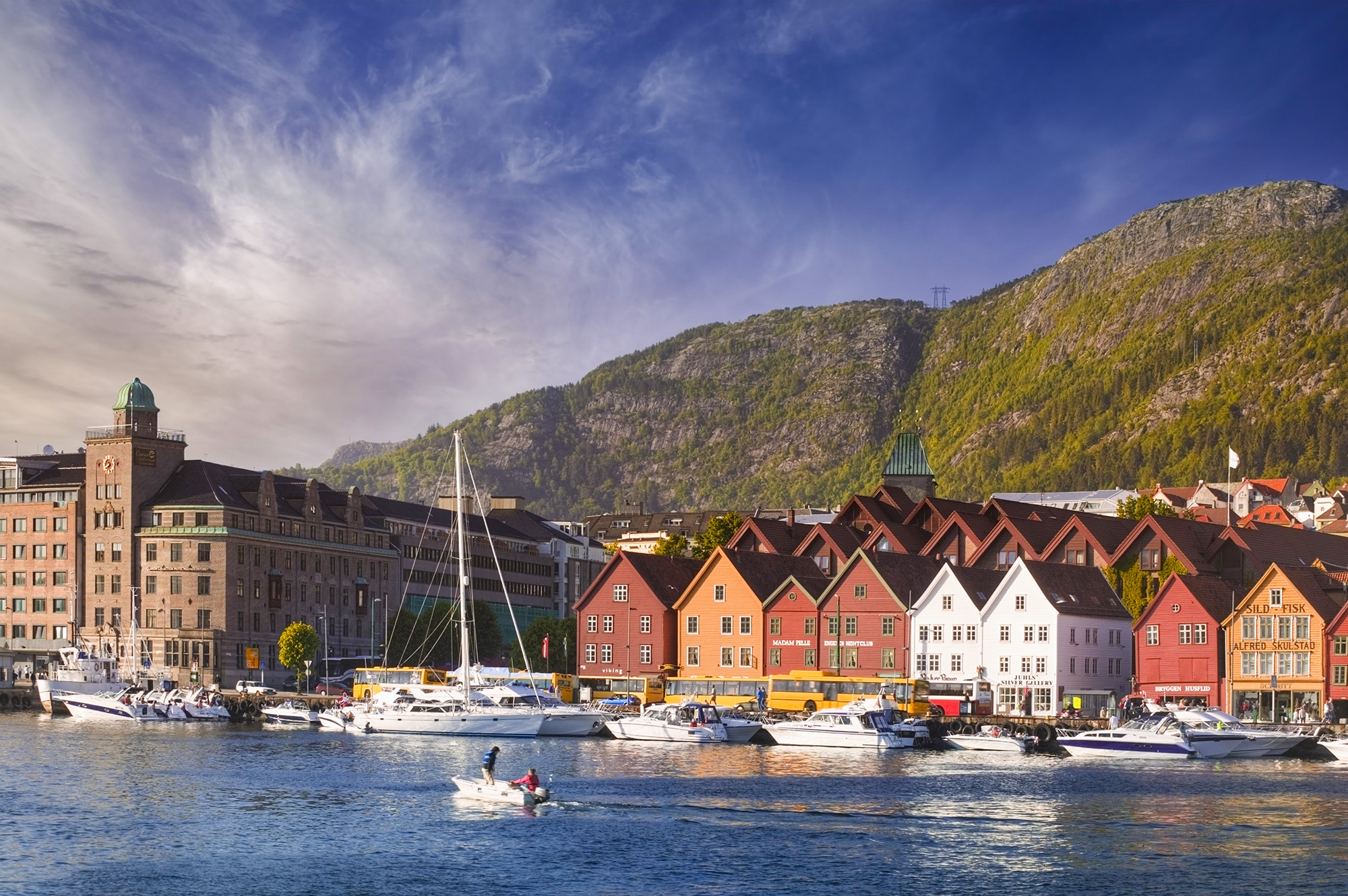
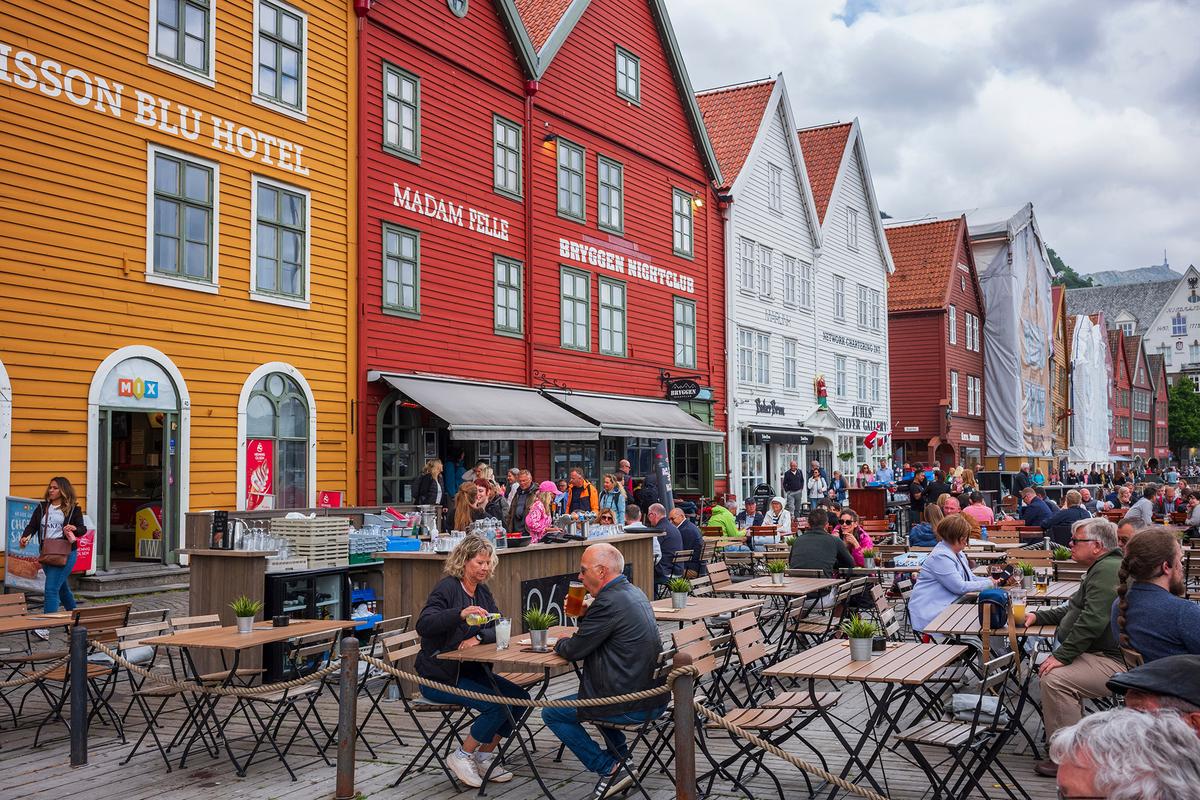
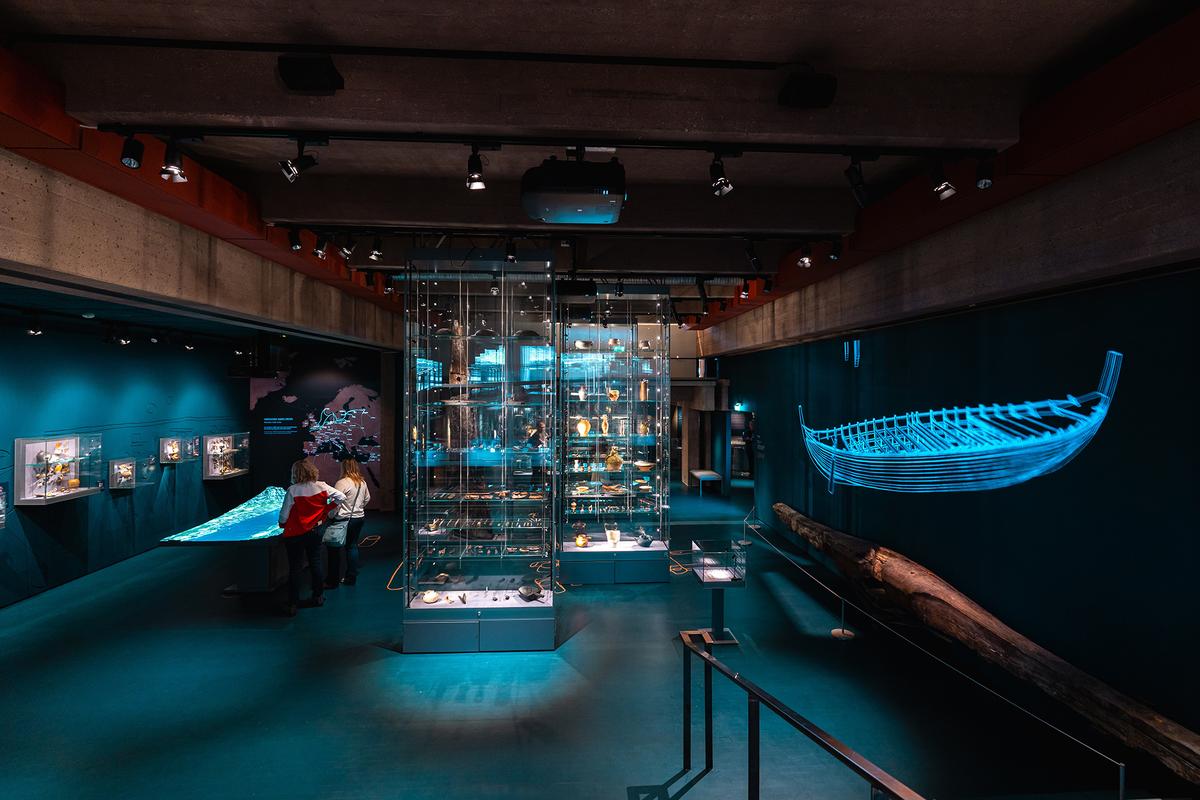
The League left behind a line of almost-too-perfect wooden houses along the harbor. Now preserved as a UNESCO World Heritage Site, Bryggen is a wonderful place to wander. You can smell the timber as you amble through shops selling everything from kitschy souvenirs (including stuffed troll toys) to handmade woolen clothing. Perhaps pop into the Bryggens Museum, which is built over the foundations of the city’s oldest buildings, and contains artifacts from a 13-year archaeological excavation.
Once you reach the King Haakon Statue, turn around and make your way back along the wharf. It’s always busy with all sorts of watercraft, from hardy vessels serving the North Sea oil platforms to cruise ships.
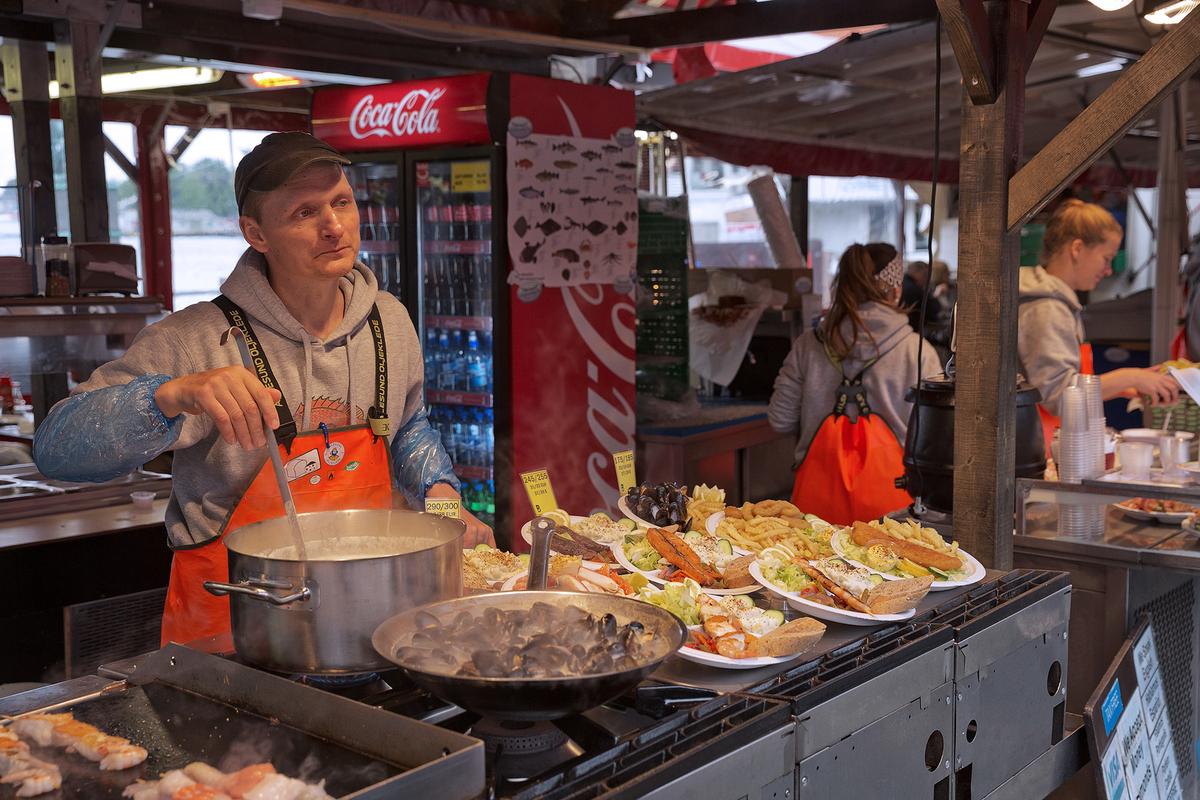
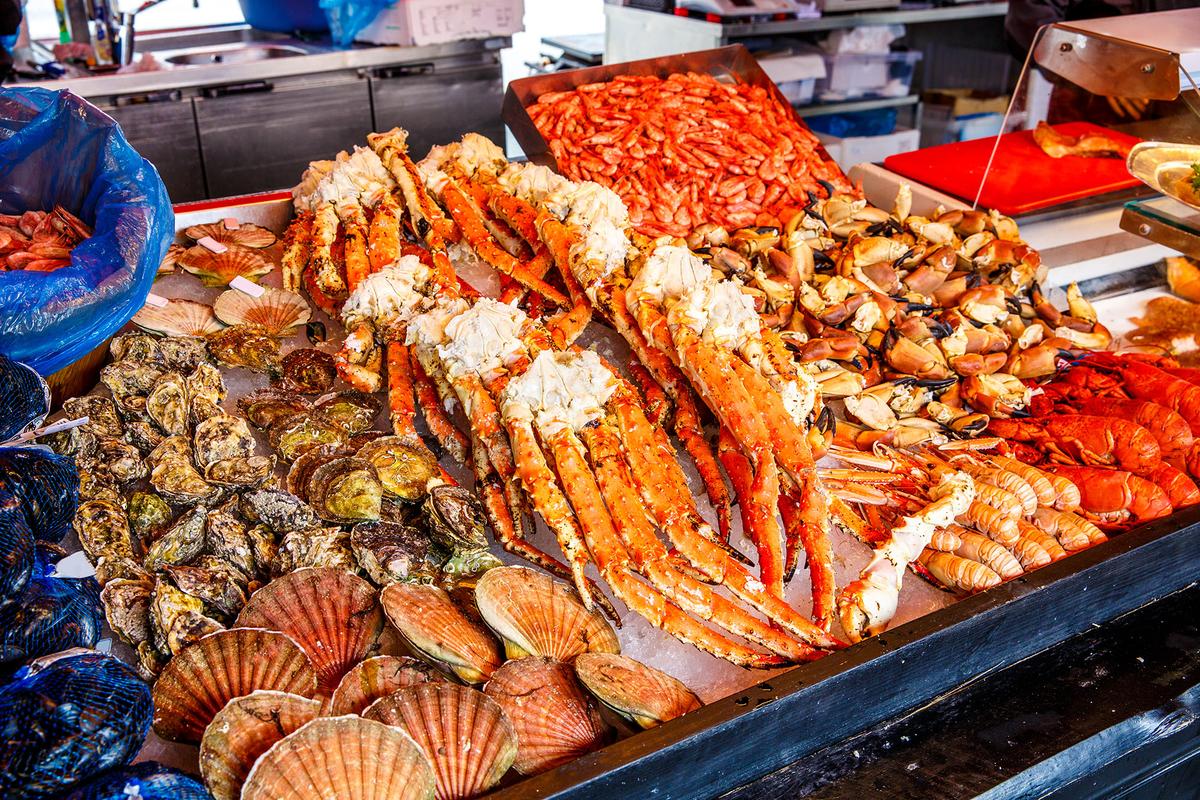
And, of course, watch out for boats that deliver their catch to the Fish Market, which is an excellent place to pause for lunch. You’ll smell the delicious scents before you arrive, wafting up from this assemblage of open-air food stalls and restaurants.
Walk the full length of it before you make any important decisions. Tanks are swimming with king crabs. Salmon, scampi, tuna, cod, and (very ugly) monkfish sit on ice. Choose your favorite swimmer and have the restaurant prepare it fresh. There’s also sushi, sashimi, fish soup, and so much more. And if seafood isn’t your thing? Just grab a moose burger.
And there’s no better way to rest after your lunch than boarding a boat and relaxing in the salty breezes. Bergen is a very maritime city, and the view from the water is exceptional. Hopping on an afternoon fjord cruise will also showcase all of the splendor and glory just outside of town.
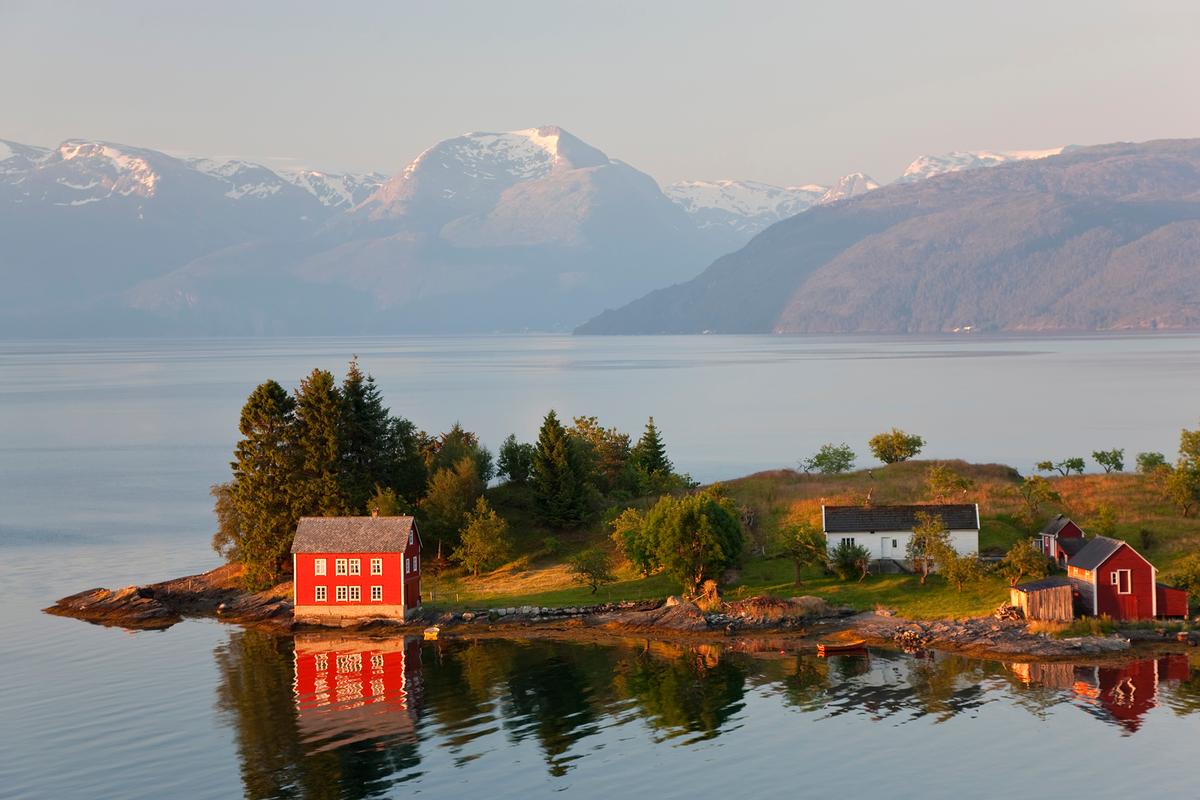
These three-hour tours will spirit you out on a big, stable catamaran, past the Hanseatic houses, and into the wild. The captain will navigate into Osterfjord, which runs more than 16 miles, as well as the narrow straits of Mostraumen.
Along the way, you’ll find steep mountain majesty and tiny villages such as Modalen (population: 380), where bright buildings nestle right up to the wharf. Take in a waterfall, crashing from high above. The crew will turn the bow toward it, so you can feel the clear, cold, refreshing spray.
Evening
Descending back onto the dock in the middle of Bergen, dinner probably must be a quick affair. A perfect choice: some reindeer sausage. Just a few steps away from the water, along the cobblestones, a legendary spot called Trekroneren has been serving them up for decades. It’s simple and pretty cheap—and very delicious. Make sure to get everything on it, including juniper berries and all of the venison spices.Then, make your way south across town to Den Nationale Scene (the National Stage). Pass the somewhat terrifying statue of dramatist Henrik Ibsen to the rather impressive art nouveau building, which builders completed in 1909. It has since been protected as a heritage structure.
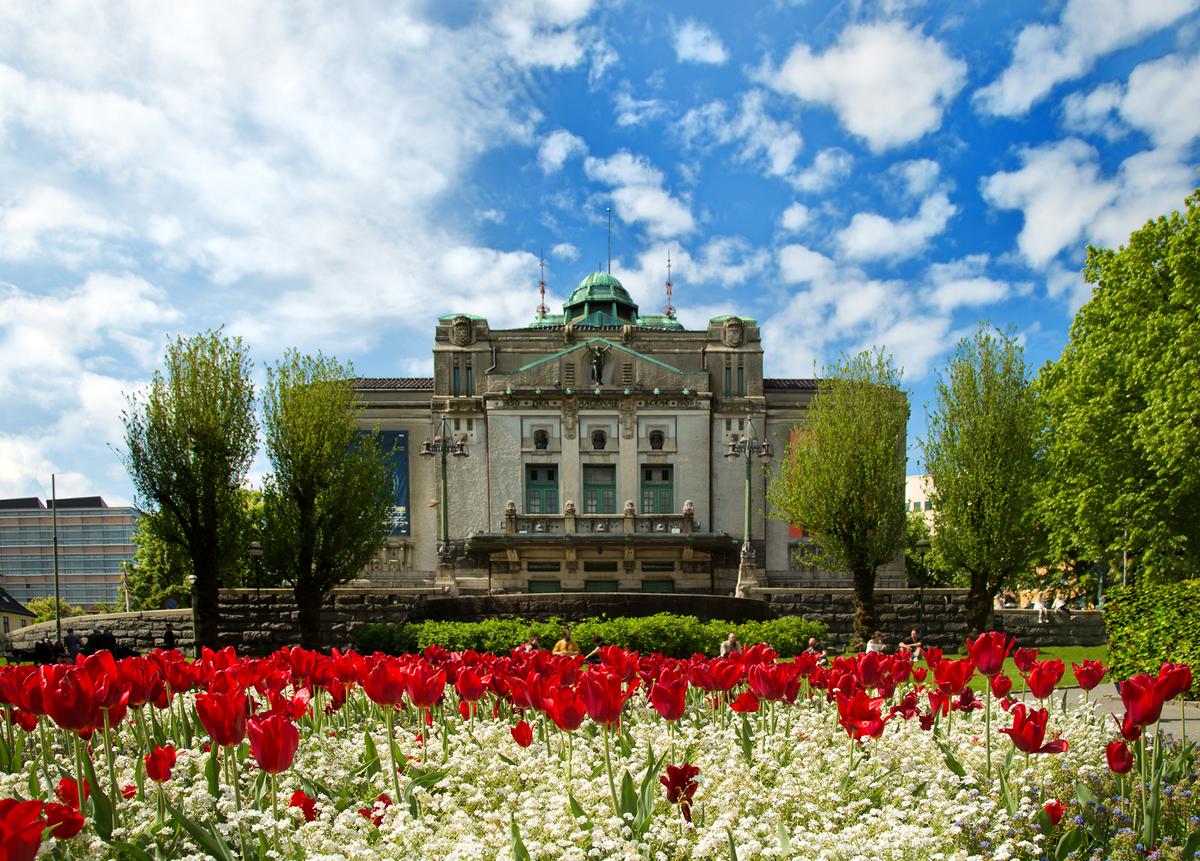
The 19th-century founders of The National Stage were concerned with promoting the arts in Norwegian culture and language. Today, three stages inside host regular shows. So patrons have choices when it comes to an evening performance.
Whether you choose a classical play on the Main Stage or something more cutting edge in the intimate Lille Scene (which has just 90 unnumbered seats), you’ll probably enjoy it. A poetic and lyrical end to a day that included narrow fjords, tumbling waters, fresh fish, and paddling on a lake—and, of course, a few trolls, too.