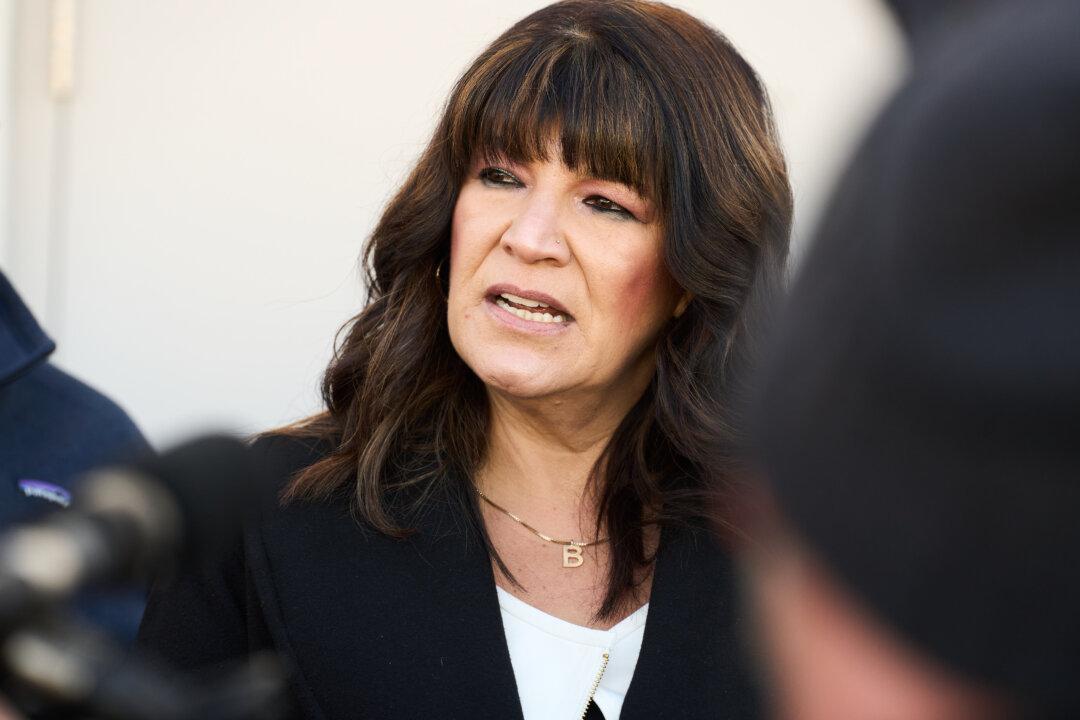
The Yukon government has announced plans to implement new firearms legislation this fall to protect lawful gun owners, but plans to gather public feedback before tabling the proposed law.
Justice Minister Laura Lang announced on July 2 that her department intends to introduce the Yukon Firearms Act when the legislature reopens in the fall in a bid to push back against federal firearm confiscation programs.
Lang did not say exactly when the government would table the legislation, but emphasized the importance of gathering public input before the document is finalized.
The government is holding public consultations on the proposed act over the summer. This will include an open public session at the Whitehorse Public Library on July 20, but residents can also submit feedback online.
“I look forward to hearing from Yukoners as we advance this work,” Lang said in a statement.
The main goals of the Yukon Firearms Act are to establish a dedicated Yukon Chief Firearms Officer (CFO), create a Firearms Advocate position, and implement new protections against federal overreach, Lang said.
The Yukon is served by a federally appointed Chief Firearms Officer based in Surrey, B.C. Lang said the power to appoint a territorial chief firearms officer lies with the federal Public Safety Minister, and the territory is working with Ottawa to appoint a CFO locally to better understand northern realities.
The act will also include the appointment of a firearms advocate to provide advice to the Minister of Justice, support firearms training, and help protect the interests of local gun owners.
Lastly, the proposed legislation will allow the territory to create regulations and licensing requirements to prevent the territory from participating in the federal firearms buyback confiscation programs.
“This government has consistently advocated on behalf of lawful Yukon firearms owners and been clear with the Government of Canada about the impacts that federal changes, including prohibitions, will have on law-abiding Yukon firearms owners,” Lang said. “The legislation we are developing is a continuation of this advocacy on behalf of lawful Yukon firearm owners.”
She noted that no territorially funded police services will be used for the federal gun program, adding that policing resources in the Yukon will remain focused on local priorities.
Gun Program
The federal buyback program is designed to take more than 2,500 types of firearms, deemed as “assault-style” guns by the government, out of the hands of owners throughout the country.Federal Public Safety Minister Gary Anandasangaree has said the firearms the government intends to ban will assist in reducing “the devastating effects of firearms violence.”
“These assault-style firearms are largely designed to kill people, not for hunting or sport shooting and have no place in Canada,” Anandasangaree said in a 2025 press release announcing the rollout of the program. It began with a pilot in Nova Scotia last September.
The territorial government first said it would not participate in Ottawa’s gun buyback after it was elected last fall. The Yukon Party, elected as a majority government in early November after nearly a decade of Liberal rule, previously voiced concern about the federal program while serving as the Official Opposition, saying it should target criminals instead of law-abiding firearms owners.
Its stance aligns the territory with provinces like Alberta and Saskatchewan in their opposition to the federal initiative.
Alberta has been outspoken against the federal buyback program, saying it “undermines” law-abiding citizens and fails to combat the illegal use of firearms. Saskatchewan has described it as the “wrong approach” for enhancing public safety.
Manitoba, Ontario, New Brunswick, and Newfoundland and Labrador have also opposed the program.
Ontario, Alberta, and Saskatchewan have officially intervened as parties supporting a Supreme Court of Canada challenge brought forward by the Canadian Coalition for Firearm Rights. The provinces are supporting the coalition’s constitutional claim that Ottawa exceeded its authority by implementing the 2020 ban and confiscation plan via cabinet decree instead of through legislative action.