Manitoba’s first supervised consumption site has opened its doors in Winnipeg this week in what the province’s addictions minister described as a long overdue step to help people with drug dependence.
The opening in Manitoba’s capital comes at a time when other provinces like Ontario and Alberta have restricted or defunded such services to focus on treatment and recovery.
Housing, Addictions and Homelessness Minister Bernadette Smith said the Winnipeg site is a tool that will help drug users “get connected with supports and services so they can get on to a path of recovery.”
“We can’t treat people who aren’t alive,” Smith said at a press availability from her office.
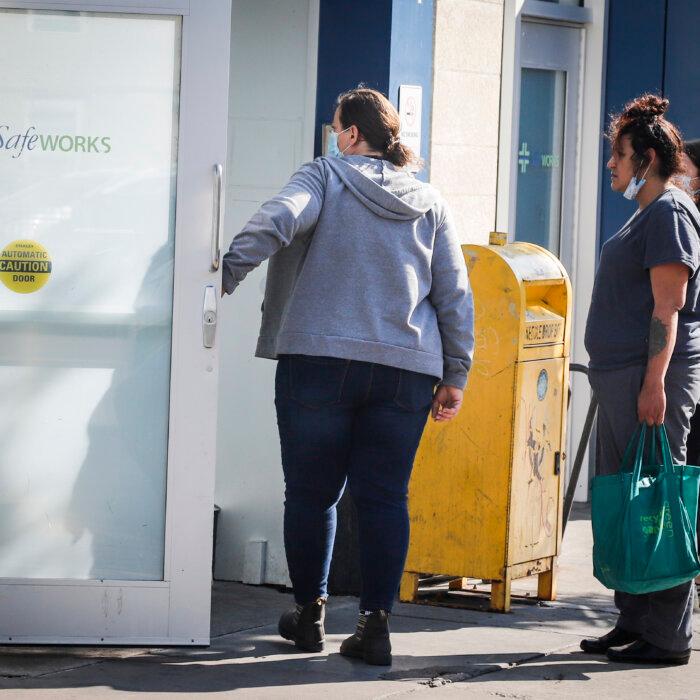
The province said the site in Winnipeg’s inner city, just north of downtown, had a limited opening starting in June, but the temporary space at the site was fully staffed and operational as of Aug. 11.
The site is run by the province in collaboration with the Aboriginal Health and Wellness Centre and can accommodate a maximum of 12 clients at a time. The site has eight staff, including two nurses, clinicians, and mentors, Smith said. The facility which will also have physician oversight and round-the-clock security service.
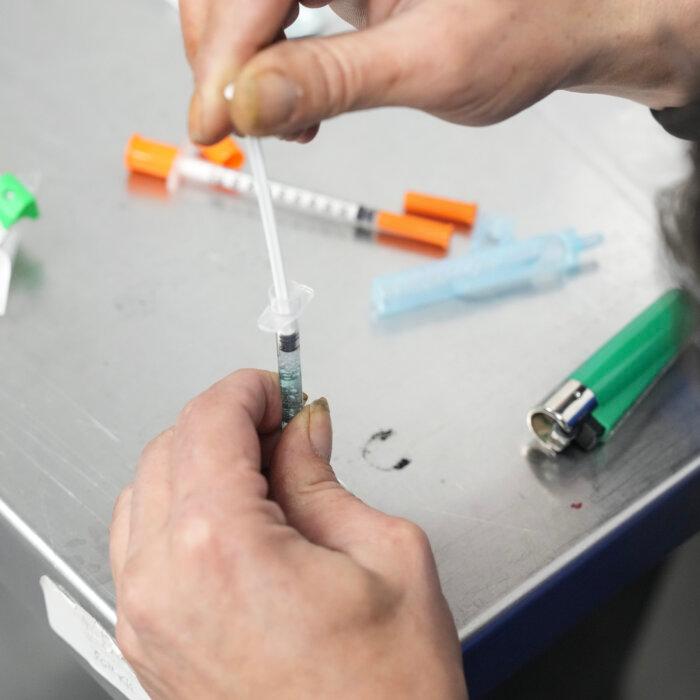
Clients supply their own drugs when visiting the facility, where the staff confirm that the drugs are not contaminated with fentanyl or other dangerous substances. The facility will provide clean consumption supplies like needles and inhalation kits and will also have Naloxone kits on hand to reverse opioid overdoses.
Individuals receiving injections are sent to a recreational vehicle that served as a vaccination site during the COVID-19 pandemic. There is also a designated area under a canopy for inhalation.
The province had originally announced its intention to establish a site by 2025, but opposition to the initially selected location and various complications led to delays. Smith declined to provide an expected timeline for when the permanent space would be complete at 366 Henry Ave.
The Aboriginal Health and Wellness said in a statement that the site will be operated within a holistic model of care that honours the dignity of the people it serves while maintaining accountability to their neighbours.
The building is mostly surrounded by auto repair shops, but it’s also a block from a playground and across from a banquet hall.
Some business owners and residents have raised concerns about security, and the Opposition Progressive Conservatives (PC) have argued that the government should prioritize treatment.
PC deputy leader Jeff Bereza is one of those pushing for a focus on treatment and recovery.
“We don’t have enough recovery or addiction treatment centres here in Manitoba,” Bereza said in a statement to the media.
He said the resources allocated to the supervised consumption site could have been more effectively spent on treatment to address the prolonged delays.
“If a person comes in there and takes a pamphlet … and they say that they want to get into treatment and recovery, how long is that going to take?” he added.
Varying Strategies
Manitoba’s strategy for dealing with addictions contrasts with the plans put forward by the Alberta and Ontario governments.He said the funding designated for these services would be redirected to expand addiction treatment, medical detox, recovery support, and 24-hour outreach teams.
The province closed a site housed within the Royal Alexandra Hospital just north of Edmonton’s downtown core last year, as well as a site in Red Deer. The closures mean that only three supervised consumption sites will continue to operate in Alberta: two in Edmonton and one in Grande Prairie.
The eventual goal is to transition entirely from the supervised consumption model to prioritize treatment, Ellis added, emphasizing that such facilities were intended as a temporary measure in response to the opioid crisis, not as a permanent solution.
Health Minister Sylvia Jones has said the HART hubs will “connect vulnerable residents with the resources they need to rebuild their lives” by providing primary care, mental health counselling, addiction treatment beds, social services, and supportive housing.
There are now only three supervised consumption and overdose prevention sites operating in Ontario. All three remaining sites are located in Toronto and rely entirely on independent or private fundraising to stay open.
The three-year experiment permitting personal possession of up to 2.5 grams of certain illicit drugs officially ended on Jan. 31 after the province chose not to renew its federal exemption.
Premier David Eby said that while having compassion for those struggling with addiction is important, the province could no longer “accept street disorder that makes communities feel unsafe.”