As the “smartphone generation” grapples with mental health issues amid a daily flood of online content, a growing number of educators are turning back the clock—to the likes of Aesop and Aristotle—for a way forward.
The classical education movement has thrived in the United States for decades with about 677,500 enrolled students in 2023-24, and in recent years, momentum has begun building down under.
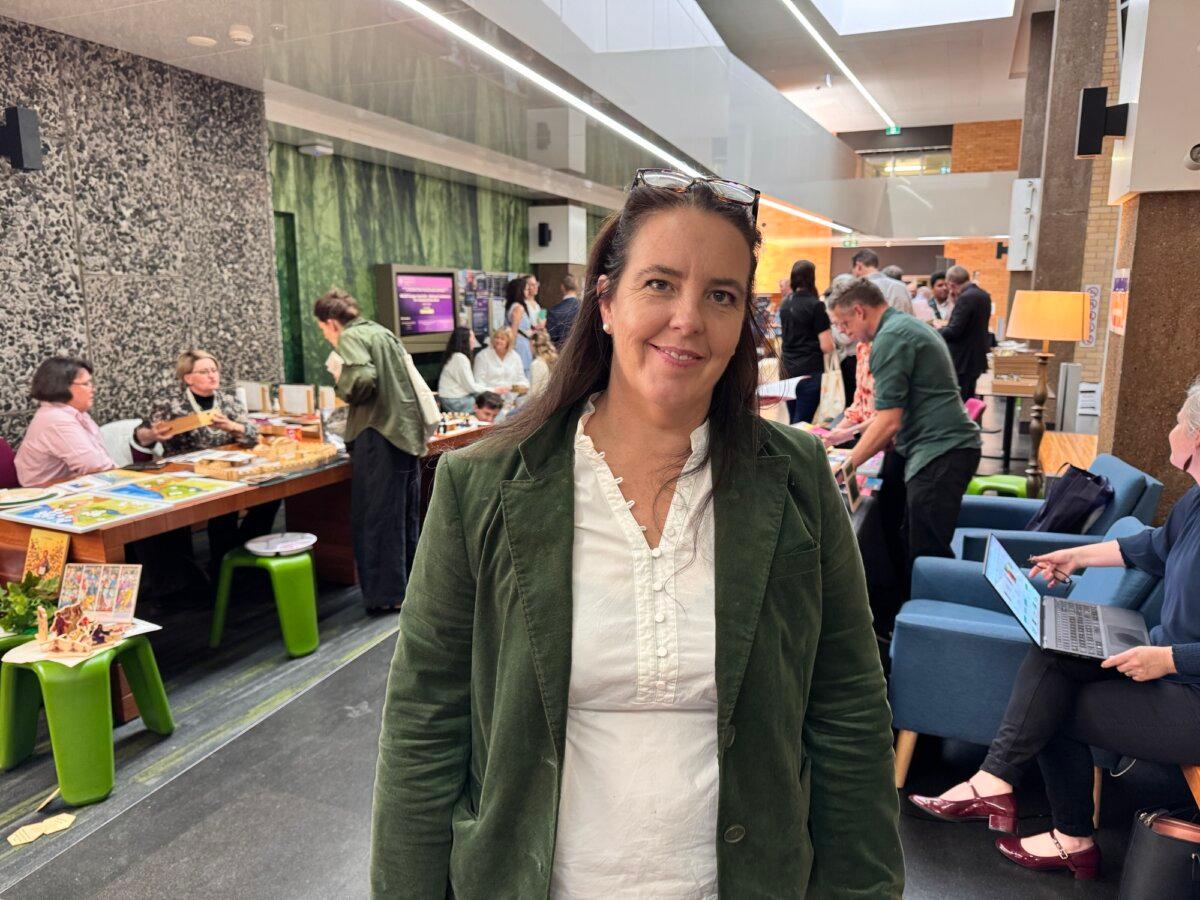
Sarah Flynn is one of those at the forefront of the movement, which strips away the use of iPads in classrooms, and focuses on teaching children the importance of cultivating virtue and learning from great historical figures—as opposed to “deconstructing” them.
“For the little children, we start with the fables, Aesop’s Fables, for example, and we show them that there’s patterns of human behaviour playing out in these animals that are little nuggets of truth about the rewards of a just and good life,” said Flynn, who founded the classical education organisation Logos Australis.
“So there’s a wisdom and virtue formation inside the child from fables,” the high school teacher told The Epoch Times, at the annual classical education conference, “Education for Human Flourishing” in Brisbane.
The mother of five also says from a psychological perspective, classic literature helps transmit “patterns of wellbeing” into a child the way counselling sessions do.

“So literature does a lot of the heavy lifting for wellbeing and flourishing.”
Flipping the Education Model Upside-down
Classical education inverts traditional notions about education, which focuses on acquiring hard skills—notably STEM subjects—in the hopes of finding a future job.“The ’telos’ or purpose [of education] has always been human flourishing. But maybe in the last 100 years, if you ask people what the purpose of going to school is, they‘ll say, ’So I can get a job.' It’s been commodified. It’s a transaction, and it’s utilitarian idea of learning,” Flynn said.
She says modern learning focuses on analysis and critique, or “looking for evidence, coming up with a thesis, and pulling all the pieces apart.”
“But we can’t solve the problems of the human person with a wholly materialistic view of that person,” she said.
In turn, classical learning encompasses other elements: spirituality, art, and even beauty, which today, can often be “trivialised and sidelined as not real knowledge,” according to Flynn. Students also learn Latin.
Pushback Against Social Media Harms, Public Schooling
While there are few classical education schools in Australia, the conference has gained in popularity in the three years it has run. This year, organisers report about 250 attendees (mainly educators) over two days, double the 100 that attended last year.And the timing is fortuitous, as figures consistently report mental health decline among young Australians, as well as a movement by parents away from public education.
Concerningly, only half of young people felt confident applying for a job, while only 52 percent said they felt they had the necessary skills to succeed. Additionally, 62 percent of youths reported loneliness.
To combat the impacts of social media, the federal government is rolling out its social media ban for under-16s by the end of this year. Further, state governments have banned the use of smartphones in classrooms.
Parents meanwhile are showing an increased distrust of the public school system.
Learning to Learn from the Greats, Not Criticise Them
One of the newest classical institutions is St. John Henry Newman College in Brisbane, which will open from Prep to Year 3 in 2026, with more classes to be added until it covers secondary by 2030.Principal Kenneth Crowther said parents were looking for schools that could help their kids enjoy learning, and not risk being “anxious, depressed, isolated, or slaving away.”
“A lot of the difference is not what we do, but what we don’t do,” Crowther said.
He also spoke about another major difference from current learning: rather than find problems with the world, find areas of personal improvement.
“We don’t criticise [the Great Books], we don’t read Shakespeare to find out all the problems with him. We read Shakespeare to find out about ourselves,” Crowther said.
“It’s far less about looking out at the world and judging the world, and more about being real with who we are—realising that if there are problems with the world then we are part of the problem, and we need to find a solution to that.”