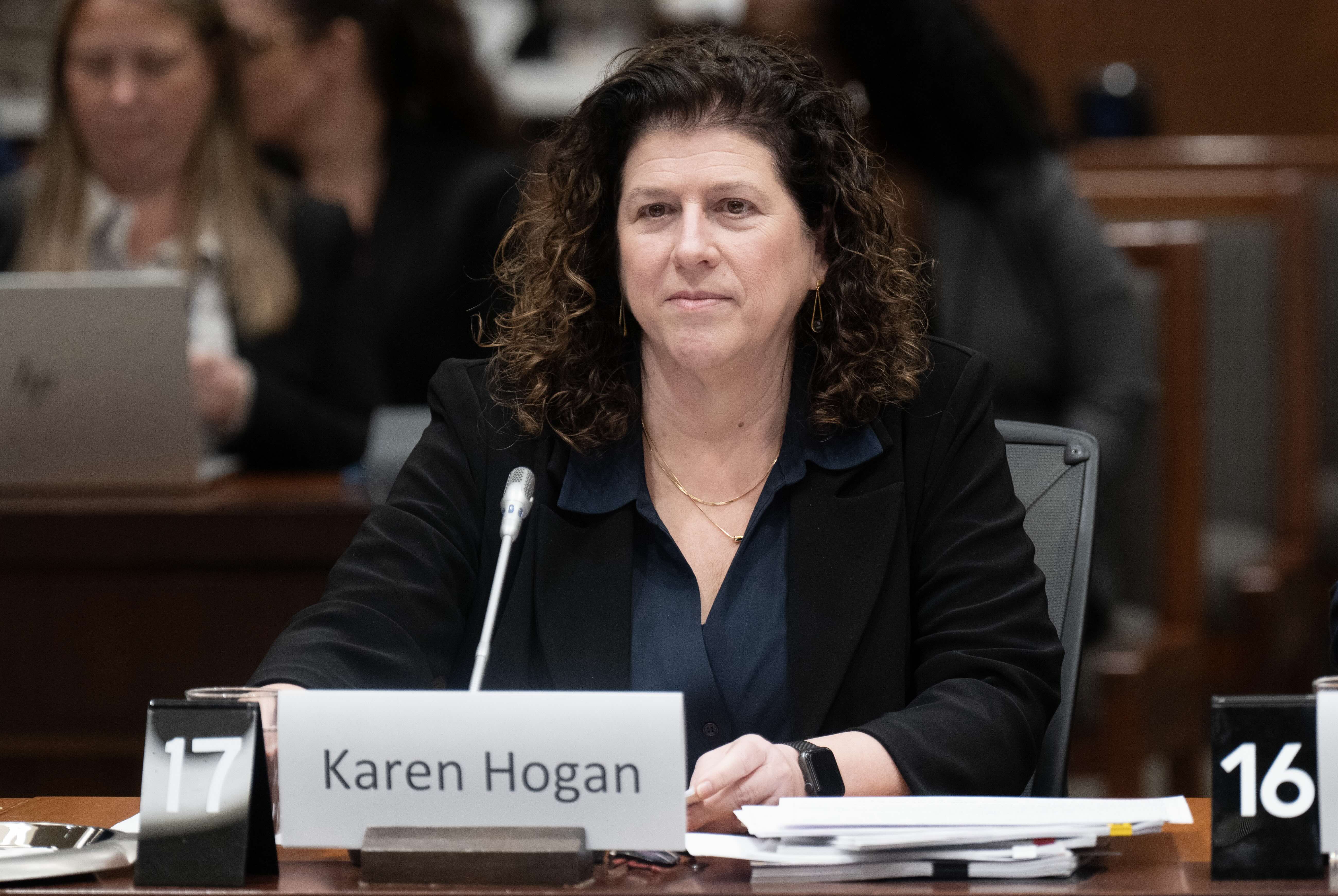
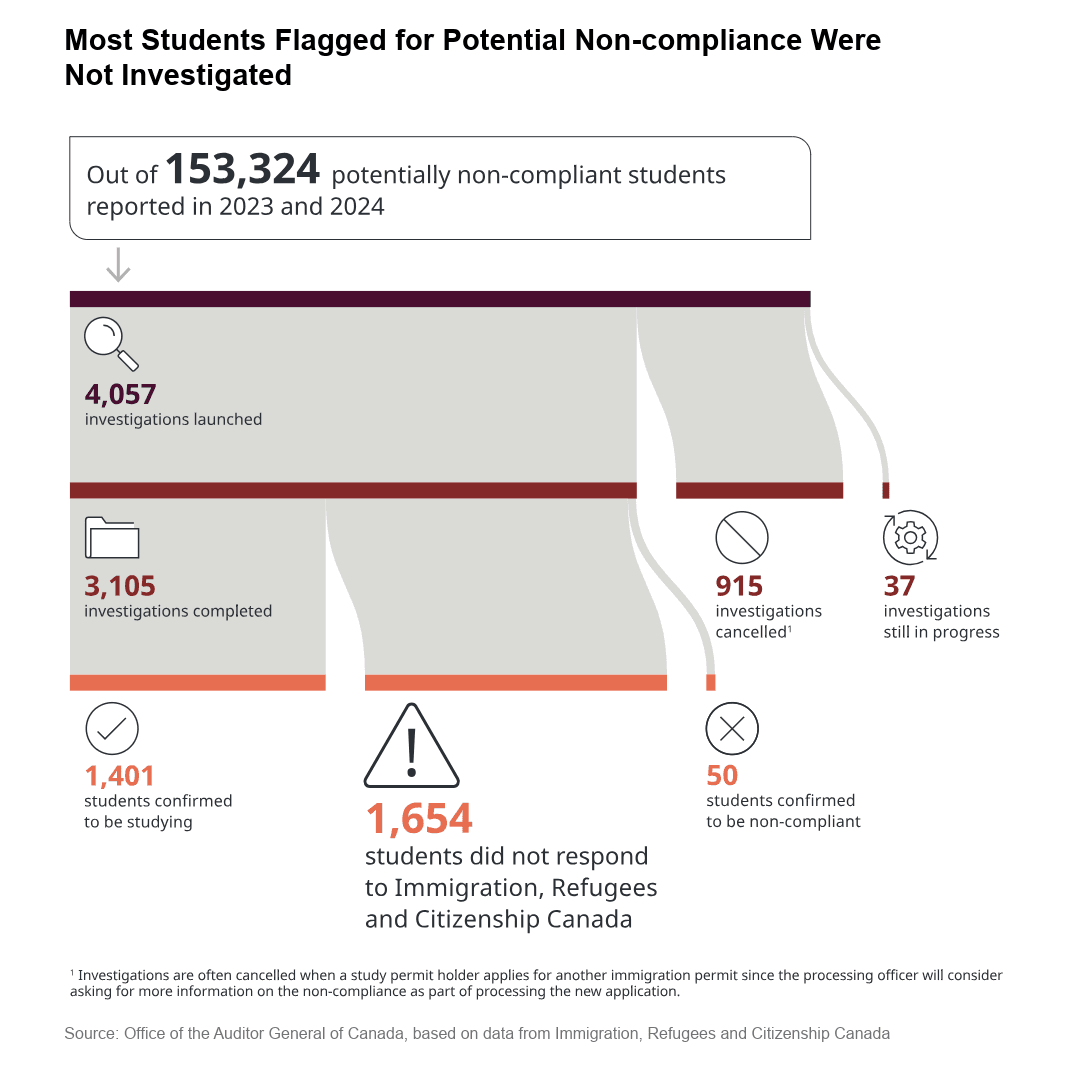
Auditor General Karen Hogan reported on March 24 that the immigration department failed to verify whether study permit holders were complying with the terms of their permits, and only conducted 4,057 investigations out of the over 153,000 cases flagged in 2023 and 2024.
The report also found that Immigration, Refugees and Citizenship Canada (IRCC) in 2024 approved fewer than half of the forecast number of new post-secondary study permits. This reduction in new study permits disproportionately affected smaller provinces, according to the report.


The rapid decline in new permits came after former Immigration Minister Marc Miller admitted in 2024 that temporary immigration in Canada, including that of international students, had gotten “out of control.” Ottawa had rapidly increased immigration in the preceding years, leading to stress on the country’s housing, health care, and employment.
Rollback in International Students
The Canadian government rapidly increased its immigration rates in 2022, and the country’s population grew from 38 million in July 2020 to over 41.7 million by October 2024.As housing affordability worsened and support for immigration among Canadians declined, the federal government began to roll back its immigration levels in early 2024.

Auditor General Report
The latest auditor general’s report found that the immigration department reduced the number of new study permits issued but that approved applications were below the department’s forecasts due to both lower application volumes and lower approval rates. IRCC approved 149,559 study permits in 2024 compared to a projection of 348,900, and it approved 50,370 permits in 2025 compared to a projection of 255,360.While permit issuance was meant to be reduced the most in the provinces with large populations and the highest number of international students, the report found that all provinces experienced “greater reductions in approved new study permits than intended” but that smaller provinces were disproportionately impacted.
While decreases of 10 percent or less were expected, Manitoba saw a 62 percent drop, Prince Edward Island 68 percent, Nova Scotia 66 percent, and New Brunswick 64 percent.
In the few cases the IRCC investigated, limited action was taken to confirm non-compliance beyond contacting the student for more information, according to the report. The auditor general said around 41 percent of the investigations could not be completed because of a lack of response from the students.
The IRCC was also slow to address integrity concerns with the Student Direct Stream of the International Student Program, which expedited the processing of study permits for 14 countries. Despite risk assessment units identifying India as a “high-profile risk,” the IRCC did not take steps to address the risk, and approval rates for Indian nationals were at 98 percent in 2024.
While the Student Direct Stream was cancelled in November 2024, the report said the “disproportionately high approval rates for these permits, sustained over several years, created new risks for study permit extensions.”
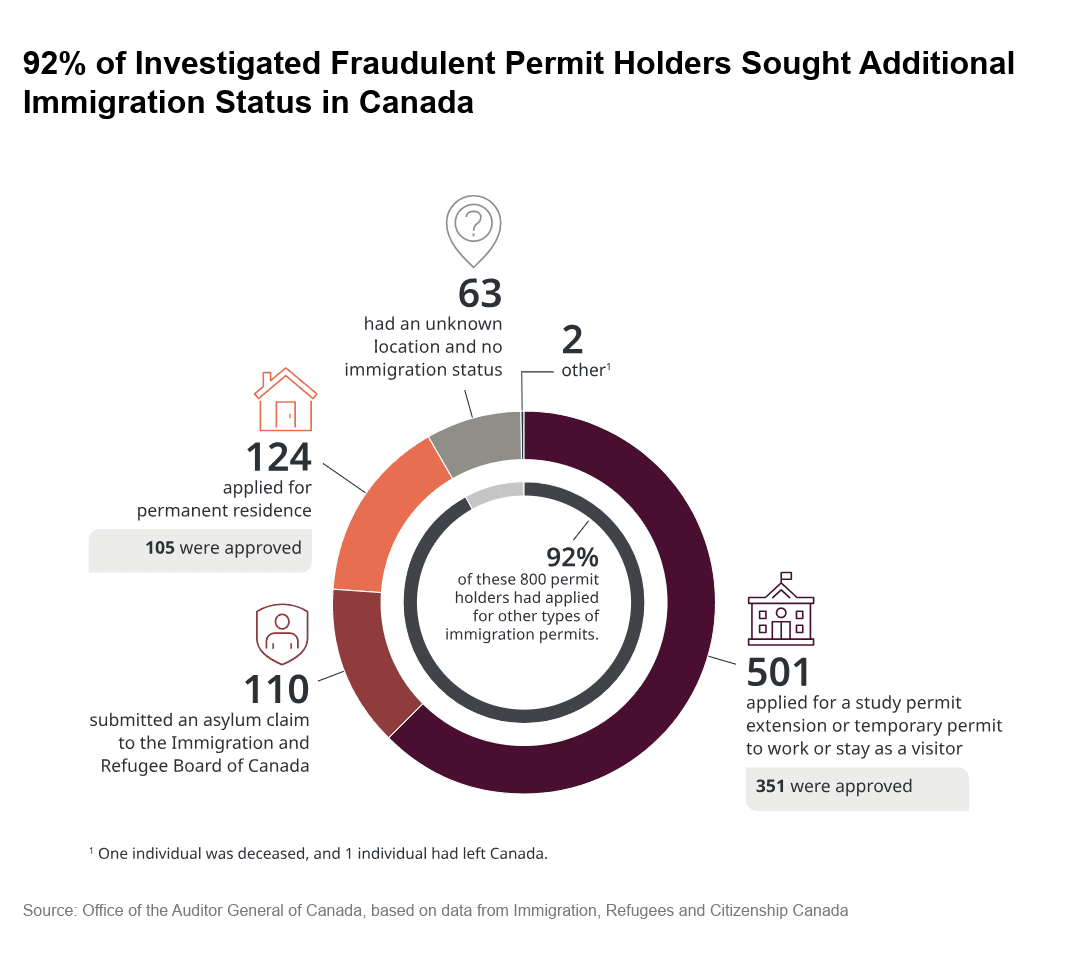
The report also found the IRCC failed to follow up on 800 study permit holders suspected of misrepresenting information or using fraudulent documents in their applications. Most of these people would later apply for other immigration permits while in Canada, and around 68 percent of them were approved.
The department also did not track which international students were expected to leave Canada each year, or which ones had already left. A total of 93 percent of the 549,000 individuals whose study permits expired in 2024 were allowed to remain in Canada, according to the report.
Federal MPs Debate
After the auditor general’s report was released, Immigration Minister Lena Diab said in a statement that the department accepted the auditor general’s recommendations and thanked the office for its audit. She said that while international students benefit Canada, the system must be “sustainable, credible and well managed.”The statement also noted that the auditor general’s report “captures only the first 18 months of a broader multi-year reform effort“ that runs through 2027, and as such, ”reflects an early phase of implementation.”
“I do want to remind people, though, the vast majority of international students are good people. … We are talking about a small percentage of students who were non-compliant,” Diab added.
When Diab appeared before the immigration committee, Conservative MP Michelle Rempel Garner, who serves as her party’s immigration critic, questioned why the Liberal government was going to issue another 215,000 foreign work permits “even with the auditor general’s findings.”
“Why are you doing that, even though we know most of these millions of citizens won’t leave the country voluntarily? That seems kind of crazy to me,” she asked.
Rempel Garner also told reporters after the committee meeting that the government is “still bringing in very high levels of foreign student permits” despite there being over 2.9 million people in Canada who are either on expired visas or have visas that will expire this year.
Diab responded that the IRCC is aware of the number of temporary resident documents that are scheduled to expire each year. She said that while some individuals with expiring documents may hold multiple permits, “Clearly, people who have expired permits are expected to leave.”