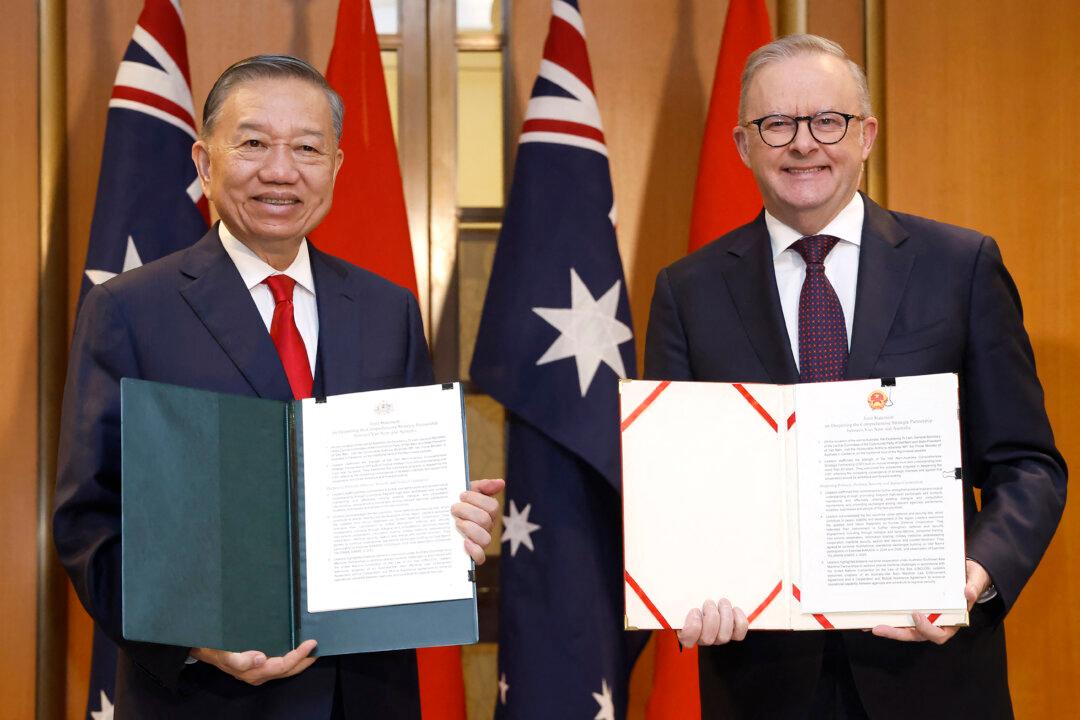
Last week, the Albanese government unveiled its new 2035 climate target for Australia, promising an accelerated overhaul of the country’s energy grid.
The plan still maintains a net zero target by 2050, but includes a new 2035 benchmark to cut emissions by 62-70 percent by 2035.
The blueprint is discussed in the released report, Australia’s Net Zero Transformation: Treasury Modelling and Analysis, which was released by Prime Minister Anthony Albanese, alongside Climate Minister Chris Bowen, Treasurer Jim Chalmers, and Climate Authority Chair Matt Kean.
More ‘Carbon Removal’ Projects Needed
One arm in the government’s arsenal to reach net zero could be “land-based sequestration.”Sequestration is the process of capturing carbon emissions and trapping them within the earth’s natural cycle where they are absorbed into plants and soil and converted into organic matter.
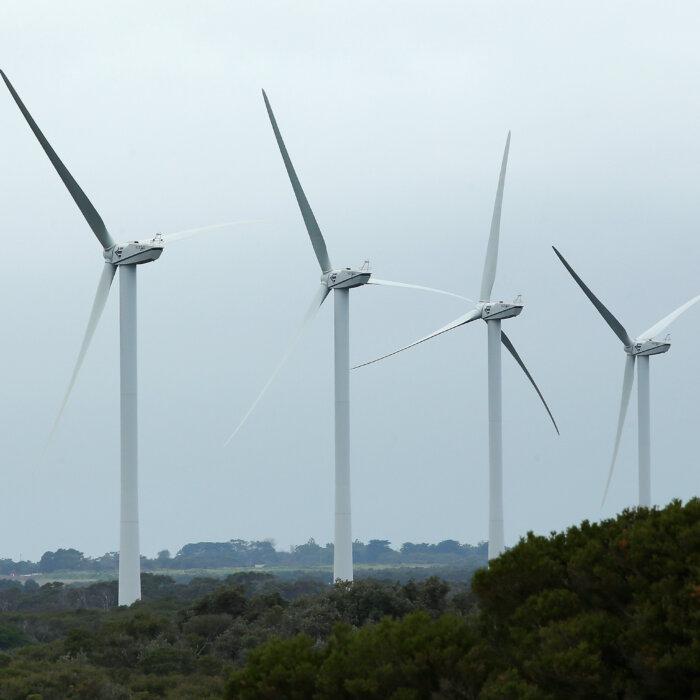
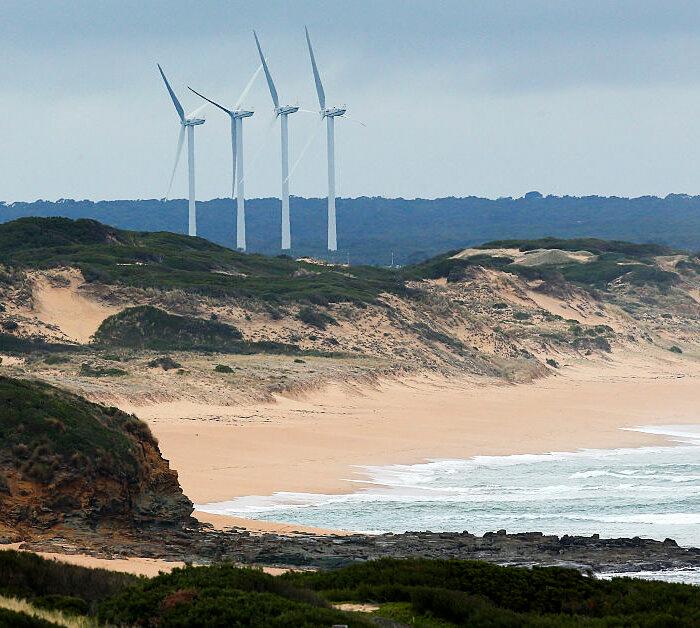
Modelling projects sequestration could be increased by 9 percent to 2035, with reforestation considered the most achievable method of doing so.
But costs and other factors remain a grey area.

The report notes a “considerable uncertainty” around the scale and composition of land-based sequestration needed for Australia to reach net zero.
At this stage, experts including Australia’s Commonwealth Scientific and Industrial Research Organisation, can’t agree on how much carbon Australia’s land can absorb for a given price—which would drastically impact the ratio of what a landholder may be paid versus how much carbon can be locked in for the amount of land used.
Various predictive studies give examples up to 20 times apart, meaning some estimates reveal only small amounts of carbon being locked in, while others foretell massive portions for the same cost.
Hopes of a Booming ‘Green’ Industry
The plan also banks on a future booming “green iron” industry, alongside green ammonia and hydrogen, which is produced via a low emissions process.The Treasury best case scenario model predicts around 120 million tonnes of green iron will be produced by 2050.
While there are signs of a burgeoning industry, like Calix Limited’s recent July announcement of a $44.9 million grant for a demonstration plant, there are still a number of major obstacles for the young sector.
“Doing it in Australia is expensive, it’s an expensive place to build stuff,” Rio Tinto Chief Technology Officer Mark Davies said.
Green iron also requires new infrastructure like transmission lines, roads, pipelines, storage, and upgrades to ports.
Global Demand Predicted to Explode
The 2035 plan also relies on overseas demand booming with Treasury predicting a $109-$178 billion boon by 2050 for hydrogen, ammonia, critical minerals, and “green” metals exports.Countries like China or those in Europe are expected to be the key buyers.
“Demand for critical minerals, such as lithium and nickel, essential for electric vehicles and energy storage technologies, is expected to experience strong growth by 2050 under a well below 2°C-aligned global scenario,” the report says.
It also assumes that in this scenario Australian critical mineral exports will increase by 170 percent by 2050, making the country a “key part of global clean energy supply chains.”
How Much Will it Cost?
And the most important question: will Australians be paying more, or less?Yet that’s not entirely clear.
The Treasury does warn that delays in the energy transition due to procrastination will devastate the Australian economy.
“Not pursuing net zero by 2050 risks lower economic growth, reduced investment, missed export and employment opportunities, and higher energy prices,” the report says.
Moreover, the government says net zero will result in 2.3 million more people being employed by 2035, and 5.1 million more in 2050.

However, Aussies are currently dealing with higher energy bills, which has resulted in the Albanese government rolling out two rounds of energy rebates.
Further, the cost of some renewable projects have already ballooned, including New South Wales’ first renewable energy zone, which has gone from an estimated $650 million in 2021, to $5.5 billion in 2025.