With $13 billion in federal funding to start, BCH aims to construct an initial set of 4,000 units across six federally-owned sites in Dartmouth, N.S.; Longueuil, Que.; Ottawa; Toronto; Winnipeg, Man.; and Edmonton, with construction expected to start next year. The government says additional build phases to construct more housing units are planned for future phases up to 45,000 units on these lots.
What the Government Says About New Program
BCH has been created as a special agency within Housing, Infrastructure and Communities Canada under the leadership of CEO Ana Bailão, a former Toronto city councillor and deputy mayor.The program will use prefabricated modular home and mass timber technology, as well as oversee 463 hectares of federal land where new housing can be built. This includes incorporating the Canada Lands Company’s portfolio of 88 properties into BCH, lots which Ottawa says have been found appropriate for building housing on.
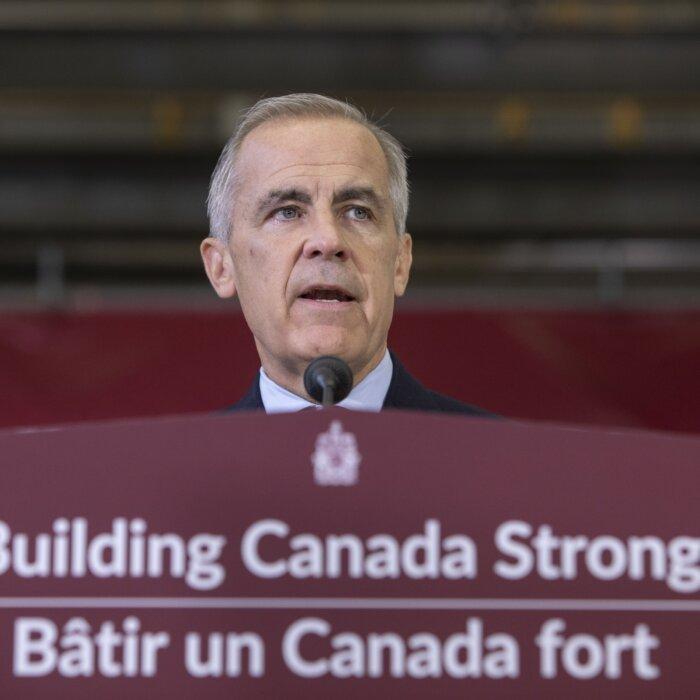

Carney says the program will focus on speeding up construction through the use of public land, reducing development risks, and streamlining approvals, as well as incorporating prefabricated modular units to lower costs and shorten building timelines and prioritizing the purchase of Canadian-made materials such as lumber, steel, and aluminum where feasible.
“I think it’s a key responsibility of the federal government. It hasn’t been for about 30 years since the mid-90s. And that’s what’s got us into the housing crisis that we have today. It’s decades of not building enough non-market housing,” Robertson said.
Robertson pointed to higher levels of non-market housing and government intervention in many European nations as a model for Canada to follow, saying that the Carney government is especially focused on getting affordable housing for the “missing middle” who can’t currently afford a home.
What Does the Opposition Say?
Conservative Leader Pierre Poilievre has made it clear that he sees Carney’s term as a failure in every category, including housing and cost-of-living. Past Liberal measures such as the Housing Accelerator Fund have been criticized by the Conservatives as full of red tape and ineffective.Addressing his Conservative caucus Sept. 14, Poilievre said that under Carney, there have been increasing “costs, crime, and chaos,” and said that Carney’s solutions to housing will not be effective.
“When it comes to building bureaucracies, which is what the Liberal plan is morphing into when they announced $13 billion to build a bureaucratic structure rather than getting out of the way of new home construction, well those are things that we can’t support,” Scheer said.
Parliamentary Budget Officer’s View
Interim Parliamentary Budget Officer (PBO) Jason Jacques recently weighed in on BCH during a House of Commons committee session on Sept. 16, saying that his office is unsure about whether the plan will be able to build the projected homes.“We don’t know,” Jacques said. “As soon as the announcement was made ... on Sunday, yesterday morning when the office opened at 7:45, we drafted an information request to the government to ask them for details exactly how they’re planning on spending that $13 billion to transform the housing market.”
Jacques added that housing units built through federal initiatives aren’t always classified as affordable by Canada Mortgage and Housing Corporation (CMHC) standards. He said that official statements can be misleading and that his focus is on the actual data rather than promotional messaging.
Remaining Unknowns
BCH has considerable funding behind it and ambitious goals. Significant risks are also present, however, including the fact that municipalities may not be agreeable to speeding up permitting and making rezoning easier. Putting the government as a major force behind the housing market also won’t erase market realities of the current high cost of labour and materials, especially in large metro areas like Toronto, where housing starts are down 69 percent since last year.Analysis from Royal Bank of Canada said the ability of BCH to make a difference is far from certain as it contends with a difficult economic situation and many layers of bureaucracy.
Canada’s housing system requires numerous layers of organizations to work together or risk duplicating efforts and wasting time. This includes federal departments such as Housing, Infrastructure and Communities Canada, Crown corporations (CMHC, Canada Lands Company), provincial and territorial governments, municipalities, indigenous governments, non-profits, and private developers. Coordination among these various layers of bureaucracy will be essential to the workability of the program.
Prefabricated and modular construction methods can accelerate housing delivery and reduce costs, but scaling up these innovations nationwide is harder than expanding traditional construction methods, which already have existing supply chains, and regulatory frameworks, whereas newer techniques may face bottlenecks in permitting, logistics, or finding enough regional expertise and labour.
It still remains unclear how this new initiative will work with municipalities, what the details of partnerships with developers are, and how it will deal with large-scale immigration that’s put pressure on the housing market, nor is it clear how 4,000 new homes per year would make a sizable dent in providing more affordable housing, particularly in areas like Metro Vancouver and the Greater Toronto Area, as well as how the new construction technologies and supply chains can be scaled up at a fast rate across the country.