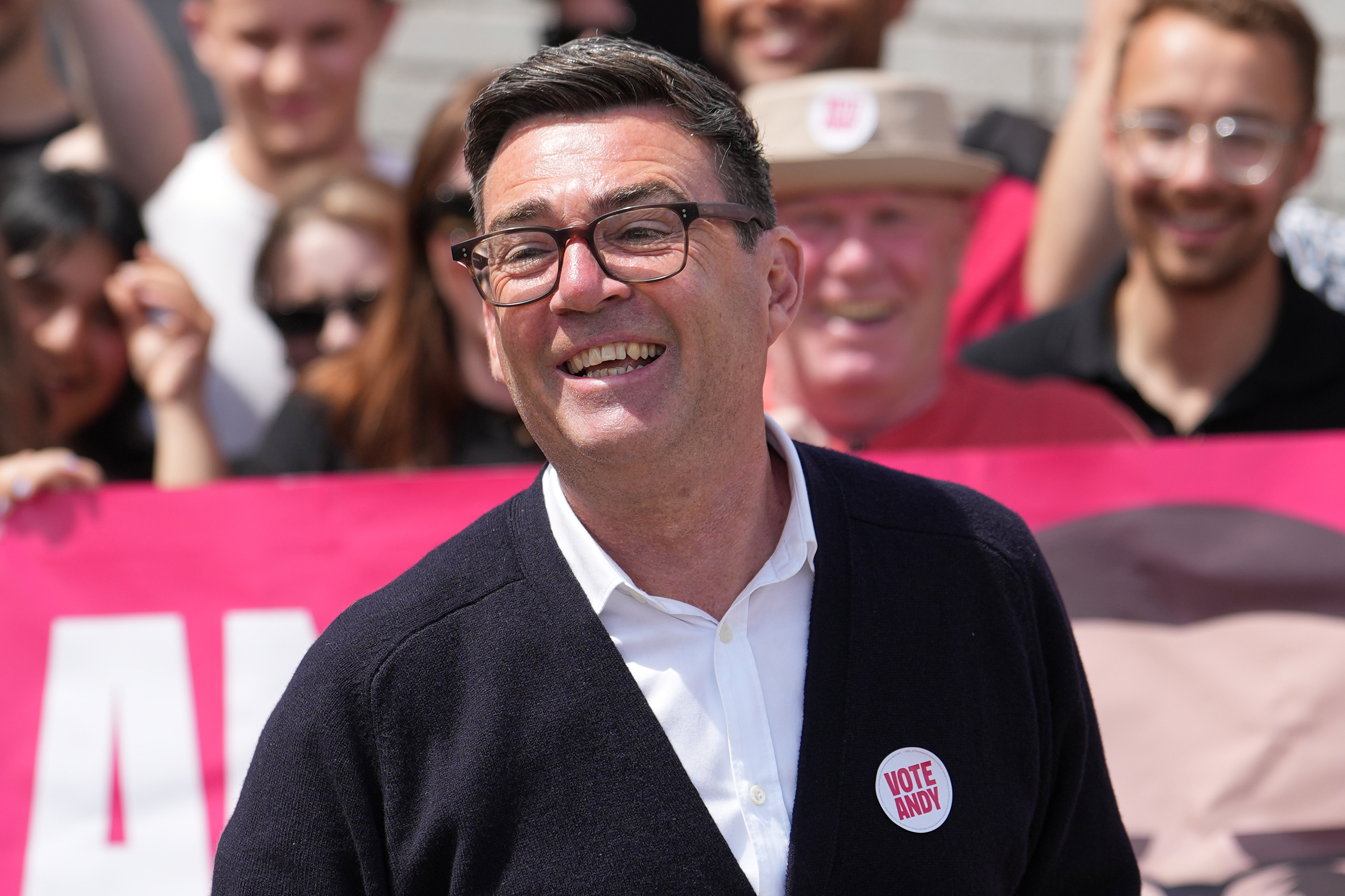

Former Mayor of Greater Manchester Andy Burnham, Britain’s presumptive prime minister following Keir Starmer’s resignation, set out his vision for the country in a speech on Monday.
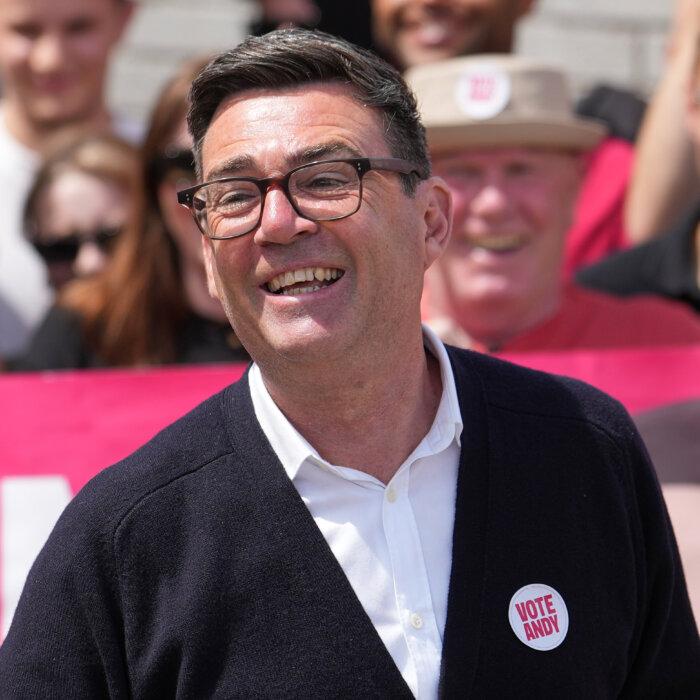
Burnham presents himself as an amiable northern everyman who likes to dress casually in T-shirts rather than a suit and tie and spends his spare time playing football or spinning tunes on the decks for charitable DJ battles.
Burnham won a by-election on June 18 for a seat in Parliament with the express aim of challenging Starmer for leadership of the Labour Party after lawmakers lost confidence in the prime minister following disastrous local election results. Starmer eventually bowed to mounting pressure and stood down.
It could be third time lucky for Burnham’s ambitions, having stood twice previously to be Labour leader, coming fourth behind Ed Miliband in 2010 and finishing second to Jeremy Corbyn in 2015.
What’s His Story?
Born in a Liverpool suburb, Burnham, 56, is a career politician and married father of three who entered politics after graduating from Cambridge University, working as a researcher and adviser to Labour MPs.
At 31, Burnham was elected as MP for Leigh in the Greater Manchester region of north-west England, going on to serve in junior ministerial roles under the premiership of Tony Blair. He progressed to senior roles when Gordon Brown became prime minister, first as culture secretary and then as health secretary.
He became mayor of Greater Manchester in 2017, trading the cut and thrust of national politics for regional leadership while Labour was in opposition under Jeremy Corbyn. Burnham proved popular in the region, which has a population of over 3 million, and was reelected twice in 2021 and 2024.
His profile grew during the COVID-19 lockdowns and restrictions, when he campaigned for greater furlough funding for northern communities. Although not a lockdown skeptic, Burnham argued that tiered restrictions were hitting some regions harder than others and said Boris Johnson’s administration was too London-centric in its pandemic policy-making.
As Starmer’s ratings plummeted less than two years after he led Labour to a landslide national election victory in 2024, Burnham emerged as the party’s clear favorite to replace him.
Will Burnham Be Challenged?
Some media commentators dubbed Burnham the “king of the north” following his COVID stand-off with then-Prime Minister Boris Johnson, and it is possible the former mayor could find himself coronated as both Labour leader and prime minister without anyone standing against him.
The Labour party appears to be uniting behind Burnham, although he could still face a contest if another MP decides to throw his hat into the ring and challenge him. To do so, they must secure the backing of 20 percent of their fellow Labour MPs and three affiliates, two of which must be unions, or five percent of constituency parties.
Nominations for the Labour leadership open on July 9 and close a week later. If Burnham is the only contender, he could become prime minister on July 17.
If there is a contest, a new leader should be in place by the time Parliament returns from its summer recess on Sept. 1.
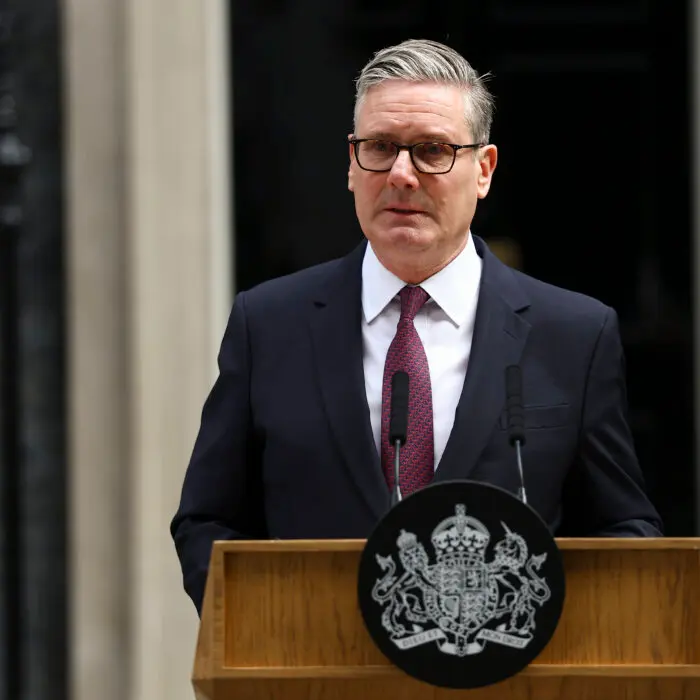
Starmer has said he wants an “orderly transition” and that whoever succeeds him will have his full backing.
Some of those considered likely to challenge him have ruled themselves out, while others might still decide to throw their hats into the ring—if they can secure the backing they need.
Former health minister Wes Streeting, the most high-profile member of Starmer’s team to resign amid calls for him to step down, said he would back Burnham in the wake of Starmer’s resignation.
Cabinet minister and Starmer loyalist Darren Jones, touted as a possible rival, told Sky News he would not run as leader, saying that Burnham had offered him reassurance over his economic policy.
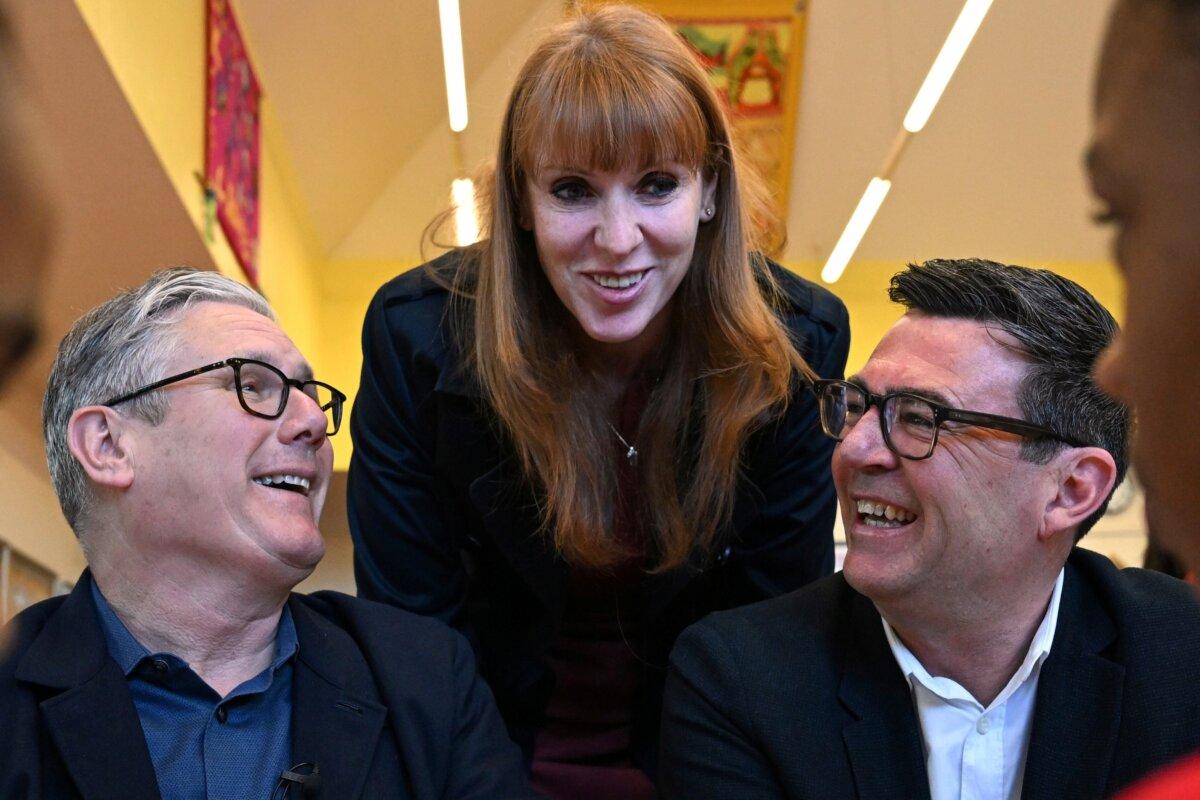
Other lawmakers whose names have previously been mentioned as potential contenders, including former deputy prime minister Angela Rayner and former Armed Forces minister Al Carns, have not announced plans to stand.
Polling shows Burnham is the clear favorite among Labour members to become the next leader.
Trump and the ‘Special Relationship’
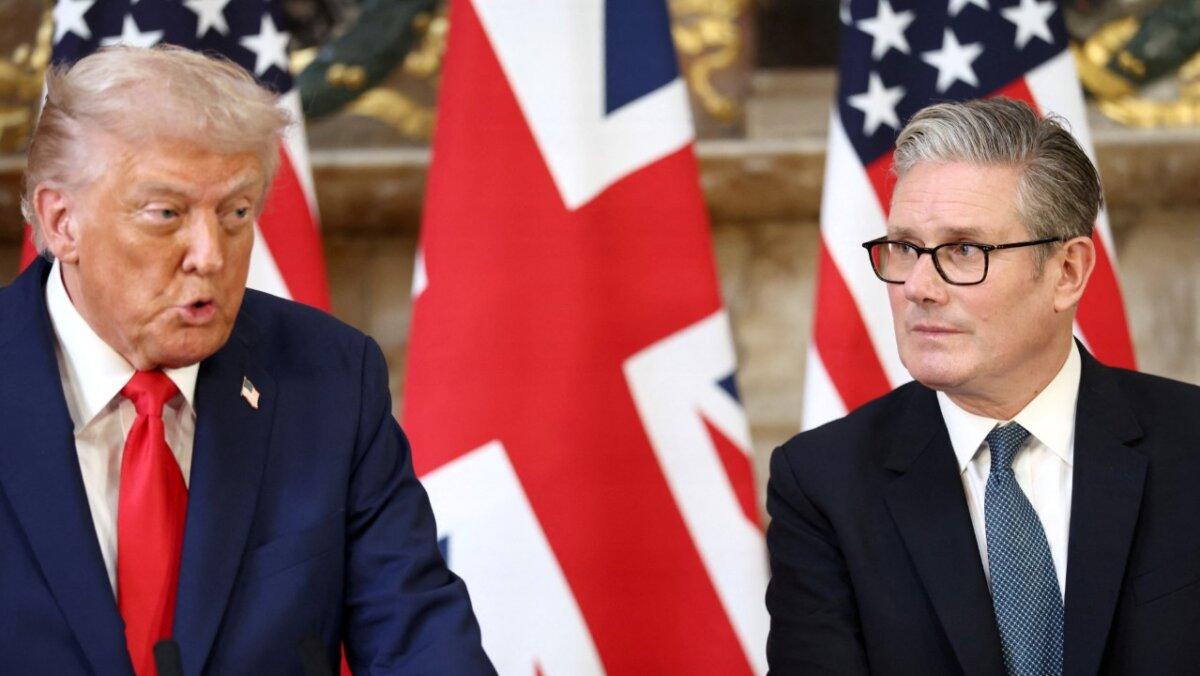
The so-called “special relationship” between the UK and the United States has come under strain in recent months, particularly since Starmer initially rejected Washington’s request to use British bases for airstrikes on Iran.
Asked about Burnham on June 25, President Donald Trump told journalists: “I don’t know anything. I see that he was, I guess, the mayor of a town.”
“I hear he’s extremely liberal, extremely, so that means he probably won’t open up the North Sea. You know I gave Keir Starmer some pretty good advice, I said open up the North Sea,” Trump added.
Asked if he'd like to be the first leader to visit Burnham’s Britain, the president replied: “No, but I think we’re probably of a different persuasion.”
Burnham has made less-than-flattering remarks about the U.S. president in the past, including in the wake of the Capitol protest by Trump supporters, posting on Jan. 6, 2021, “Any UK politician who gave Trump the time of day should be ashamed right now.”
The former Mayor has previously cautioned against what he termed the “poisonous” nature of American-style politics and told The London Economic that Trump has brought “instability” to the United States and the world.
Burnham wrote in a 2024 book, “Head North,” co-authored with Liverpool City Mayor Steve Rotheram, “Whether we like it or not,” Trump and Reform leader Nigel Farage had been “effective in connecting with people who feel politicians have neglected the place where they live.”
The pair argued that what they termed the “new radical Right” on both sides of the Atlantic has exploited feelings of alienation and an “out-of-touch left-progressive establishment” which, in their view, has failed to address working-class concerns and societal inequality.
What Are His Politics?
During his unsuccessful 2010 party leadership campaign, Burnham said his political philosophy was one of “aspirational socialism.”
He is classed as belonging to the so-called “soft left” wing of the Labour Party, meaning he is generally considered slightly to the left of Starmer, who is considered center-left, particularly on the economy.
The former mayor favors higher taxes on property, wealth and investment income as well as tighter state control of utilities and more social housing.
His speech on Monday placed a strong emphasis on localism and giving power to the regions. He also pledged to build more council (public) housing to address soaring private rents. He made no mention of immigration.
As health secretary from 2009–10, Burnham tried to introduce free social care for all adults in the UK, but the bill did not pass before Labour lost the 2010 election.
As mayor, he set a target for Manchester to become carbon neutral by 2038, with his green measures including the electrification of buses.
However, Burnham has signalled that he isn’t opposed to reconsidering British access to North Sea oil and gas. “I’ve got something of an open mind, you know. I don’t have a sort of fixed position,” he said in early June.
On defense, he is a strong supporter of NATO and, in 2015, said he would be unable to serve in the shadow cabinet if Corbyn, who became party leader, backed leaving the military alliance.
On foreign affairs, Burnham backs a two-state solution in the Middle East and signed a letter calling on the UK government to recognize the Palestinian state. He has denounced Israeli settlements in the West Bank, although he has declined to call Israel’s military actions in Gaza a “genocide.”
His voting record as an MP shows he favors socially liberal policies, including same-sex marriage.
He has faced criticism over his backing for the treatment of children who believe they are transgender, particularly concerning public funds given to charities which gave puberty blockers to children, now banned in Britain except for a controversial medical trial.
Women’s rights groups accused Burnham of altering his position on gender policy in order to appeal to socially conservative voters in Bakerfield. Previously, he said that only a “small minority” object to trans-identifying men in women’s toilets or changing rooms, and supported speeding up the process of obtaining a gender recognition certificate for those who want to be given the legal identity of the opposite sex.
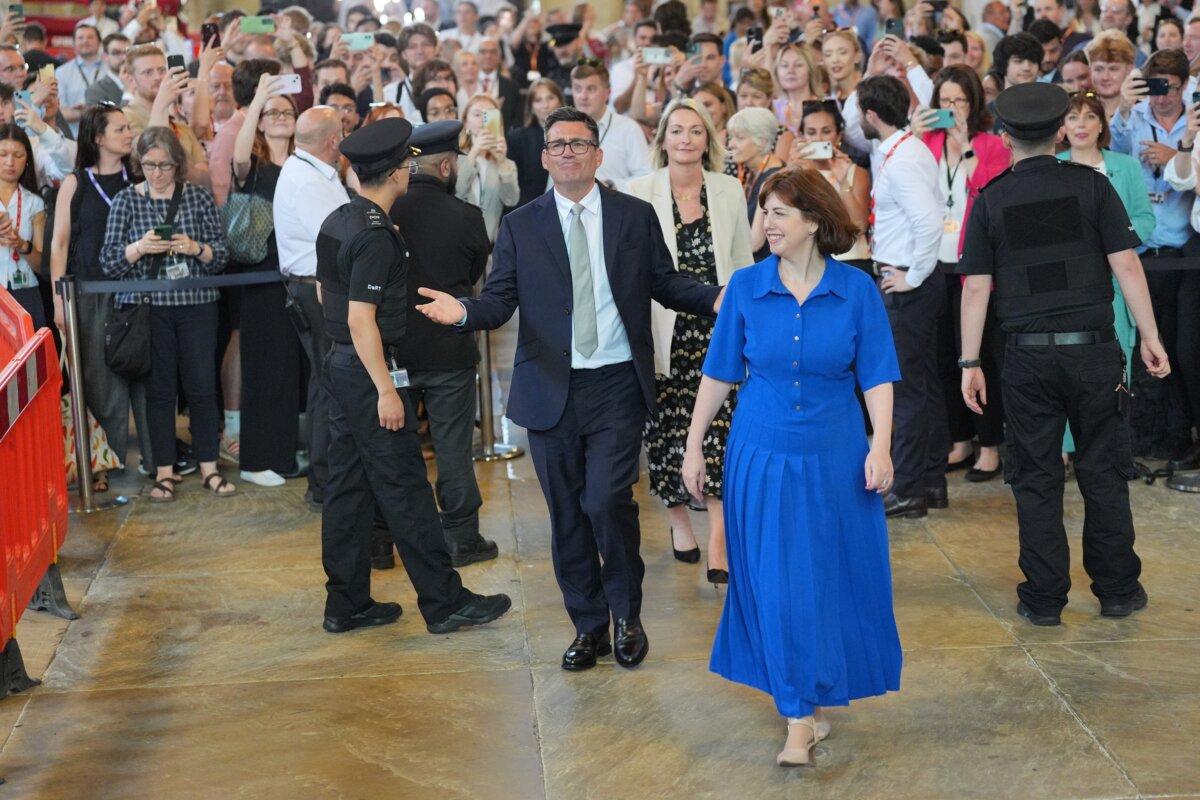
What is He Pledging?
In Monday’s speech, he pledged to reverse almost two decades of sluggish economic growth since the 2008 financial crash through an approach he dubbed “Manchesterism”—harnessing private and public money to invest in areas such as transport, housing, and infrastructure.
Burnham said he would create new industrial jobs and better educational opportunities, and reform the country’s inefficient and expensive privatized water and energy utilities.
Delivering the speech from Manchester, Burnham said he would create a new government office in the city, which he dubbed “No. 10 North.”
He said this would oversee regional development and become “the nerve center of a rewired Britain,” with the aim of levelling up living standards across the country. Regional mayors would be given greater powers over housing, welfare and education under his plans.
While it outlined a broad vision, the speech did not give specifics on how additional funds would be raised, and Burnham did not take questions from journalists.
On immigration, Burnham has generally favored a stricter asylum system but has consistently voted against stronger laws and enforcement of immigration rules. His speech on Monday made no mention of either immigration or the asylum system.
Could a ‘Burnham Bounce’ Beat Reform?
Opposition parties have called for a national election when a new Labour leader is installed, but British law does not require one.
Burnham called for an election when Conservative prime minister Liz Truss stood down after just 45 days in 2022 and was replaced by Rishi Sunak, writing on X, “We can’t go on like this,” in reference to the succession of unelected leaders.
Arriving in London to be sworn in as an MP on the same day Starmer stood down, Burnham told reporters they were “jumping several hurdles ahead” in asking him whether he planned to call a general election.
Following the Brexit vote in 2016, the UK has seen a rapid succession of six prime ministers, with Burnham expected to become the seventh in a politically tumultuous decade.
Recent polling suggests there could be a “Burnham bounce” for Labour, following the party’s recent struggles.
He is now regarded by many within Labour as the party’s best hope of winning back former voters who have either drifted towards the populist Reform and Restore parties, or leftward to the Greens.
Burnham comfortably defeated the Reform candidate in Makerfield, winning 55 percent of the vote, despite Reform’s strong showing in the area in May’s local elections.
Given Labour’s recent difficulties and its large majority in the House of Commons, commentators do not consider it likely that Burnham will call an election, with one not due until 2029.