As three miners remain trapped underground at the Red Chris mine in northern B.C., a leading mining expert says they are likely “a bit worried” but generally calm in knowing they will be rescued.
With two reported collapses now blocking miners behind a pile of debris 20 to 30 metres long and seven to eight metres high, professor of mining engineering Ferri Hassani of McGill University says that rescue time will depend on the size of the rocks blocking the tunnel and whether secondary blasting will be required.
“The difficulty depends how big these blocks that have come into the tunnel are. If they are very big, that is time consuming, because a loader or remote control scoop or a loader cannot pick them up, so you have to go in and have a secondary blasting on those rocks and break them and then scoop them,” Hassani said in an interview with The Epoch Times.
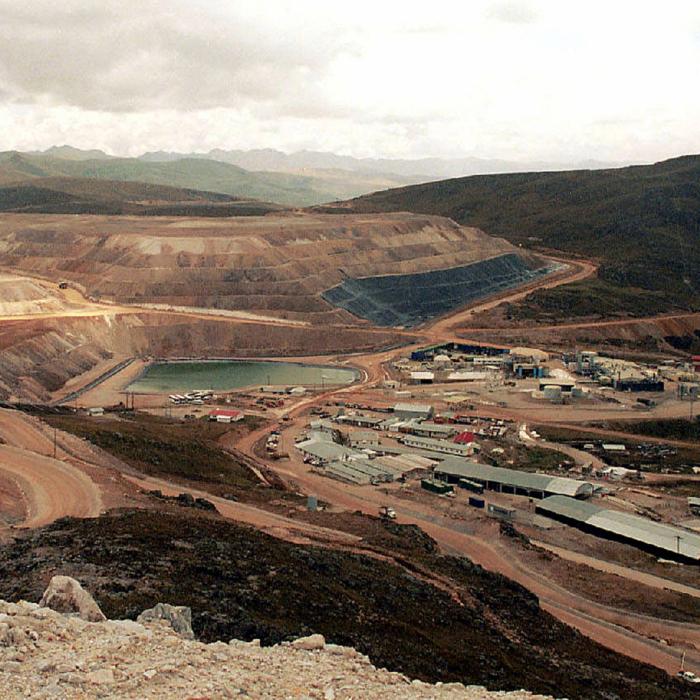
The miners, who are from B.C., Manitoba, and Ontario, were working about 500 metres from the affected zone when the first rockfall incident occurred in the underground section of the open-pit gold and copper mine near Dease Lake, B.C., on July 22.
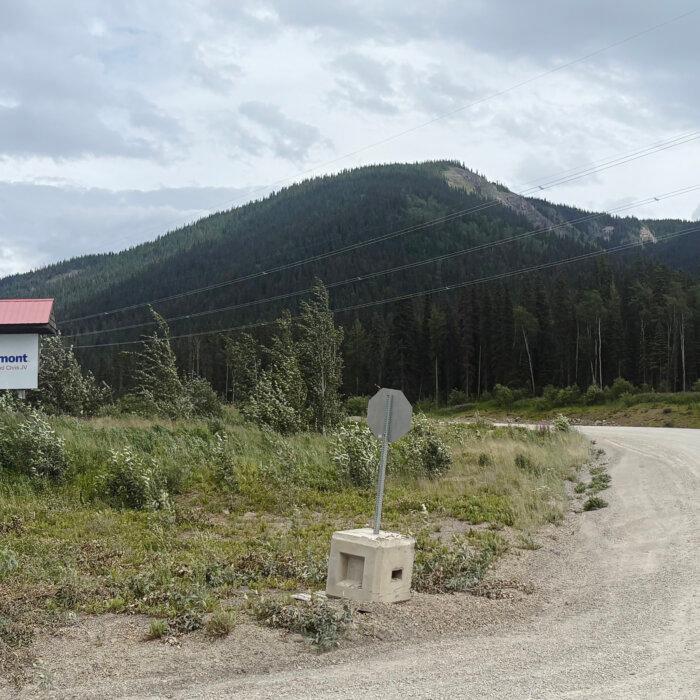
The mine, which is majority-owned by Newmont Corp., said July 23 that specialized drones are determining the best way to rescue the workers who are now in an underground refuge chamber. The company is also working to restore communications.
“I’m sure they are working three shifts a day, 24 hours a day to get this done,” said Hassani. “I think within a week to two weeks ... maximum two weeks, they should be able to get them out.”
The company said in an update on July 24 that it can’t provide a timeline on how long the rescue effort will take, saying, “underground rescues are complex and must prioritize safety.”
Calling the incidents “very unfortunate,” Hassani said that if worst comes to worst, a hole to access the trapped miners can be drilled from above, but he doesn’t think it will come to that.
Newmont said that after the first rockfall, the workers were asked to move to a refuge chamber, and the last-established communications held on July 23 confirmed that they had safely reached the refuge.
Canada has among the safest mining industries in the world, said Hassani, who has been in mines around the world and has extensive experience in mining engineering, rock mechanics, mine energy, and mine backfill. Newmont says it immediately activated all emergency protocols when the fall of ground incidents occurred on July 22. Fall of ground incidents occur when there is a sudden uncontrolled collapse of rock or other materials from the area of an underground excavation.
In terms of the current state of the trapped miners, Hassani said that miners may be “a bit worried” but are likely not panicking as “they are used to being in the mine, so they are not claustrophobic and such. So I’m sure they know that people are going to be rescuing them.”
“When you go in there [refuge chambers], you’ve got water, you’ve got air, you’ve got food in there, and you’ve got beds as well. I’ve been to many of those, so they should be okay,” said Hassani, who noted that while the refuge chambers are usually “not comfortable,” they are generally designed for 16 to 20 people.
A Newmont spokesperson told The Epoch Times on July 23 that the refuge chamber the workers are in is stocked with food, water, and ventilation, and can support “an extended stay” if required. Hassani said that the trapped workers can also get up and walk around in the areas of the mine outside the refuge chamber that haven’t experienced any rock fall, but added the rooms themselves are generally “quite large” in any case.
“Safety is number one in mining in Canada, and all the mines take it very, very seriously, and also we have a great number of inspectors that inspect the mines and make sure that everything is to the standard that they should be,” said Hassani, who worked for the British Coal Corporation in the past and has extensively consulted with numerous Canadian mining companies including.
“This is not normal in Canada,” Hassani said, adding that this appears to be a freak accident. “We have small rock falls and stuff, but this way it’s very abnormal to get something like that in Canada, because you have rock mechanics professionals who design these tunnels, and this should not have happened.”
Hassani says that Newmont, which reported net income of US$3.4 billion in 2024, has one of the best safety records in Canada, and he is confident that they will rescue the miners and get to the bottom of why the fall of ground incidents occurred.
“Newmont is a very good, large mining company,” he said. “They have high standards, and I’m sure they’re going to investigate and see why this happened. But overall, I’m sure they'll succeed to get these people out.”
The company said on July 24 that it is “working around the clock, using every available resource” to rescue the trapped miners.