At the state level, pride in the True North and what it means to be Canadian has undergone dramatic changes in recent years.
Freshly in office in 2015, former Prime minister Justin Trudeau famously said the country is a “postnational state” with “no core identity.”
Then in 2021, some indigenous groups reported ground-penetrating radar scans had detected possible human remains near former residential schools, including in Kamloops, B.C. The reported findings, cited by some media as unmarked mass graves of children, led to the cancellation of Canada Day celebrations in some cities and renewed criticism of Canada’s past by media commentators and political leaders.
Flags remained at half mast for several months, and the situation didn’t change much even as news emerged that at the few sites that did undergo excavations, no remains of children were found.
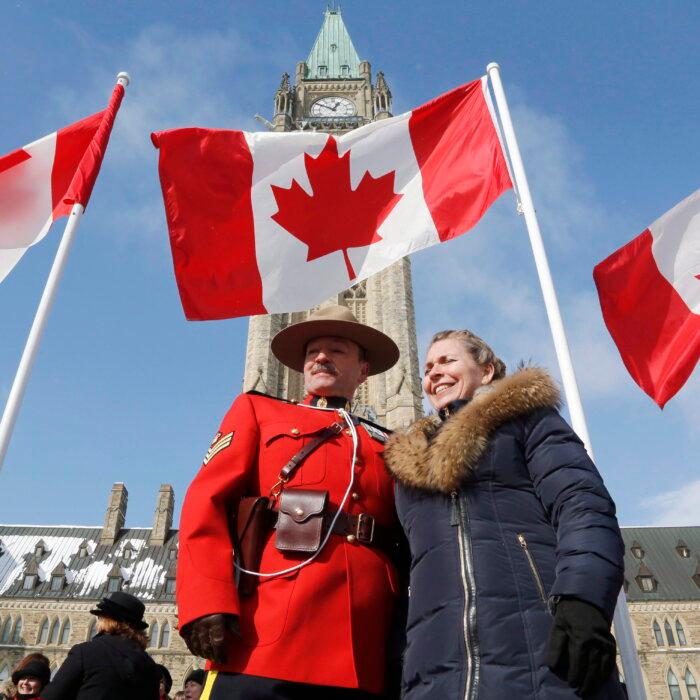
How are Canadians taking all of these shifts and what’s the mood on the streets ahead of July 1?
The Epoch Times asked Canadians from different backgrounds and regions what Canada Day means for them this year amid recent years’ upheavals.
‘Every Day Is Canada Day Now’
Karen Messier, 70, of Montreal, says given the latest developments, she supports buying Canadian products and showing Canuck pride every day.“Every day is Canada day now, so it’s different,” Messier said. “It translates into how we are right now in supporting the country, travelling in the country, buying Canadian. That’s been an effort of mine now ever since all these threats came in from the U.S.”
In terms of political polarization and growing separatist sentiment in the West, Messier said it’s nothing new and hasn’t affected her love of Canada.
‘Blessed’ to Be Born in Canada
Brett Laurie, 27, of Duncan, B.C., said he’s proud to be Canadian and will be celebrating Canada Day.“In the morning, my family and I are attending a Canada Day breakfast with like-minded people of the same Christian faith at our local meeting house,” he said. “In the late morning/early afternoon, we will be going to the BC Forest Discovery Centre to enjoy local history and participate in singing the national anthem and raising of the flag. In the evening, we will have a barbecue with family.”
Laurie says he has “always been a proud Canadian,” and that won’t change no mater what challenges may come the way.
“I am blessed to have been born of good Christian parents in a land where I am free to praise God and count my blessings,” he said.
“My feeling toward Canadian land and country does not sway despite challenges that our country faces. I believe that current tariffs would be far less of an impact and overall concern if our nation had a leader that has the strength and skills to advocate for Canadian people and negotiate with other world leaders. The thought of separation would cease to exist if Canadians would focus on greater common concerns than the lesser ones.”
Laurie, who works as an administrative assistant, said he is particularly concerned with law and order.
“Issues that are important to me include the drug epidemic and overall affordability,” he said.
He says over the past few years, “due to policies established by local and federal governments,” drug abuse and crime have become a more serious issue in the community.
“With virtually zero enforcement from the RCMP and bylaws, the homeless and drug addicts rule the city. There has been a dramatic increase in crime, vandalism, theft, and violence that affects everyone. As a resident who lives downtown, I witness this firsthand on a daily basis. As someone who works has to uplift my community, this is very discouraging to me,” he said.
“We need real change. We need rehabilitation. We need to stop the crime and hold people accountable for their unlawful actions.”

‘Which Day?’
Tyler D’Arcy of Duncan, B.C., said Canada Day isn’t of major importance to him but he cares about the country remaining accepting of immigrants and having a pluralistic society.“Which day? July 1. Yeah, it’s been a while since I’ve participated in Canada Day,” he said. He adds, however, that Canadian values are important to him, which he defines as “humanity, care for everyone, all nationalities, equally and great health care.”
D’Arcy says the 2021 Kamloops residential school news affected him and his friends strongly and he hasn’t celebrated Canada Day since then. Still, he says he’s proud to be Canadian in terms of how he defines it as people holding liberal values.
‘Celebrate Alberta’
Katherine Kowalchuk, 50, a lawyer from Calgary, says if she does anything on Canada Day it will be going to a local cafe to celebrate Alberta.“I disassociated from Canada a while back. That started back in 2020 with COVID, when all of the mandates came in and I saw how our government was treating its citizens,” Kowalchuk said.
“It was 2021 where I really started looking seriously into Alberta separation, and ever since then I’ve become a dedicated separatist.”
Kowalchuk wants Alberta, or the West, to separate and become its own nation, not to join the United States, and she believes there’s a strong likelihood it will happen.
“I do think that there’s a really good chance that Alberta is going to separate. There’s too many push-and-pull factors that aren’t being resolved and are continuing to get worse and making life more difficult—not only for Canadians, but especially for Albertans, especially given the unfair treatment and relationship we have with Ottawa,” she said.
As for the recent push toward more patriotism and being proud of Canada as a country, Kowalchuk said it strikes her as “completely disingenuous.”
“For years, we’ve been told by the federal government that we’re post-national society, and our political leaders have made it clear that they prefer the multiculturalism approach to Canada, something that I do not agree with,” she said.
“I think that they used it as a marketing opportunity, like they do with most other things, to gain favour for the election, and I don’t believe they actually have any good feelings towards Canadians generally.”
Kowalchuk says the old Canada that Albertans and all Canadians were loyal to and proud of is now gone.
Proud of Canada
Fellow Albertan Dan Steiger, on the other hand, says he is proud to be Canadian. “I think we shouldn’t have to be told to be proud of Canada or being Canadian,” said Steiger, who lives in the central Alberta town of Blackfalds. “I think that it’s something that we should just feel because we just love our country for what it is, not because that’s what we’re told.”
Steiger, 39, is a data entry and data analyst who voted for the NDP in the last federal election because there was no Liberal candidate on the ballot in his riding.
“I think we really need to stop with the dangerous rhetoric on both sides that leads to propaganda. I think that we just need the truth from as many places are willing to tell us, so that we can actually figure out what’s going on.”
As for separatism, Steiger referenced past separatist movements in Alberta, including in the 1990s, that did not succeed.
Bustling Toronto
Ahead of Canada Day in Toronto the mood was busy, with few wishing to stop and talk. Those who did share their views appeared more focused on their personal lives and business and not overly concerned about Canada’s current political tensions.One who did take time to speak to The Epoch Times, Samuel Martins, said he has no plans for Canada Day.
“I’ll just probably hang out with family and that’s the extent of it,” he said, adding that housing is the most important issue to him right now, especially “housing affordability, rent prices and stuff like that.”
Hamza Jama of Toronto said he plans to see Canada Day fireworks and meet up with some friends.
“When I’m celebrating Canada Day I don’t usually think about the political stuff. I feel like for most people it’s just a celebration, you know? Without attaching a lot of what’s going on, we usually just celebrate. It’s just a happy day.”