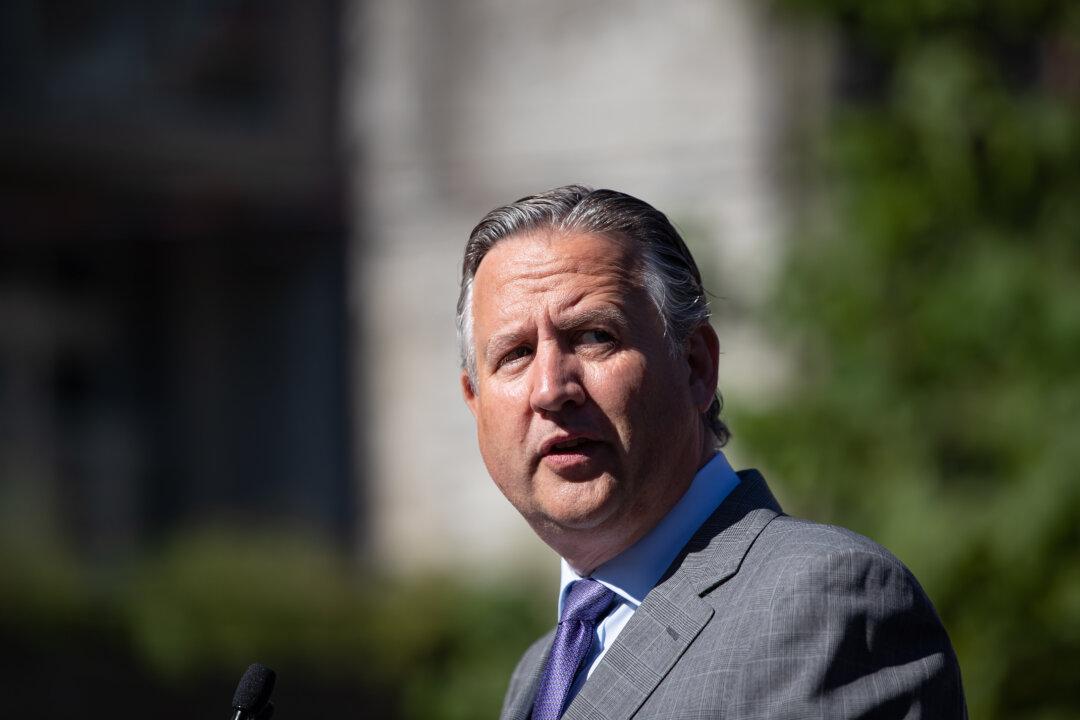
Alberta Premier Danielle Smith was quick to condemn a May 13 court ruling throwing out a petition for a referendum on Alberta’s separation from Canada, citing improper consultation with First Nations.
In her May 13 decision, Justice Shaina Leonard of the Alberta Court of King’s Bench ruled that Elections Alberta’s approval of the petition question—the first step toward gathering signatures—was unlawful because the Crown had not yet fulfilled its duty to consult First Nations.
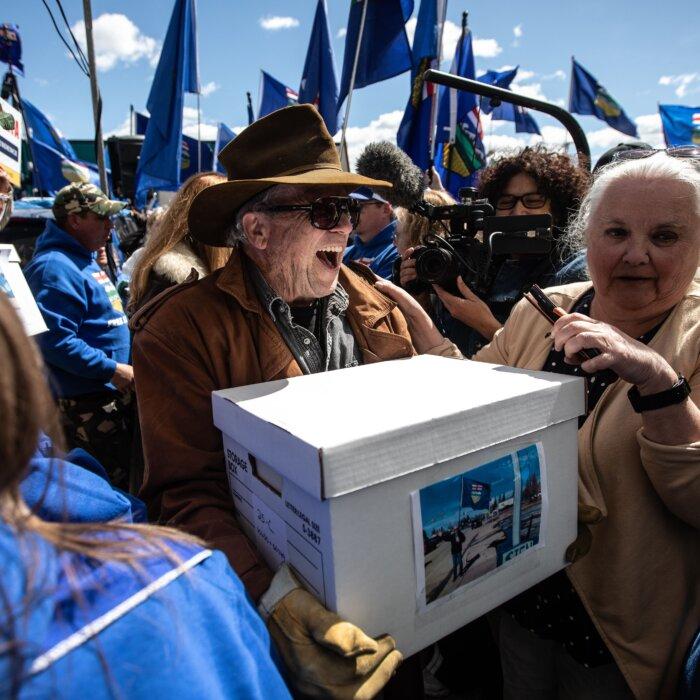
Petition organizers said they had collected over 300,000 signatures, more than the required 177,732 needed for their petition to qualify as a referendum. With the process halted by the court, Elections Alberta now won’t proceed to validate the signatures for a potential referendum on the issue this year.
While Smith doesn’t support separation herself, she has said a petition meeting legal requirements would be included in upcoming referendum questions this fall, and called the judge’s decision “undemocratic.”
In the wake of the petition being quashed, Smith has said the province will appeal, as has Stay Free Alberta, the separatist group behind the petition drive.
Province vs. Citizen-Led Referendum, and Political Pressure
While Quebec’s separatist Parti Québécois governments led referendums in 1980 and 1995 on separation from Canada, Alberta’s push was initiated through a citizen petition process.While Smith’s ruling United Conservative Party (UCP) has said it does not back separation, last year it lowered the number of signatures required for citizen-led referendums.
Alberta-based lawyer Keith Wilson, who backs independence, says pressure on the governing UCP to hold its own referendum will now escalate.
“Unfortunately, this court has struck down the direct democracy route, [but] that in no way limits, restricts, or impairs in any form whatsoever, the authority of the Alberta government to hold a referendum on independence,” Wilson said in an interview.
Some of those who oppose the petition-led process are also saying that the referendum should be government-led, but for a different reason.
But for Smith—with the majority of the population wanting to remain within the federation, and the majority of her party membership and those willing to volunteer for election campaigns wanting separation—the situation is more politically challenging.
Smith has said that the issue should be democratic and shouldn’t be decided by a “single judge.”

Bill 14, the Justice Statutes Amendment Act, became law on Dec. 11 of last year and put in place a number of amendments to the Citizen Initiative Act after the court had earlier ruled that a proposed citizen-led referendum question was unconstitutional and outside the scope of the Citizen Initiative Act.
Smith said at the time that referendums should not be up against “a whole pile of gatekeepers” in defense of Bill 14, whose amendments included taking away the chief electoral officer’s authority to send citizen initiative questions to the courts and delegating that authority to the minister of justice. It also put a stop to existing court challenges and permitted previously blocked referendum applications to be resubmitted.
Constitutional law professor Dwight Newman says that judges shouldn’t be too quick to set aside a democratic process.
“Those reading the judgments deserve more than a few lines of mechanical test application to believe that the courts are considering all interests and are acting as courts of both law and justice.”
Alberta NDP Leader Naheed Nenshi, meanwhile, said the issue should be put to rest, while repeating the charge that Smith is a separatist, which the NDP have made a key part of their campaign. Smith says she wants Alberta to remain within the Confederation, and that she’ll fight with Ottawa for the interests of the province.
Legal Challenge
Stay Free Alberta, the separatist group behind the petition, says it is currently preparing its appeal. Meanwhile, one of the group’s leaders, Jeffrey Rath, says focus will now be on the affiliated group the Alberta Prosperity Project to lead the campaign on independence.Smith said she will meet with her cabinet and UCP caucus to decide next steps to pursue an appeal of the court ruling.
Wilson, the pro-separatist lawyer, said an appeal by Stay Free Alberta and the UCP government could take anywhere from several months to a year or more.
He said, however, that the push will be for Alberta’s government to hold the referendum, as that is the practical path, and pursuing an appeal of the court ruling that could take a long time would be required for another reason.
“The reason it needs to be appealed in particular is because the court seems to have dramatically enlarged the duty to consult beyond anything that any other court has applied,” he said.
Lawyer Leah Ballantyne, who has represented First Nations in other cases and supports the First Nations’ challenge to the separation petition, said the court ruling properly upholds treaty rights and appeals against it would have Charter rights challenges to overcome.
“I think that any court of law operating within the nation state of Canada needs to uphold its constitution, and that includes section 35 treaty and inherent rights of First Nations, Inuit, and Métis people,” she said.
Under the 1998 Secession Reference, the Supreme Court held that a clear referendum result in favour of separation would create an obligation for governments to enter negotiations, though it did not establish an automatic right to unilateral secession. The ruling came about after Quebec’s razor-thin 1995 referendum on separating from Canada, when the federal government asked the Supreme Court whether a province could unilaterally separate.
Commenting on the Alberta referendum on May 14, Prime Minister Mark Carney referred to the Clarity Act, saying “Parliament has a role in making the judgment about the question,” while adding that Alberta the “best place” for Alberta is to remain in Canada.