Ottawa’s regime against forced labour and its ambitions to get closer to Beijing could be tested in the short term as Chinese electric vehicles are about to enter the Canadian market.
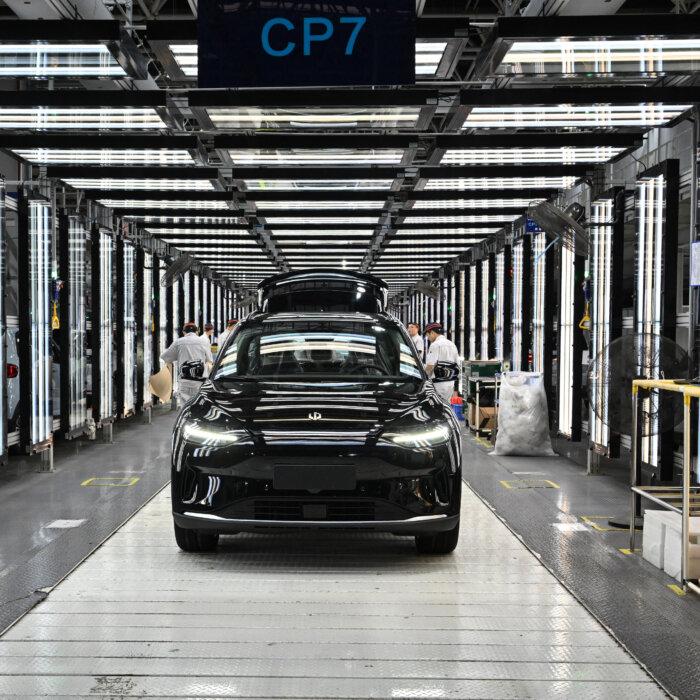
Experts have raised concerns that goods made with forced labour are being used in the manufacture of cars and parts assembled in China, and Canada has a legal obligation to prevent their import.
In recent years, the Canada Border Services Agency (CBSA) has blocked shipments of Chinese car parts over forced labour concerns, but overall there have been far fewer enforcement cases in Canada compared to the United States.
The CBSA told The Epoch Times that companies are responsible for ensuring goods they import into Canada are compliant with Canadian law, and it is their responsibility to conduct due diligence on supply chains to ensure goods they import are not mined, manufactured, or produced wholly or in part by forced labour.
The border agency says it advises importers when they may be importing goods with an “elevated risk” of being produced by forced labour. The CBSA issued advisory notices to approximately 1,800 importers in August 2025 that were identified as importing such goods.

Since legislation passed in 2020 to address the issue, the CBSA has intercepted only two shipments that were determined to have been produced using forced labour, including a shipment of textile products in 2024 and a shipment of frozen seafood in 2025. Both shipments were from China and were prohibited entry into the Canadian marketplace.
The border agency said the only instance of it intercepting auto parts on the grounds of forced labour since 2021 was in 2023 when it intercepted six auto parts shipments originating from China, all of which were shipped back to China before formal determinations were made as to whether the goods had been produced using forced labour.
The border agency noted that while legislation in the United States allows border services officers to prohibit goods “unless proven otherwise,” Canadian legislation does not and CBSA officers must make determinations on imported goods on a case-by-case and shipment-by-shipment basis.
When it comes to whether the CBSA will detain shipments from China on the grounds of forced labour concerns as EVs enter the Canadian market, the CBSA said that while the country or region of origin “may serve as a risk indicator,” Canadian legislation does not allow goods to be prohibited solely on that basis.
The agency makes its determinations based on research from Employment and Social Development Canada’s labour program, as well as reports, studies, and intelligence that help identify goods or supply chains “at risk of being linked to forced labour.”
Chinese EV Deal
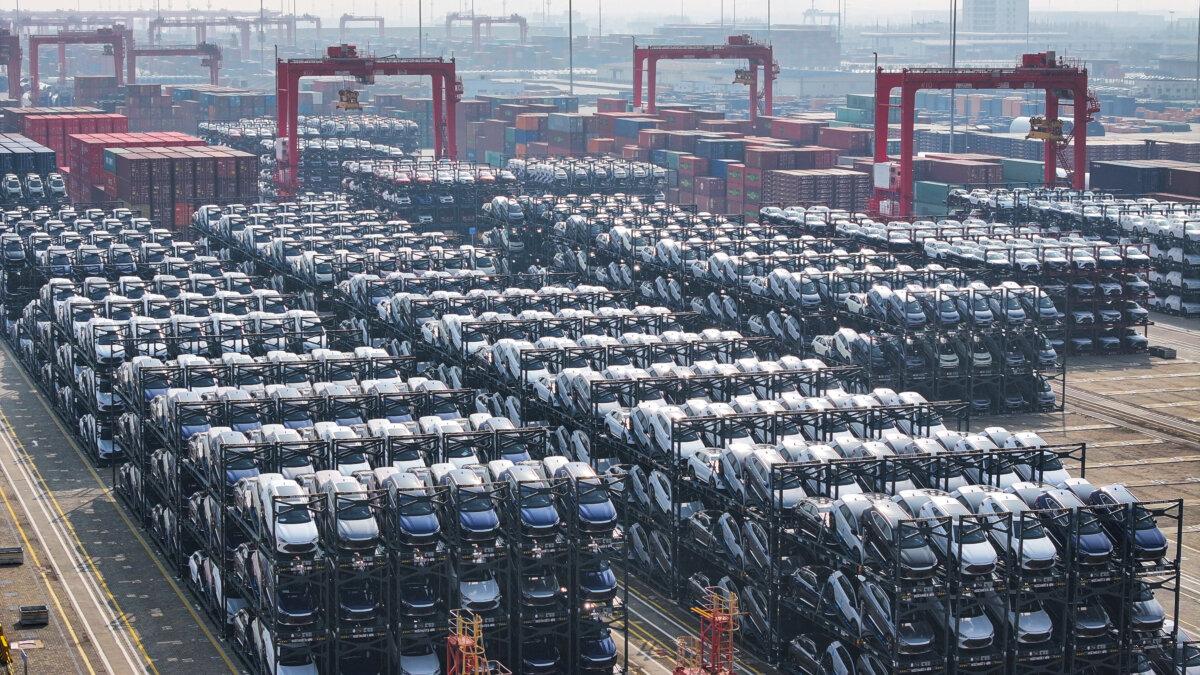
The border agency’s process of intercepting products made by forced labour could enter the spotlight more as Canada has opened its markets to Chinese EVs.Human rights groups, China experts, and opposition MPs have raised concerns about the deal, noting various human rights abuses in China and security concerns with vehicles made in China.
“Car companies simply don’t know the extent of their links to forced labor in Xinjiang in their aluminum supply chains,” Jim Wormington, senior researcher at Human Rights Watch, said in a February 2024 statement.
Other human rights groups also report of the widespread practice of forced labour against groups targeted for persecution.

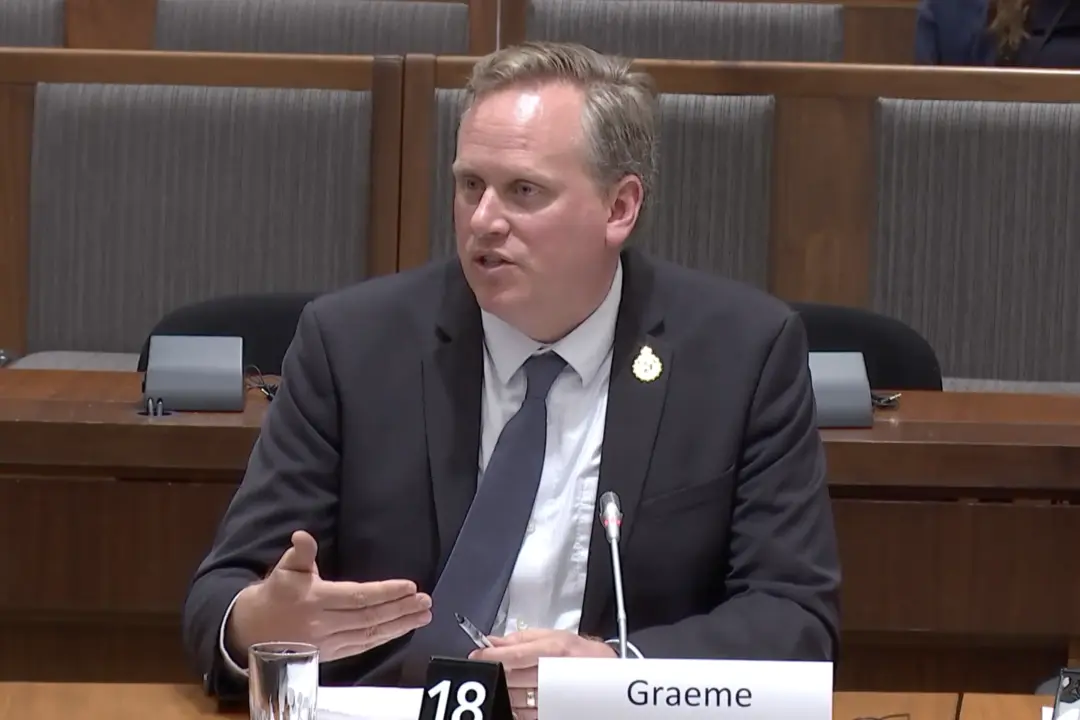
She told MPs on the House of Commons international trade committee last month she doesn’t think Canada can ensure imported Chinese EVs are not made with forced labour.
“Certainly, Chinese brands have to be assumed to include forced labour,” she said. “We can’t take the word of the Chinese company that they don’t have any forced labour.”
Mehmet Tohti, executive director of the Canada-based Uyghur Rights Advocacy Project, told MPs in February that expanding trade with China “carries substantial risk” and could erode Canada’s alignment with the United States and other Western alliances.
US Trade Irritant
Forced labour was listed as a new trade irritant for Canada by the United States Trade Representative in its annual report on foreign trade barriers released on March 31.Although Canada has passed laws to prevent goods made by forced labour from entering its market since the USMCA, the United States says enforcement has been inadequate.
“It does not appear that Canada is effectively enforcing its forced labor import prohibition, meaning goods made with forced labor may be able to enter and compete in Canada’s market,” the report said.
The report also criticizes Canada for not imposing enough measures to protect North America from non-market practices, such as those promoting over-capacity or extensive subsidies.

Labour Concerns
A recent investigation by China Labor Watch found “serious labor rights concerns” affecting Chinese migrant workers at the construction site of Chinese auto manufacturer BYD’s EV plant in Szeged, Hungary.The report notes workers are often unable to exercise their rights to resign, report abuses, or seek remedies when faced with such working conditions due to “fear of economic loss, immigration-related consequences, or retaliation.” It also said the issue could cause “spillover effects” on Hungary’s labour market and the broader European workforce by driving down labour standards in favour of productivity.
“The labor practices observed at the Szeged project mirror patterns long documented in parts of China’s domestic manufacturing sector, where legal protections exist but enforcement gaps have allowed abusive labor practices to persist,” the report says.
The issue could be of more immediate concern to Canada as the country considers opening Chinese EV plants within its borders.
Ontario Premier Doug Ford called the alleged talks “unacceptable,” saying such an agreement would undermine Ontario autoworkers as it would potentially involve the use of kits, where cars are largely built in China and then shipped overseas for final assembly.
Industry Minister Mélanie Joly said that to resume production, Stellantis needs to ensure there are proper labour standards and conditions for workers, that production supports the local supply chain, and that the software in the vehicles is secure.