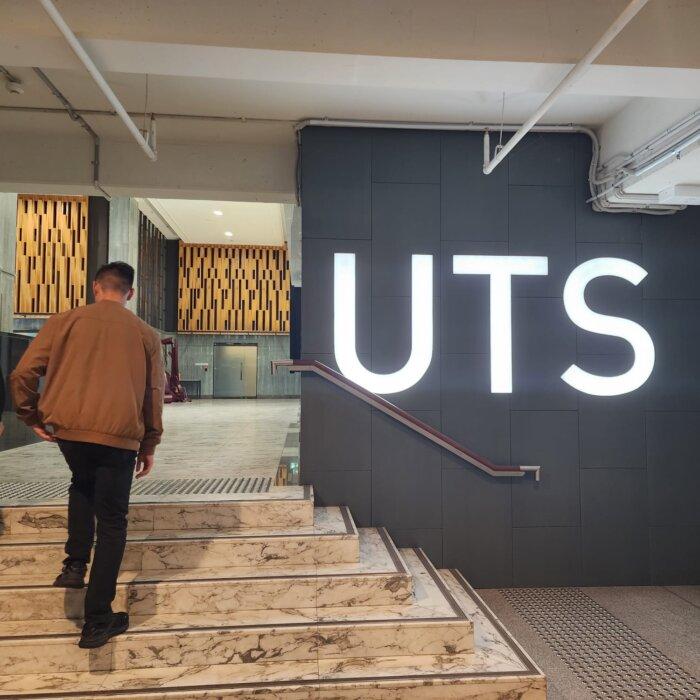
The University of Technology Sydney has announced one of the biggest shake-ups in its history, shutting down its teacher education and public health schools, axing more than 1,100 subjects and cutting hundreds of jobs.
The plan, unveiled on Sept. 17, is designed to save $100 million a year and comes after months of speculation about the university’s financial position.
UTS has already announced about 400 job losses, with a further 134 full-time equivalent academic positions now at risk, alongside reductions in casual staff.
Vice-Chancellor Professor Andrew Parfitt said the cuts were unavoidable, citing federal funding changes, caps on revenue growth, and the lingering impact of the pandemic.
“UTS is focused on achieving a sustainable future where students can continue to get the quality of education they expect, and we can continue to deliver research outcomes for the communities that benefit from our work,” he said.
Schools Merged and Programs Closed
The restructure will cut the number of schools from 24 to 15.
It proposes shutting the School of Professional Practice and Leadership, merging the law and business faculties into one, and folding the School of Public Health into a renamed “School of Health and Human Performance.”
The teacher education program will also be disestablished, while the International Studies and Education School will be “rested.”
A total of 167 courses are proposed for discontinuation, many of which had already stopped taking new enrolments.
UTS said courses and subjects were identified based on demand, enrolment trends, strategic alignment, and financial viability. Despite the cuts, the university says it will still offer more than 400 courses and 2,300 subjects.
SafeWork Intervention Delayed Release
The release of the proposal was delayed by a week after SafeWork NSW issued a rare prohibition order on the 400 job cuts, warning that they posed a “serious and imminent risk of psychological harm” to staff.
The regulator lifted its notice after discussions with management on how staff would be informed.
Parfitt admitted the process had been distressing but said the university had “little choice.”
He told a parliamentary inquiry, “We’re devastated to be in a position to have to do this due to financial constraints. It is a very hard time for our community, and there’s no easy way to have this discussion.”
Impact on Courses and Students
As part of the Operational Sustainability Implementation Program, UTS has paused enrolments for 146 courses across six faculties.
Low-demand electives will disappear from 2026, though compulsory subjects will remain. Current students will be able to complete their courses, with alternative electives provided.
Professor Kylie Readman told a Senate inquiry that duplication was one reason for the changes. She said International Studies had been offered under multiple codes but lacked sufficient enrolment to justify continuation.
“The decisions were based on clear criteria,” she said. “It was about representing ourselves accurately to future students and ensuring we gave timely and transparent information.”
Cost Trimming Includes Executive Pay
The restructure extends beyond academic offerings.
Executive pay and travel budgets will be cut, with senior executive roles, including the Provost, to be removed.
Additional savings will come from reducing property and utilities expenses.
Together, these measures are expected to deliver $20 million, bringing total annual savings to $100 million.
Parfitt said the university had worked for months to identify savings and would continue to consult staff.
“We are taking every measure we can to limit impacts and ensure opportunities for engagement, consultation and feedback,” he said.
Sector Under Strain
UTS’s restructuring reflects wider pressures facing Australia’s universities.
Appearing before a Senate inquiry last week, Parfitt said that in 30 years of academic leadership he had never seen the sector under such strain.
The financial fallout is being felt nationwide. Macquarie University has warned up to 75 academic jobs across arts, science, and engineering could go, with further course cuts likely in 2026 and 2027.
At ANU, 59 positions will be removed by mid-2026 under a $250 million savings drive.
Charles Sturt University faces a $35 million budget shortfall after overseas enrolments plunged from 8,460 in 2019 to just 10 percent of that by 2024.
The University of Tasmania has also confirmed job losses.
Union Demands Governance Reform
The National Tertiary Education Union has condemned the cuts and renewed calls for governance reform, arguing that universities’ reliance on international students has made them financially fragile.
The union also warned that constant restructuring leaves staff vulnerable to job insecurity and undermines teaching quality.
It has called for a long-term funding model that reduces dependence on international student income.