The U.S. military used one-way attack sea drones in combat for the first time in another round of strikes against Iran on July 12.
In a social media post on July 13, U.S. Central Command stated that three Corsair unmanned surface vessels hit the port at Bandar Abbas Naval Base, which is Iran’s main naval facility. It stated that the strike marked the first time the U.S. military had used sea drones in combat operations.
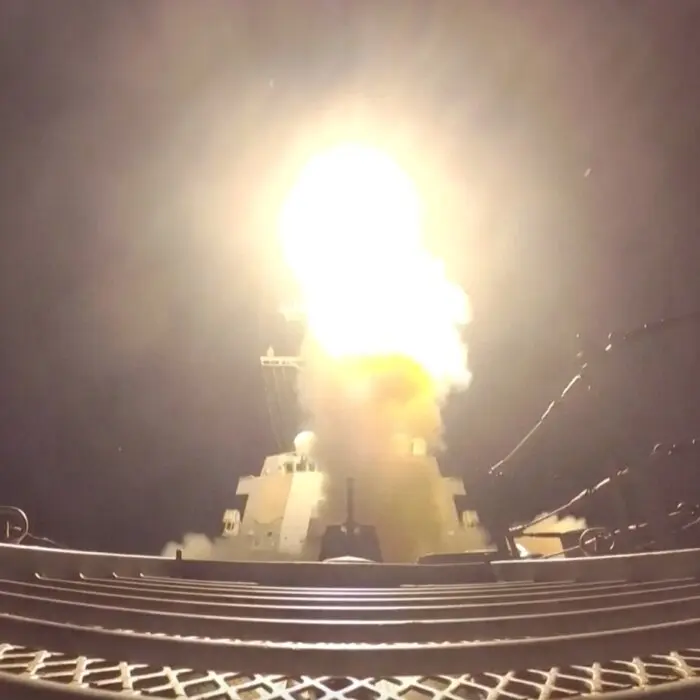
U.S. Central Command stated that the strikes, which started on July 12 at 5 p.m. ET, “degraded Iran’s ability to continue attacking commercial shipping.”
Video footage shows the Corsair sea drones crashing into the port and causing multiple explosions.
President Donald Trump ordered the U.S. military to conduct strikes against Iran after the U.S. government assessed that the Apache helicopter crash was caused by an Iranian drone.
The Corsair sea drones, developed by Saronic, are 24-foot boats with a payload capacity of 1,000 pounds and a range of more than 1,000 nautical miles. In a statement following the July 12 strike, Saronic stated that U.S. forces used the “military variant” of its Corsair drones.
“We are proud that our technology supported this mission and helped to keep the brave men and women of the U.S. armed forces safe,” it stated. “Saronic remains committed to delivering autonomous maritime systems that strengthen the security of America and its allies.”
Trump’s statement came after U.S. Central Command stated that it had completed another wave of offensive strikes against the Iranian regime on July 12. The strikes were conducted against dozens of targets, including Iranian missile and drone capabilities, air-defense systems, coastal radar sites, and small boats.
In addition to the one-way attack sea drones, U.S. forces used one-way attack aerial drones, fighter aircraft, and naval vessels to carry out the July 12 strikes.
On July 12, the Persian Gulf Strait Authority, a new Iranian agency, stated that passage through the Strait of Hormuz was “currently not possible” due to the actions of the U.S. military. The agency repeated its claim on July 13, stating that passage through the strait was “currently unfeasible.”
U.S. Central Command disputed Iran’s claims about controlling the strait in a social media post on July 12.
“Iran does not control the Strait of Hormuz. It remains an international waterway. U.S. forces are positioned and prepared to keep it that way,” it stated.