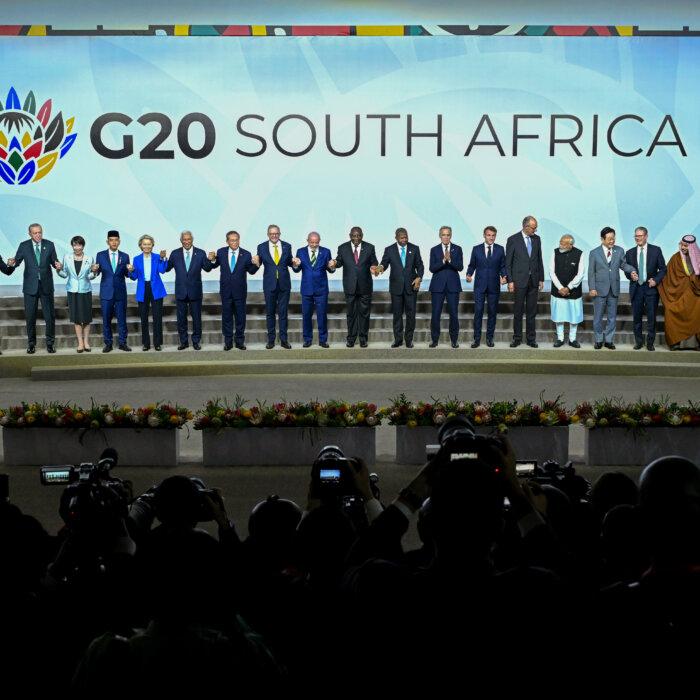
The White House said South Africa weaponized its leadership of the Group of 20 this year after the G20 summit adopted a declaration addressing climate and other global challenges before the summit’s close on Nov. 23, despite U.S. objections.
The declaration, drafted without input from the United States, “can’t be renegotiated,” South African President Cyril Ramaphosa’s spokesperson told reporters on Nov. 22. This reflected strains between Pretoria and the Trump administration, which boycotted the event.
“We had the entire year of working toward this adoption, and the past week has been quite intense,” spokesperson Vincent Magwenya said.
The presidency of the G20 rotates. South Africa assumed it in December 2024 and will hold it through November, after which the United States will assume the role.
South Africa has reiterated its rejection of a U.S. offer to send the U.S. chargé d'affaires for the handover of the G20 presidency.
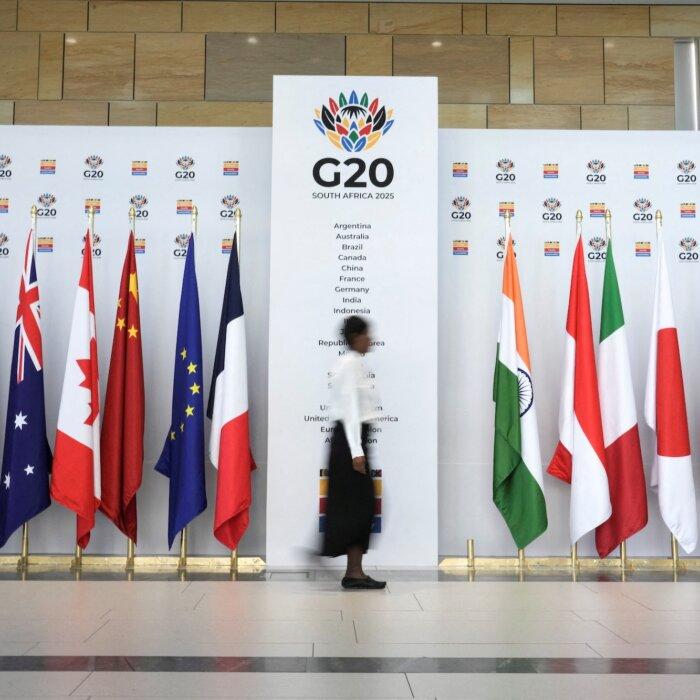
Magwenya said the South African president “will not hand over to a junior embassy official the presidency of the G20.”
“It’s a breach of protocol that is not going to be accommodated,” he said.
South African Foreign Minister Ronald Lamola later said Pretoria would assign a diplomat of the same rank as a chargé d'affaires to perform the G20 presidency handover at the South African Department of International Relations and Cooperation.
White House spokeswoman Anna Kelly said on Nov. 22 that Ramaphosa was “refusing to facilitate a smooth transition of the G20 presidency” after initially saying that he would pass the gavel to “an empty chair.”
“This, coupled with South Africa’s push to issue a G20 Leaders Declaration, despite consistent and robust U.S. objections, underscores the fact that they have weaponized their G20 presidency to undermine the G20’s founding principles,” Kelly said.
She said that Trump looks forward to “restoring legitimacy” to the G20 next year, when the United States holds the rotating presidency.
Declaration Adopted
On Nov. 21, White House press secretary Karoline Leavitt addressed reports from Ramaphosa that suggested that the United States would participate in the summit.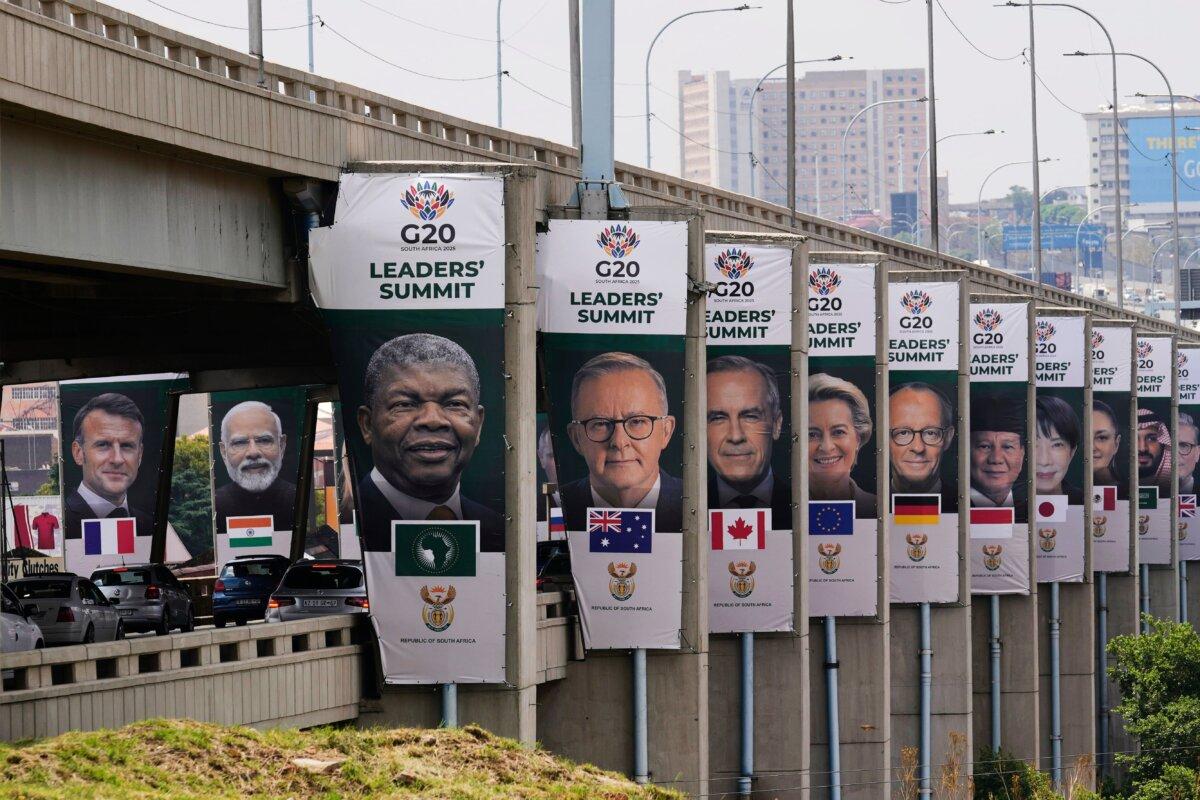
“The ambassador or the representative of the embassy in South Africa is simply there to recognize that the United States will be the host of the G20,” she said. “They are receiving that sendoff at the end of the event. They are not there to participate in official talks, despite what the South African president is falsely claiming.”
On Nov. 22, the G20 adopted a new declaration without any input or support from the United States.
Although declarations are typically passed at the end of a given G20 summit, the gathered global leaders this time elected to adopt their declaration shortly after convening their two-day summit in Johannesburg.
The 122-point declaration calls for global efforts to help developing nations better contend with natural disasters, as well as climate-related efforts. Other sections of the declaration seek to help poorer countries manage their sovereign debt and increase economic stability.
Trump’s Boycott
On Nov. 7, Trump announced that he would not be attending the G20 event this year, repeating accusations of human rights abuses against white South Africans.“Afrikaners (People who are descended from Dutch settlers, and also French and German immigrants) are being killed and slaughtered, and their land and farms are being illegally confiscated. No U.S. Government Official will attend as long as these Human Rights abuses continue.”
South African officials at the time called the president’s remarks regrettable and denied allegations of persecution.
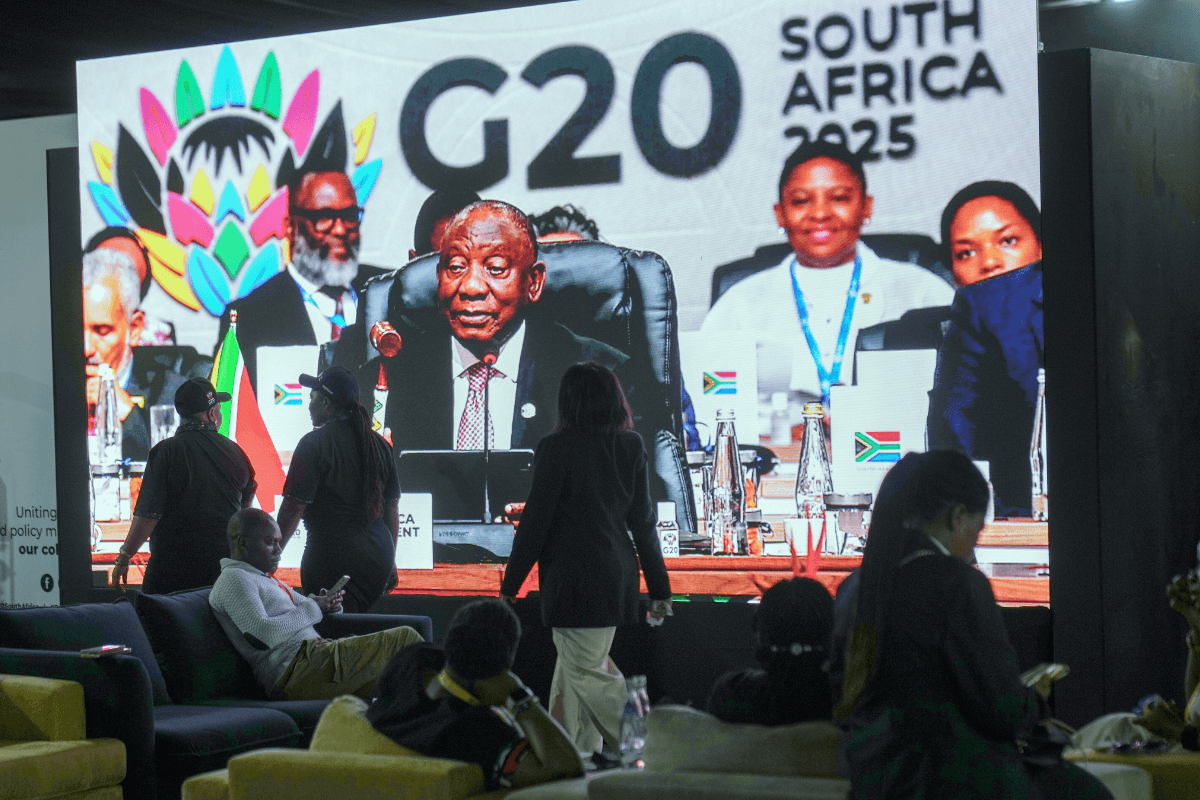
“In other words: [diversity, equity, and inclusion] and climate change,” Rubio said, noting that it was not in the interest of the United States to waste taxpayer money or “coddle anti-Americanism.”