Farmers in France and Greece took to the streets in their tractors on Jan. 8 to protest the European Union’s plans to move forward with a free trade deal with the South American Mercosur trading bloc.
In France, farmers drove about 100 tractors into Paris and gathered in front of the National Assembly, the country’s lower house of parliament, to demonstrate their opposition to the deal.
Meanwhile, in Greece on Jan. 8, farmers escalated nationwide protests, launching a 48-hour blockade of highways, tolls, and junctions and halting all traffic except emergency service vehicles. Greece’s main highway connecting the capital, Athens, with Thessaloniki in the north was shut.
But farmers in Europe have been concerned that the deal would allow markets to be flooded with cheap goods, hurting their industry.
Tractors in Paris
French Agriculture Minister Annie Genevard said on Jan. 7 that Paris remains opposed to the Mercosur deal, claiming that it threatens a range of France’s sectors, including beef, chicken, honey, sugar, and ethanol.Referring to the ongoing negotiations, Genevard told French news broadcaster France Info, “As long as the combat is not over, nothing is lost.”
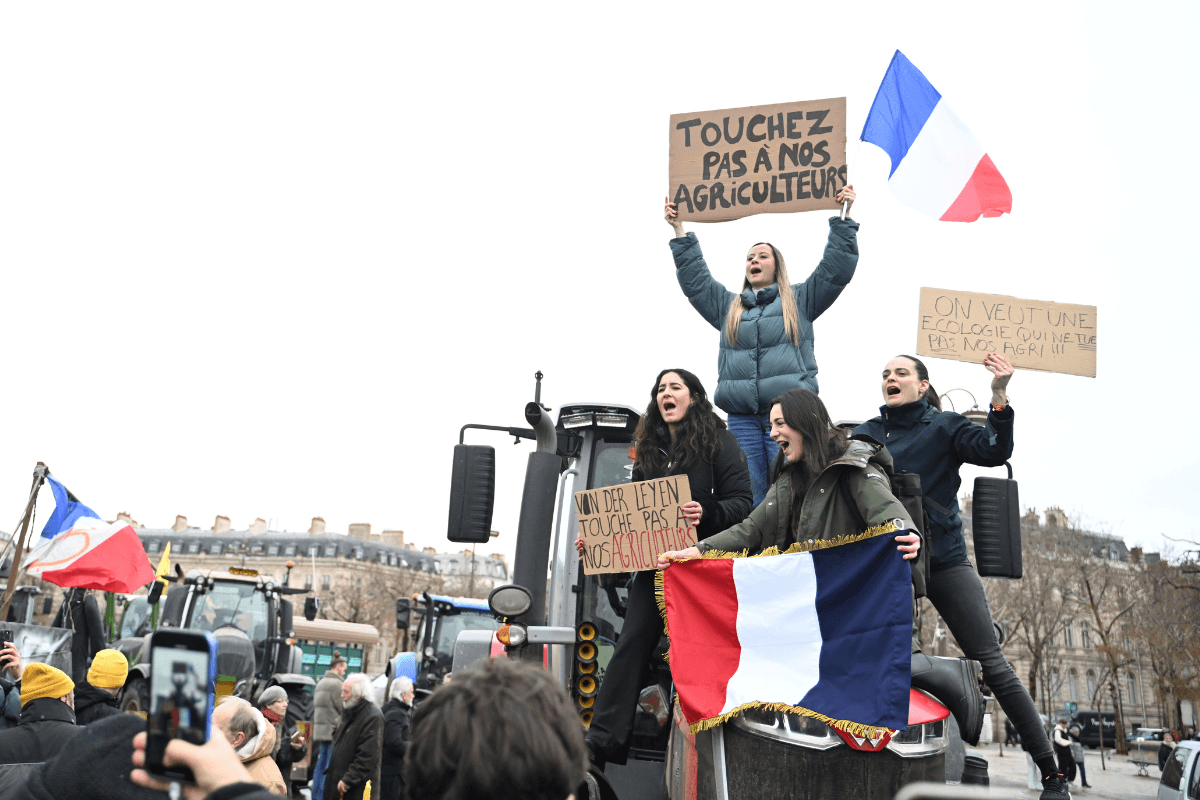
But protesters say the government has not shown strong enough opposition to the trade deal.
One group of protest organizers in Paris was the union Rural Coordination, which describes itself as France’s leading agricultural union.
“The goal ... is to come to Paris to express our demands closer to those who have the power,” said José Perez, president of the Rural Coordination in the Lot-et-Garonne region in southwestern France.
‘Greek Agriculture Is Finished’
Like their French counterparts, Greek farmers are calling for stronger government support in opposing the deal.Protests in Greece began in November 2025 and initially focused on rising production costs sparked by a sheep and goat pox outbreak, as well as a farming subsidy fraud scandal that delayed legitimate payments. They have now come to include concerns over Mercosur.
“If this agreement goes through, Greek agriculture is finished,” protest organizer Vangelis Roubis said outside the southern city of Halkida, Greece.
“Greece depends on agriculture and tourism.
“We don’t have heavy industry like Germany or France. Production costs here are 300 percent higher than in Latin America.
“We want Greece to join the bloc of EU nations that rejects this deal.”
“The EU-Mercosur agreement itself is expected to increase EU agri-food exports to the region by 50 [percent] while ensuring the protection of 344 EU geographical indications, protecting emblematic EU food and drink products from imitation,” notes from the meeting stated.
European Commissioner Maros Sefcovic told reporters on Nov. 7 that it was a significant deal.
“The Mercosur agreement is a landmark one,” he said. “This is the biggest free trade agreement we have negotiated. It’s four times bigger than a free trade agreement with Japan.”