U.S. forces struck and disabled a tanker operating in the Gulf of Oman on June 9, as part of an ongoing U.S. blockade of Iranian ports and maritime trade.
The U.S. Central Command (CENTCOM) reported that the Palau-flagged tanker M/T Settebello was attempting to breach the blockade and transport oil out of Iran.
“A U.S. aircraft fired precision munitions into the ship’s engine room after the crew repeatedly failed to comply with directions from American forces,” CENTCOM said in a statement released on June 10.
The Indian Foreign Ministry condemned the strike on M/T Settebello, stating that three of the 24 Indian nationals aboard the vessel remain missing.
“Our Embassy in Oman is closely monitoring the situation and proactively coordinating with the Omani authorities in the ongoing Search and Rescue operation,” India’s foreign ministry said in a June 10 statement.
The White House did not respond by publication time to a request for comment about the Indian Foreign Ministry statement.
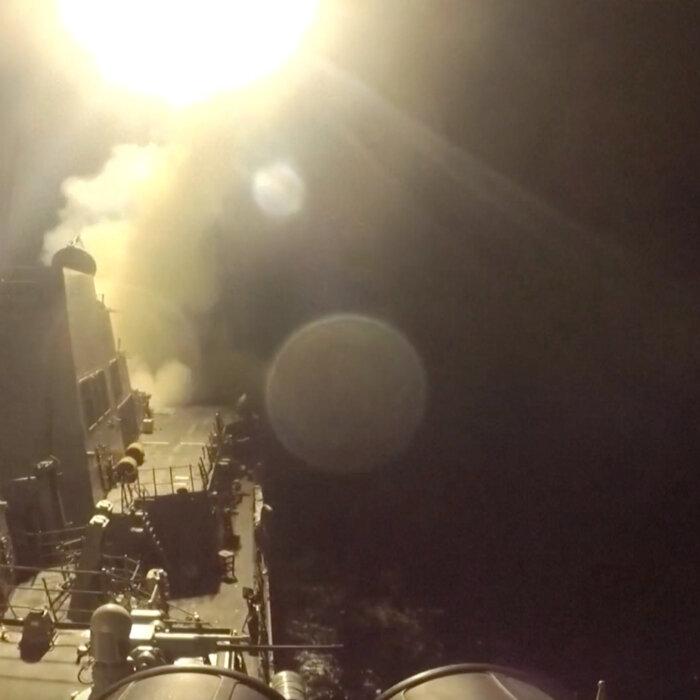
U.S. State Department spokesperson Tommy Pigott said in a June 13 update that U.S. and Indian counterparts had spoken on the strike.
Secretary of State Marco Rubio “stressed that all commercial vessels should immediately comply with orders from U.S. forces as they seek to uphold peace and security in the Strait,” he said. “He underscored that violations of the U.S. blockade and the illicit transport of Iranian oil will not be tolerated.”
M/T Settebello is the eighth vessel that U.S. forces have fired upon and disabled as part of the blockade, which began on April 13.
Vessels complying with U.S. commands to redirect their course during the blockade totaled 134 as of Wednesday. CENTCOM said another 42 vessels supporting humanitarian aid efforts have been permitted to continue past the blockade.
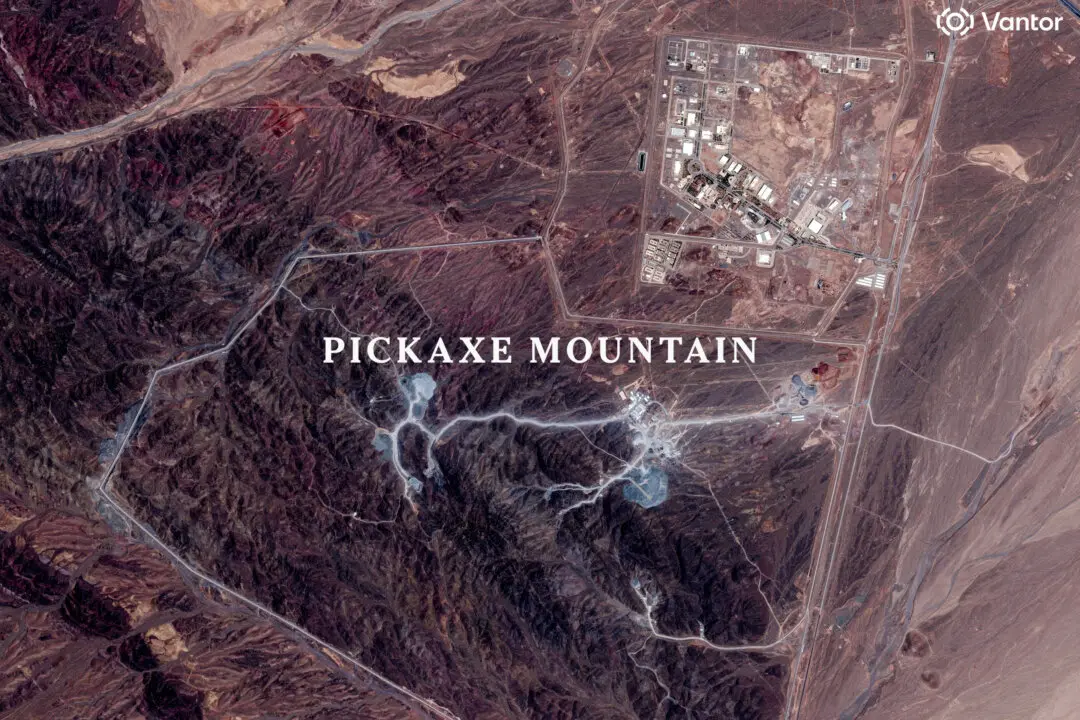
The decision to fire on M/T Settebello came on the same day U.S. forces bombed several targets across Iran. Those U.S. strikes were in retaliation for Iranian forces shooting down a U.S. Army AH-64 Apache attack helicopter near the Strait of Hormuz on June 8.
The flight crew of the downed Apache helicopter survived and was rescued about two hours after going down off the coast of Oman.
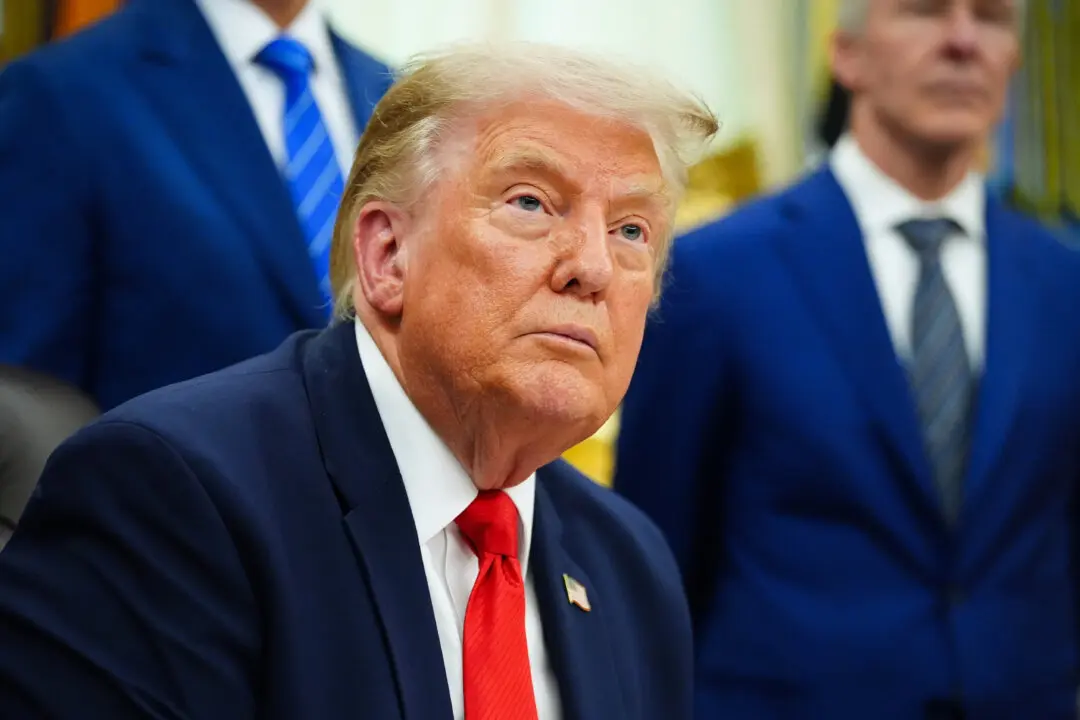
“We hit them hard yesterday, and we’re going to hit them again hard today,” Trump told reporters during an Oval Office event on June 10.
Trump also expressed frustration at the pace of negotiations with Tehran.
The president had pursued some negotiations to restrain Iran’s nuclear program before he directed U.S. forces to attack Iran’s nuclear sites as part of a joint operation with Israel. Those strikes on Feb. 28 set off 38 days of fighting before Washington and Tehran agreed to a ceasefire on April 7 and further negotiations.
As he spoke with reporters on Wednesday, Trump criticized the Iranian leadership’s approach to negotiations.
“We were really close to a deal, but they keep tapping us along,” Trump said. “They keep playing us for suckers.”
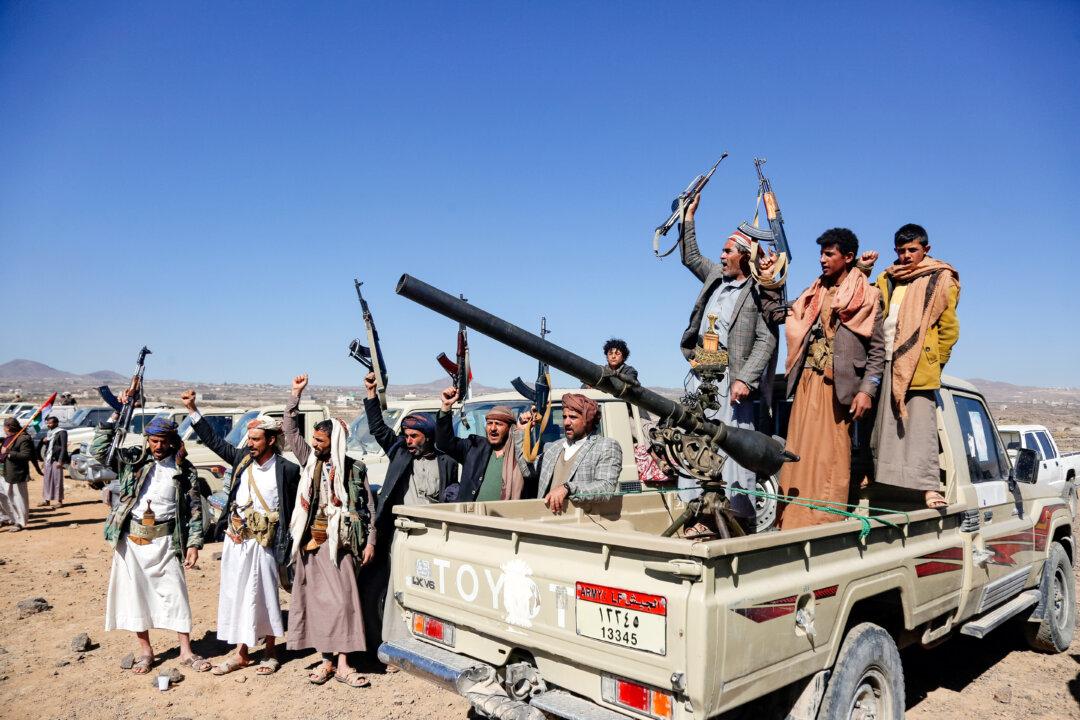
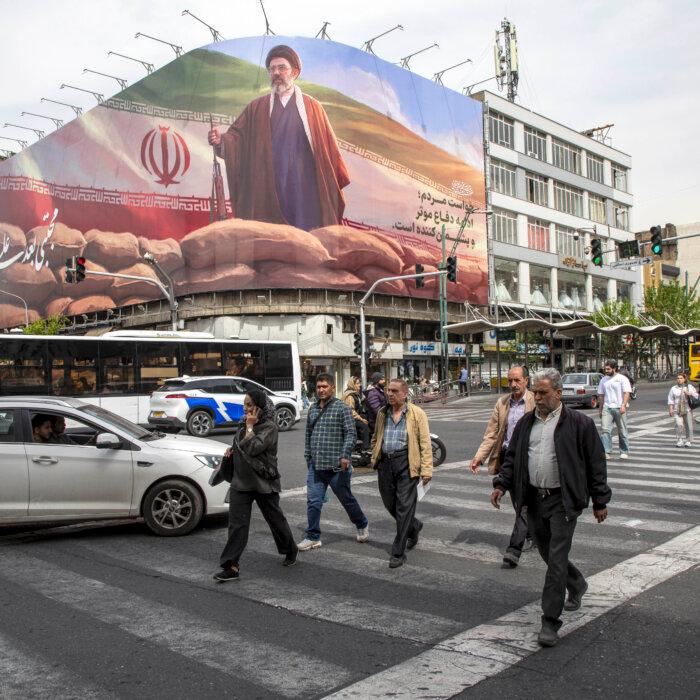
Iranian officials, meanwhile, have bristled at the blockade Trump implemented just days after agreeing to a ceasefire. Iranian forces have fired on commercial ships operating in the Persian Gulf and Strait of Hormuz, in an effort to block traffic through the waterway in retaliation for the joint U.S.–Israeli strikes on Iran.
Tehran has also objected to Israeli military operations in Lebanon.
On Wednesday, Iranian Foreign Ministry spokesperson Esmail Baghaei announced that Tehran would reevaluate negotiations with Washington in light of the renewed fighting.
“Any diplomatic process is harmed by the use of force and unlawful actions on the ground,” Baghaei said in remarks shared with Iran’s state-run PressTV.