The head of the U.S. military command in charge of combat operations in Iran said that the country “suffered a generational military defeat” in the conflict, in remarks made two days after a ceasefire agreement between Iran and the United States was announced.
Adm. Brad Cooper, the commander of Central Command (CENTCOM), said on April 9 that the military was deployed in the Middle East to “dismantle the Iranian regime’s ability to project power beyond its own borders, and we clearly accomplished this task,” adding that Iran’s capacity to “conduct large-scale military operations” was destroyed for “years to come.”
“Iran’s conventional military capability, built over 40 years at the cost of billions of dollars, has been eliminated,” Cooper said in a video released on X.
Addressing U.S. military service members, he said: “In less than 40 days, you destroyed the military that Iran built for over 40 years. Your courage, grit, and ingenuity have served America extremely well.”
Iran’s drone, naval, and missile capabilities were destroyed in the five-week-long campaign, dubbed “Operation Epic Fury,” that started on Feb. 28. Earlier this week, President Donald Trump announced that the United States and Iran would partake in a two-week ceasefire, following warnings from the president that U.S. forces would soon strike Iran’s bridges and power plants if the country did not move to reopen the Strait of Hormuz.
Cooper confirmed in the video that while U.S. forces have paused the campaign for now, the military will stay “present” and “vigilant” to resume the operation.
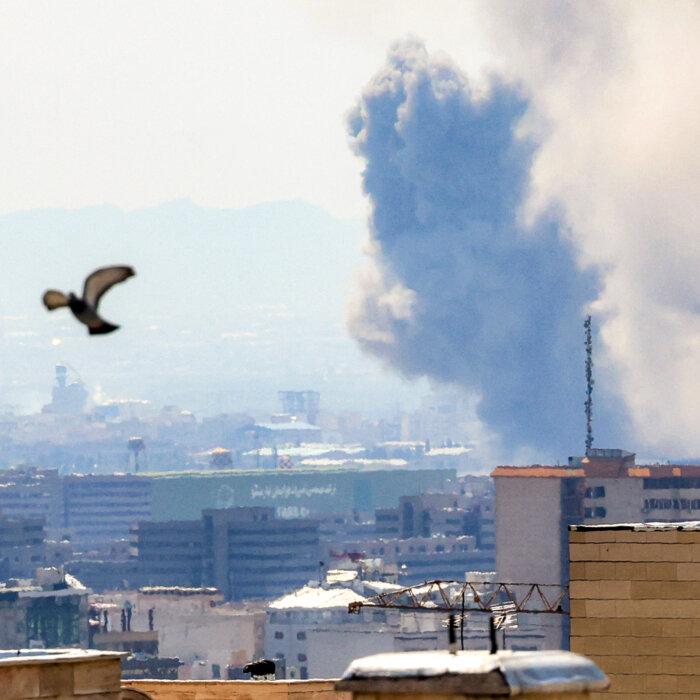

“We also continue to stand shoulder to shoulder with our regional partners in maintaining the most sophisticated and largest active air defense umbrella in the world,” he said.
Over 50,000 American service members are deployed to the Middle East, with the military having conducted more than 13,000 strikes on Iranian targets, Cooper said. Thirteen U.S. service members have died, and another 381 have been injured, since the start of the conflict, according to CENTCOM.
The message comes as Israeli Prime Minister Benjamin Netanyahu said Thursday he is seeking direct talks with Lebanon’s government, a day after Israel said it launched significant strikes in that country against the Hezbollah terrorist group.
“In light of Lebanon’s repeated requests to open direct negotiations with Israel, I instructed the cabinet yesterday to start direct negotiations with Lebanon as soon as possible,” Netanyahu said in a statement Thursday. “The negotiations will focus on disarming Hezbollah and establishing peaceful relations between Israel and Lebanon.”
Israel, which launched strikes in Lebanon last month in parallel with the war on Iran to root out the Hezbollah terrorist group, says its actions there are not covered by Trump’s announced ceasefire. Iran, however, has said that a halt on such strikes was part of the ceasefire deal, prompting officials in Tehran to warn that the pause in fighting is at risk.
A host of countries, including the UK and France, as well as the European Union, have said the truce should extend to Lebanon.
In a statement, French President Emmanuel Macron’s government said that it condemned the fresh wave of Israeli strikes inside Lebanon “because they jeopardize the temporary ceasefire between the United States and Iran the day after it was concluded.”
“This ceasefire must include Lebanon in order to end hostilities at regional level and pave the way for a solution to the crisis that guarantees the conditions for a lasting regional peace,” the statement said. “France therefore calls on all parties to show the utmost restraint and grasp the opportunity offered by this ceasefire.”