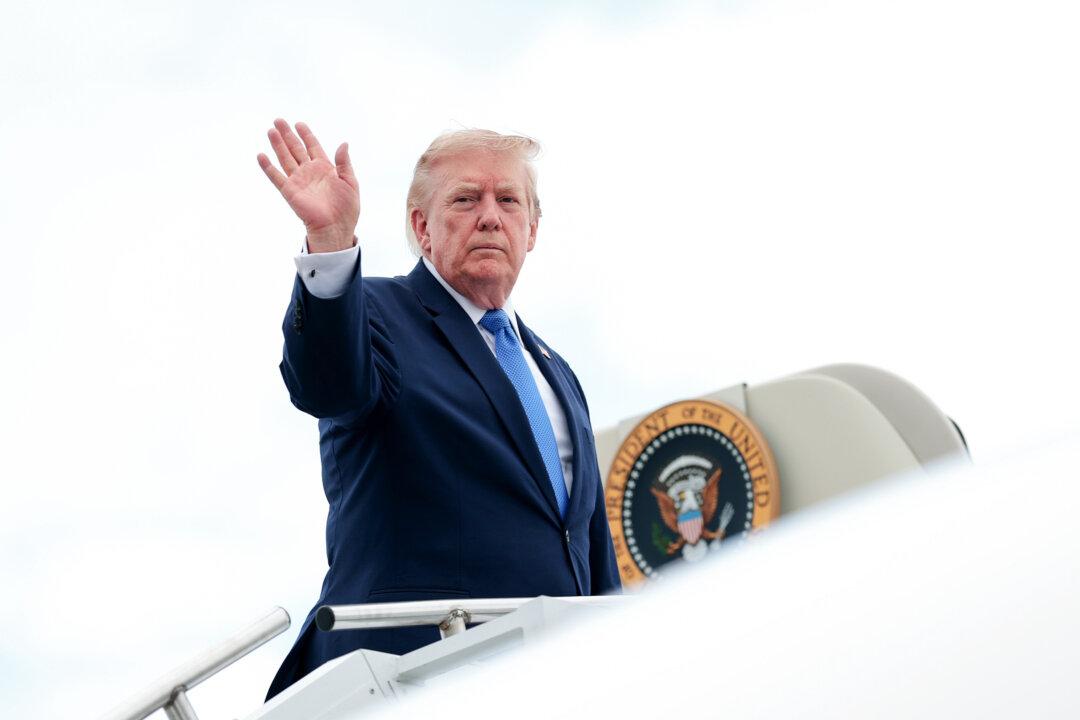
U.S. President Donald Trump told reporters on Monday that negotiations with Iran are ongoing but warned that it’s the “last chance” for Tehran to make a peace deal.
Trump told reporters at the White House that Iranian officials called him and asked him not to attack. He described the planned strikes as being significant.
“‘Please, don’t attack. We'll make a deal,’” the president said, describing what officials in Tehran told his administration.
The pause in strikes came after Gulf allies and Iranian officials had made a request, Trump said over the weekend. The president also indicated to reporters on Sunday that the attacks would be the most significant since World War II.
Since the start of the Feb. 28 conflict, Trump has stopped and restarted strikes amid negotiations over ending Iran’s controversial nuclear program. Throughout the war, Trump has insisted that Iran cannot be allowed to obtain a nuclear weapon.
“This is the last chance” for Iran to sign a “good document,” Trump said, adding that “I want to give them every last chance before decapitation.”
Trump also dismissed concerns about possible Iranian tolls in the Strait of Hormuz, the narrow waterway that links the Persian Gulf to the broader ocean. He said the United States maintains naval control of the Middle East.
“We have total control. You know, we have a thing called a blockade,” he said, adding, “And that Navy is, they call it a wall of steel.”
The president described two phases in the ongoing talks, with the first including the opening of the Strait of Hormuz. That would occur on Aug. 4, he said.
The second phase, the denuclearization of Iran, will take longer, the president said. “We’re very strong on it: they cannot have a nuclear weapon,” he said.
After Trump announced the pause in strikes, a top Iranian spokesperson said on Aug. 3 that negotiations with the United States are not happening but that Tehran is talking to Oman, according to the semi-official Mehr News Agency.
Iranian Foreign Ministry spokesman Esmaeil Baghaei said the Strait of Hormuz will not “return to the situation before the war,” according to Mehr following talks between Tehran and Oman.
Iran has repeatedly attacked vessels attempting to transit through the Strait of Hormuz without its authorization as part of its conflict with the United States.
Trump told reporters on Sunday that he decided to hold off ordering new American strikes against Iran at the urging of Gulf allies Qatar, Saudi Arabia, and the United Arab Emirates.
A conversation with Saudi ruler Mohammed bin Salman weighed heavily in his decision, he said.
“I said to the crown prince, ‘What would you rather do? Would you rather us do this or not?’” Trump told reporters on Air Force One en route to Washington after spending the weekend at his golf club in Bedminster, New Jersey.
“They said we would much prefer a deal as opposed to an attack, because you don’t know where these attacks lead.”