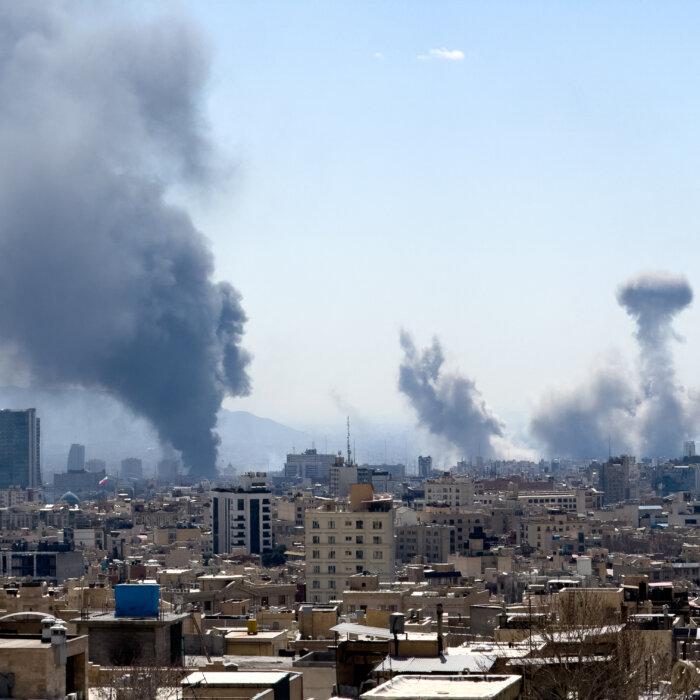
The International Atomic Energy Agency (IAEA) said that it could not rule out a “possible radiological release” in Iran as a result of the ongoing U.S.–Israeli attack on the Islamic Republic on March 2.
IAEA Director General Rafael Grossi made the announcement in a speech to the organization’s board of governors during an emergency meeting in Vienna.
“Let me underline that the situation today is very concerning,” Grossi said. “We cannot rule out a possible radiological release with serious consequences, including the necessity to evacuate areas as large or larger than major cities.”
He also said that, so far, no elevation of radiation levels above the usual background levels has been detected in countries bordering Iran or at any of the nuclear installations within the Islamic Republic.
The U.N. nuclear watchdog chief said Iran “and many other countries in the region that have been subjected to military attacks have operational nuclear power plants and nuclear research reactors, as well as associated fuel storage sites, increasing the threat to nuclear safety.”
Grossi said the United Arab Emirates has four operating nuclear reactors, and Jordan and Syria have operational nuclear research reactors.

“Bahrain, Iraq, Kuwait, Oman, Qatar, and Saudi Arabia have also been attacked,” Grossi said. “These countries all use nuclear applications of some sort or another. We therefore urge utmost restraint in all military operations.”
Grossi said that the IAEA currently has no indication that any of Iran’s nuclear installations, including the Bushehr Nuclear Power Plant, the Tehran Research Reactor, and other nuclear fuel cycle facilities in the country, had been hit.
He said that the watchdog had been unable to make contact with Tehran’s nuclear authorities but that he hoped communication could be reestablished swiftly.
Shortly after Grossi made these remarks, Iran’s ambassador to the IAEA, Reza Najafi, told reporters outside the closed-door Vienna meeting, “Again, they attacked Iran’s peaceful, safeguarded nuclear facilities yesterday.”
‘Operation Midnight Hammer’
U.S. officials said 2025’s Operation Midnight Hammer destroyed Natanz, along with the Fordow and Isfahan nuclear sites.Iran and the United States were involved in negotiations regarding a new deal to replace the JCPOA, the sixth round of which was set to take place in Muscat, the capital of Oman, on June 15, 2025. Those talks were canceled following the Israeli strikes.
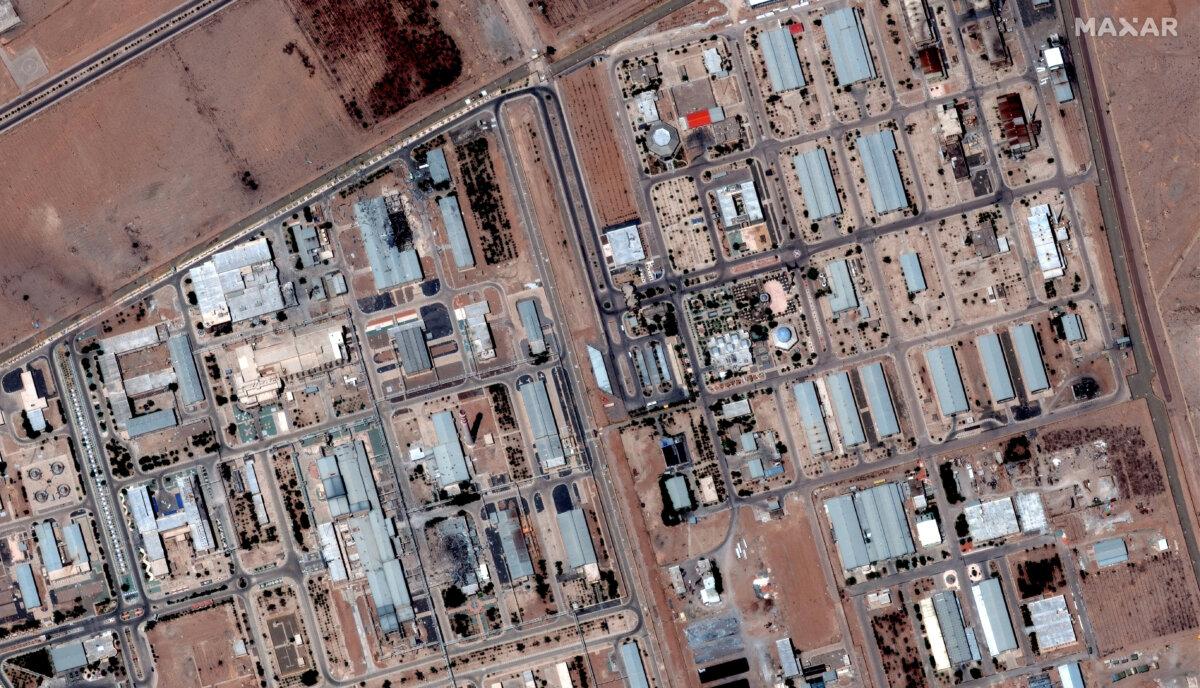
The main above-ground enrichment building at Natanz was known as the Pilot Fuel Enrichment Plant.
Israel hit the building on June 13, leaving it “functionally destroyed” and seriously damaging underground halls holding cascades of centrifuges, Grossi said at the time. A U.S. follow-up attack on June 22, 2025, hit Natanz’s underground facilities with bunker-busting bombs, likely destroying what remained.

Grossi told Sky News on June 18, “We came to the conclusion that we could not affirm there is any systematic effort in Iran at the moment to manufacture a nuclear weapon.”
Geneva Talks
Grossi was present at the most recent round of U.S.–Iran talks in Geneva on Feb. 26. At the time, Iranian Foreign Minister Abbas Araghchi said he welcomed Grossi’s presence.U.S. President Donald Trump has said the operation’s goal is to eliminate threats from Iran and ensure that the regime “can never have a nuclear weapon.”
Iran retaliated with a series of attacks on Israel and its neighboring Gulf nations, targeting U.S. and Israeli military bases in the region.