British Prime Minister Keir Starmer has vowed to remain in the job under growing pressure to resign after his Labour Party suffered major losses in local elections across the UK last week.
Under the threat of a Labour leadership challenge from a former minister, Starmer said in a speech on May 11 that rebuilding relations with Europe will be his Labour government’s defining mission.
‘Dangerous Opponents’
In his latest attempt to reset his government, Starmer said the UK is living in “dangerous times.“ The prime minister said that if Labour does not respond in the right way, the country “will go down a very dark path.”“We are facing not just dangerous times, but dangerous opponents,” he said.
He accused Reform and the Green Party, which also made gains in the local elections, of exploiting the “despair” felt by the people of the UK, noting that neither party offers the “serious progressive leadership that these times demand.”
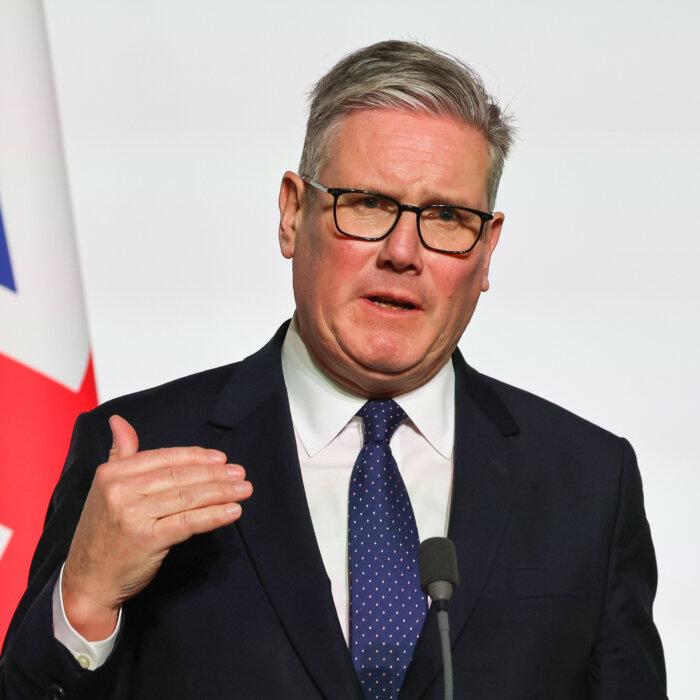
Starmer said he takes full responsibility for Labour’s poor performance in the elections, but made reference to the succession of Conservative prime ministers who led the previous administration and vowed not to step down.
“I take responsibility for not walking away, not plunging our country into chaos, as the Tories did time and again, chaos that did lasting damage to this country,” he told supporters and journalists in central London.
“On growth, defense, Europe, energy, we need a bigger response than we anticipated in 2024 because these are not ordinary times, and this is a political challenge just as much as it’s a policy challenge,” he said.
“We’re battling Reform and the Greens. But at a deeper level, we’re battling the despair ... despair that they exploit and amplify.”
Starmer, who campaigned for Labour to remain in the European Union ahead of the 2016 referendum, won one of the largest parliamentary majorities in modern UK history in 2024.
Public anger over high levels of both illegal and legal immigration has continued to grow, with Reform surging in popularity at the expense of both Labour and the Conservatives.
‘Heart of Europe’
Starmer said in his speech that leaving the EU, following the Brexit vote in 2016, has made the UK poorer and led to immigration going “through the roof.”“At the next EU summit, I will set a new direction for Britain,” he said. “The last government was defined by breaking our relationship with Europe.
“This Labour government will be defined by rebuilding our relationship with Europe, by putting Britain at the heart of Europe.”
He said this would strengthen the economy, trade, and defense.
Starmer said that “standing shoulder to shoulder with the countries that most share” the UK’s interests, values, and enemies is “the right choice for Britain.”
He announced plans for a new “youth experience” scheme to make it easier to live and work in Europe, saying that Brexit had “snatched away” opportunities for young people.
Leadership Challenge Threatened
No leading Labour contender has stepped forward to challenge Starmer as yet.Starmer was asked about Andy Burnham, mayor of Greater Manchester and former Labour member of Parliament, who would need to return to the House of Commons as a lawmaker in order to challenge the party leader.

In January, Burnham was blocked by Labour’s governing body, the National Executive Committee, from standing in the Gorton and Denton parliamentary by-election. The committee said Burnham’s standing for parliament would trigger an unnecessary by-election for his mayoral seat.
Starmer said it is for the party’s governing body to determine whether Burnham should be allowed to contest a seat in the future, noting that he and Burnham have previously worked well together.
The Labour Party has not removed one of its prime ministers in its more than 125-year history.
Under party rules, it would take 20 percent of the parliamentary party, or 81 lawmakers, to announce their backing for a single candidate to trigger a leadership challenge.
If Starmer is forced out of office in the coming weeks, the UK will get its seventh prime minister in a decade, marking the highest level of political turnover in almost two centuries.