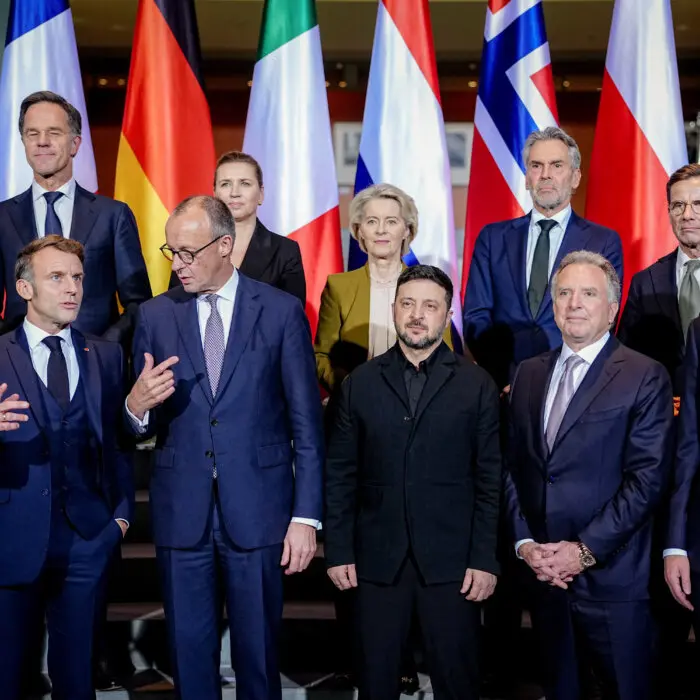
Multiple European leaders said on Dec. 15 that the proposed security guarantees for Ukraine should include a European-led peacekeeping force.
The leaders said that any Ukrainian territorial concessions to Russia in order to end the ongoing war between the two countries could be agreed to only after strong security guarantees for Ukraine are in place.
Detailing what security guarantees they felt were required, the leaders said Kyiv should be able to keep its armed forces at a peacetime level of 800,000 to deter conflict and defend its territory.
To beef up that deterrent, they said that U.S. and European leaders have committed to “a European-led ‘multinational force Ukraine’ made up from contributions from willing nations within the framework of the Coalition of the Willing and supported by the US” as a robust security guarantee.
“It will assist in the regeneration of Ukraine’s forces, in securing Ukraine’s skies, and in supporting safer seas, including through operating inside Ukraine,” the leaders said.
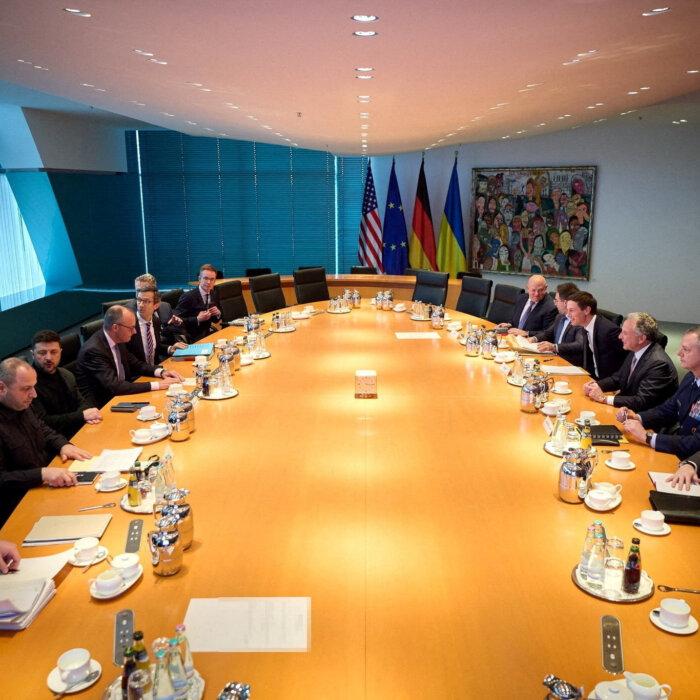
Security guarantees would also include an American-led cease-fire monitoring mechanism to provide early warning of any future attack and respond to any breaches.
They also called for a legally binding commitment to restore peace in the event of a future armed attack against Ukraine, and pledged to invest in the future prosperity of the country.
The leaders also expressed the coalition’s support for Ukrainian President Volodymyr Zelenskyy and said that any “decisions on territory are for the people of Ukraine, once robust security guarantees are effectively in place.”
They added that they strongly supported Ukraine’s accession to the European Union.
“It is now incumbent upon Russia to show willingness to work towards a lasting peace by agreeing to President [Donald] Trump’s peace plan and to demonstrate their commitment to end the fighting by agreeing to a ceasefire,” they wrote, adding that they agreed to “continue to increase pressure on Russia to bring Moscow to negotiate in earnest.”
The statement was signed by the leaders of Denmark, Finland, France, Germany, Italy, the Netherlands, Norway, Poland, Sweden, and the UK. It is also open for other countries to join.
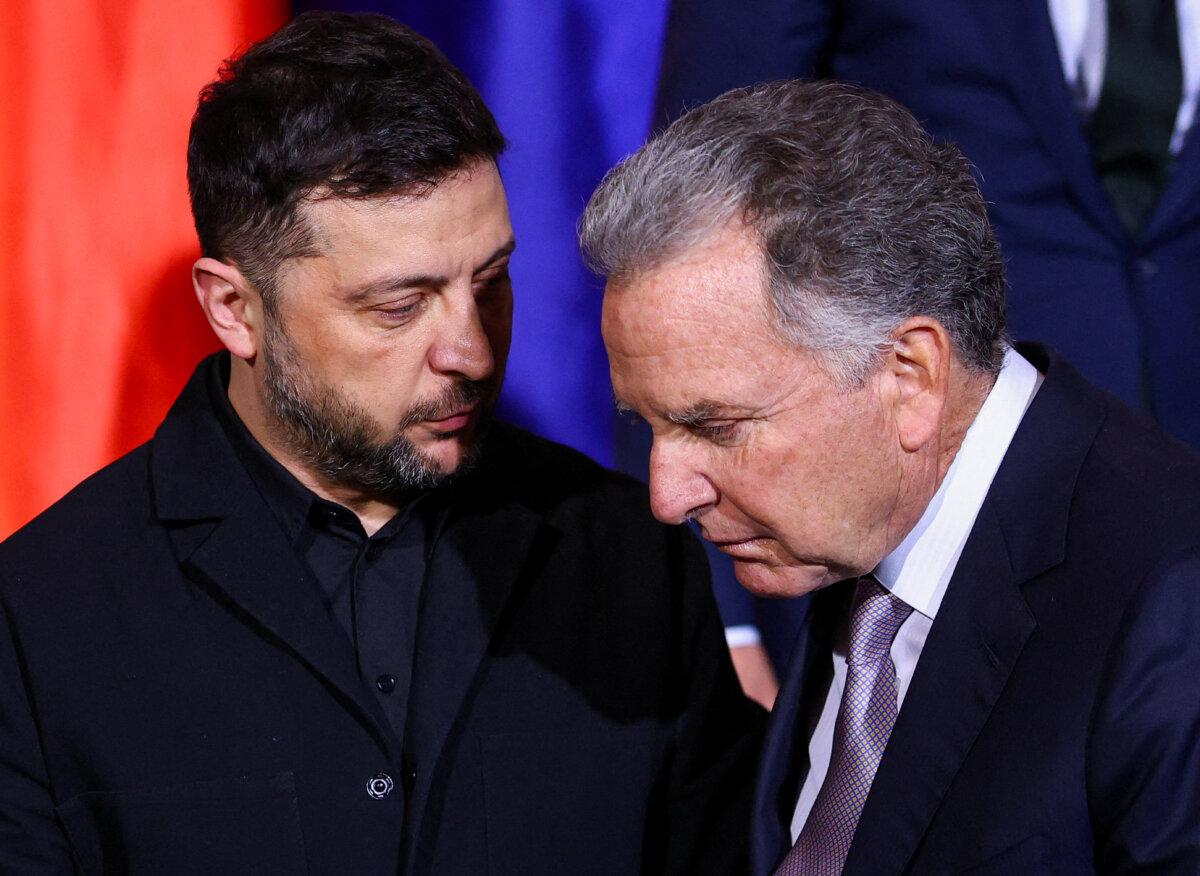
Speaking to reporters in a call, the officials said the talks resulted in the strongest possible package, including robust security guarantees for Ukraine, similar to NATO’s Article 5 protections.
These guarantees are intended to deter and address any future territorial violations by Moscow.
U.S. officials did not disclose the details of the guarantees but said Trump will seek U.S. Senate approval. They expressed confidence that Russia may accept these terms.
“Giving this NATO-like Article Five guarantee is something that President Trump believes he can get Russia to accept,” one official said.
Speaking to reporters at the White House, Trump said the talks were productive.
“We’re getting closer,” he said, referring to the peace deal. “We’re having tremendous support from European leaders.”
On territorial issues, differences remain, officials said. Talks over the weekend have narrowed gaps, with some issues resolved and multiple potential solutions identified to bridge remaining gaps, they added.
The U.S. team said that Trump will not pressure Ukraine to cede territory, leaving decisions about what is next to Zelenskyy.
Acting Dutch Prime Minister Dick Schoof said on Dec. 16 that these security guarantees offered by European nations and the United States provide Ukraine with a good basis for possible peace talks with Moscow.
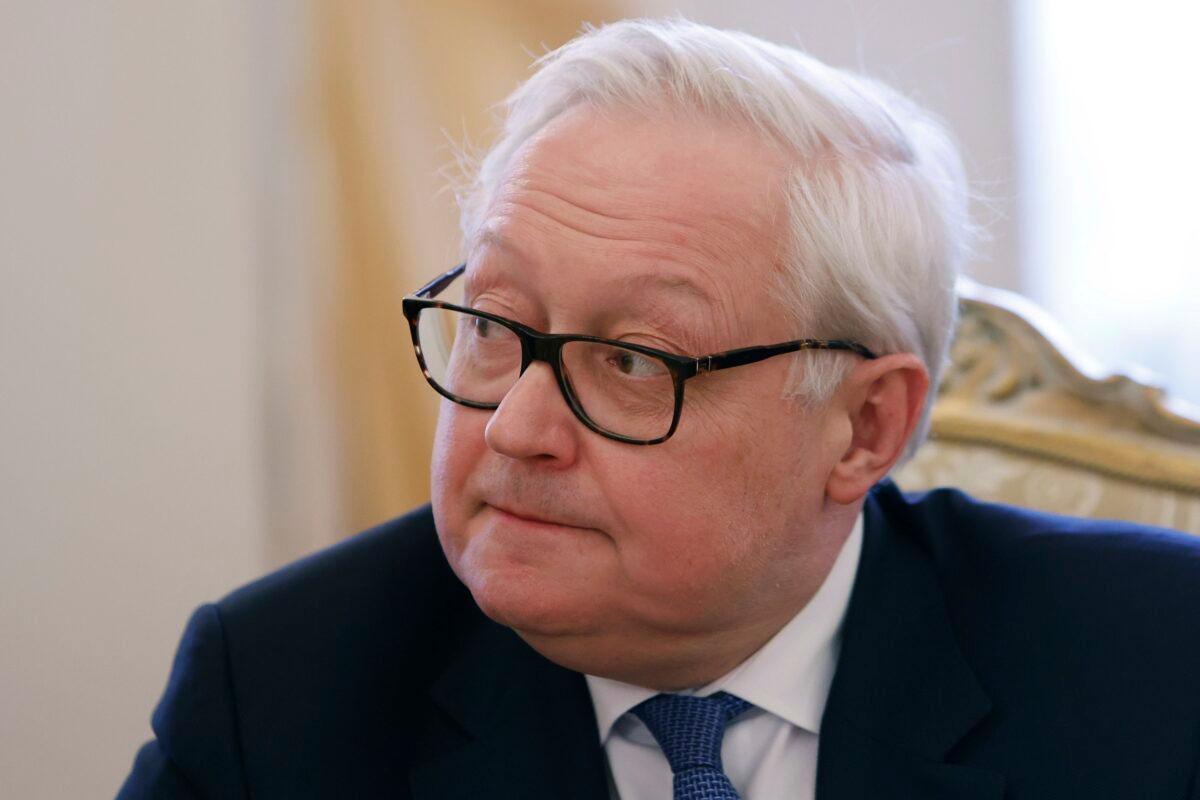
Russian Deputy Foreign Minister Sergei Ryabkov said that the Kremlin would not consent to the deployment of Western troops to Ukraine under any circumstances.
When asked whether Russia would be prepared to accept European forces in Ukraine outside the framework of NATO, Ryabkov replied, “No, no, no.”
“A ‘coalition of the willing’ is just the same. It’s maybe even worse because it may be arranged without usual NATO procedures that are more or less stable,” he said, adding that Russia had a “total and dominating mistrust” of anything that comes from NATO and major NATO capitals.