The British government outlawed support for Iran’s Islamic Revolutionary Guard Corps (IRGC) and another Iran-linked group, the Islamic Movement of Companions of the Right (IMCR), on July 13, after a string of anti-Semitic attacks on the streets of the UK.
The new powers would effectively ban support for those groups and give the police and intelligence community new tools to address threats linked to them.
Along with the two Iranian-linked organizations, a group linked to Russia’s GRU military intelligence agency, the GRU Volunteer Corps, was also targeted in the move.
Outgoing British Prime Minister Keir Starmer said that the government “will never let Britain be a playground for states who want to spread fear, division and violence on our streets.”
“These new powers will make it easier to prosecute and lock up anyone carrying out their dirty work here in Britain,” he said, adding that anyone acting on “behalf of those who threaten our national security” will be found and “face the full force of the law.”
British Home Secretary Shabana Mahmood said that Iran and Russia are “using proxies and thugs to do their dirty work on our shores.”
“I have rapidly designated three groups so those working for them will be tracked down and put behind bars,” she said, adding that she will “leave no stone unturned to keep our country safe.”
“Sitting behind IMCR were members of Iran’s Islamic Revolutionary Guard Corps Qods Force, who almost certainly directed IMCR attacks across Europe,” the government statement said, adding that “new offenses for supporting and assisting these groups could result in a 14-year prison sentence.”
In just one year, the UK’s internal intelligence agency, MI5, identified “at least 20 potentially lethal Iranian-backed plots against people in the UK,” the government said, adding that the IRGC “is central to the Iranian state’s operations” and has a long history of using proxies and criminal networks to target people overseas,” particularly taking aim at Jewish communities and dissidents of the current regime in Terhran.
Under the new law, prosecutors will no longer need to establish a foreign power connection in every case, making it easier and more straightforward to build cases.
It also provides that those found guilty of conducting acts of sabotage, including arson, on behalf of these groups could face life imprisonment.
The designations need to be approved by parliament before they take effect.
If they do pass, it will then be illegal to be a member of any of the named organizations, support or invite support for them, or display their symbols or uniforms.
Though materially very similar in effect, this would not make the groups “proscribed terrorist organizations,” as the IRGC is in the United States after it was designated a foreign terrorist organization by the U.S. State Department in 2019.
The move comes as the United States continues its war against Iran after a fragile peace deal failed.
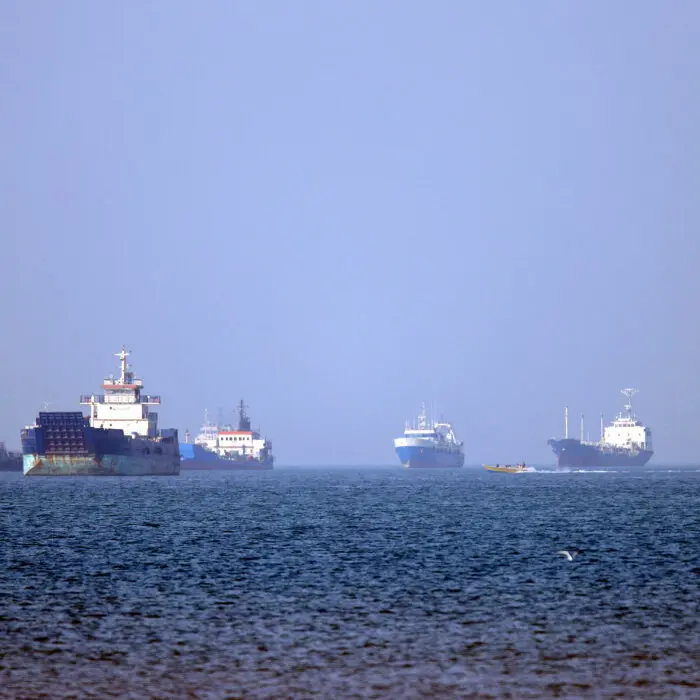
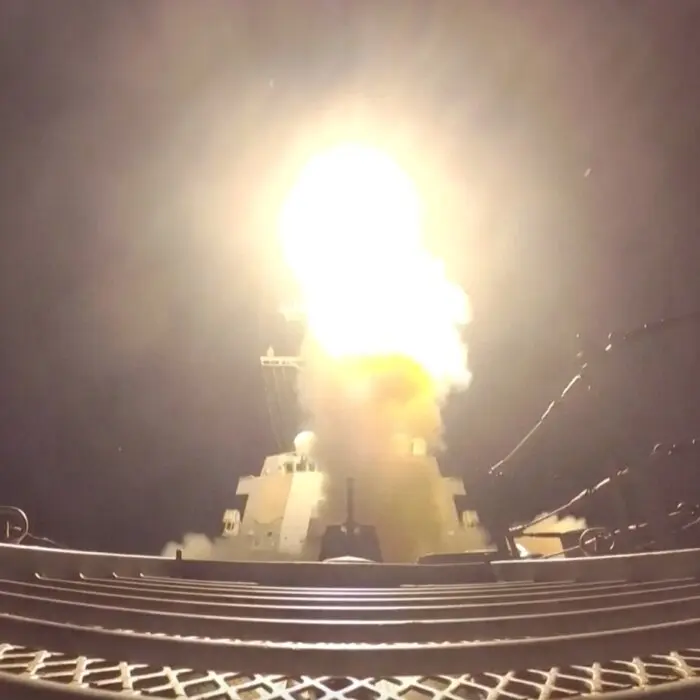
CENTCOM said the attacks that started Sunday at 5 p.m. ET, or early Monday in Iran—directed by U.S. President Donald Trump—were aimed at degrading the Iranian regime’s “ability to attack civilian mariners and commercial ships freely transiting the Strait of Hormuz.”
The new round of strikes comes after multiple countries in the Middle East blamed Iran for drone and missile attacks against them on Sunday local time, following earlier U.S. strikes on Iran for its attack on a Cyprus-flagged container ship transiting the strait.