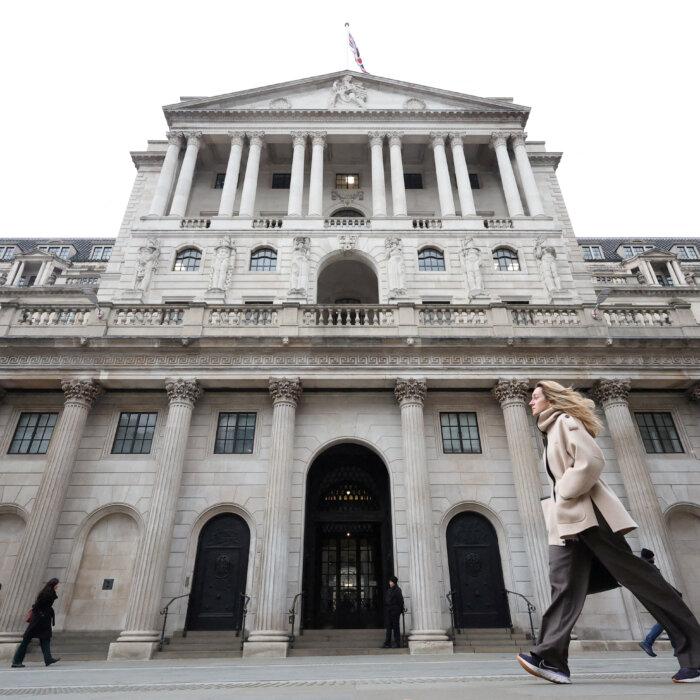
More people in the UK are falling behind on credit card bills and other unsecured loans, according to the Bank of England (BoE), as higher borrowing costs, stubborn inflation, and a softer labor market continue to strain household budgets.
A BoE survey released on July 2 found that defaults on unsecured lending reached their highest level since the global financial crisis.
Lenders reporting higher default rates outnumbered those reporting lower defaults by a net 34 percentage points in the second quarter of 2026.
That was up sharply from 18 percentage points in the first quarter and marked the highest reading since 2009. Lenders also expect defaults on unsecured loans to rise again in the third quarter.
Defaults rose mainly on credit cards and other unsecured loans. Mortgage defaults changed little, suggesting homeowners continued to make their mortgage payments even as household finances came under pressure.
The BoE said lenders expect mortgage defaults to remain stable in the third quarter.
Geopolitics, Tight Credit Conditions
Karim Haji, global and UK head of financial services at KPMG, said on July 2 that tighter lending standards, geopolitical tensions, and a weaker labor market had contributed to the rise in unsecured loan defaults.“Default rates paint a mixed picture of the economic realities facing households,” Haji said.
While defaults on secured loans remained unchanged, he said: “Tighter credit conditions, the ongoing impact of the Iran conflict and a cooling labor market triggered a rise in unsecured lending defaults, which is clearly where financial pressure is most acute.”
Haji added that demand for unsecured borrowing was broadly unchanged because many households appeared reluctant to take on additional debt while borrowing costs remain elevated.
He also said demand for mortgages had been supported by borrowers trying to lock in lower fixed-rate deals before inflation or interest rates moved higher.
Although household finances remain under pressure, some of those challenges may begin to ease.
Falling oil prices following the U.S.–Iran memorandum of understanding (MOU), signed on June 17, could reduce energy costs.
Borrowing to Stay Weak
The survey suggests households are likely to remain cautious in the months ahead, even as some borrowing costs begin to ease.Demand for mortgages is expected to fall in the third quarter after a recent jump in borrowing, as many homebuyers had already rushed to lock in fixed-rate deals before mortgage rates increased.
Lenders expect defaults on unsecured loans to continue rising in the third quarter, although at a slower pace than in the previous three months.
The BoE also found that banks tightened some lending standards for unsecured borrowing.
Inflation, Jobs Remain Key Risks
Economists said the outlook for households will depend on whether inflation continues to ease and whether the labor market weakens further.“While major lenders have cut mortgage rates and oil prices have eased, the outlook for Q3 remains volatile,” Haji said.
He added that “stubborn inflation, lingering energy cost pressures and low consumer confidence linked to cost of living and job security concerns will continue to fuel economic and financial anxiety for many.”
Haji also said lenders should use better data and technology to identify customers who may be at risk of financial difficulty before they miss payments, allowing banks to provide support earlier.