European leaders and some U.S. lawmakers intensified scrutiny this weekend of President Donald Trump’s 28-point peace proposal for Ukraine, which the White House said is a pragmatic blueprint designed to halt nearly four years of war and create what officials call a “win-win” security framework for all sides.
The White House said the plan would offer robust security guarantees and broad economic incentives in which both Russia and Ukraine “gain more than they must give,” while both Kyiv and key Western partners said it risks forcing Ukraine into hard concessions, limiting its defensive capabilities, and rewarding Russian aggression.
“We are clear on the principle that borders must not be changed by force,” they said, adding that limitations on Ukraine’s armed forces “would leave Ukraine vulnerable to future attack.”
Rep. Don Bacon (R-Neb.) compared the proposal to pre–World War II appeasement.
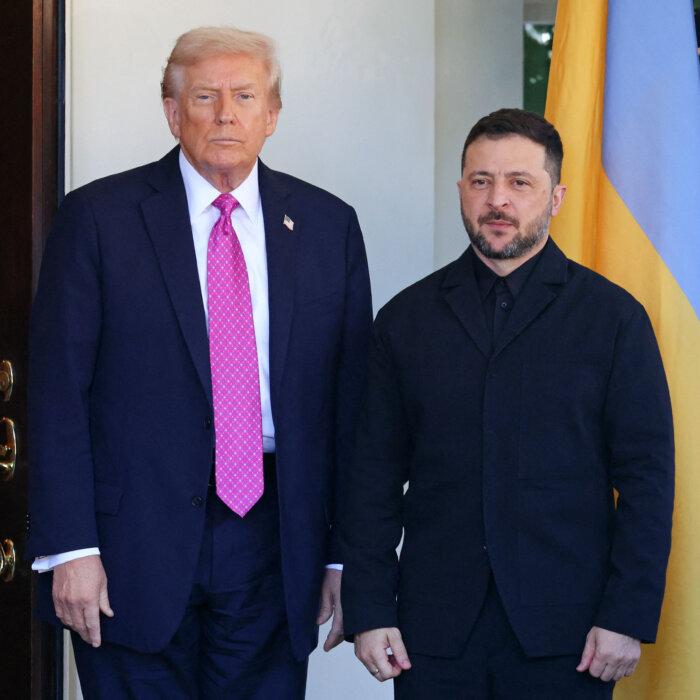
White House Calls Framework ‘Win-Win’
Drafts of the proposal—crafted by Special Envoy for Peace Missions Steve Witkoff and Secretary of State Marco Rubio—would require Ukraine to cede Crimea, Donetsk, and Luhansk, freeze front lines in Kherson and Zaporizhzhia, permanently renounce NATO membership, and cap its armed forces at 600,000 troops. In exchange, sanctions on Russia would be lifted in phases and Moscow would be reintegrated into the global economy, including with an eventual return to the G8.White House press secretary Karoline Leavitt told The Epoch Times in an emailed statement that the framework is meant to secure “full security guarantees and deterrence for Ukraine, Europe, and Russia to ensure the end of the war,” while offering “financial opportunities for Ukraine to rebuild, and for Russia to rejoin the global economy, to benefit the people in both countries.”
“This plan was crafted to reflect the realities of the situation, after years of a devastating war, to find the best win-win scenario, where both parties gain more than they must give,” she said.
A senior U.S. official told The Epoch Times that the document was drafted following discussions with Rustem Umerov, a top adviser to Ukrainian President Volodymyr Zelenskyy, who agreed to a majority of the points and presented it to Zelenskyy. Umerov has said he lacked the authority to approve any terms but acknowledged continued consultations.
Europe Welcomes Diplomacy But Seeks Revisions
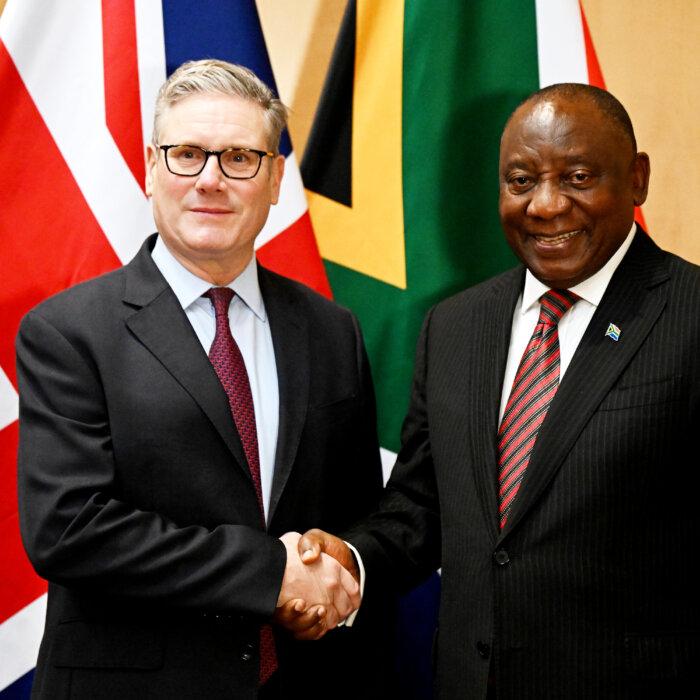
European capitals—largely excluded from initial negotiations—have pushed back on the proposal’s territorial and military terms, while highlighting their intent to continue discussions with both Kyiv and Washington on a final plan that would ensure that any peace reached is “sustainable.”Besides noting in their joint statement at the G20 summit in Johannesburg that any elements of Trump’s peace plan that relate to the EU and NATO would “need the consent of EU and NATO members respectively,” European leaders said that they fully support Ukraine and plan to “continue to coordinate closely with Ukraine and the US over the coming days.”
French President Emmanuel Macron told reporters on Nov. 22 that the Trump administration’s proposal “incorporates ideas that are quite familiar” and recognizes important principles on sovereignty and security guarantees, but he said that the plan “wasn’t negotiated with the Europeans” despite that it prescribes obligations for them.
“There are many things that can’t simply be an American proposal,” Macron said. “Frozen assets are held by Europeans. The European integration of Ukraine is in the hands of the Europeans. ... Knowing what NATO is doing is in the hands of NATO members.”
British Prime Minister Keir Starmer echoed that message, telling reporters in Johannesburg that “all matters about Ukraine must be determined in the end by Ukraine” and that any lasting peace requires “security guarantees.”
German Chancellor Friedrich Merz said he had reiterated Europe’s position directly to Trump during a lengthy phone call shortly before leaving for the G20 summit, noting that he urged the U.S. president to consider Ukraine’s security needs and Russia’s past treaty violations. Merz said he reminded Trump that Moscow had already broken its commitments under the Budapest Memorandum.
“At that time, Ukraine renounced a large arsenal of weapons, including nuclear weapons, and in return received Russia’s commitment to accept the territorial integrity of that country in the long term,” Merz said. “Russia did not comply with this.”
EU foreign policy chief Kaja Kallas told reporters in Brussels on Nov. 20 that the EU has “always supported a just, lasting, and comprehensive peace,” adding that the bloc’s objective is to weaken Russia and support Ukraine.
“Either the loss of dignity or the risk of losing a key partner,” he said in a Nov. 21 national address. “We will–and must–do everything so that, as a result, the war ends, but Ukraine does not end.”
“In the coming days, consultations with our partners will take place on the steps needed to end the war,” Zelenskyy said in a Nov. 22 national address. “Our representatives know how to defend Ukraine’s national interests and exactly what must be done to prevent Russia from launching a third invasion, another strike against Ukraine.”