U.S. President Donald Trump said on Jan. 28 that a “massive armada” is heading to Iran and urged Tehran to come to the table to make a deal on nuclear weapons.
“Hopefully Iran will quickly ‘Come to the Table’ and negotiate a fair and equitable deal - NO NUCLEAR WEAPONS - one that is good for all parties,“ Trump wrote. ”Time is running out, it is truly of the essence!”
According to Trump, the fleet is ready to “fulfill its mission, with speed and violence, if necessary.”
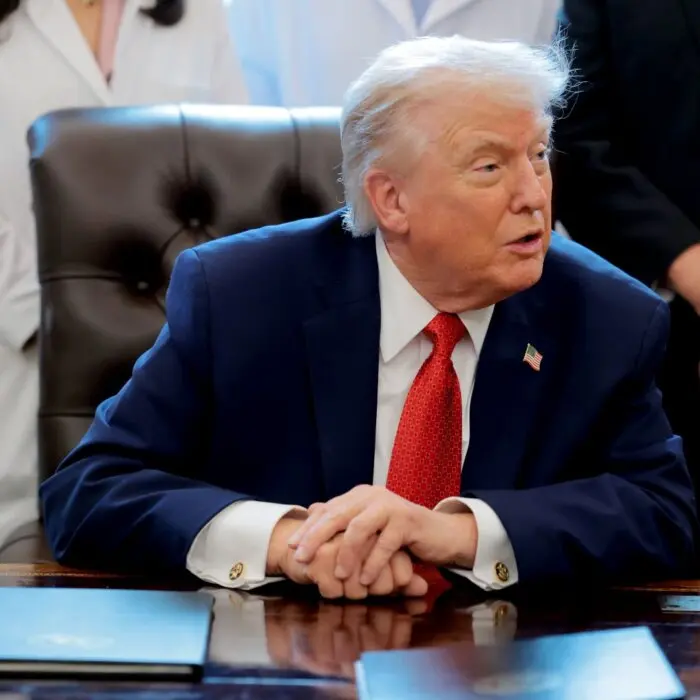
“As I told Iran once before, MAKE A DEAL!“ Trump wrote. ”They didn’t, and there was ‘Operation Midnight Hammer,’ a major destruction of Iran. The next attack will be far worse! Don’t make that happen again.”
The message, shared on X, also said that if pushed, Iran would defend itself and “RESPOND LIKE NEVER BEFORE!”
“Last time the U.S. blundered into wars in Afghanistan and Iraq, it squandered over $7 trillion and lost more than 7,000 American lives,” the post reads.
Statements on US–Iran Talks
In December 2025, Trump said he may support more strikes on Iran if the country makes advances in its nuclear or long-range weapons program.However, according to local media reports, Iranian Foreign Minister Abbas Araghchi told reporters in Tehran on Jan. 28 that there has been no contact in recent days with U.S. regional envoy Steve Witkoff.
He said that Iran has not submitted any request for negotiations and that “negotiations cannot work under threats.”
“Talks must take place in conditions where threats and excessive demands are set aside,” Araghchi said, according to Iranian state media outlet Press TV.
Responding to questions about a potential meeting with International Atomic Energy Agency Director General Rafael Grossi, Araghchi stated that no such meeting is currently planned.
US and Allies Push Enforcement
Diplomatic pressure on Iran increased in September 2025, when the U.N. reinstated an arms embargo and other sanctions on the Iranian regime.It included bans on arms imports and exports, restrictions on ballistic missile technology, travel bans, asset freezes, and provisions allowing the seizure of prohibited cargo linked to Iran.
European powers offered Iran a delay of up to six months before reinstating sanctions, giving negotiators time to pursue a long-term agreement—provided Tehran readmit U.N. nuclear inspectors, address concerns over its enriched uranium stockpile, and return to talks with the United States.
The United States and about 40 countries gathered last week in Prague for a symposium focused on implementing the restored U.N. Security Council resolutions.
Iran Protests
Widespread protests broke out across Iran in late December 2025, initially sparked by rising living costs, high inflation, and the sharp drop in value of the national currency.Testifying before the Senate Foreign Relations Committee on Jan. 28, U.S. Secretary of State Marco Rubio estimated that the death toll from the protests is now in “the thousands.”
He described what he called the Iranian regime’s use of snipers against demonstrators as “horrifying.”
Rubio said the Iranian government was weaker than it had ever been. He said the core problem facing the leadership was an economic collapse that it could not easily fix.
“The reason why their economy’s in collapse is because they spend all their money and all their resources building weapons and sponsoring terrorist groups around the world instead of reinvesting it back into their society,” he said, noting that the resulting sanctions had isolated Iran’s economy and fueled public anger.
Rubio said protests might ebb under pressure but would likely return.
Addressing the protests in his op-ed on Jan. 20, Araghchi said the “violent phase of the unrest lasted less than 72 hours” and blamed armed demonstrators for the bloodshed.