
As President Donald Trump continues negotiations to limit Iran’s nuclear aspirations, historian and Hoover Institution senior fellow Victor Davis Hanson said he believes that the president is preparing his non-interventionist supporters for the possibility of a more forceful confrontation in the Middle East.
On the 2024 campaign trail, Trump frequently touted his record of avoiding new wars during his first term and emphasized his plans to quickly resolve ongoing conflicts, such as the one in Ukraine. But Trump has also described his foreign policy approach as one of “peace through strength,” and he has been willing to threaten military action to press his agenda.
“The MAGA covenant he ran on said no optional Middle East wars, no foreign entanglements, and it’s always better to jawbone than to go to war,” he said.
While the Trump administration has joined successive rounds of indirect talks with Iranian representatives, Hanson assessed that Israeli leaders feel that the current moment provides a good opportunity to strike Iran.

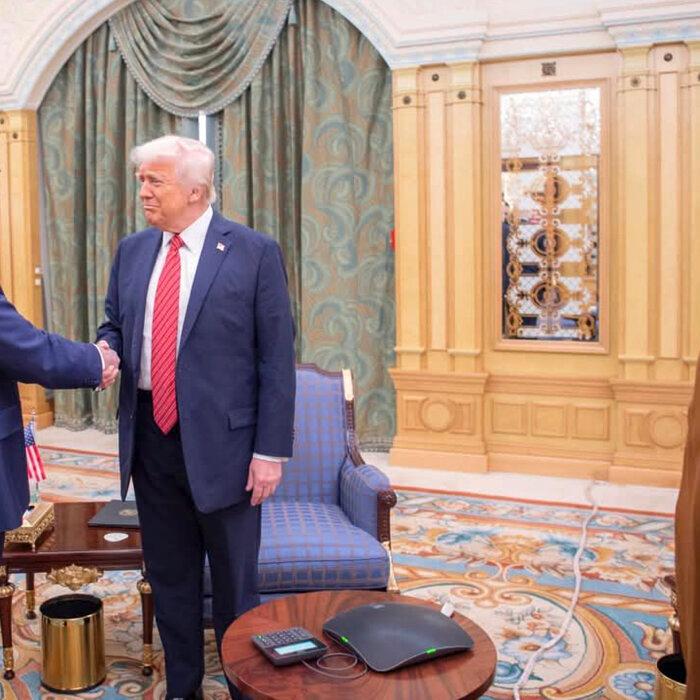
Hanson said that even if the negotiations don’t result in a deal, Trump could use the opportunity to acclimate his base to the Israeli point of view.
Syria
Hanson assessed Bashar al-Assad’s fall from power in Syria as an important opportunity to further isolate Tehran and diminish its influence across the Middle East.After seizing Damascus, a rebel-led council chose Ahmed al-Sharaa—the leader of Hay’at Tahrir al-Sham—as president of a new self-styled Syrian transitional government. The council has named other Hay’at Tahrir al-Sham members to top leadership positions in this transitional government.
Since taking power, Sharaa has tried to present himself as more of a moderate than his past would suggest. In turn, the United States has shown reduced hostility.
Trump also urged Sharaa to join the Abraham Accords, a framework for normalizing relations between Israel and its various Muslim neighbor states.
Despite Sharaa’s past, Hanson assessed that Turkey, Israel, Syria’s Kurdish population, and the neighboring Arab states all prefer him to Assad, and he indicated that Trump may feel the same.
“There may be terrorists, but they may be directed in other directions,“ Hanson said. ”I don’t know. But all of these interests felt that it was superior to the Assad regime. And most of the interests were pro-American.”