Some 42 percent of manufacturers in Canada have moved or plan to move some or all of their production to the United States as trade tensions persist between the two countries, a new survey suggests.
The survey, conducted between May 11 and May 29, gathered responses from business owners, executives, and decision-makers at 275 manufacturing companies in Canada, using Angus Reid’s business research panel.
The findings come amid escalating discussions about the Canada-United States-Mexico Agreement (CUSMA).
United States Trade Representative Jamieson Greer announced last week that the White House is not renewing CUSMA “in its current form,” but said the trade agreement would remain in place as negotiations continue.
The decision sets in motion a rolling annual review that can continue for up to 10 years, at which time it will lapse if no extension is reached. CUSMA will remain active until then unless one of the partner nations provides a six-month notice of its intention to withdraw.

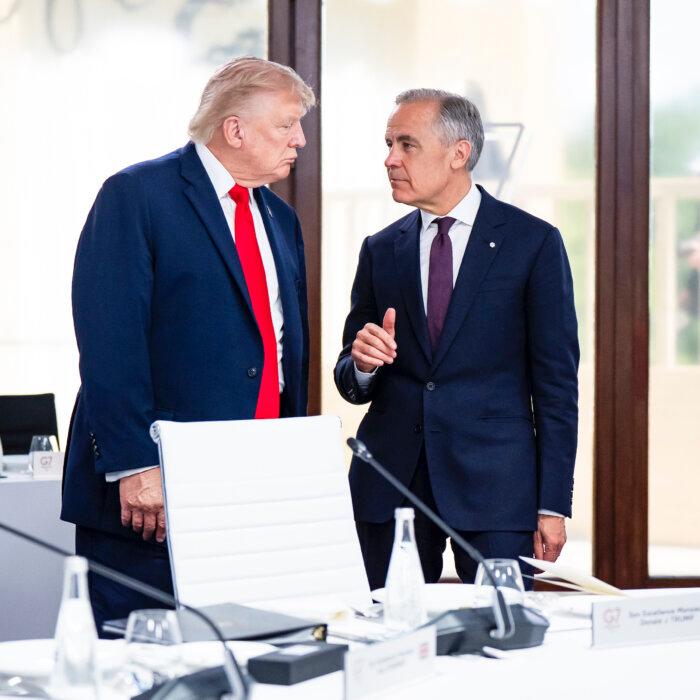
The trade agreement has provided Canada with protection against many of the tariffs set by U.S. President Donald Trump, but the country continues to face challenges from specific sectoral tariffs on industries including steel, aluminum, automobiles, and cabinetry.
“Last year, the conversation was about survival. This year, it’s about endurance,” said Anamika Gadia, KPMG Canada partner and national leader of industrial markets. “Manufacturers have shown incredible resilience, adapting to tariffs and uncertainty to navigate this period of heightened volatility. But businesses can only operate in endurance mode for so long.”
The survey also found 57 percent of manufacturing companies had either paused, reduced, or cancelled capital investment projects. Of these, 36 percent reported scaling back investments, 12 percent had put plans on hold, and 9 percent had completely cancelled intended expenditures, according to the poll.
Although large corporations have the ability to postpone investments, manage increased costs, and modify their operations, they cannot “remain in a holding pattern indefinitely,” Gadia said.
She said the postponement of capital investments could suggest that those funds are likely to be redirected to the United States.
“At some point, uncertainty begins to shape long-term decisions about where investment, production and growth will occur,” Gadia said. “The question now is whether Canada can create the conditions that give manufacturers the confidence to keep building, investing, and staying here.”
The survey also showed 80 percent of manufacturers were planning to keep their Canadian headquarters, but 11 percent were planning to move their head office to the United States within the next five years.
A loss of that size could meaningfully impact Canada’s gross domestic product (GDP), KPMG Canada said.
Federal government figures indicate the manufacturing sector represents roughly 10 percent of Canada’s overall GDP.