Conservatives are criticizing Foreign Affairs Minister Anita Anand for saying Canada has a “strategic partnership” with China following her recent trip to Beijing.
“These two things seem contradictory. Can the minister reconcile these two things, or is this another example of the prime minister saying one thing during the election and doing another after?”
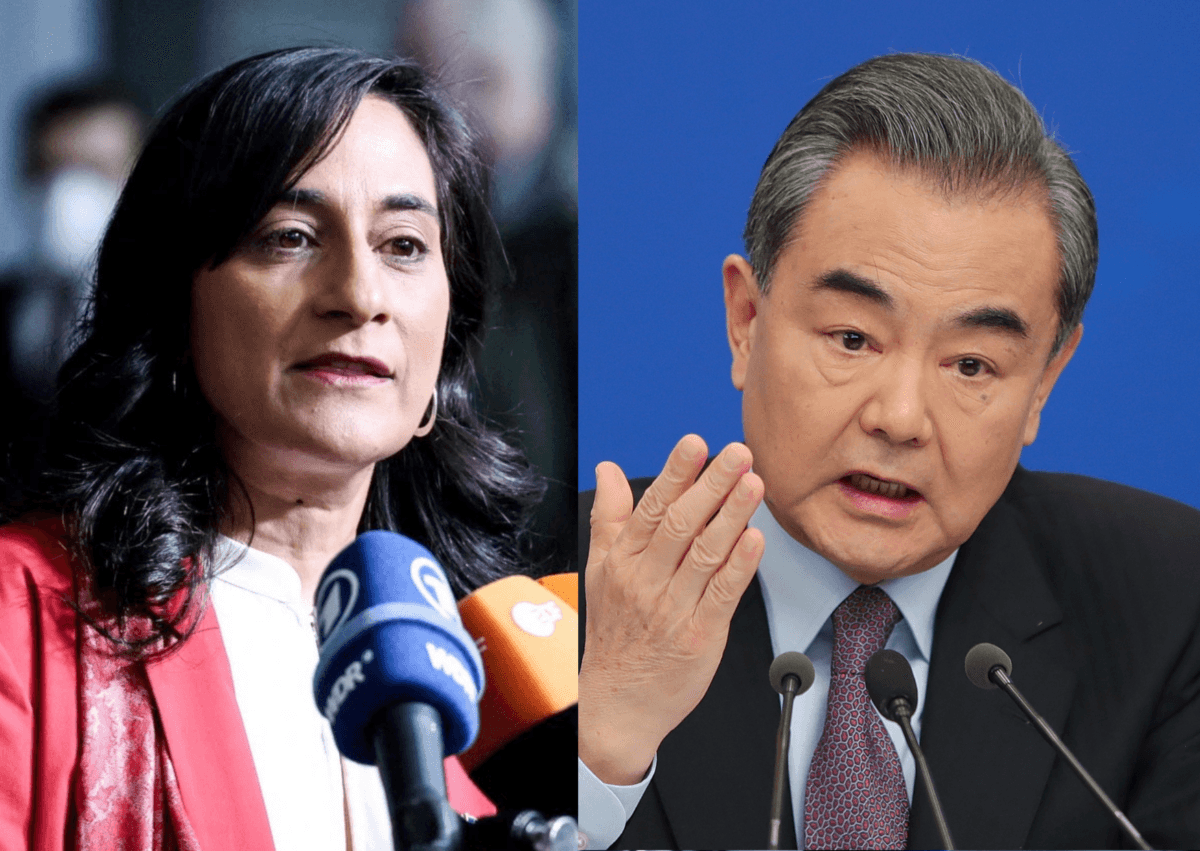
In an interview with The Canadian Press on Oct. 20 following her trip, Anand went further, saying Canada is in a “strategic partnership” with Beijing and that Ottawa is “going to find areas where we can further co-operate.” She added that she and Wang discussed cybersecurity, air travel, health, energy, and the environment.
“We must be nuanced in our diplomacy. We must stress our concerns relating to security and public safety on the one hand, and we must seek to build additional supply chains on the other. That is pragmatism,” Anand said.

China’s readout of the Anand-Wang meeting said it was a step toward a “restart” of Canada-China relations.
Anand said the meeting was “unprecedented, in the sense that over the past number of years, our governments have not proceeded along this route,” and that she has invited Wang to visit Canada.
Responding to Chong’s question in the House of Commons on Oct. 23, Anand appeared to be suggesting that while her government places importance on issues related to national security, relations with China are part of the government’s strategy of diversifying Canada’s supply chains.
“Let me reiterate that the public safety and security of Canadians, regardless of the time and place, is always top-of-mind for our government, including in our diplomatic relationships,” she said.
“At the same time, Canada will continue to become the strongest economy in the G7 and the way we do that, Mr. Speaker, is to diversify our supply chains while making sure we protect our citizens at home.”
Anand’s comments mark a pivot from Ottawa’s 2022 Indo-Pacific strategy, which referred to China as an “increasingly disruptive power” whose interests and values increasingly don’t align with those of Canada.
However, more recently, Carney said Canada would benefit from engaging with China on climate issues.
Carney is set to travel to Asia this week, visiting Malaysia, Singapore, and South Korea from Oct. 24 to Nov. 1.
Canada and China signed a strategic partnership in 2005, but relations have worsened in recent years, reaching a low point with China’s 2018 detention of Canadians Michael Kovrig and Michael Spavor after the arrest of Huawei executive Meng Wanzhou in Canada on a U.S. extradition request.