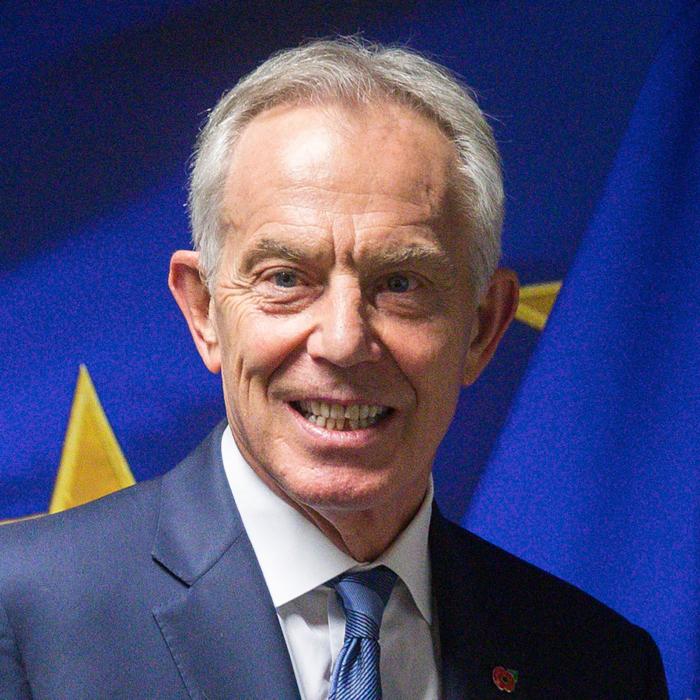
Former British Prime Minister Tony Blair, who led the Labour Party to three election victories, has said that the government should repair its relationship with the United States rather than look to rejoin the European Union.
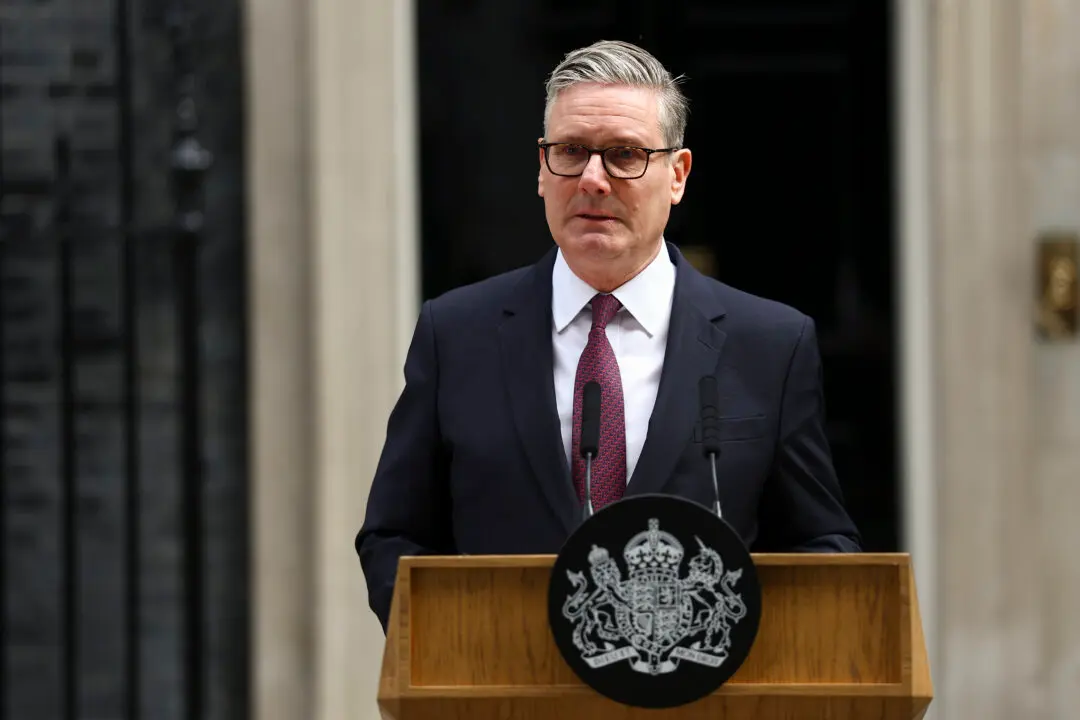
The influential former premier, who took the UK into the Iraq War in 2003 based on what an official UK inquiry later concluded was faulty intelligence, wrote that Starmer should not have prevented Washington from using UK bases in the United States and Israel’s ongoing war with Iran.
“The initial request was simply for the use of our military bases for the refuelling of American planes,“ Blair wrote. ”I understand the reasons for refusal but it’s not the best way to treat our ally.”
America’s ‘Staunchest Supporter’
He wrote: “I know how hard it is to be an ally of the USA. We were its staunchest supporter post 9/11. We went through Afghanistan and Iraq together. But it mattered deeply to America and so it mattered to us also. America remains the indispensable core of Britain’s security alliance. But staying with it means even when it is difficult or unpopular.”Blair argued for the government to smooth relations with U.S. President Donald Trump, who has criticized Starmer’s handling of immigration and free speech issues, as well as his decision not to back military action in Iran.

Polling in the UK suggests that although Starmer is personally unpopular as prime minister, most Brits back his decision not to involve the country in the war.
Blair also criticized cuts to international aid, which he said had weakened the UK’s influence on the global stage, including for the purpose of EU negotiations.
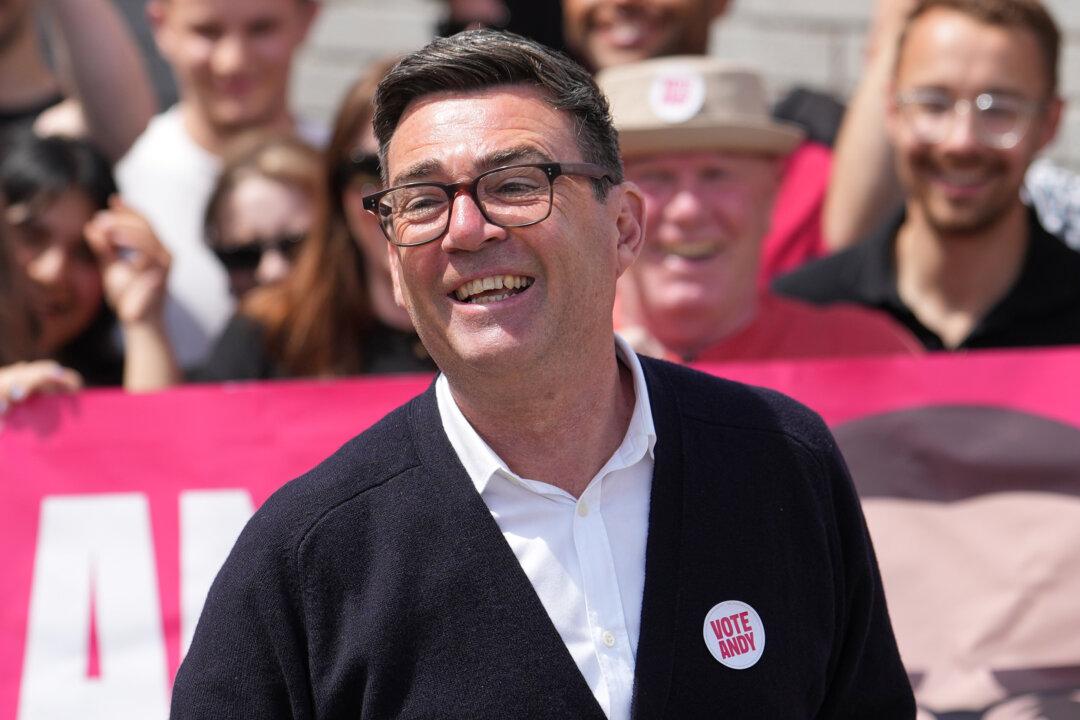
Likely Labour leadership contender Wes Streeting has made clear his desire to see the UK back in the EU “one day,” while another possible contender, Andy Burnham, has expressed similar musings in the past.
Blair was the party’s longest-serving premier, holding office between 1997 and 2007. Through his centrist “New Labour” ideological vision, he transformed what was once a party with a traditional working-class voter base.
The former premier, who published the 5,600-word essay for his influential think tank, the Tony Blair Institute for Global Change, said the government should dial down its net zero commitment, intended to combat climate change.

‘Cheap’ Over ‘Clean’ Energy
Blair said the UK should make the most of its resources to address the ongoing energy crisis, writing: “We must prioritise cheaper energy and electrification over net zero and use what is left of our North Sea oil and gas resources.“At a minimum, the government should try to limit the effect of the changes made and, as we have argued consistently, remove those parts of the net-zero agenda which prioritise clean energy over cheaper energy; and from now on make sure the actions match the words on growth.”
“The government’s principal problem isn’t Keir’s personality,” Blair wrote. “Or a failure to communicate ‘our achievements’. Or a need to assert more strongly Labour’s ’values’. Whether there is a leadership change or not is irrelevant if it doesn’t start with a policy debate.”
Blair, who swept to power with his own landslide in 1997 following 18 years of Conservative rule, appeared to take aim at both Streeting and Burnham in his polemic.
Burnham, the current mayor of Greater Manchester, who needs to win an upcoming by-election in order to return to national-level politics before he can mount a challenge, is regarded as being on the so-called soft left of the party.
Polling shows that the party members prefer Burnham, a more experienced politician who served as a junior minister in Blair’s government and that he would defeat Starmer in a head-to-head leadership contest, whereas the prime minister would win in a one-on-one with Streeting.
Blair argued against both Streeting’s and Burnham’s mooted solutions to the UK’s various problems—either an attempt to rejoin the EU or a shift to the left.

De-Brexit ‘Not the Answer’
“It is one thing when in opposition to indulge this perennial delusion that when we lose seats to the right the country is really signalling it wants Labour to move left; it is dangerous to do it in government,” he wrote.“Just as Brexit was never the answer to Britain’s challenges back in 2016, reversing it isn’t the answer to the country’s far worse situation in 2026.”
Blair wrote that the government should instead try to forge “a structured, formal relationship” with the EU—akin to Starmer’s stated ambitions for closer ties with the bloc while stopping short of an attempt to rejoin.
Blair suggested that it was a mistake for Labour to remove Starmer as leader, writing: “The Labour party is playing with fire; or, more accurately with its future, and that of the country.
“Trying to force the prime minister out, before we know what policy direction we’re bringing in, is not a serious way of conducting ourselves.”
‘The Radical Centre’
He said these two shifts “require radical change in policy, system of government and politics,” and that in his view, the best political position from which this could be achieved is what he terms “the Radical Centre.”“[Any renewal of Britain] requires a fundamental reset,” he wrote. “Labour’s only electorally viable strategy is to become the Radical Centre.”
Blair said there is “no point in debating“ whether the AI revolution ”is a good or bad thing.”
He wrote: “Just know it is a ‘thing’. In fact, it is ‘the thing’. It will displace jobs, though creating new ones, but no one yet knows the full consequence.”
Under a subsection titled “The New World Order,” Blair said he understood Europe’s anxiety over Trump’s “America First” policies, but countered that the U.S. president has identified “the principal threats—in the Arctic from Russia; longer term, globally, from China; and in the Middle East from Iran—no differently from how Europe sees the world.”
“President Trump has demanded increases in NATO spending not dissolution of the alliance,” Blair added.
The wide-ranging essay sparked much commentary and debate within the UK media, with criticism coming mainly from the left faction of the Labour Party. Starmer has made no public response so far.
Burnham, who will contest the Makerfield by-election in the northwest of England on June 18, told The Observer that Blair had misunderstood why voters had abandoned the political center in the first place.
Burnham said Blair’s essay “doesn’t mention inequality once” and argued that 40 years of widening inequality and declining living standards for many people were the driving reasons for voters turning away from the two main parties.
“If you don’t get how that’s driving politics now, if you are not rooting your analysis in the fact that people are unable to live and that things that were taken for granted are no longer affordable, then you are not understanding what’s going on,” Burnham said.