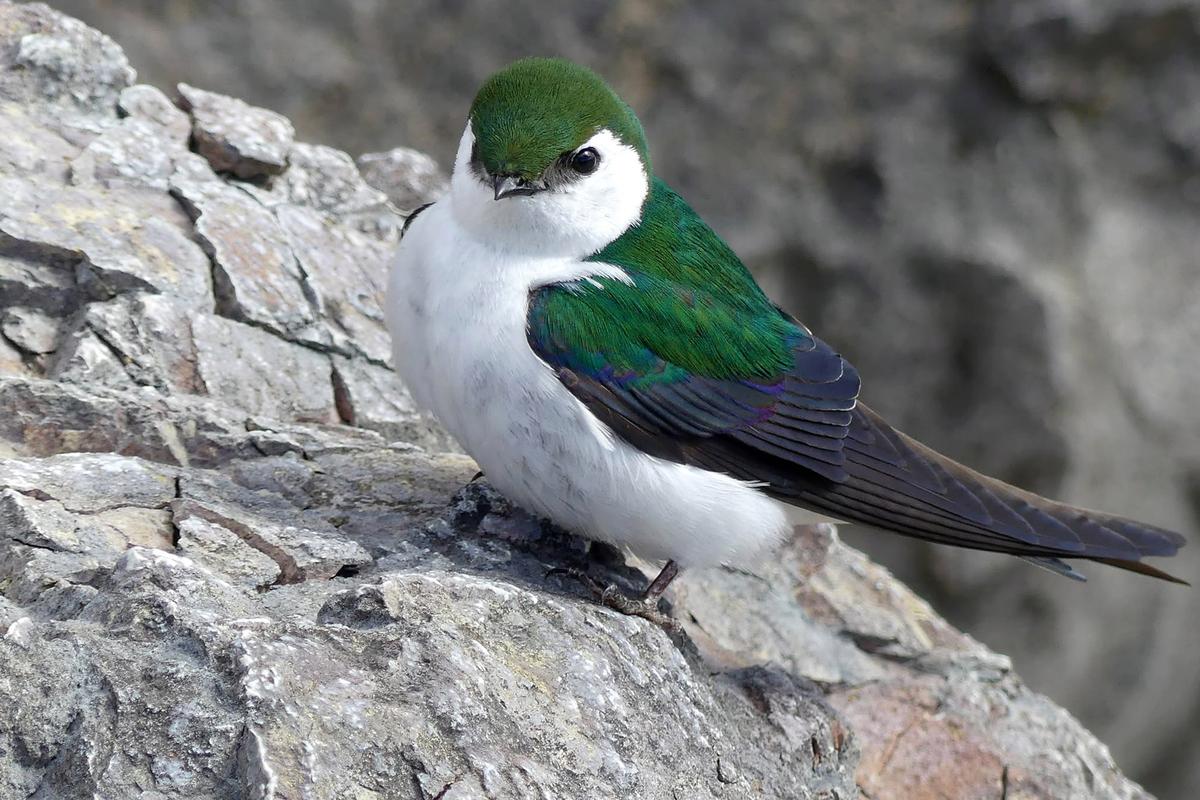
The violet-green swallow may not be the rarest bird in the world, but its colours sing when they catch the sunlight. Birder Brad Vissia, from West Kelowna, B.C., often observes them flocking on power lines, but only at a distance. He yearned to capture their sparkling, iridescent colours up close through his camera.
So when a violet-green swallow happened to land on a rock beside him, Vissia didn’t miss his chance.
In Vissia’s world, photographing the violet-green swallow was important enough to cut classes that day—or rather, take a drive in between classes at the middle-school where he teaches to Gellatly Bay near the yacht club to view and photograph avians.
The trip didn’t disappoint.
“They don’t typically land—especially close to people,” Vissia told The Epoch Times. “I noticed these birds were landing not too far from me on these rocks, so I basically just went and sat on another rock, positioned myself, and hoped.”
He anticipated one might flutter down to where he had his camera poised and ready and the lighting was just right. When one finally did land, he “photographed crazy,” he said, and captured several certifiably “good” images of the violet-green swallow. He’s honed his professional photography skills for years while birding.
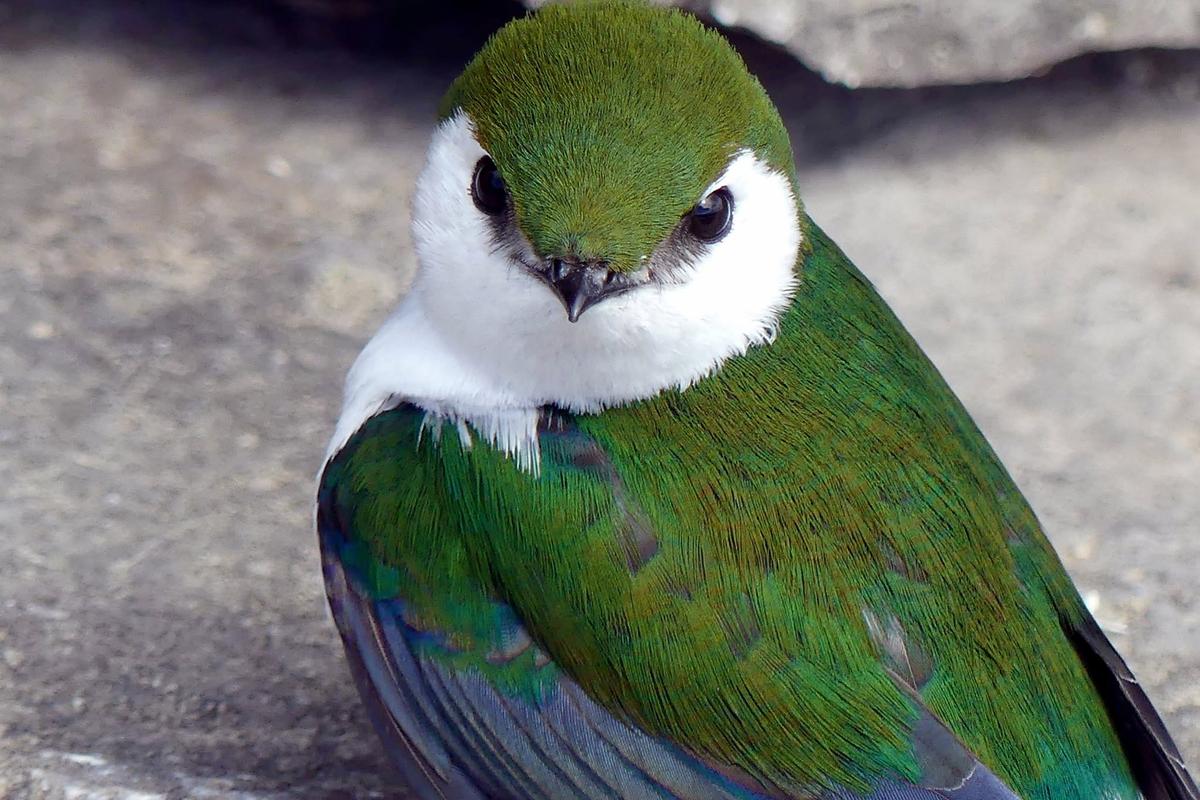
“It’s a great diagnostic photo. It’s in focus and it’s not overexposed,” said the seasoned birder with a decade of bird-scouting under his belt. “I’ve learned simple tricks. I probably had my foot on a rock with elbow on my knee.” He holds his breath and clicks the shutter. His photos are crisp and clear, encyclopedia-grade, he says.
The sparrow-sized violet-green swallow is an acrobatic insect hunter, snapping up bugs on the fly. Swarms of insects were hovering over the water that morning, near where the creeks meets Okanagan Lake, luring the typically aloof birds down to eye level. Most likely migrating from Mexico, where they spend winter, the violet-green swallow seeks cooler climes up north in spring, along the Pacific coast from California to Alaska, where they nest and mate.
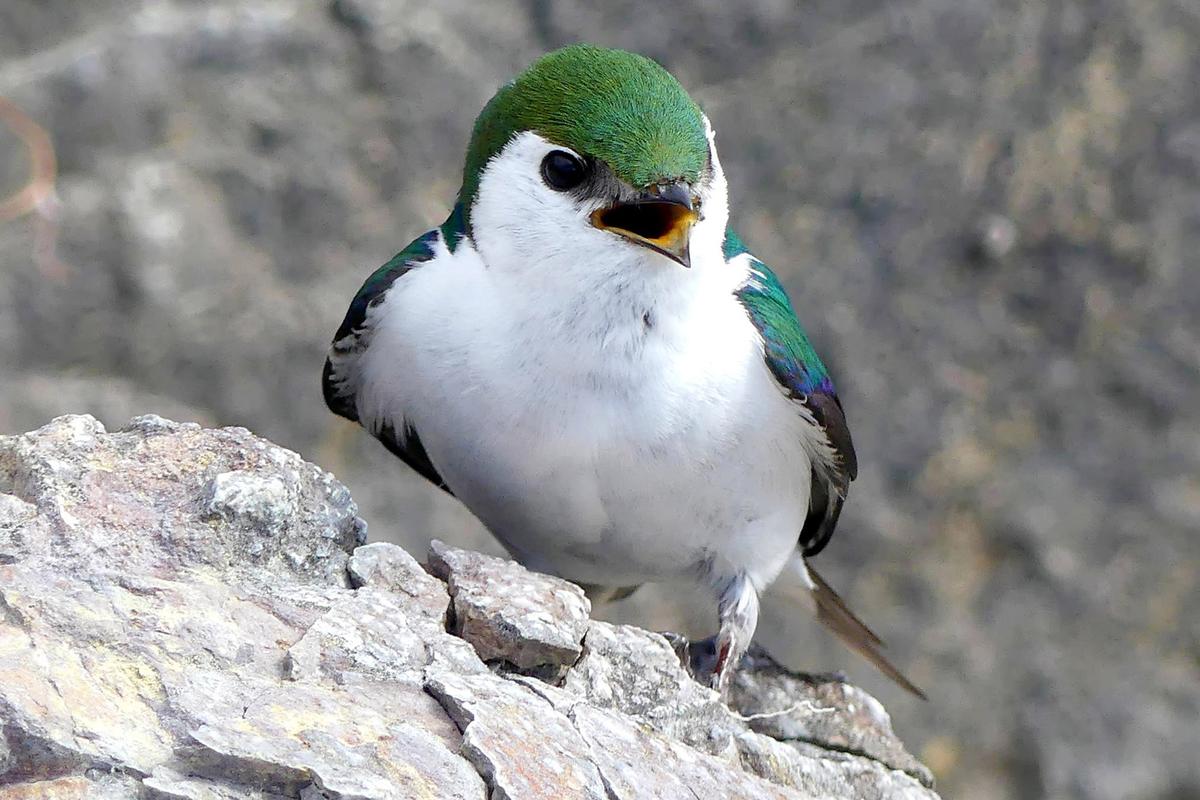
Males display back and head feathers with a rich green colour and an iridescent purple rump. This particular bird was a male. Females are significantly duller. Both sexes have refreshingly cool white feathers on their rumps and cheeks that make them really stand out. The odds are that females will presently be closer to the nest, as they typically lay eggs early June. The male parent will be out catching food for seven, since females lay a clutch of five eggs on average.
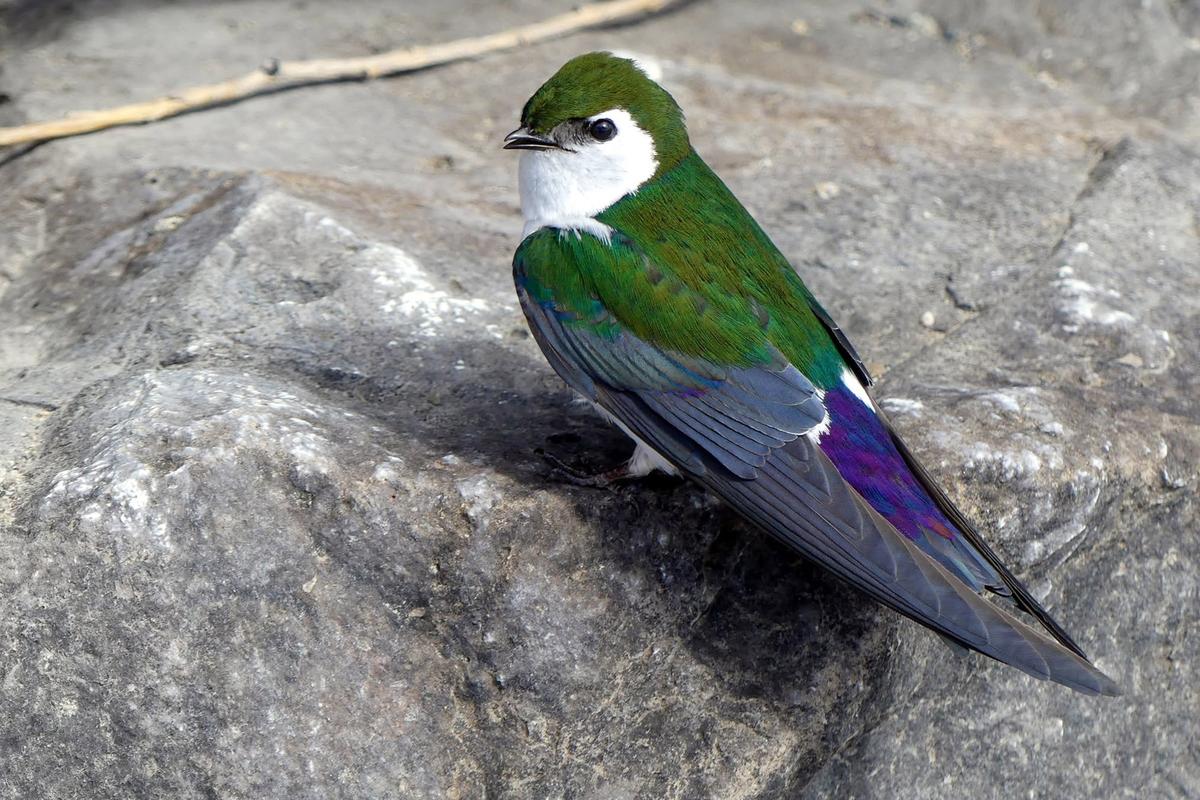
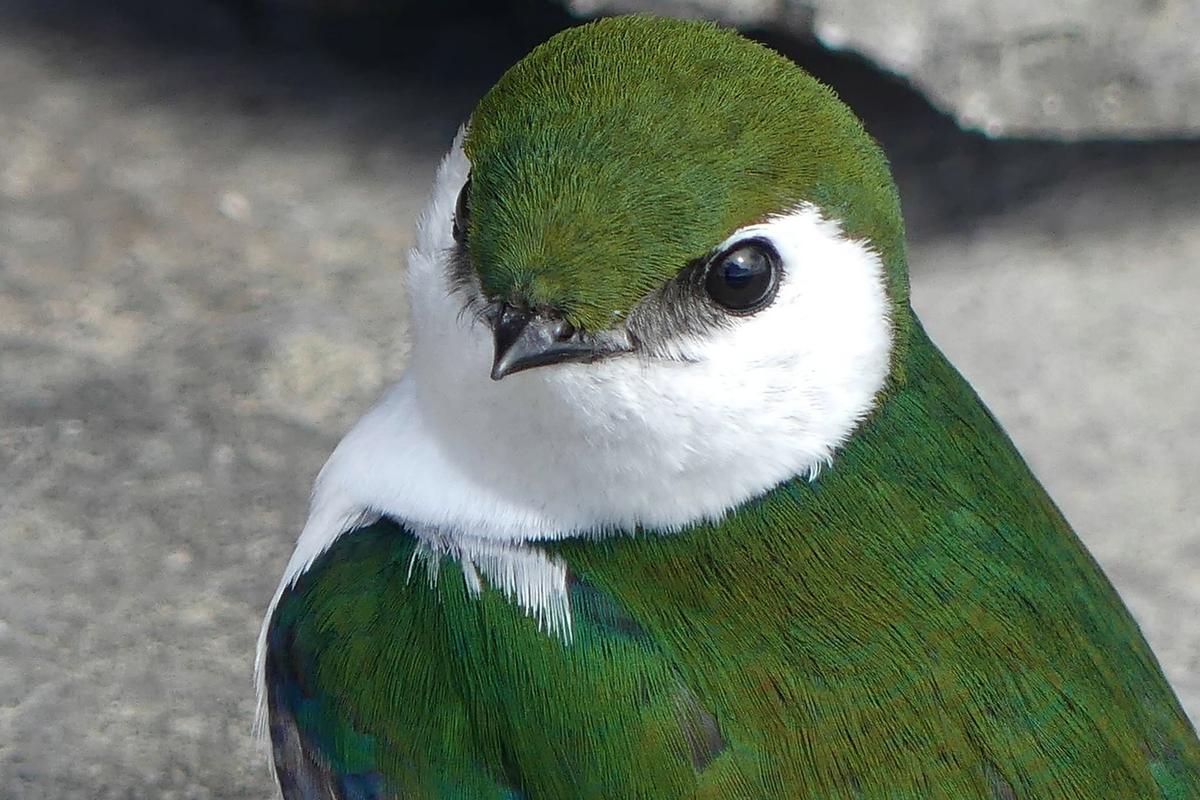
Often flocking in large numbers, these birds string together several consecutive “chee-chees,” twittering to establish territory and during courtship. They might emit a sharp “zwark” when defending the nest site. This one chirped a few times, which Vissia said sounded “like electricity going through wires.”
“It took an interest in me,” he said, adding it was unusual that the male bird stayed for two minutes, since they dart around so fast. “I was pretty impressed, to be honest.”
Vissia, 56, says his birding is an obsession. He didn’t always love birds—probably because he’s always viewed them from afar. But when he injured his knee and was waiting for an operation around 2015, all he could do was hold a pair of binoculars and enjoy their freedom in flight.
For Vissia, binoculars opened up a whole new world of detail to explore—not to mention colours.
“I couldn’t do all those other activities like bike and hike,” he said, “and was blown away with the birds I was seeing.”
Once hooked, his birding activities exploded. He bought a good camera and started driving and flying, as far as Mexico, to scout local and exotic avians. He knows countless bird calls and has been known to drop everything on a dime and travel long distances should a birder friend call about a rare specimen outside of town.
“It’s a fantastic hobby,” Vissia says. “You’re outside, and you don’t even realize how far you’re walking. You’re getting a lot of exercise without thinking you’re exercising.”
Vissia connects with the world-wide birder community and shares his photos via the eBird app. He tends to avoid social media.
Asked when his next expedition will be, he laughed and said “tomorrow morning.” He was already out this morning, he added. Morning is the best time for birding. He wakes up early, because birds are most active before the Okanagan heats up. Evenings are also good, he says. That’s when they feed before taking cover for the night to avoid becoming owl food.