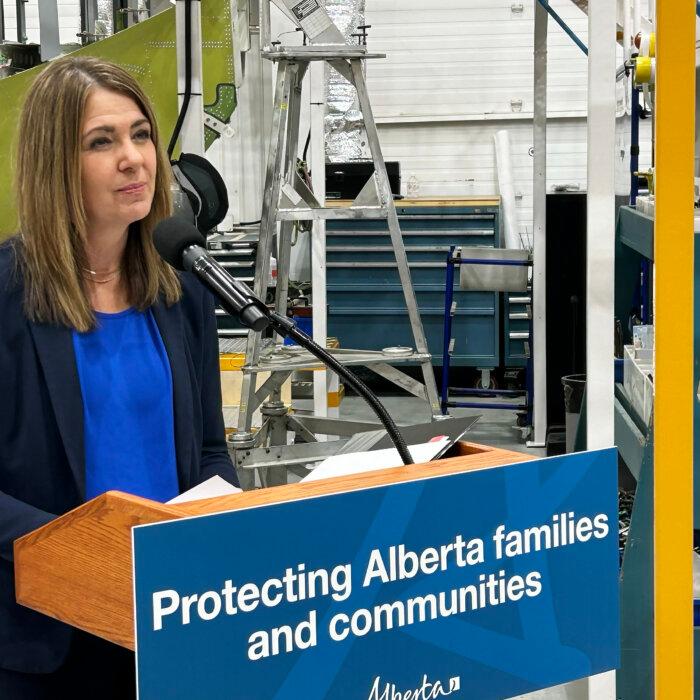
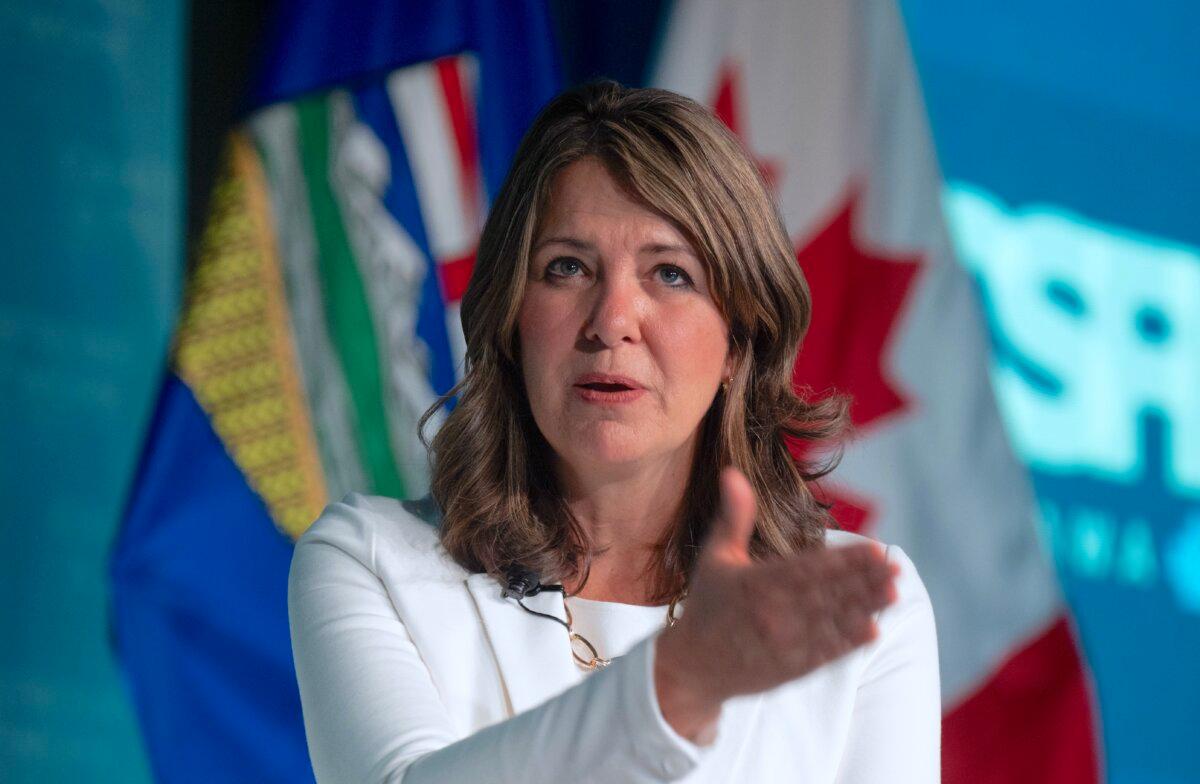
Alberta Premier Danielle Smith’s promise to hold a referendum that will give her province a chance to demand greater control over immigration is the latest episode in the long-standing, ever-evolving drama between the provinces and Ottawa over immigration jurisdiction.
The October referendum will ask nine questions, including four on constitutional issues. But the major spark igniting a firestorm of debate across Canada is the five immigration questions.
One question asks whether Alberta should have greater control over immigration, three focus on whether temporary residents—such as foreign workers and students—should receive provincially funded services like health care and education, and the final question asks whether provincial elections should require proof of citizenship.
This is just the latest yank of the rope in a multi-decade tug-of-war between Ottawa and the provinces over immigration.
For more than a century after Confederation in 1867, provincial power over immigration went largely unexercised, existing mainly on paper.

Following this unique arrangement, a series of bilateral agreements were struck with the other provinces and territories in the 1990s and 2000s, conferring some power over immigration—but far less than is held by Quebec.
For the 11 provinces and territories that have joined the PNP, there are two notable limits: the number of PNP slots is set annually by the federal government, which also holds the final power of approval for nominees.
Provincial Pushback
The Provincial Nominee Program has not satisfied most provincial governments, which continue to seek more control over immigration.“What we’re looking at is a model very similar to what Quebec has had since 1991 with their Quebec-Canada Accord, where they have total control over their economic migrants,” Smith said.
While Smith’s government is the first to hold a referendum on immigration, other provinces are testing the limits of provincial immigration powers in other ways.
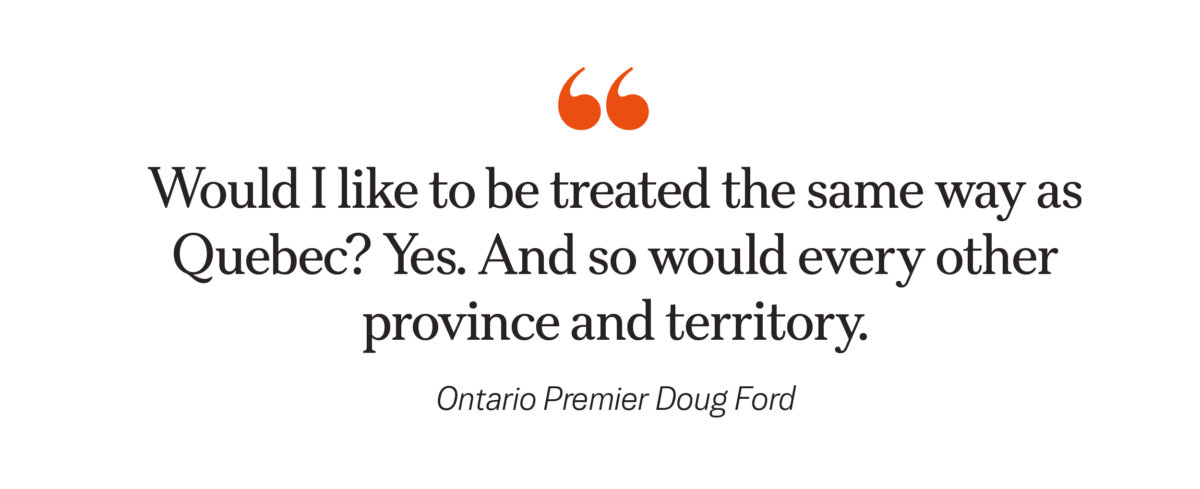
Later at the same conference, Ford made it clear what that would look like for Ontario: unilaterally issuing work permits for asylum-seekers.
“There’s jobs available in Ontario and we need to give them work permits and make sure that they’re out there working and contributing back to society; I’m not waiting any longer,” he said.
‘Unable to Keep Up’
The fundamental tension lies in the fact that, while the federal government sets the overall number of new immigrants each year, the provinces are the ones that deal with the strain posed by population growth on services.While no province has yet achieved a Quebec-style immigration deal, many are exercising as much power as they can within existing arrangements—and the consequences can be chaotic.
P.E.I.’s move to cut immigration and relieve what then-Premier Dennis King described as an “increasingly stressed public services and infrastructure system” ignited raucous protests in Charlottetown, as foreigners on work visas saw their dreams of permanent residency fall apart.
This highlights another bone of contention between the federal government and the provinces: Ottawa sets immigration levels, but in many cases the provinces need to act to clean up immigration fraud.
Attracting Newcomers
The provinces’ push to exert power over immigration does not always mean restricting immigration. Sometimes, it means boosting it.Nova Scotia Premier Tim Houston has long aspired to use immigration to double his small Maritime province’s population to two million by 2060.
“People drive economies, so we need people. ... We know what happens when communities lose people. Schools close, stores close, and then you get caught in that negative vortex because oftentimes those that remain are aging,” he said.

Nova Scotia did see a post-pandemic population boom, becoming the first Atlantic province to top one million people, but this has since cooled as Ottawa has slowed immigration levels.
Nova Scotia is not alone in its push, Premier Smith has long advocated for an ambitious target to double Alberta’s population.
“We have to be that bastion of liberty, and people are going to want to come here, and we want to embrace them,“ she said. ”And we want to be able to build this place out, so that we can actually have the political clout in Alberta that we deserve, because right now we’re being treated as a junior partner by Ottawa.”
“It’s a matter of time scale. … We certainly can’t double our population in three years, which it seems a lot like the federal government was bent on doing. You can probably double your population by 2100, maybe. In Alberta, we might go a little bit faster than that because people do want to move here.”
The previous Alberta government under Premier Jason Kenney also tried to boost the population through its “Alberta is Calling” marketing campaign in 2022—an advertising blitz persuading Canadians in other provinces to move to Alberta.
The “Alberta is Calling” campaign highlights the creative methods provinces outside Quebec sometimes use to get around their lack of immigration power. While they have little direct control over immigration, they can always employ the power of persuasion.
Quebec Lobbies for Greater Control
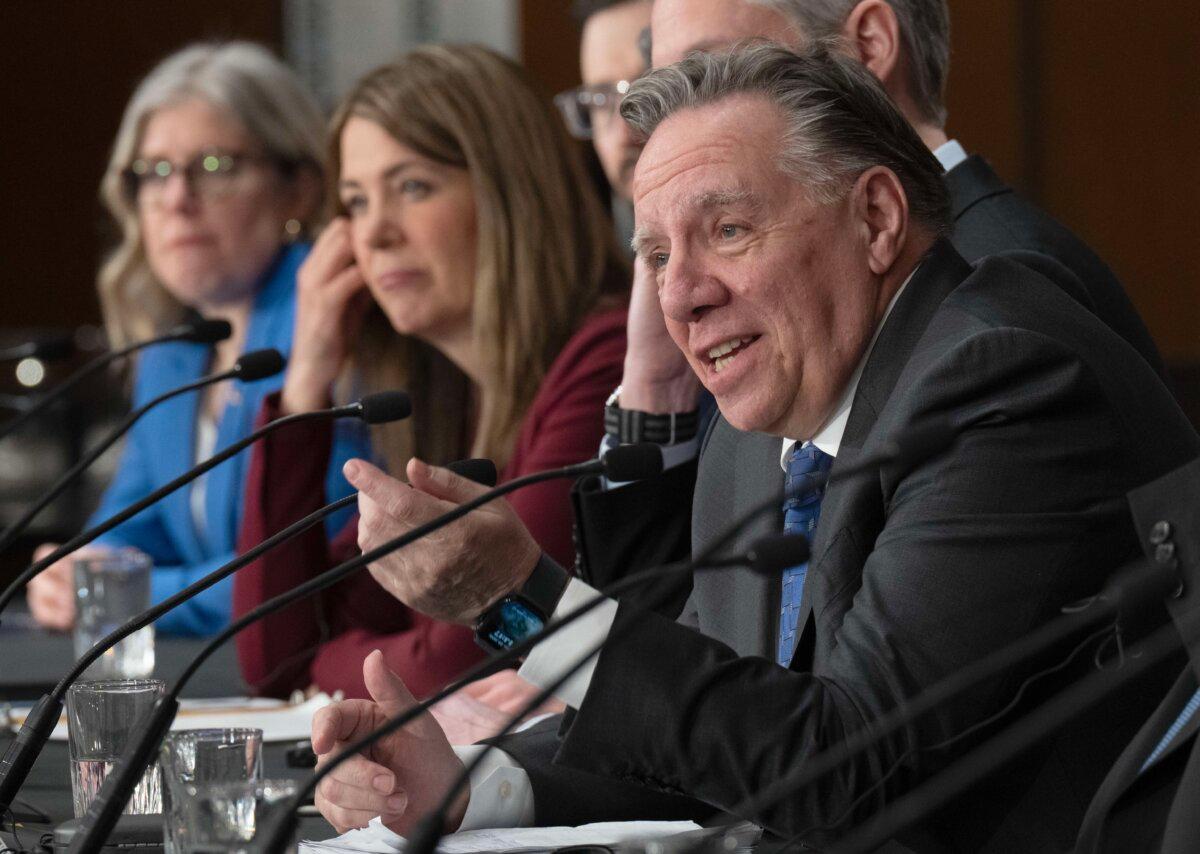
The premiers outside Quebec have been vocal about their aspiration for Quebec-style immigration powers to be extended to the other provinces. Meanwhile, the Quebec government is not satisfied with its deal and has repeatedly come into conflict with Ottawa as it seeks even greater immigration power.The source of tension lies in the fact that, while Quebec sets its own permanent resident levels and criteria, temporary residents—largely foreign workers, international students, and asylum-seekers—remain under federal control.
Legault also requested that all power over immigration be transferred from Ottawa to Quebec, an ask that then-Prime Minister Trudeau declined.
Ministers in the Quebec government have also repeatedly threatened to cut social assistance to asylum-seekers.
The Quebec-Ottawa irritation goes both ways, with the federal government at times expressing its frustration over Quebec immigration policy.
In 2024, then-Immigration Minister Marc Miller instructed his ministry to overrule Quebec’s family reunification levels, which he called “artificially low.” Against the Quebec government’s objections, the federal government decided to process more than 20,000 family reunification applications.
Though Quebec’s immigration deal with Ottawa may be looked at with envy by other provincial governments, it has clearly not managed to dissolve tensions over immigration powers.
Canada’s struggle over immigration jurisdiction shows no signs of slowing down, with provinces in English Canada seeking a Quebec-style arrangement, Quebec itself lobbying for even greater control, and the federal government attempting to stop any further erosion of its power.