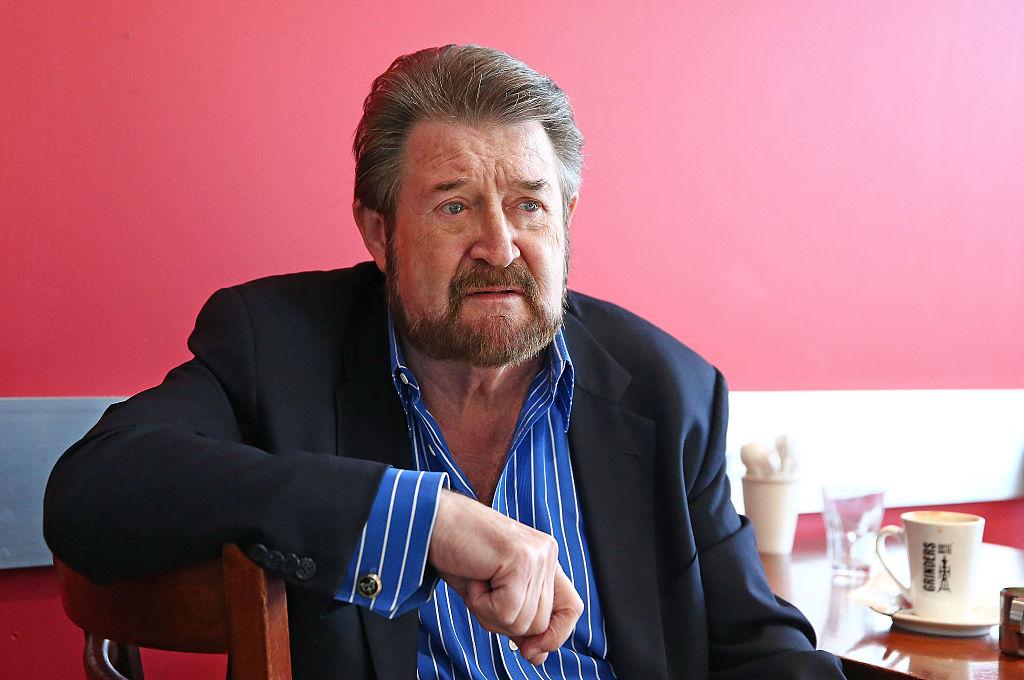
The broadcaster whose gravelly voice earned him the affectionate nickname “The Golden Tonsils,” John Laws, has died peacefully at his home in Sydney at the age of 90.
His family said in a statement that “while fame and prominence had become a mainstay of his life, for us he was always the person who meant so much, away from the microphone, the cameras, and the headlines.
“It is comforting to know that John’s was a life lived well—he had remained in good health, and even better spirits, right up until the last few weeks. The family wants to thank the many well-wishers who have already reached out, because we know that we shared the man, known simply as ‘Lawsie,’ with so many of you.”
Born in Papua New Guinea to Australian parents in 1935, Laws entered radio in the 1950s, working as a disc jockey at Bendigo station 3BO.
He worked his way up through the industry before securing a place at Sydney’s 2UE in the 60s, where he began to gain notice, pioneering talkback at a time when it was the only interactive medium, prior to the arrival of the internet.
He spent four separate periods at 2UE after first joining the broadcaster in 1957, and also worked for 2GB, 2UW, and 2SM and had short periods with Network Ten and Foxtel.
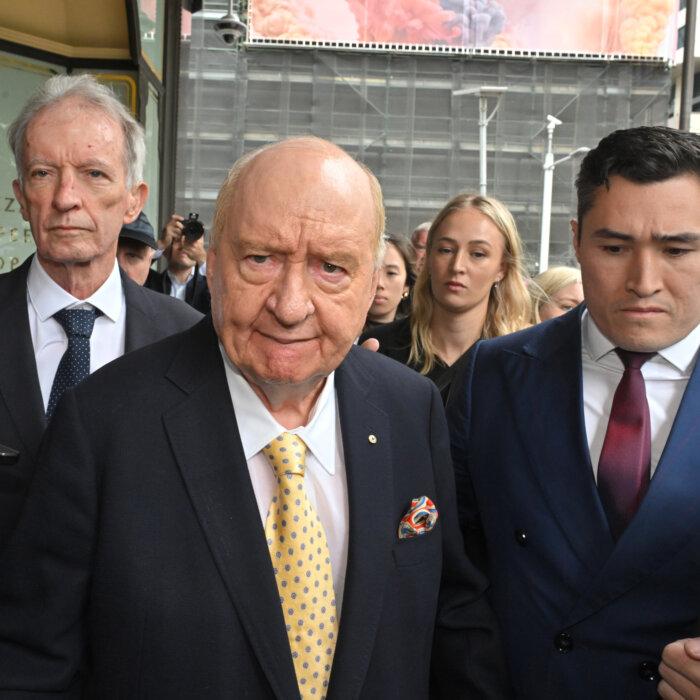

He was consistently a top-rated radio host in Australia, dominating the ratings for decades and attracting millions of listeners, especially in the 1980s and 1990s.
At his peak, he had an audience estimated at 2 million when his shows were broadcast around Australia. His popularity waned in later years, particularly in the competitive Sydney market, but he remained particularly popular in rural New South Wales.
During his most dominant period, from the late 1970s through to the turn of the century, political leaders, entertainers and advertisers used him to reach his large audience through up to 100 stations across Australia.
He began all his shows with, “Hello world, I’m John Laws.”
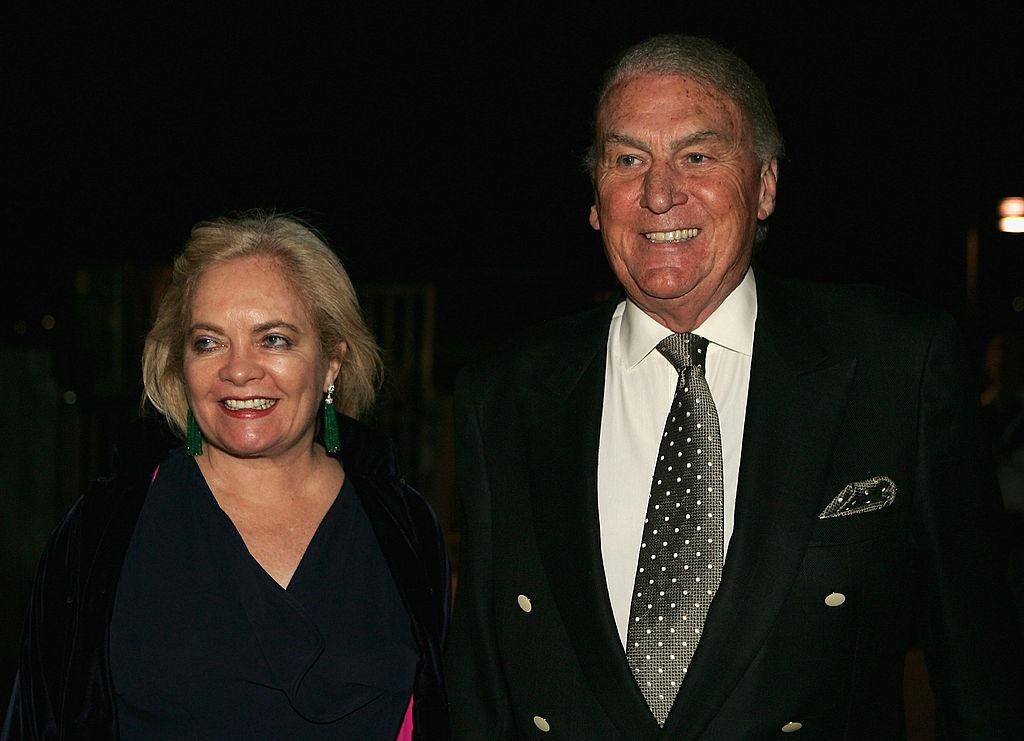
Tall and considered good-looking, Laws was quickly offered opportunities to work in the country’s fledgling TV industry. He would go on to appear on TV shows Bandstand, Startime, New Faces and, in 1970, Beauty and the Beast.
He also did commercial work, famously promoting the engine oil Valvoline for many years.
In the process, he became one of the nation’s most famous, influential broadcasters, something he clearly enjoyed, as well as one of its highest-paid. He was said to be the best-paid radio broadcaster in the world at one stage of his career, and 2UE management presented him with a golden microphone, which became his trademark from that point on.Former Labor Prime Minister Paul Keating once called Laws “the world’s greatest broadcaster,” and was a regular guest, as was his predecessor Bob Hawke, who said in 1987 that Laws’ listeners “are Australia.”
Current Prime Minister Anthony Albanese paid tribute to Laws on social media, calling him “an iconic voice and so much more.
“Generations of Australians trusted and respected him for telling it straight, digging deep and giving his guests and his listeners a chance to be heard. John was always a thoroughly prepared and thoughtful interviewer—and wonderful company off-air.”
New South Wales Premier Chris Minns called the broadcaster a towering figure in Australian radio whose voice resonated across the nation for more than seven decades. John’s career was extraordinary. Few broadcasters have left such a deep and lasting mark on Australian media.”
In 2016, an airline refused to let him fly home from Rome to Australia without an insurance industry-approved doctor seated beside him, taking his blood pressure and administering oxygen.
Two weeks earlier, he had been admitted to Salvator Mundi Private Clinic in Rome, suffering from bronchial pneumonia with oxygen levels so low that doctors feared the impact on his heart.
Several times over the past decade, Laws was admitted to St Vincent’s Private Hospital, where he was treated for multiple respiratory complications. He had returned from a European holiday in September and then spent two weeks in hospital in October, after which he was cared for at his home at Woolloomooloo.
But one of his greatest blows came in 2020 when he lost his beloved wife Caroline, the woman he called “The Princess” to cancer.
In one of his last interviews earlier this year, Laws told podcaster-businessman Mark Bouris he had landed on his feet in the radio industry.
“I don’t think I had any great desire to be a broadcaster, but once I started, I liked it. Plenty of money and plenty of girls. What more could a man ask for?”
When asked in recent years if he feared death, he borrowed a line from filmmaker Woody Allen: “I’m not afraid of death, I just don’t want to be there when it happens.”
He is survived by sons Samual and Joshua, his step-daughters by Caroline, Gabrielle, Georgina, Nichola and Susie, and his grandchildren.