Ukrainian President Volodymyr Zelenskyy said on Dec. 11 that the issue of territory remains a major sticking point in the negotiations with Washington over the proposed peace plan.
The Ukrainian leader said the United States is offering to create a “free economic zone” in the Ukraine-controlled parts of the eastern Donbas, which Russia has demanded Ukraine give up, as a compromise to try and end the hostilities.
“They see Ukrainian troops leaving the territory of Donetsk Oblast, and the supposed compromise is that Russian troops would not enter this part of Donetsk Oblast. They do not know who would govern this territory, which they are already calling a ‘free economic zone’ or a ‘demilitarized zone.’ This is more or less how the compromise vision of the United States looks at the moment,” he added.
Zelenskyy went on to say that Ukraine may not accept this proposal, because “when you talk to us about compromise, you must offer a fair compromise.”
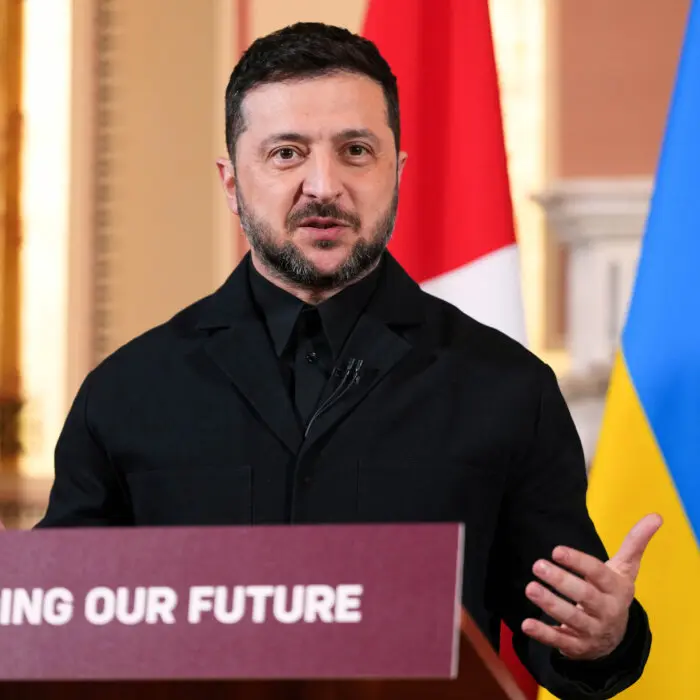
“We need to continue the conversation and try to find answers to all the questions in a way that makes everything more reasonable,” he said, adding that “as in all wars, there must be some form of monitoring.”
He further stated that there was still no agreement on the land issue and that Ukrainians should get to vote in a referendum on any potential concession of territory.
Meanwhile, in Washington, the White House has said that U.S. President Donald Trump is “sick” of the frequent meetings with negotiators from both Kyiv and Moscow.
“He doesn’t want any more talk. He wants action. He wants this war to come to an end. The administration has spent more than 30 hours—this just in the past couple of weeks—meeting with the Russians and the Ukrainians and the Europeans and speaking with them as well. So, we'll see about the meetings this weekend. Stay tuned,” Leavitt said.
She stated that if there was a “real chance of signing a peace agreement,” and there were meetings the administration deemed worthy of someone’s time this weekend, then the United States would send a representative.
“It’s still up in the air whether we believe real peace can be accomplished and we can truly move the ball forward,” Leavitt added.
“We greatly value the active engagement of the American side at all levels—not only in working to end the war, but also in ensuring Ukraine’s security and preventing a new Russian invasion. This reflects the seriousness of America’s intentions and its clear focus on achieving outcomes,” he wrote.
However, Zelenskyy added that Ukraine remained wary, having already had the “negative experience of the Budapest Memorandum.”
“Everyone remembers this, as well as the occasions when Russia repeatedly violated all its other commitments,” Zelenskyy said.
“That is why it is essential that this document on security guarantees provides concrete answers to what concerns Ukrainians the most: what actions partners will take if Russia decides to launch its aggression again.”
Russia, however, has said it may dislike the amendments that have been made to the plan by Ukraine on Dec. 12.
Ukraine views this position as unacceptable.